How to Visit Hazrat Nizamuddin Dargah in Delhi

Hazrat Nizamuddin Dargah is one of the most mystical and spiritual places you’ll ever visit in Delhi. But it can be challenging for tourists to explore because of the location and reserved attitude of Islamic locals.
The first time I tried to visit Hazrat Nizamuddin Dargah I was so intimated, I turned around and left. But I’ve been back a couple of times since then, and I’m glad I made the effort. The mysterious site is one of Delhi’s most fascinating, and it’s more historical than Old Delhi.
I’m going to tell you exactly how to visit Hazrat Nizamuddin Dargah in Delhi and provide context, so your visit will be even more unforgettable.
How to Visit Hazrat Nizamuddin Dargah in Delhi
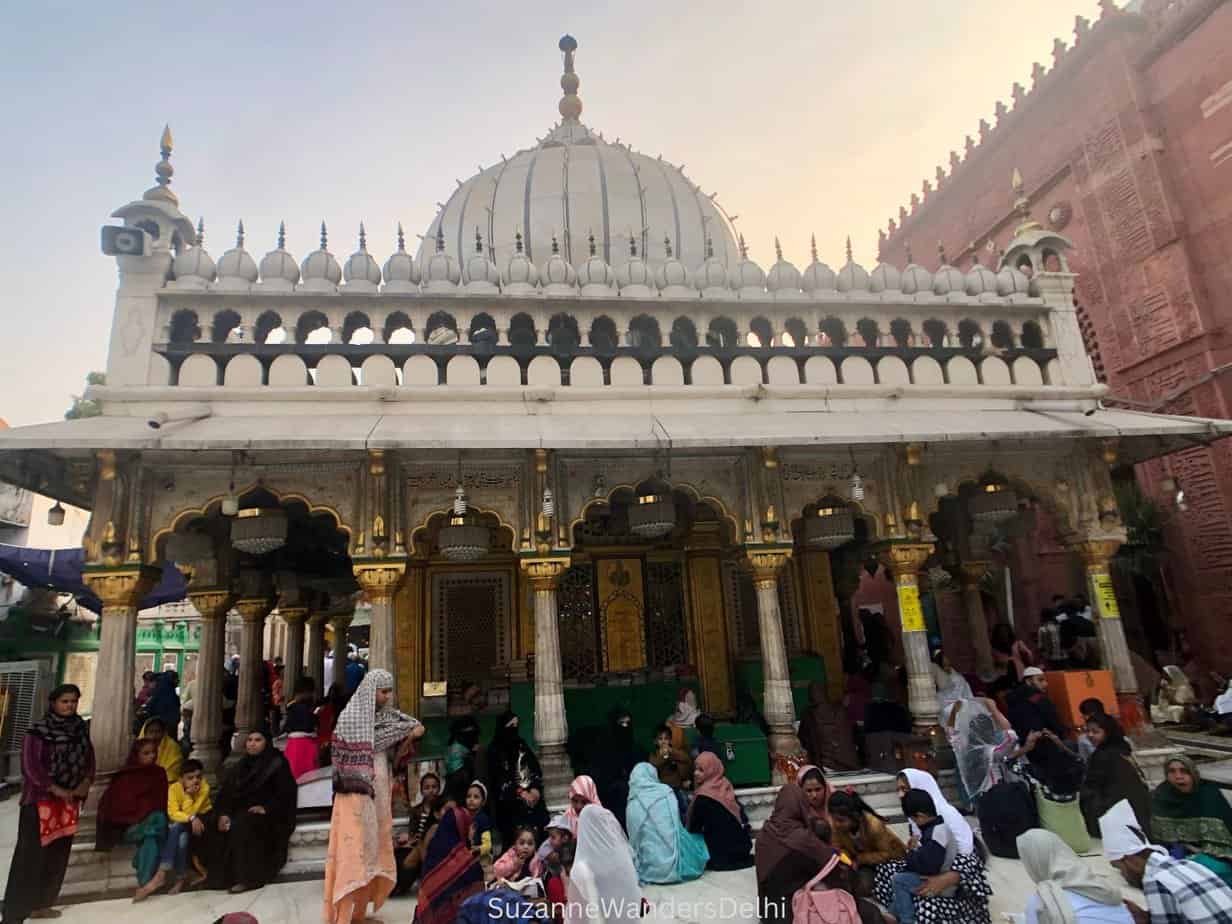
What is it? It is the mausoleum of the powerful Sufi saint Hazrat Nizamuddin Auliya. The dargah is believed to hold great power, and it gets hundreds of visitors each day of all faiths, including Hindus.
Hours: 5:00 am to 10:30 pm, daily
Cost: free
Location: Baoli Gate Road, Nizamuddin West, New Delhi
Nearest metro station: JLN Stadium (Violet line), exit Gate 2
Where is Hazrat Nizamuddin Dargah?
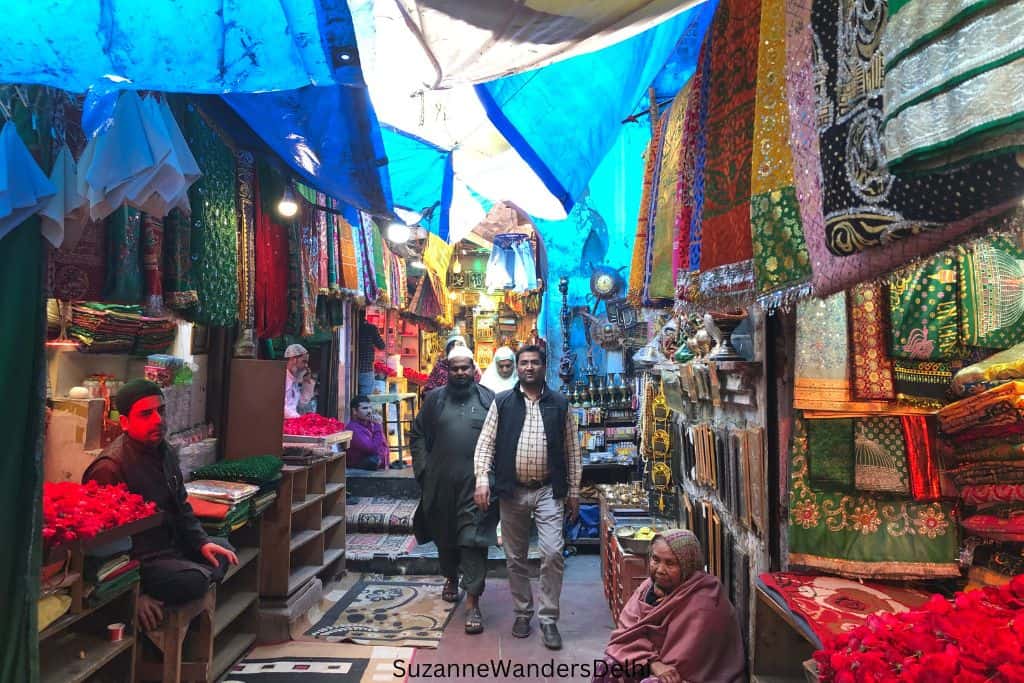
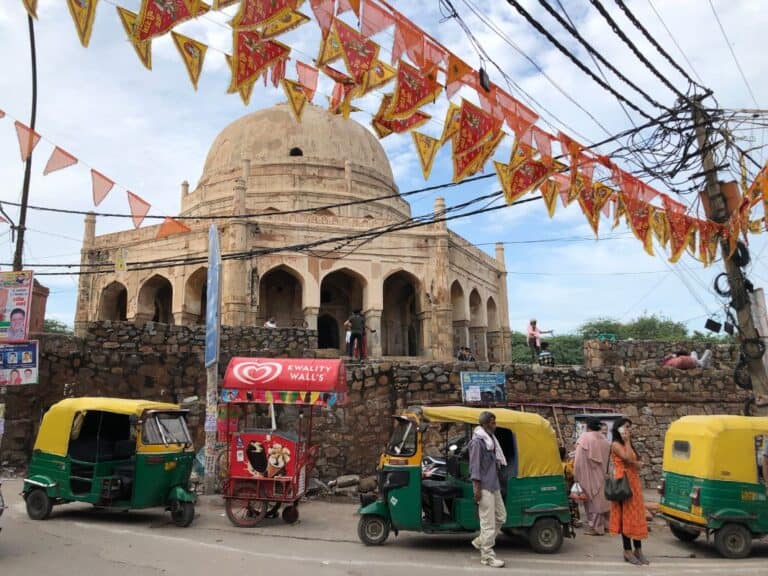
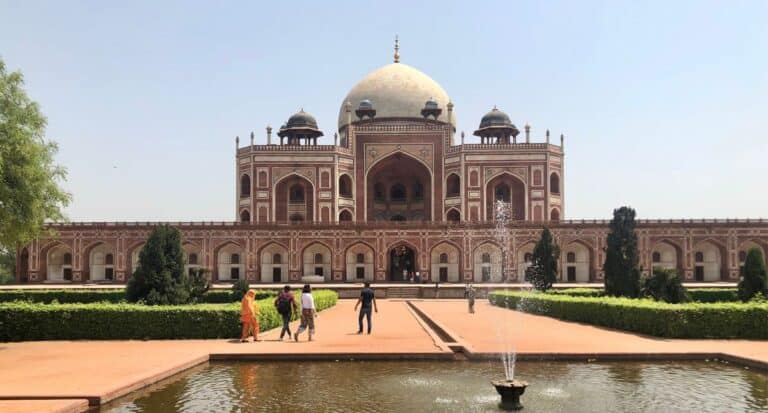
Hazrat Nizamuddin Dargah is in the middle of crowded Nizamuddin Basti, in South Delhi. It is not far from Humayun’s Tomb. A basti is an informal settlement, or slum. I wouldn’t call Nizamuddin Basti a slum, but it is a very congested, lower income area.
To reach the dargah you will need to walk through the market. It’s basically a warren of confusing lanes. I used Google maps to help find it, but I also asked vendors who pointed me in the right direction. Everyone here knows where the dargah is.
Market vendors can be persistent about removing your shoes, but shoes do not need to come off until you reach the entrance of the dargah.
If you’re hesitant about visiting on your own, I highly recommend this walking tour of Nizamuddin Basti (which includes the dargah) with local NGO Hope Project. It’s only INR 500 ($5.50 US), and it goes to a very good cause.
How to Get to Hazrat Nizamuddin Dargah
The best way to get there is to either take the metro to one of the nearby stations (Jangpura or JLN Stadium) and take an auto rickshaw from there, or take an Uber. I’ve done it both ways.
Either way, you’re probably going to have to walk part of the way, because the area near the dargah is very tight – only suitable for two-wheelers.
The Delhi metro and Uber are both reliable and safe to use.
History of Hazrat Nizamuddin Dargah
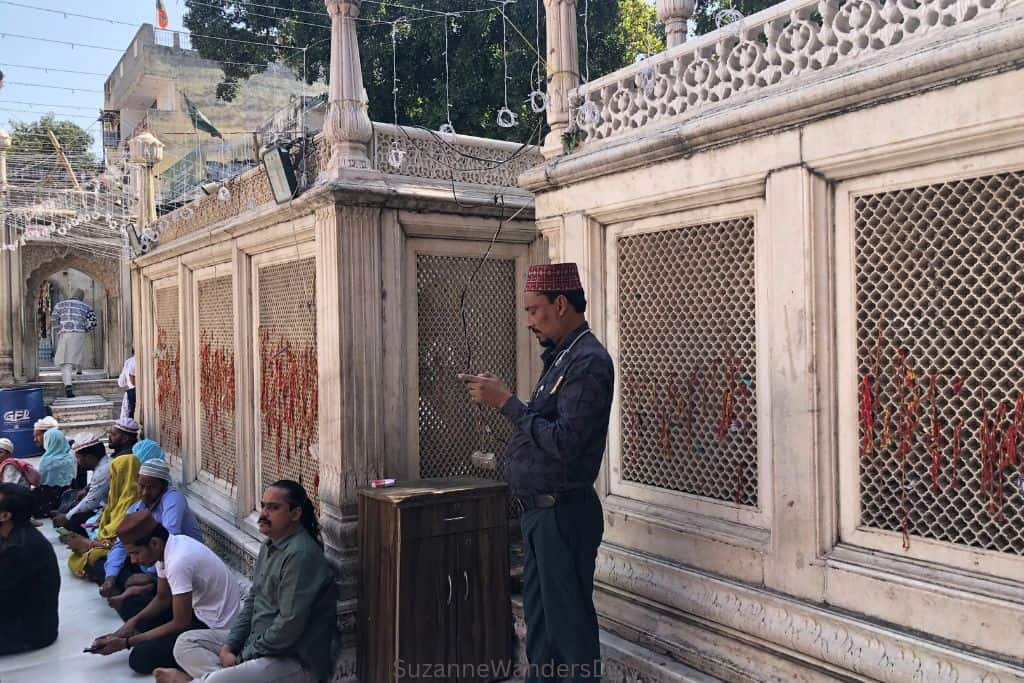
The dargah was built in 1325 by ruler Muhammad Bin Tughlaq, who was a devotee of the saint.
Hazrat Nizamuddin Auliya settled here in the 13th century and his devotees followed him. People have lived in Nizamuddin Basti since that time. It is one of the oldest continuously inhabited areas of Delhi, even older than Old Delhi.
Hazrat Nizamuddin Auliya believed in religious inclusion. People of all religions were welcomed to his hospice, and he preached that everyone has their own path to God. Sufism is part of Islam, but Hazrat Nizamuddin Auliya had followers from all religions.
The tombs of Mughal Princess Jahan Ara Begum, the poet Amir Khusro and over 70 mystics, poets and devotees are in the dargah complex. They all wanted to be buried near the saint.
What You Should Know Before Visiting the Dargah
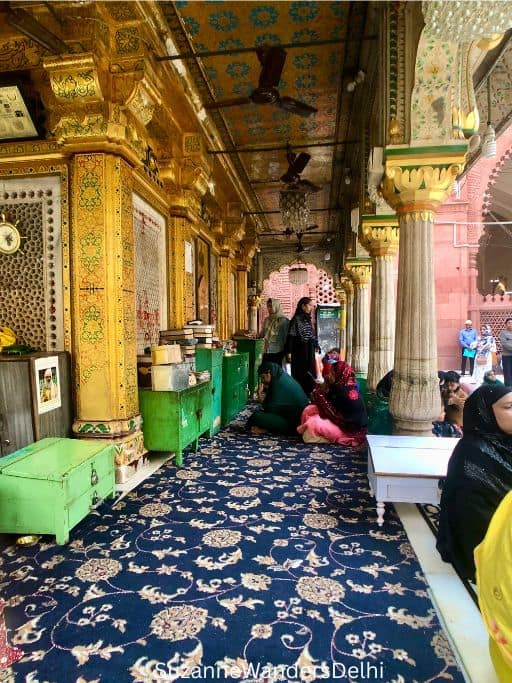
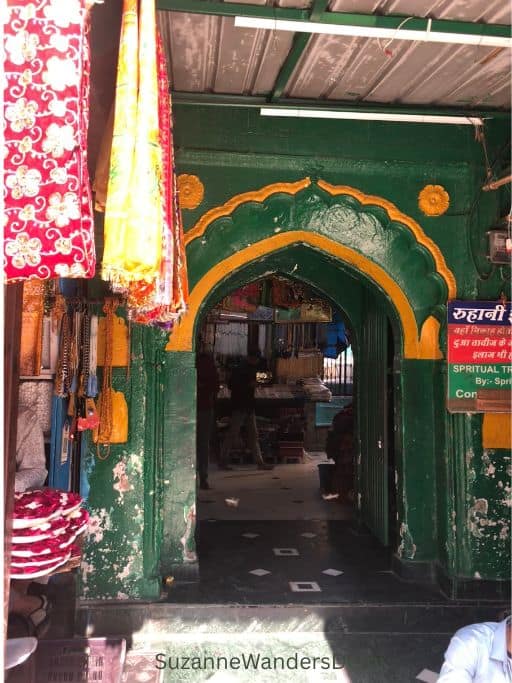
All religions are welcome here. In fact, this is one of the best places to celebrate, Diwali, the Hindu festival of lights. So don’t worry if you’re not Muslim, everyone can visit the dargah.
What you should do is dress very conservatively. Shoulders, knees and hair covered, including men (a bandana like the ones worn at Sikh gurudwaras is fine for men). The more conservative the better. I cover my hair with a dupatta (Indian scarf) as soon as I step into the neighbourhood.
Shoes do not need to come off until you reach the entrance of the dargah complex. You can leave them with a shoe minder by the entrance, or at one of the market stalls.
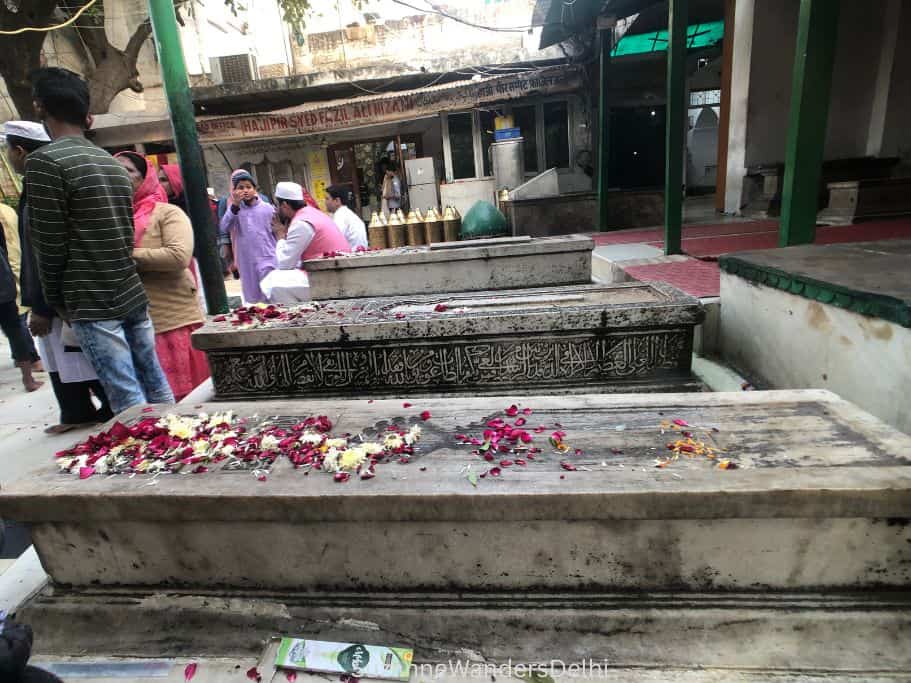
Women are not permitted to enter the enclosed area where the tomb is and must stay on the verandah. They can view the tomb through the jali (stone lattice screens) and tie sacred threads to it.
Offerings to the saint can be given to a male custodian who will take them into the tomb for you.
It is customary to first offer prayers at the tomb of Amir Khusro, the poet and a disciple of Hazrat Nizamuddin Auliya, and then the tomb of Hazrat Nizamuddin Auliya.
Some devotees come from far away and have very little money. I’ve seen pilgrims camping out at the dargah, literally eating and sleeping beside the graves. The dargah permits this.
Qawwali Singing at the Dargah
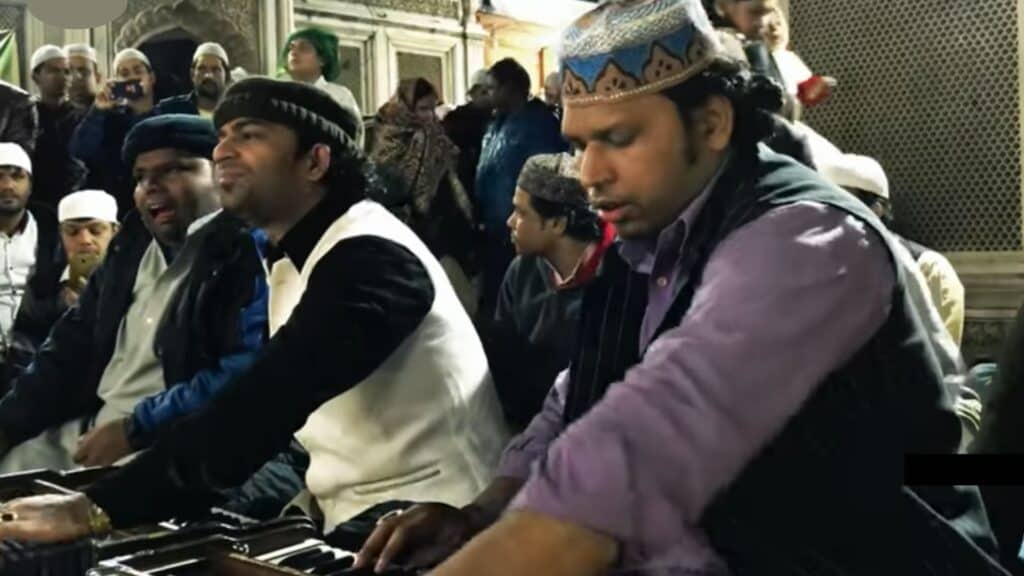
Sufi Islamic devotional singing is called qawwali and the singing at Hazrat Nizamuddin Dargah is legendary. The Nizami family have sung qawwalis at the dargah for 700 years. Their qawwali singing is even featured in the Bollywood block buster “Rockstar.”
This is a magical experience, the qawwalis are mesmerizing, and many visitors say they come away with a sense of peace and serenity.
The qawwali starts every night just after the maghrib namaz (evening prayers) at dusk. Special qawwalis are sung on Thursday when hundreds attend. There are usually two sessions on Thursday, one at dusk and another around 9:00 pm. In winter there is one performance in the evening only.
Timing of qawwali is approximate as it is based on the time of the evening prayers which change marginally daily.
The courtyard gets very crowded – it’s best to go early to make sure you have a place to sit on the floor. At the end of the qawwali, the singers stand up and offer a prayer to the Sufi saint.
Legend of the Baoli (Stepwell)
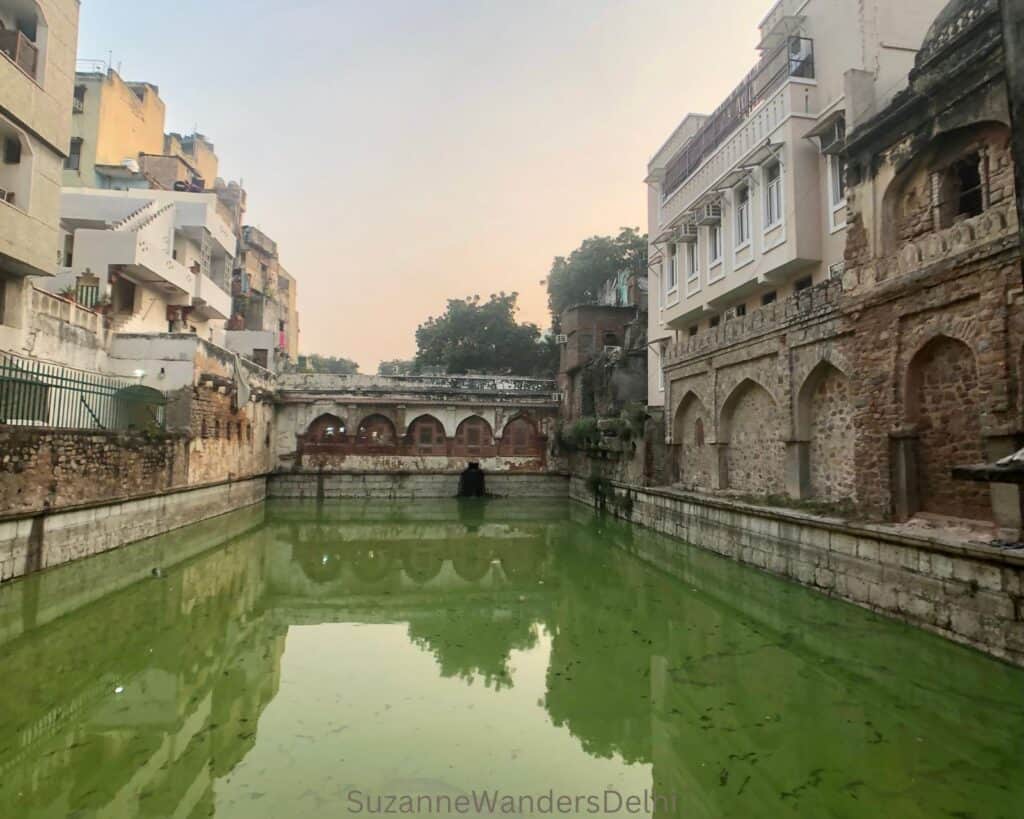
Adjacent to the dargah is the baoli (stepwell) which caused the legendary feud between emperor Ghiyasuddin Tughlaq (the father of Muhammad Bin Tughlaq who built the dargah) and Hazrat Nizamuddin Auliya.
Nizamuddin was building a stepwell at the same time Tughlaqabad Fort was being built. Ghiyasuddin Tughlaq was obsessed with building the fort, and ordered all labourers in Delhi to only work on his fort, bringing construction of Hazrat Nizamuddin Auliya’s stepwell to a standstill.
This was a major problem for Nizamuddin as the water was needed for his residence, and he was furious. He cursed the ruler and the fort.
Even though the labourers devised a way to work on the fort during the day and the stepwell at night, Nizamuddin would not remove the curse. And it seemed to have worked – the fort was abandoned after 15 years and left to ruin. Ghiyasuddin Tughlaq was murdered by his own son, Muhammad.
To this day, Tughlaqabad Fort is in ruins – and if you’ve seen Tughlaqabad Fort you’ll appreciate how strange this is. The fort is absolutely massive, basically a fortified city. Much of it is still intact, yet it hardly gets any visitors – just troupes of monkeys who act like they own it and harass tourists.
Meanwhile, Hazrat Nizamuddin Dargah is visited by hundreds each day, many of whom aren’t even Muslim. Even the stepwell gets its fair share of daily visitors since the water is considered sacred.
Visiting Nizamuddin Baoli (Stepwell)
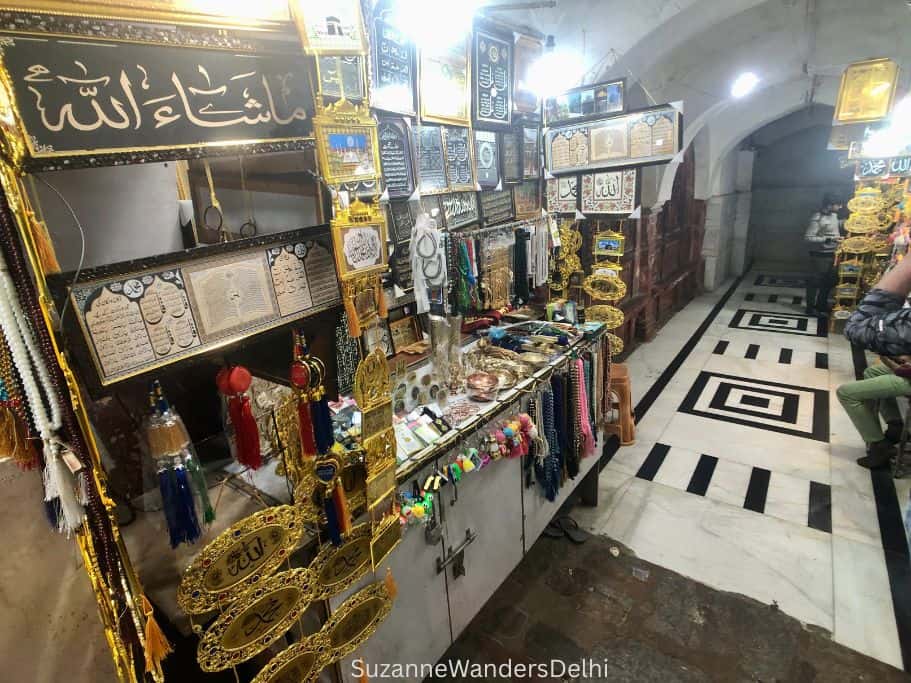
The entrance to the baoli is on the back lane that leads into the dargah complex. You can walk around the side of it to the covered bazaar (which sells religious items) in the back.
The baoli underwent a massive restoration project a few years ago after portions of the wall collapsed, deeming the residences built on top of it unsafe.
Residents were relocated to government provided housing, and the baoli was completely drained of water and 700 years of muck at the bottom. It has now been restored and filled, with the hope of reestablishing it as a meeting point for the community.
What Else to See Near Hazrat Nizamuddin Dargah
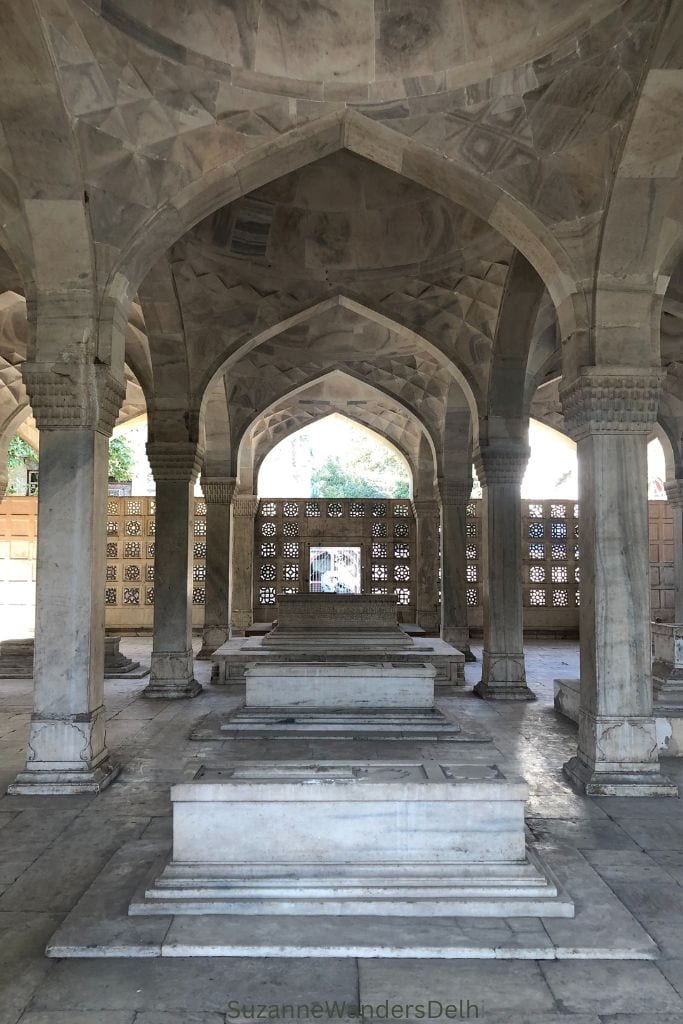
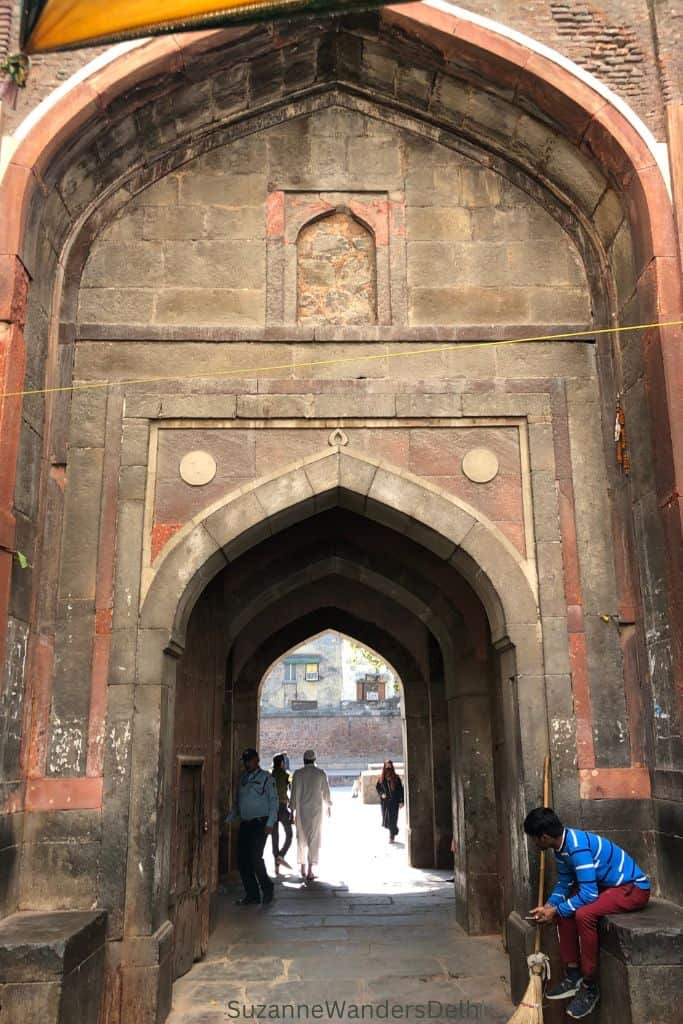
Within a very short walk of the dargah is one of Delhi’s most beautiful hidden gems, Chausath Khamba. It is the mausoleum of Mirza Aziz Koka, the foster brother of Mughal ruler Akbar.
The mausoleum is remarkable for its 64 pillars, all made of white marble.
The second time I visited Chausath Khamba was on the walking tour with Hope Project, and I learned the community uses the courtyard in front of Chausath Khamba as a gathering place. Sure enough, there were kids playing cricket and several goats hanging around.
Delhi’s most famous poet, Mirza Ghalib is also buried on the site. Like Mirza Aziz Koka, he was a follower of Hazrat Nizamuddin Auliya and wanted to be buried close to him.
Where to Stay Near Nizamuddin Dargah
Nizamuddin is in a very historic area of South Delhi. These are excellent hotels not far from dargah:
- The Lodhi (luxury): Exceptional 5 star boutique hotel and member of Leading Hotels of the World.
- B Nineteen: (mid-range): Lovely bed and breakfast in a quaint residential area behind Humayun’s Tomb. Breakfast is included.
- Prakash Kutir Bed & Breakfast (budget): Guest house in South Delhi. Not super close to the dargah, but an excellent budget option.
Last Words on How to Visit Hazrat Nizamuddin Dargah in Delhi
Visiting Hazrat Nizamuddin Dargah in Delhi is a little off the beaten path, but the area is fascinating and rich in history. This is a glimpse into Delhi’s sufi mysticism that few tourists see, and very worth the extra effort to visit.