Tombs of Green Park: Necropolis at Delhi’s Doorstep

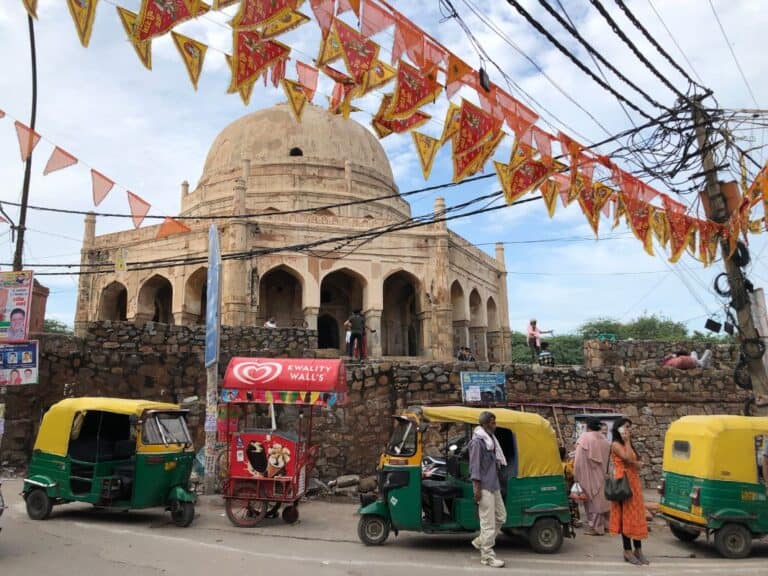
In the South Delhi neighbourhood of Green Park is a group of 6 tombs from the Lodhi and Tughlaq periods. Several are on the main road that leads from Hauz Khas Village, but the others are tucked away, hidden in quiet Green Park.
The tombs are practically on the doorstep of some very affluent Delhi homes. This is the thing I love about Delhi, history is everywhere and often in the most unlikely places.
Tombs of Green Park
It wasn’t until I started staying in Airbnbs in Green Park that I became aware of the tombs. They’re not a tourist attraction and not much is known or written about them.
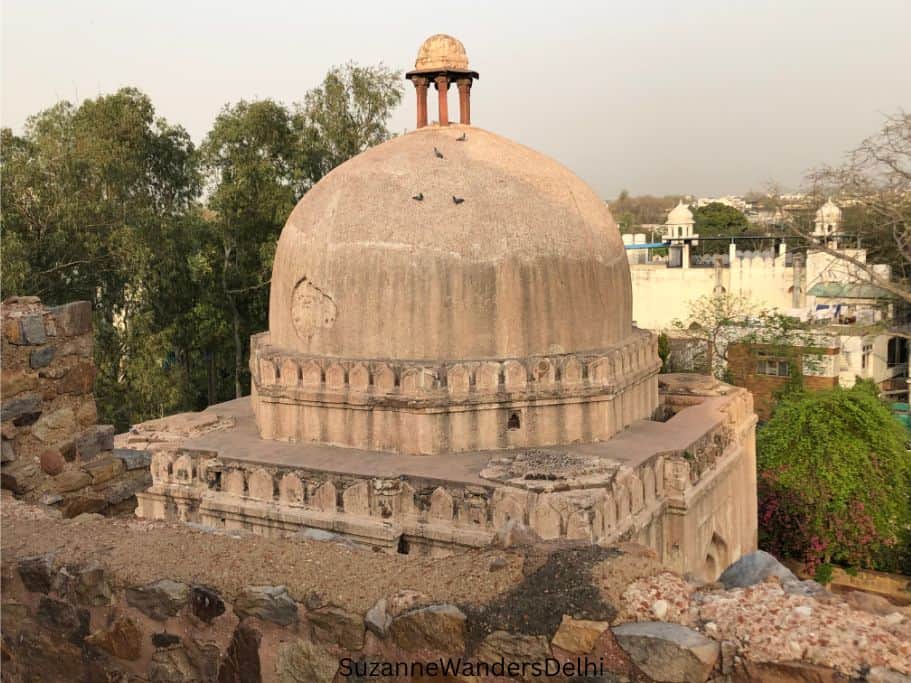
As I was walking Watson (my dog) I saw the Dadi and Poti tombs in a garden. I returned later without Watson, and the guard let me up on the rooftop. He pointed out the other domed tombs nearby – and that is how I discovered the Green Park tombs.
Hours: 24/7, but go during daylight
Cost: Free
Location: Green Park, New Delhi
Where are the Tombs of Green Park?
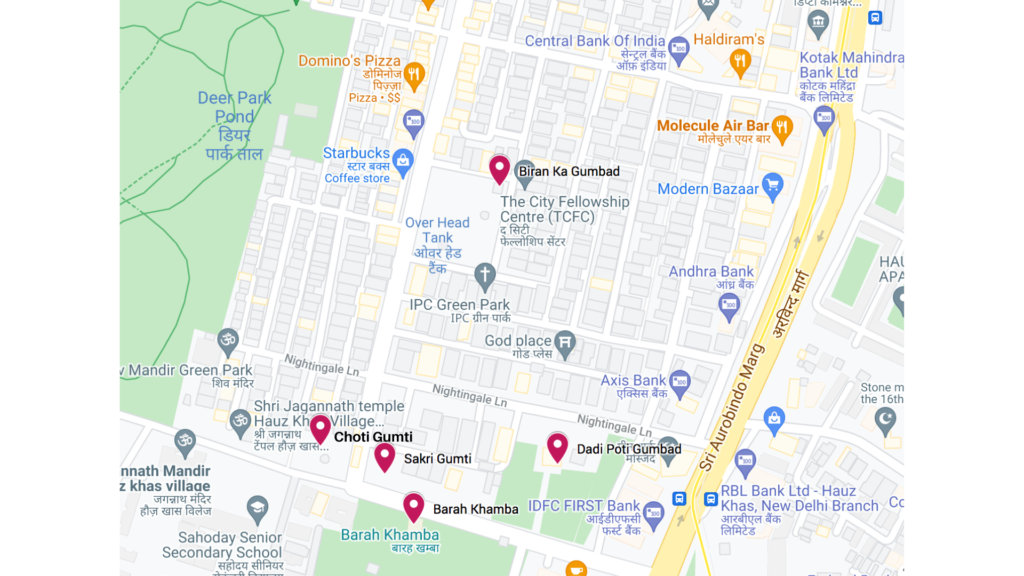
The Green Park tombs are located in a small, affluent neighbourhood of South Delhi called Green Park. They are very close to Deer Park and Hauz Khas Village.
The tombs are close to each other, and you can walk from one to the other.
How to Get There
The best way to reach the tombs in Green Park is by Delhi metro or Uber. I’ve done both. The nearest metro station is Green Park (Yellow line, exit Gate 4). The Delhi metro and Uber are both reliable.
If you take an Uber, get him to drop you off at the Barah Khamba tomb, and walk to the rest from there.
If you take the metro, you can easily walk from there, or take an auto rickshaw to Biran ka Gumbad tomb. That’s the closest one to Gate 4 of the Green Park metro station.
History of the Green Park Tombs
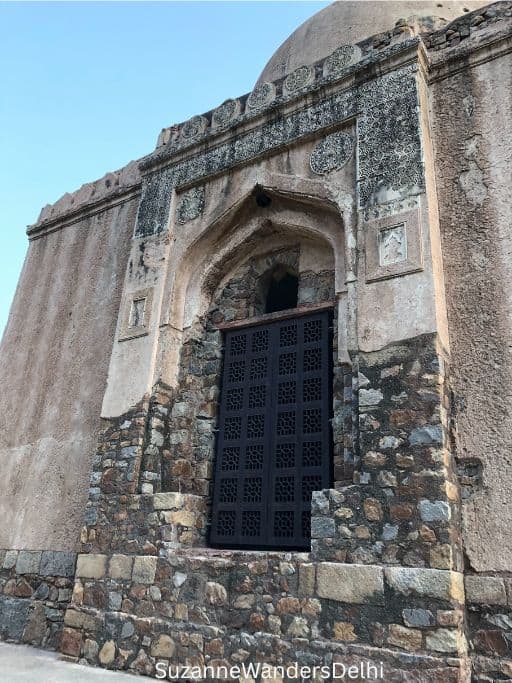
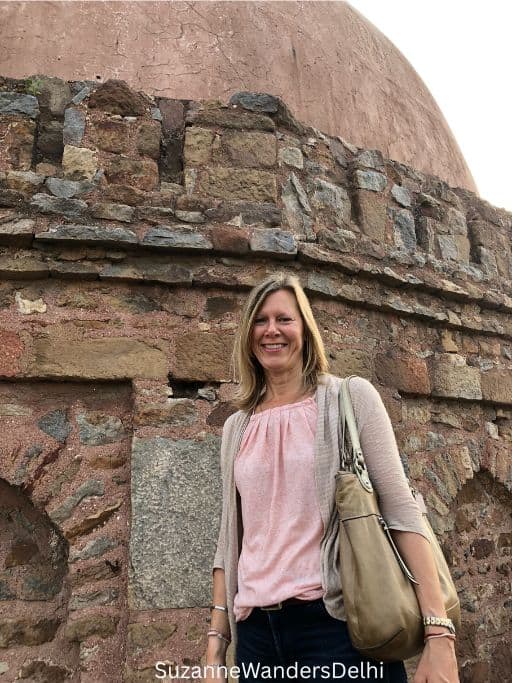
These tombs are from the 15th century, primarily from the Lodhi period, but the Poti tomb was built later in the Tughlaq era.
At that time, Delhi’s landscape was dotted with the domes (gumbads) of tombs as far as the eye could see, but over the years most have disappeared. There are several in neighbouring Deer Park as well.
Green Park was developed in the 1960s, and these tombs remained, making the area a bit like an unofficial necropolis.
Unlike many of Delhi’s forgotten historical sites, the tombs in Green Park are relatively free from encroachment and in good condition. Even so, they get very few visitors, mostly locals who come for the green space more than the historical significance.
Dadi Poti Gumbad
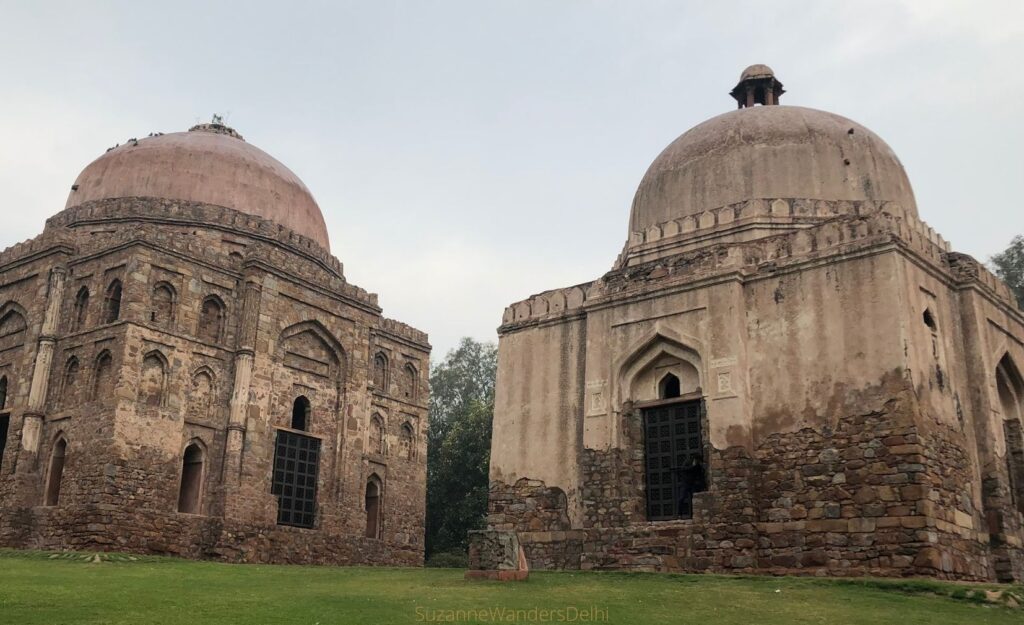
These are two separate tombs, but are commonly called Dadi Poti Gumbad as though they are one. They are the largest ones in Green Park and the only ones that have a security guard.
At night they become a neighbourhood landmark, when they are beautifully lit up with coloured lights.
Very little is known about the tombs other than the larger tomb, Dadi (grandmother) is from the Lodhi period and the smaller tomb, Poti (granddaughter) is from the Tughlaq period.
Because of their names it is commonly believed they belong to a grandmother and granddaughter, but this is unlikely. At the time it would have been highly unusual to dedicate tombs to women. A more likely theory is they are named this way because one tomb is larger than the other.
Choti Gumti
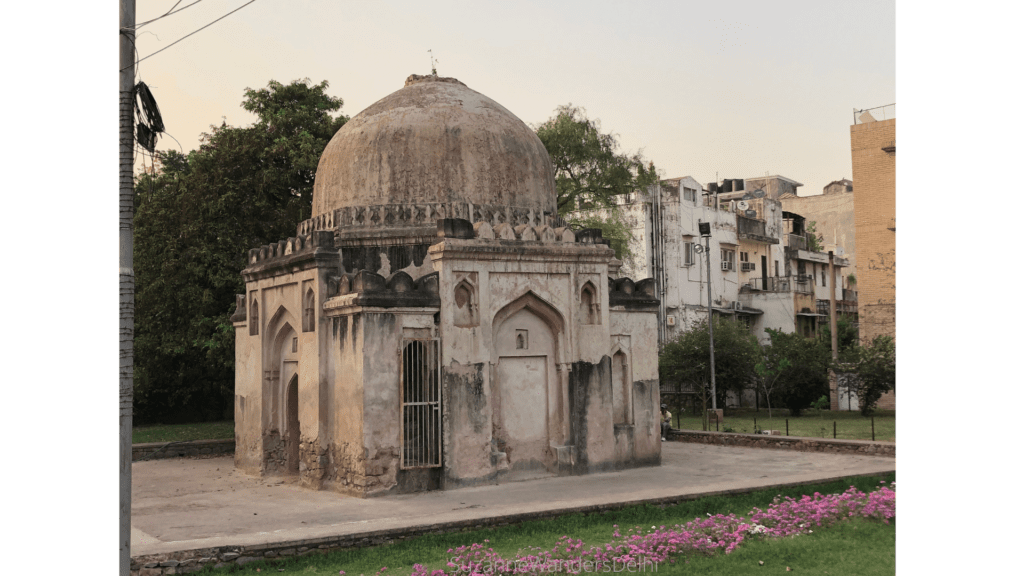
This tomb is one of three, each located on a different corner at the junction of Hauz Khas Fort Road and Block G Road in Green Park.
Its name means ‘small dome’ and it certainly does seem like a miniature compared to most other tombs in Delhi. It may have been part of a larger complex, but little is known of its origins other than it was built during the Lodhi period (1451 – 1526).
If the narrow gate is open you can access the roof from a small set of stairs, but they are a bit treacherous and there’s not much of a view from the top.
It’s a popular spot in the neighbourhood, and I always see locals here enjoying the grass and trees surrounding the tomb.
Sakri Gumti
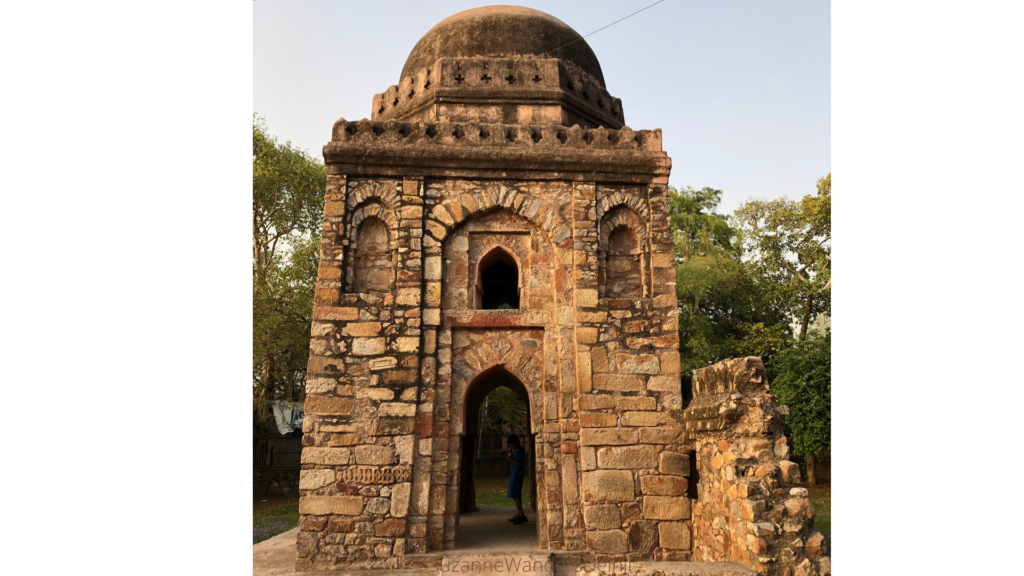
Technically Sakri Gumti is not a tomb because there is no grave, but it seems fitting to include it. Its name means ‘narrow dome’ and it is a very petite dome, even smaller than Choti Gumti.
Because of its open arches on all sides it may have been a gateway for a larger structure. There is evidence of a crumbling wall on one side of the gumti, but again almost nothing is known of its origins other than it was built during the Lodhi period.
Barah Khamba
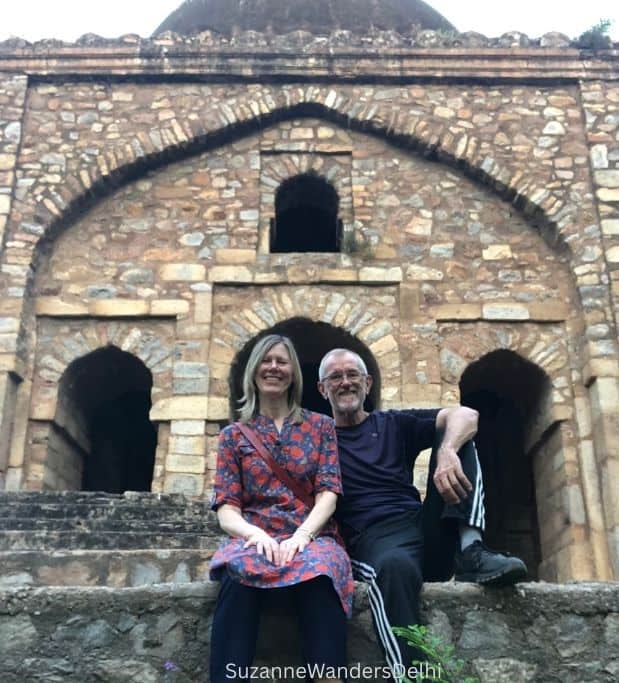
Across the street from the Sakri Gumti is the larger Barah Khamba, which means twelve pillars. The Barah Khamba gets even less visitors than the gumtis across the street.
This one is a bit hidden, set back and surrounded by more foliage, slightly up the road. There is one grave inside the tomb and others on the grounds.
The ruins of a bastion, well and alcoved square structure at the site indicate this was part of a larger complex, but again we may never know.
Biran Ka Gumbad
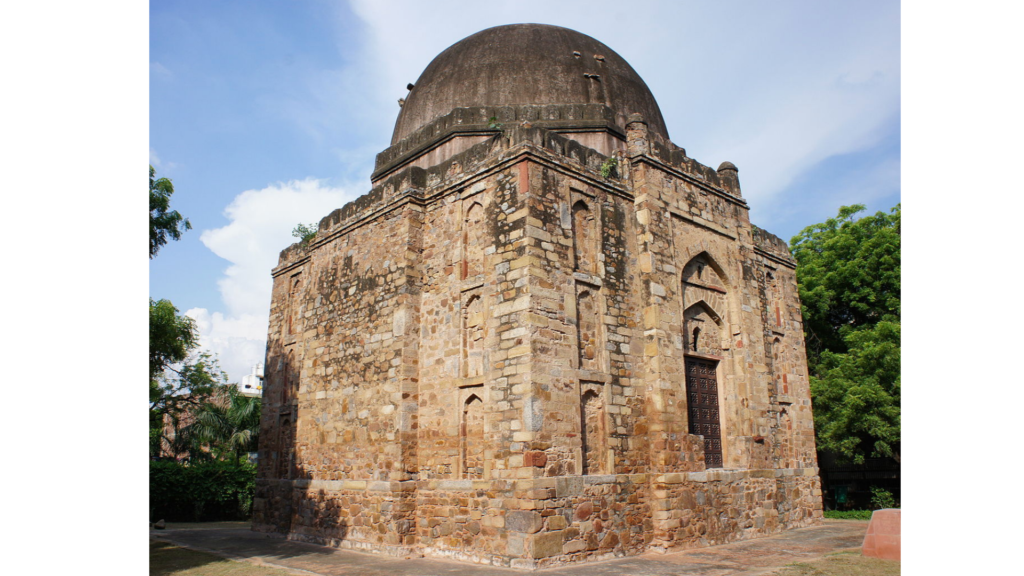
This is the last one I discovered and I came upon it entirely by chance while out walking. It is completely hidden and easy to miss. It’s a larger tomb, built in the Lodhi period but nothing more is known.
Its name means ‘the domed building of the brother’ and may be in reference to the Dadi Poti Gumbad (grandmother granddaughter). There is ruined grave in the tomb and the building features arched niches and a high ceilinged chamber, classical elements of that time period.
To find the tomb, take the side road that is opposite Starbucks in the Green Park market. It’s Block F. Walk down that road and watch for the gumbad on your right. It is accessible down a narrow lane.
What Else to See Near the Tombs of Green Park
This is a really nice area of Delhi to explore. From Green Park you can walk to or take an auto rickshaw to these sites.
- Green Park Market: Good local market with restaurants and shops (Evergreen Sweet House, Veg Gulati and A2B are good).
- Jagannath Mandir: South Indian temple dedicated to Lord Krishna, very pretty.
- Hauz Khas Fort & Hauz Khas Village: Trendy urban village with historic complex dating back to the 1350s.
- Deer Park: One of the largest green spaces in Delhi and home to several historic tombs.
- Shahpur Jat: Urban village famous for fashion and cafes – has ruins from the second medieval city of Delhi, Siri.
Where to Stay Near Green Park
Green Park is in South Delhi, an excellent area to stay in. Before I rented an apartment in Delhi, I used to rent Airbnbs in Green Park. I highly recommend:
- Hyatt Regency (luxury): The closest 5 star hotel to Green Park that I recommend. Great location for exploring the city.
- Lutyens Bungalow (mid-range): Heritage boutique property next to Lodhi Garden. Fantastic location near many sites. Breakfast is included.
- Prakash Kutir Bed & Breakfast (budget): Excellent family run guest house near Green Park. Home-cooked breakfast is included.
Last Words on Tombs of Green Park: Necropolis at Delhi’s Doorstep
For me, the tombs of Green Park are a reminder of why I love Delhi – centuries of history tucked into everyday neighbourhoods, waiting to be noticed. In Delhi, if you wander with open eyes, the city always reveals another layer.