Chandni Chowk: How to Explore Delhi’s Most Famous Street

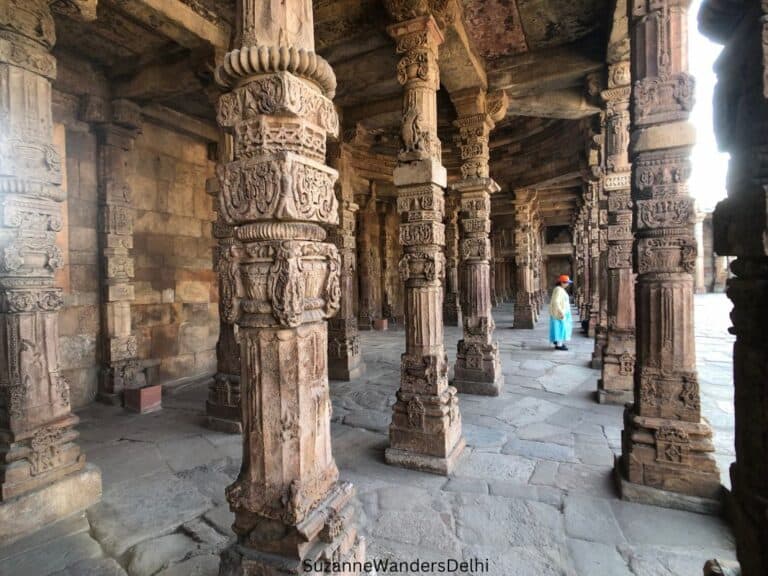
The historical and cultural importance of Chandni Chowk in Old Delhi cannot be overestimated. It is a microcosm of everything that is Delhi: centuries of history, religious diversity, cultural and social traditions, and rich cuisine.
Chandni Chowk is only 1.8 km long, but it packs an unbelievable number of important historical sites. This area was first settled in the 1650s and in many ways is unchanged.
Chandni Chowk: How to Explore Delhi’s Most Famous Street
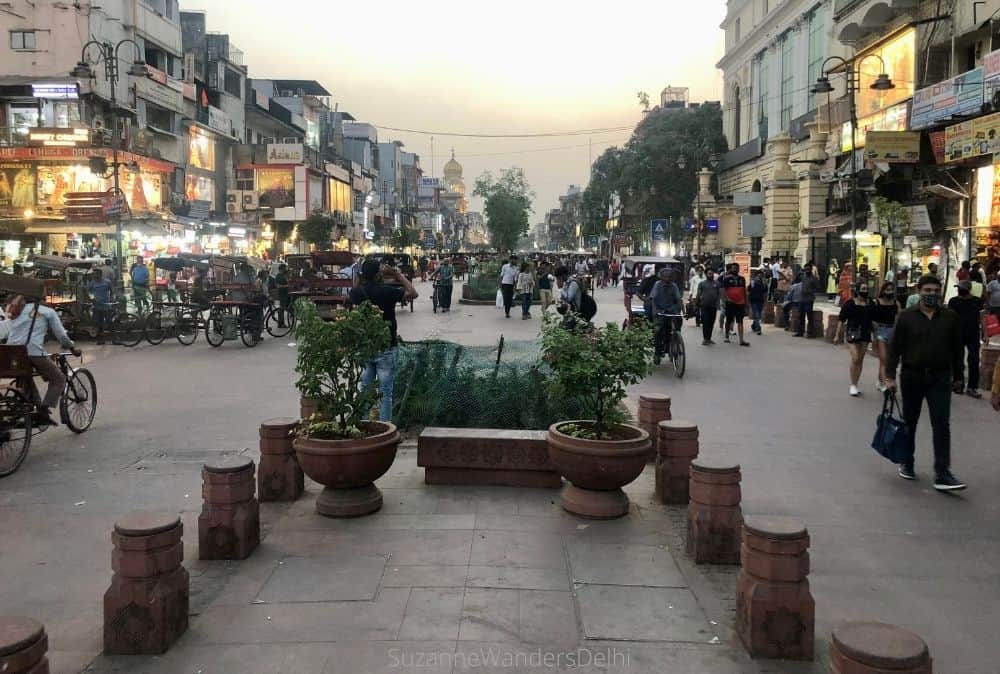
Chandni Chowk starts at the Red Fort (UNESCO) and ends at Khari Baoli, the Old Delhi spice market, passing famous temples, traditional havelis and historic markets along the way.
The best way to see everything is to start at the Red Fort and walk up the south side of the street, to the spice market, and then back again down the north side.
Hours: 24/7, but don’t go after 9:00 pm
Cost: Free
Location: Chandni Chowk Road, Chandni Chowk, Delhi
Nearest metro station: Chandni Chowk (Yellow line), exit Gate 5
Where is Chandni Chowk?
Chandni Chowk Road is in Old Delhi. It runs east-west from the Red Fort to Fatehpuri Masjid, where the spice market begins. It is north of Connaught Place and central Delhi, not far from the Yamuna River.
How to Get to Chandni Chowk
The best way to get to Chandni Chowk is by Delhi metro. This is a very congested part of Delhi and traffic is always bumper to bumper. Some Ubers won’t even come here because the traffic is so bad.
It’s possible to take an auto rickshaw, but chances are you’ll end up sitting in traffic with nothing between you and all that pollution and noise.
Trust me on this, the metro is the best way. Take it to either Lal Quila station (Violet Line) or Chandni Chowk station (Yellow line). Personally I prefer the Chandni Chowk station because the area by the exit is not as crazy as the Lal Quila station.
Delhi’s metro is surprisingly fantastic. Don’t hesitate to use it.
Here’s everything you might want to know about taking the Delhi metro. But you don’t really need a guide. It’s very user friendly.
Good to Know Before You Go
Here’s a few tips that are good to know before visiting Chandni Chowk:
- Chandni Chowk is not only the name of the road, it the name of the area and market. When locals refer to Chandni Chowk, they are often speaking of the area in general.
- No motorized traffic is allowed between 9:00 am and 9:00 pm each day. Bicycle rickshaws are allowed. This change happened during Covid, and it is much easier and less hazardous to explore on foot now.
- Toilets are limited. Most of the eateries and shops are small and don’t have facilities. Good places to use the bathroom are Omaxe Mall and Haldiram’s restaurant. Metro stations also have bathrooms.
- Omaxe Mall is a good place to cool off and decompress. There’s AC, toilets, and it’s very calm inside. Gorgeous architecture too.
- Look up on Chandni Chowk. Many of the buildings on Chandni Chowk are converted havelis, but you have to look to the second or third stories to notice the architectural details.
History of Chandni Chowk
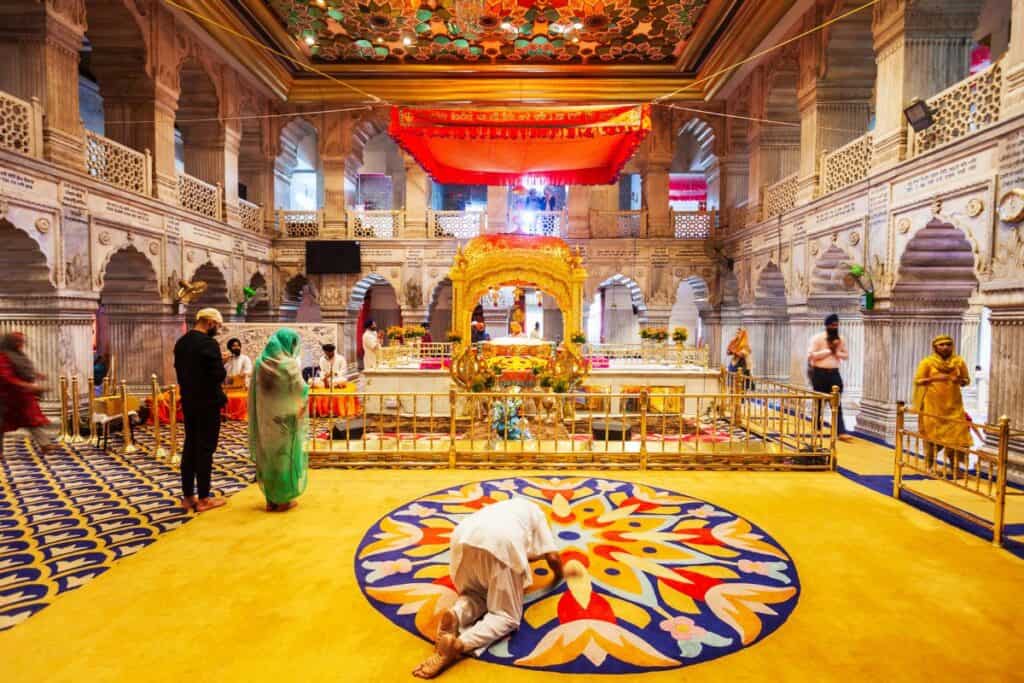
Chandni Chowk was first settled in the 1650s by Mughal ruler Shah Jahan (the same ruler who built the Taj Mahal). It was the centre of Delhi’s new capital, Shahjahanabad.
It was designed by Jahanara Begum, the daughter of Shah Jahan and named Chandni Chowk, which means ‘Moonlit Square,’ because of the central canal running through the centre which reflected the moonlight.
The area was the centre of the 7th historic city of Delhi, and a main commercial road that linked the Red Fort and Fatehpuri Masjid.
Although Chandni Chowk is much more built up and congested than it was in the 17th century, the layout is essentially the same. Many of the temples, stone gateways and specialty markets are as they were.
If you’re more comfortable taking a guided walking tour, this Old Delhi Walking Tour is very highly rated and includes Chandni Chowk and the spice market.
What to See and Do on Chandni Chowk
Chandni Chowk Road is full of sites, practically from end to the other, but there’s even more behind the main road.
On both sides of Chandni Chowk Road are a warren of narrow laneways revealing street food vendors, chai carts, small temples, shops and 18th century havelis. It’s worth exploring one or two of these side lanes. I’ve recommended a couple below.
I suggest starting at the Red Fort end of Chandni Chowk Road and working your way up to Khari Baoli, the spice market at the other end. Then you can walk back down and take the metro from the Chandni Chowk station.
1. The Red Fort (UNESCO)
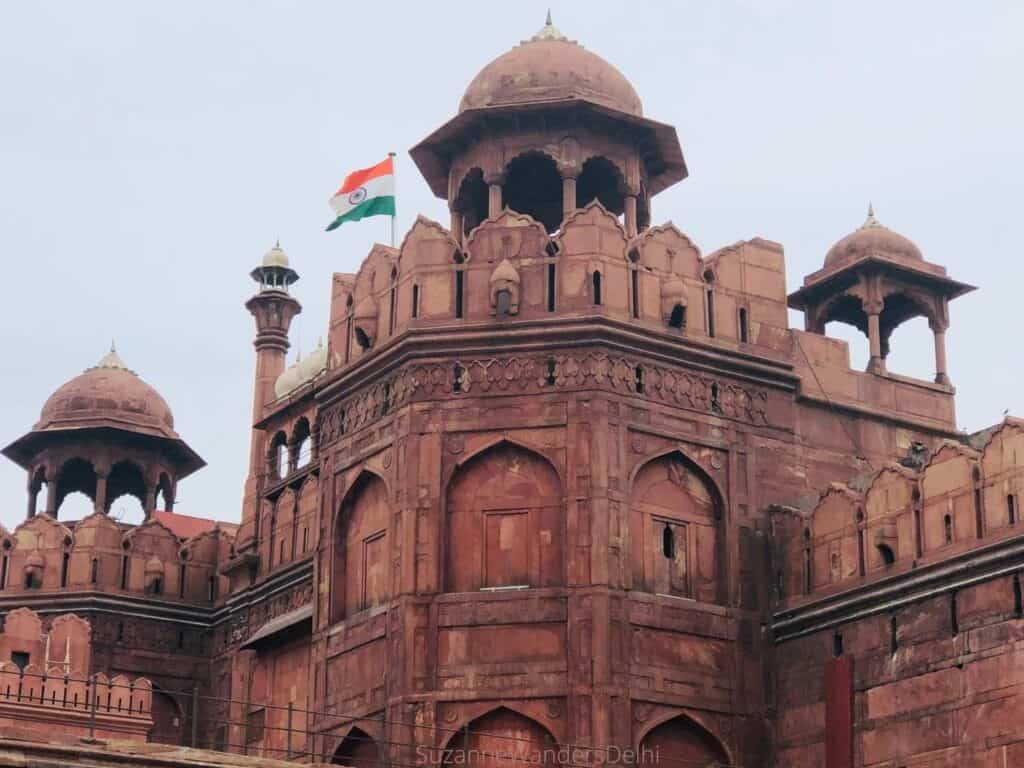
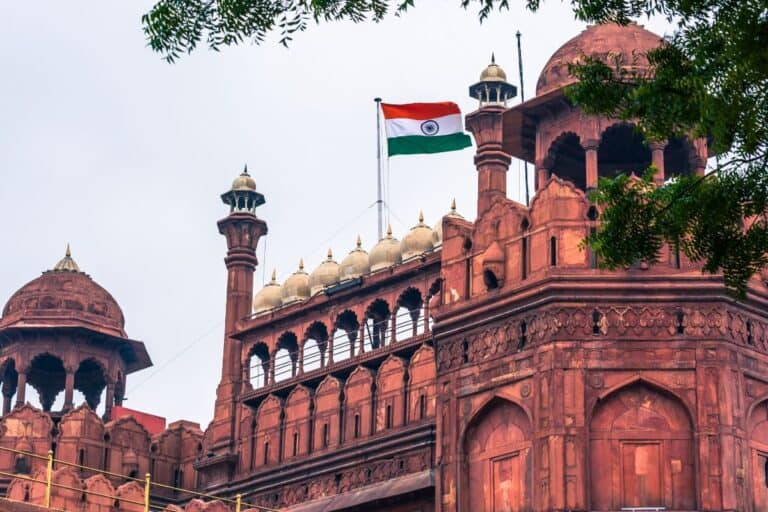
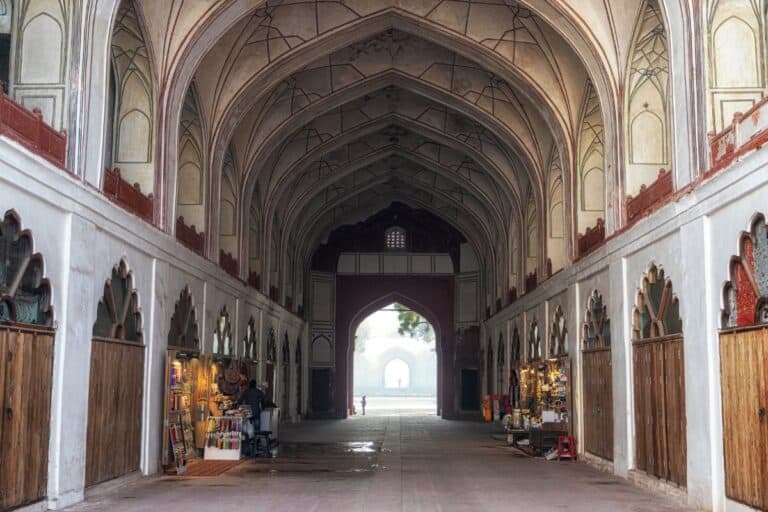
The Red Fort is the royal palace built by Mughal ruler Shah Jahan in 1639. It was the royal residence of all Indian emperors until Delhi was captured by the British in 1857.
Although some of the most beautiful parts of the palace were razed to make way for British barracks, the spectacular covered bazaar, inner and outer audience halls and royal bathhouse are still intact.
This is the number one attraction in Delhi, so go early. It opens at 8:00 am. To save time at the entrance, purchase your tickets online at the Archeological Survey of India website.
2. Sri Digambar Jain Lal Mandir
This is the oldest Jain temple in Delhi, built in 1656. At that time there was a large Jain community living in the area on land donated by Shah Jahan. When Jain army officers begun to pray in a tent, Shah Jahan granted permission for the construction of this temple.
There is a charity bird hospital on site that you can also visit, but it’s a bit dirty and you will have bare feet.
Shoes and any leather items must be removed before entering the temple (Jains are strict vegetarians). Photography is not permitted inside the temple.
3. Shri Gauri Shankar Temple
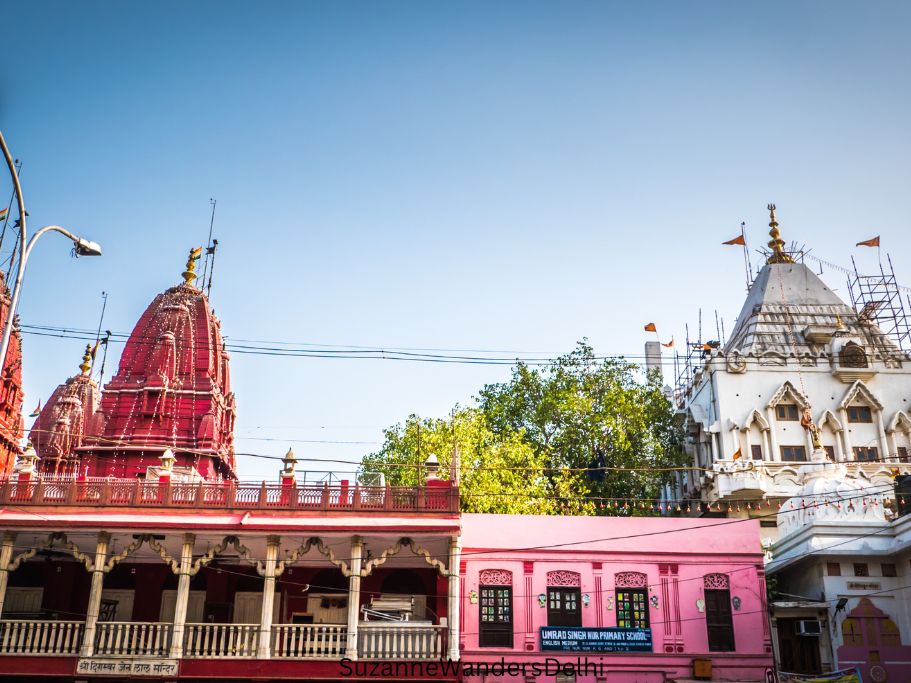
Next door to the Jain Temple is this important Hindu temple dedicated to Lord Shiva. The temple itself was built in the 18th century, but the origins go back 800 years, when this part of Delhi was forest.
This temple often gets ignored, overshadowed by the red spires of Shri Digambar Jain Lal Mandir and nearby Gurudwara Sis Ganj Sahib. Even I walked by it for years before venturing inside. It turned out to have a very interesting history.
The story is that 800 years ago there was a princess who killed herself after being raped on the banks of the Yamuna River. Her father planted a peepal tree and placed a Shiva idol at the site.
Centuries later, a Maratha solider kept having a recurring dream about the princess begging him to build the temple. After he survived a terrible battle, he built this temple.
4. Gurudwara Sis Ganj Sahib
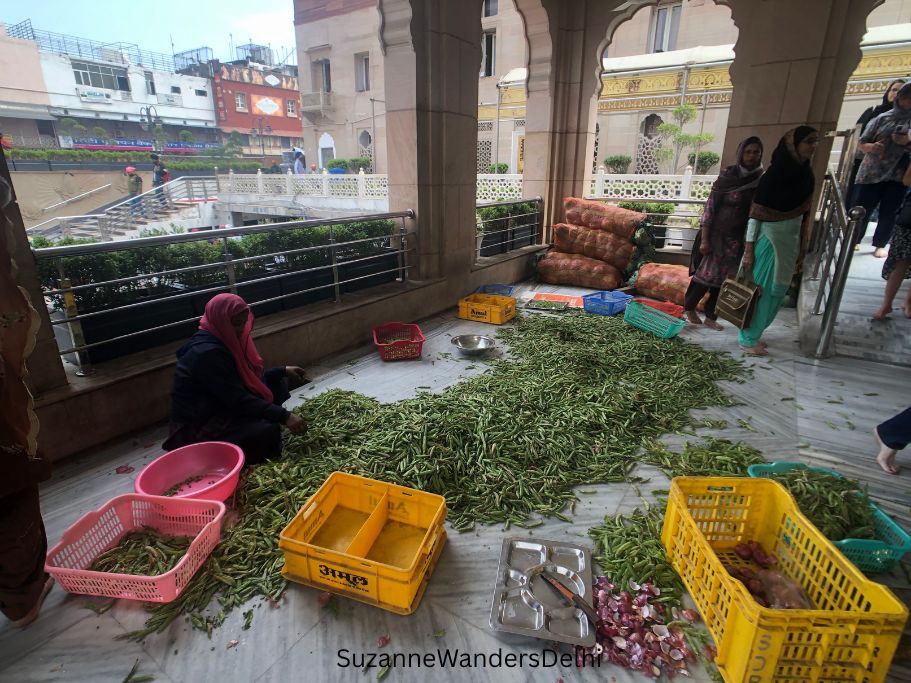
Gurudwara Sis Ganj Sahib is a Sikh temple built on the exact spot where the ninth Sikh Guru was beheaded in 1675 by Mughal ruler Aurangzeb. The gurudwara takes its name from the Punjabi word for head, ‘sis.’
Legend says that after the Guru was executed, an unusual storm completely blackened the Delhi skies, temporarily blinding people. This enabled one of the Guru’s disciples to steal the body before it could be quartered and exposed to public view.
To avoid the attention a cremation would cause, the disciple burnt his own house down with the Guru’s body inside to properly cremate it.
Everyone is welcome in the gurudwara. I like to sit and listen to the live kirtan (sacred hymns) before joining the free community meal called langar. Having langar is a culturally rich experience, and everyone is welcome.
5. Omaxe Chowk
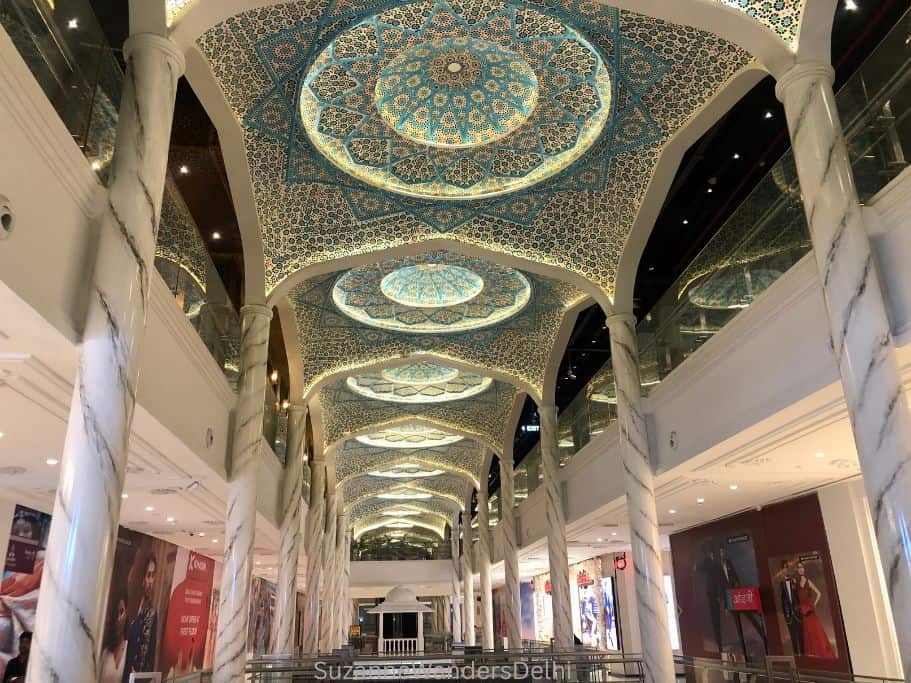
Omaxe Chowk is an opulent mall that opened in 2024. While the mall itself is anything but historic, it’s a gorgeous show piece of Indian heritage.
The mall created a lot of controversy, many fearing that it would take away from the historic essence of the old city. But now that the mall is built, I don’t think that’s the case at all. It offers a nice break from the general mayhem that is Chandni Chowk.
Shops and food offerings are predominantly upper scale Indian brands, including established Chandni Chowk institutions.
6. Paranthe Wali Gali
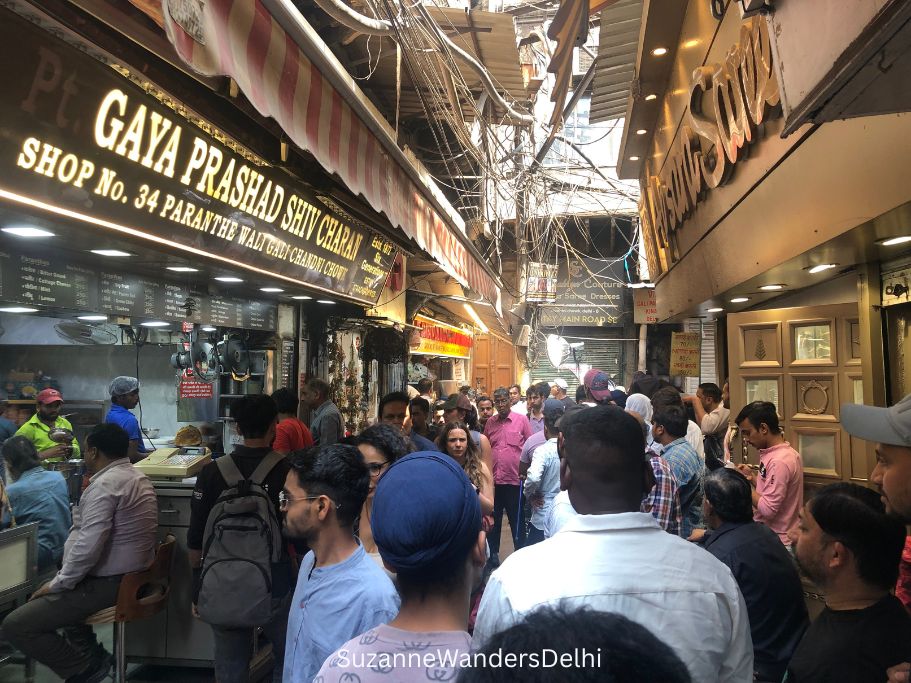
This is a famous lane right off Chandni Chowk that has many parantha shops. Paranthas are traditional flat breads and the shops here offer them in every variety you can imagine.
The only thing I don’t like about the paranthas here is they are fried in oil, as opposed to the more traditional method of cooking on a dry tava. But that doesn’t seem to bother anyone, because these shops are always packed.
7. Kanwarji Raj Kumar Bhatura Junction
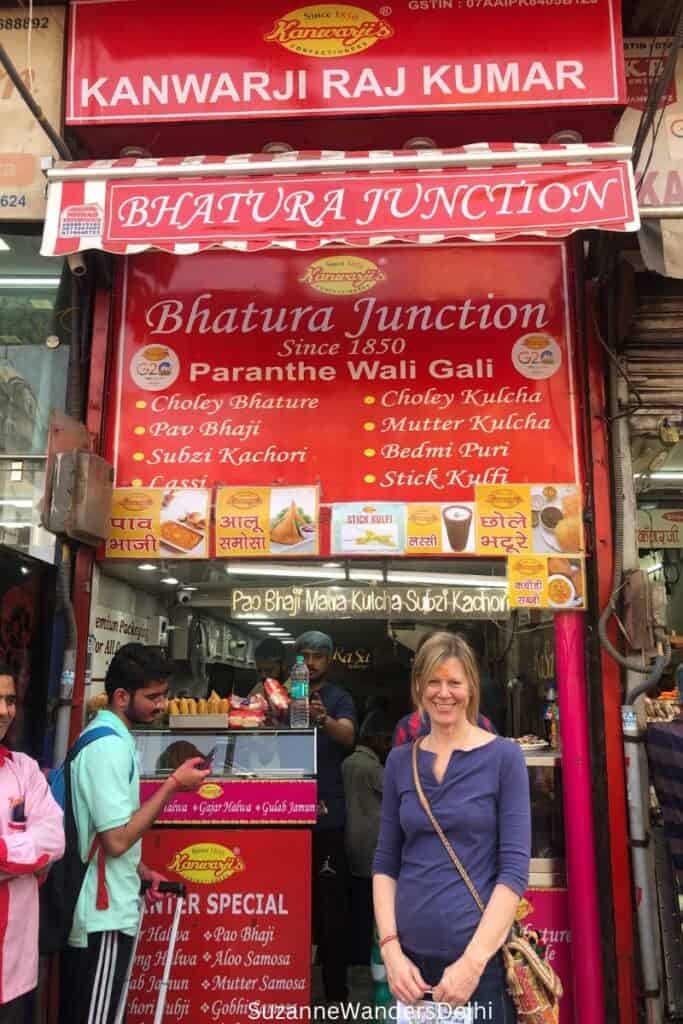
Right on the corner of Paranthe Wali Gali is one of the best places for chole bhature in the whole city, Bhatura Junction. I always stop here when I’m on Chandni Chowk, it’s one of my favourite places to eat.
There’s no indoor seating, you have to eat standing up or grab one of the benches in front. Pay for your food around the corner at the sweet shop booth, and give your receipt to the guy cooking the chole bhature.
This is a true Delhi experience. The food is very fresh – I’ve never had any issues eating here.
Here’s my best tips on eating street food safely in Delhi.
8. Kinari Bazaar
Also known as the wedding market, it is one of the oldest and most famous bazaars in Old Delhi. During Mughal times the ladies from the Red Fort would come here to find lace and trim for their sarees and dupattas.
The bazaar is very close to Paranthe Wali Gali. It’s a busy area of narrow lanes and gets crowded, but the selection of lace, trim, buttons and latkan (traditional hanging embellishments) is massive.
If you keep walking down Kinari Bazaar Road you’ll end up in Dariba Kalan, the silver market.
9. Town Hall
Town Hall was built in 1863 and used by the municipality of Delhi until 2009. The statue out front used to be Queen Victoria, but after India’s independence it was changed.
I’ve never been inside (I’m not even sure if you can get inside), but if you notice the colonial looking yellow building across the street from Paranthe Wali Gali, that’s it!
10. Naughara Gali
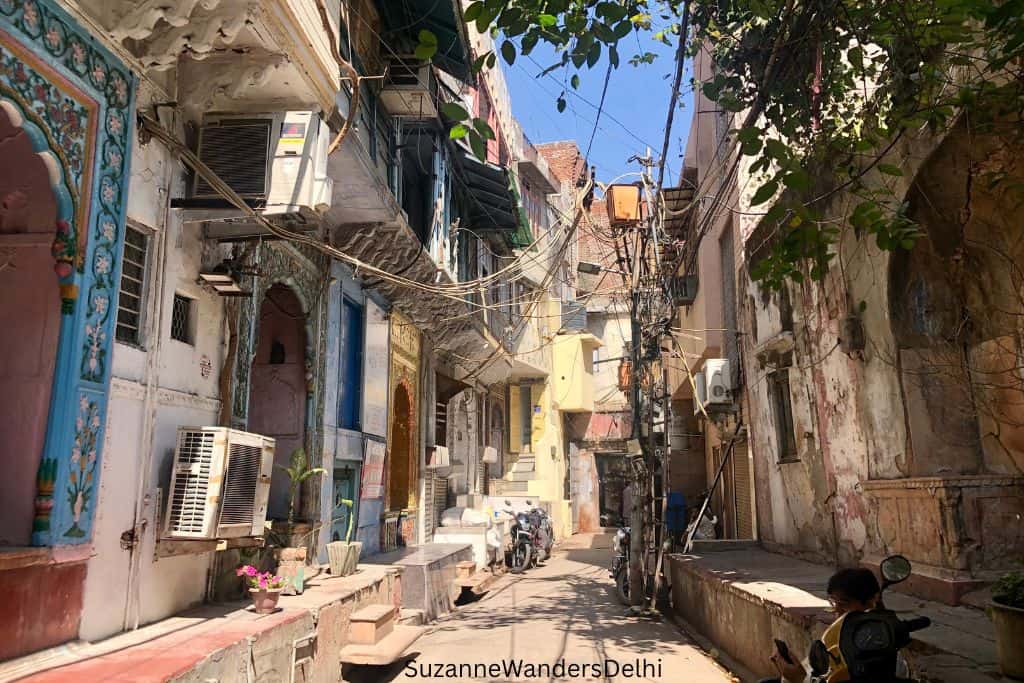
Naughara Gali is a lane with 9 historic havelis from the 1700s. Several of these havelis are jewellery shops. The alley is still predominantly owned by Jain families, and at the end of the lane is a very historic Jain temple.
The havelis are subject to heritage restrictions and must maintain the exterior in the original style, but a property owner told me the interiors are completely updated.
The doorways and elevations are typical Mughal design, with latticed balconies and arched doorways carved with flowers and vines.
11. Fatehpuri Masjid
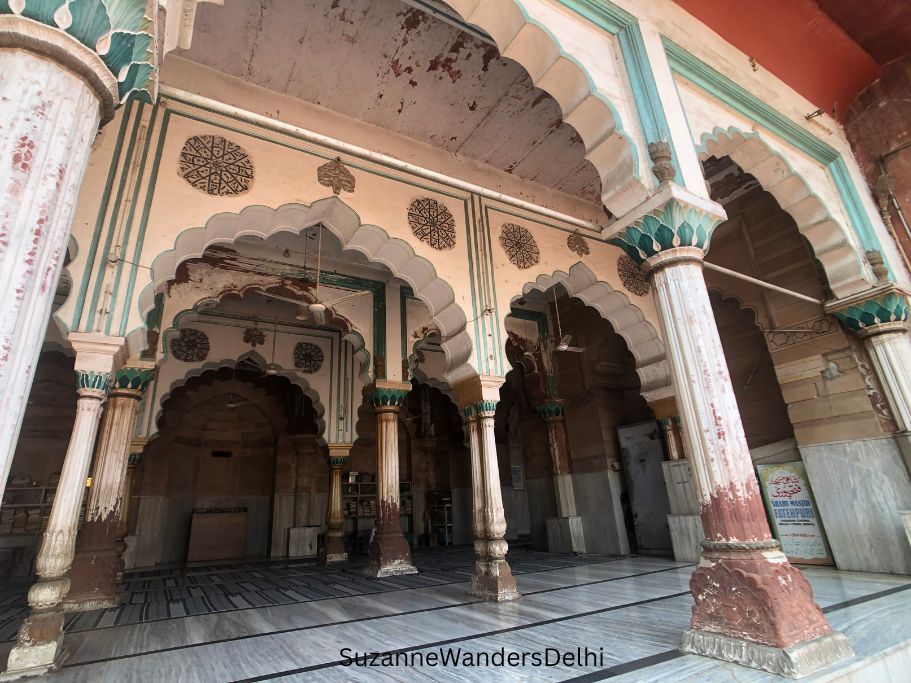
Fatehpuri Masjid is at the far end of Chandni Chowk. It is a large mosque built in 1650 for Fatehpuri Begum, one of Shah Jahan’s wives. There are several graves in the courtyard belonging to scholars and past Imams.
The mosque was probably very beautiful at one point, but was occupied and looted during the 1857 Rebellion. Some soldiers even carved their names into the red sandstone arches.
This is a working mosque, so shoes must be removed, and women must cover their heads.
12. Khari Baoli
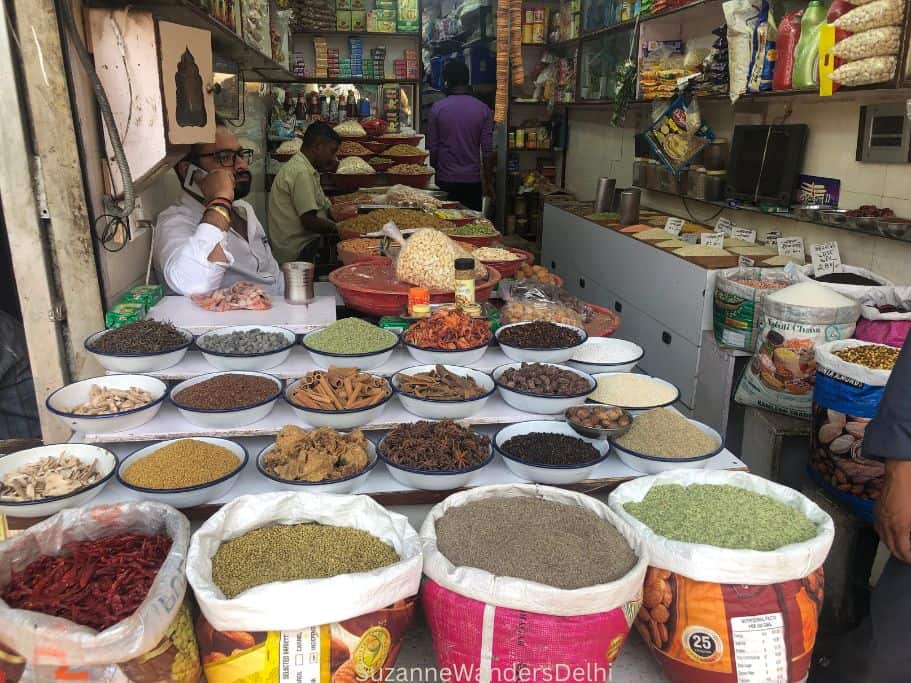
The famous Old Delhi spice market starts just around the corner from Fatehpuri Masjid. Khari Baoli has been here for many years, some of these shops have been in the same family for 10 generations.
This is a good place to pick up fresh spices, dried fruit, nuts and loose tea. For better prices head deeper into the market. While I buy most of my spices at INA Market, I do like the kopra (dried whole coconut) and dates from here.
Here’s a detailed guide to Khari Baoli and how to get on the famous rooftop.
13. Giani’s di Hatti
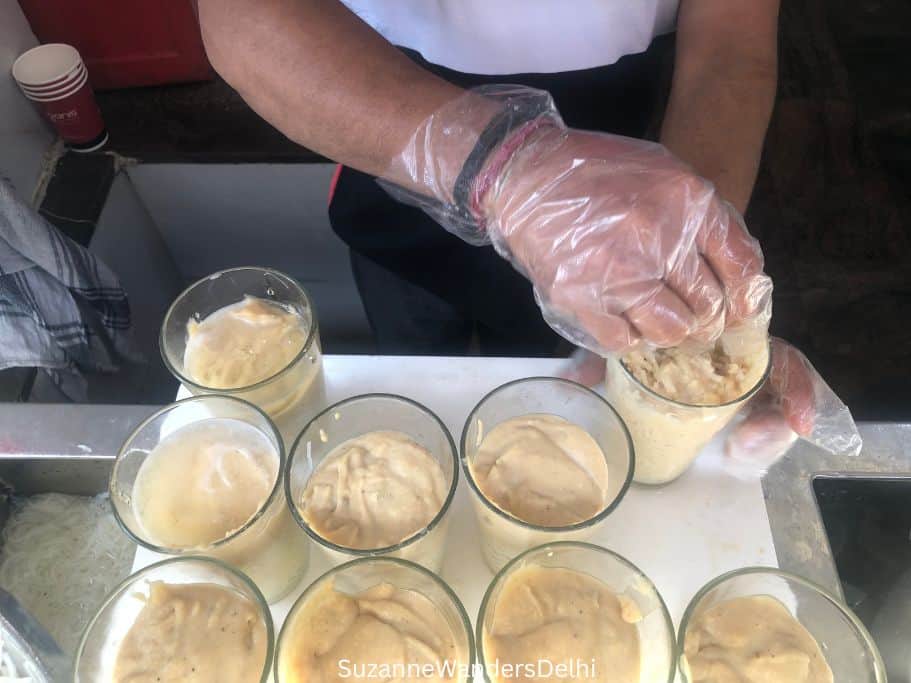
Giani’s is one of the most famous sweet shops in Delhi, and the Chandni Chowk location is iconic. It’s especially famous for one of Delhi’s best loved dessert – rabri faluda (layers of sweet vermicelli, rabri and nuts). There’s a small seating area inside.
14. Katra Neel Road
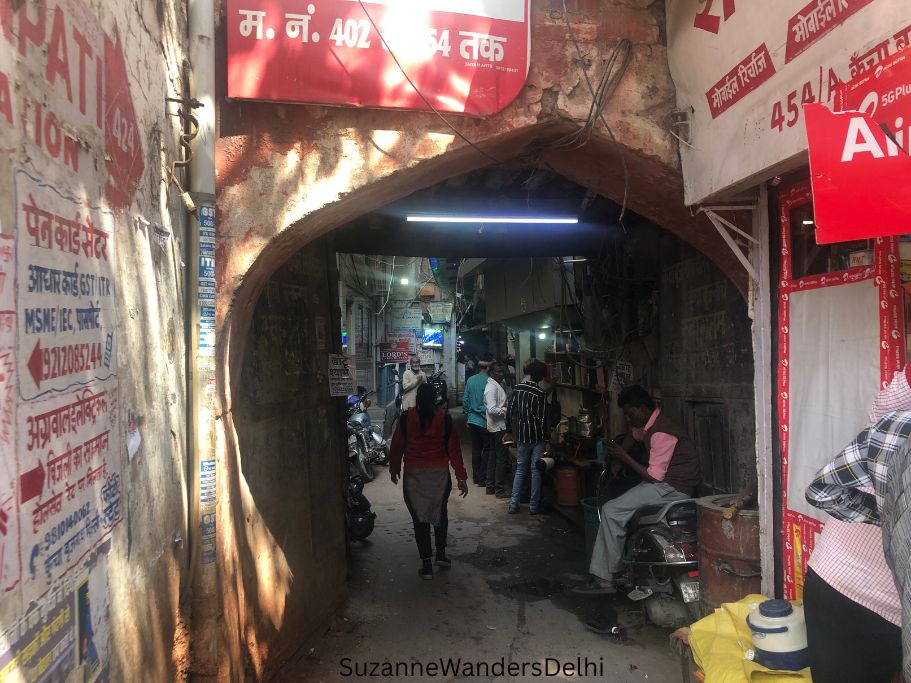
Katra Neel market is a historic market, established in the 1650s. Today it is known for fabrics and Indian wedding clothing, but during the revolts in 1857 this is where the rebels lived, and many of them were hanged here.
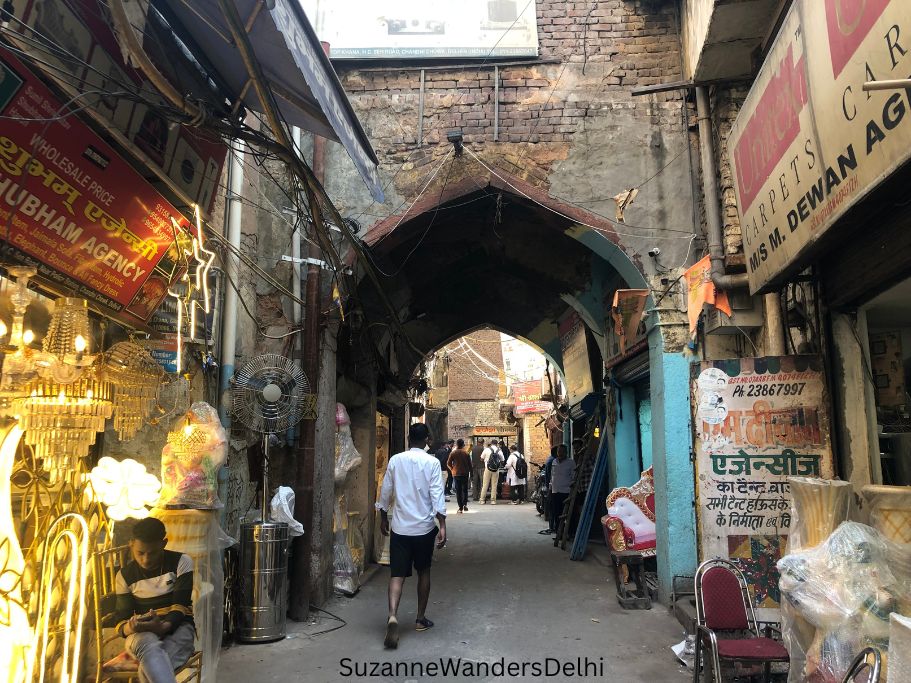
The market has an old Mughal gateway (now partially collapsed) and several traditional havelis. Many of the old haveli courtyards have a Shivalay (shrine to Lord Shiva); Katra Neel is known for them.
Where to Eat on Chandni Chowk
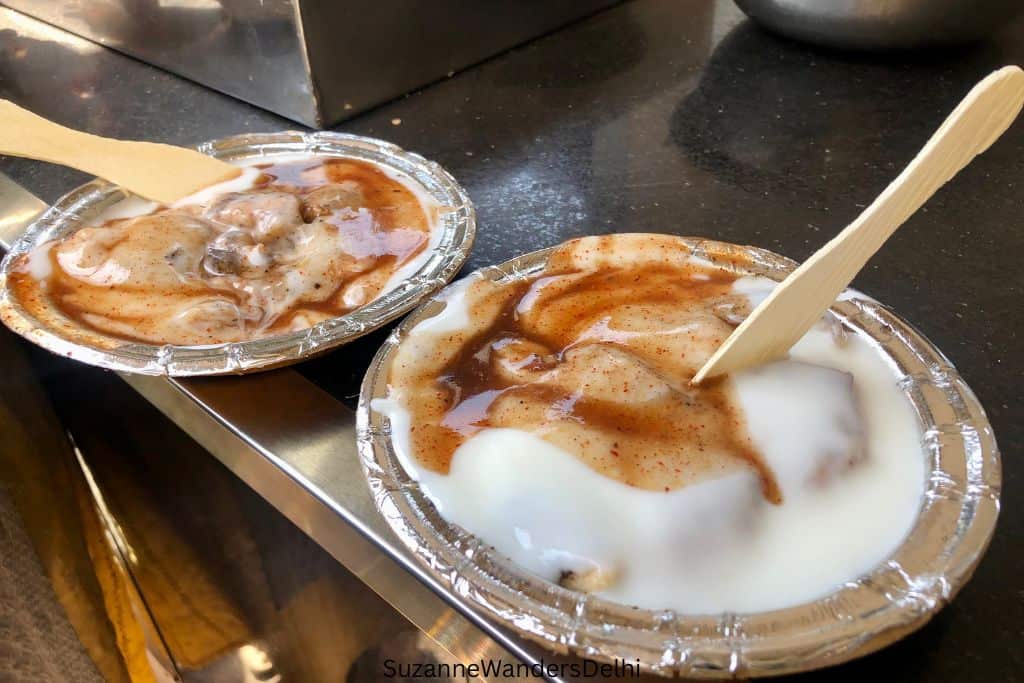
There’s quite a few choices, but they’re all pretty basic and casual. These are my favourite spots to eat on Chandni Chowk:
- Natraj Dahi Bhalla: Food stand with good dahi bhalla (famous street snack). There’s a restaurant on top, but I’ve eaten there and wasn’t that impressed. Better stick to the snack they’re famous for.
- Kanwarji Raj Kumar Bhatura Junction: Excellent chole bhature from this street food stand.
- Kake di Hatti: Simple vegetarian restaurant famous for their giant naan. Jamie Oliver even ate here. If it’s winter, order sarson ka saag – they make one of the best in Delhi.
- Haldiram’s: India’s favourite street food franchise has a location right on Chandni Chowk. Haldiram’s is known for high hygiene standards and quality ingredients. Even locals that won’t eat street food eat at Haldiram’s.
What Else is Nearby
These are other sites located in Old Delhi close to Chandni Chowk:
- Jama Masjid: Impressive royal mosque built in the 1650s. One of the top sites of Delhi. Within walking distance of Chandni Chowk.
- Chawri Bazaar: Very old and chaotic market famous for street food. You can walk there through the back lanes of Chandni Chowk.
- Haveli of Mizra Ghalib: Former home of Delhi’s most beloved poet. Walkable through the back lanes.
- Kathika Cultural Centre: Small cultural centre housed in restored haveli. About 25 minute walk from Chandni Chowk, closer to the Chawri Bazaar metro station.
Where to Go Instead of Chandni Chowk
There is no replacement for Chandni Chowk, but a good alternate that isn’t in Old Delhi is Nizamuddin Basti.
Nizamuddin Basti is even older than Old Delhi, and has some remarkable and important historic sites, including Hazrat Nizamuddin Dargah. This is a fascinating area which is often overlooked by visitors.
A good way to see and learn about the area is on a walking tour of Nizamuddin Basti with the Hope Project. It’s only INR 500 ($5.50 USD) and goes to a very good cause.
Where to Stay in Delhi
I do not recommend staying in Old Delhi or near Chandni Chowk. These are fine for visiting during the day, but they are very congested and not the safest at night.
It’s much better to stay in South Delhi or Central Delhi, up to Connaught Place (not north of). These areas are safer, greener and convenient for exploring the city from. I highly recommend these places to stay:
- The Imperial (luxury): Delhi’s finest heritage hotel and my personal favourite. Superb location, within walking distance of numerous shops, restaurants and attractions.
- Lutyens Bungalow (mid-range): Heritage boutique property in one of the best areas of the city next to Lodhi Garden. Fantastic area near many sites. Breakfast is included.
- Prakash Kutir Bed & Breakfast (budget): Family run guest house in a very good area of South Delhi, near the metro and easy to visit all the sites. Home-cooked breakfast is included.
Last Words on Chandni Chowk: How to Explore Delhi’s Most Famous Street
Chandni Chowk is a living part of Delhi’s history, but it does take a little effort to explore. You have to be prepared to look past the crowds, noise and rubbish. If you can do that, you’ll find hundreds of years of religion, culture, food and everyday life.