How to Buy Train Tickets in Delhi (2026)

Are you confused about buying train tickets in Delhi? You are not alone! Navigating the Indian rail system can be challenging, even for seasoned travellers.
I’m going to explain about the different trains, classes of tickets and exactly how to buy train tickets in Delhi and avoid common scams.
How do I know all of this? I lived in Delhi for years and have taken many trains around India. In fact, the train is one of my favourite ways to travel in India.
How to Buy Train Tickets in Delhi
Popular routes, like Delhi to Agra, can be fully booked weeks in advance. Book your train tickets as soon as possible. At the moment, you can book train tickets 60 days in advance.
Booking Delhi Train Tickets Online
This is usually the easiest way to get train tickets. The government site IRCTC has the biggest selection and there’s no service fee, but foreigners have to register first for a small fee (about $1.20 USD).
IRCTC (Indian Railways Catering & Tourism Corporation): Like any Indian government website, registering, using and paying on this platform can be super frustrating, but this is the official government website and it shows all trains and all classes of tickets. There’s no service fee.
The system is down every day between 11:30 pm and 1:30 am IST.
MakeMy Trip: I often use this platform to book domestic flights, but they sell train tickets too. It doesn’t always work from abroad, but give it a try or use a VPN and select an Indian server. There’s a small service fee.
12Go Asia: The easiest way to book online if you are abroad (and even if you’re in India). They charge a fee, but it’s probably worth the time and aggravation you’ll save. The only con is that not all train routes are available, just the popular ones.
For some reason, the online payment systems don’t always work during non-business hours in India. You’ll get an aggravating error message. If that happens try again during business hours. This is also true for online visa applications (I found that after a lot of frustration).
Like all online systems in India, if it doesn’t work right away, step away and try again later. For unexplainable reasons this often does the trick.
Booking Delhi Train Tickets in Person
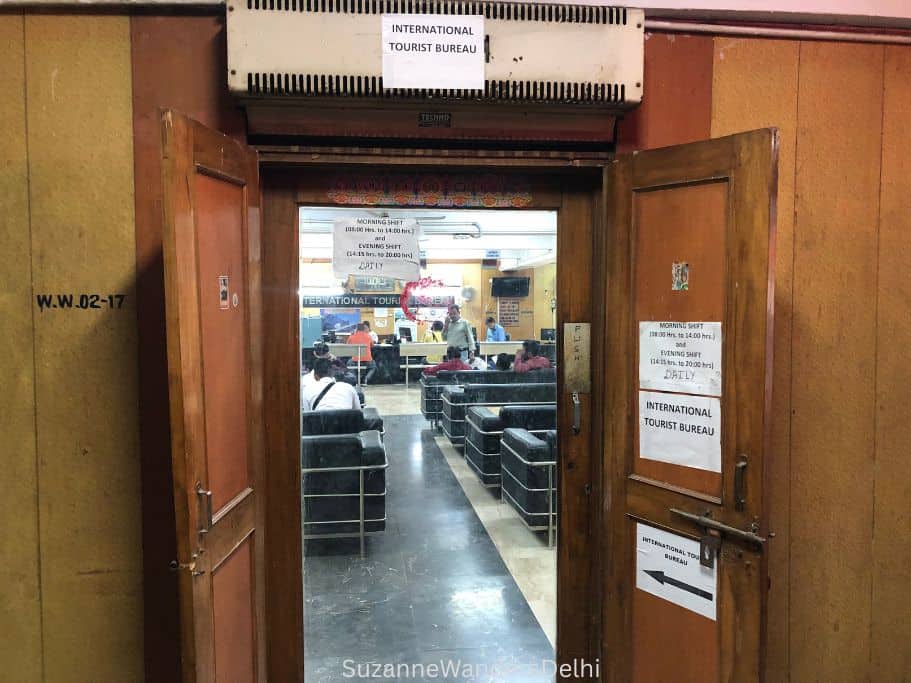
The New Delhi Railway Station has a special ticket office for foreign visitors called the International Tourist Bureau.
This ticket office is on the first floor of the New Delhi Railway Station. Enter the station on the Paharganj side. It’s open 8:00 am – 8:00 pm daily.
❗You’ll need your passport to make train bookings at the International Tourist Bureau.
You can also buy train tickets at the general counter in one of the Delhi railway stations, but you may not get a reserved seat (more on that later), and it’s a lot more chaotic than the International Tourist Bureau.
Which Delhi Railway Station Do You Need?
Delhi has 4 main train stations, but almost all popular tourist routes depart from New Delhi Railway Station (NDLS) or Hazrat Nizamuddin Railway Station (NZM). It’s really important to confirm which station your train is departing from.
Many Delhi to Agra trains leave from Hazrat Nizamuddin Railway Station, for example. But the Vande Bharat to Jaipur leaves from Delhi Cantonment Railway Station.
Trains and Ticket Classes

The Indian rail system is vast, with many categories of trains and classes of tickets. Knowing which train and ticket class to book is crucial.
Types of Trains in India
Vande Bharat Express
These are India’s most modern, high speed trains. They are the pride of India Railways with new additions to the fleet formally inaugurated by the Prime Minister himself.
These are very comfortable day trains with Executive Class (EC – this is the best class) and Chair Class (CC). A hot meal is served.
If you’re planning to see the Taj Mahal, the Vande Bharat Express 20172 is one of the best Delhi to Agra trains, especially if you want to stay overnight in Agra. It departs Hazrat Nizamuddin station in Delhi at 2:20 pm and arrives in Agra at 4:20 pm.
A new Vande Bharat Sleeper is to be rolled out for routes between Delhi and Pune (150 km SE of Mumbai) and Delhi to Srinagar in Kashmir. This will be an excellent train to take on these routes once they are operational.
Rajdhani Express
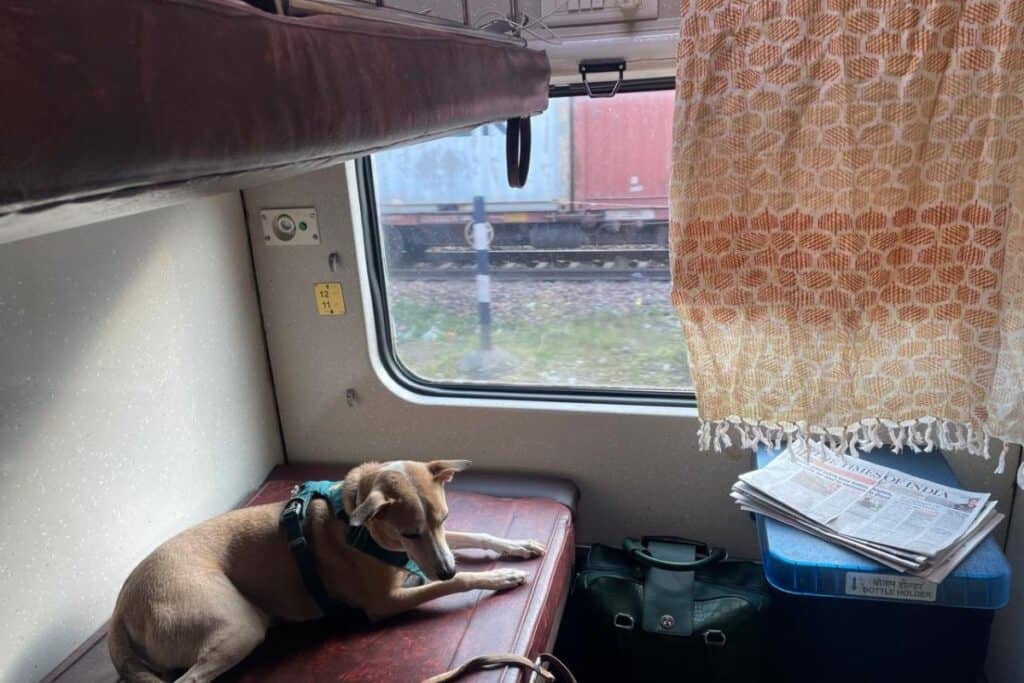
These are air conditioned sleeper trains which connect Delhi with other cities in India. Rajdhani is Hindi for capital.
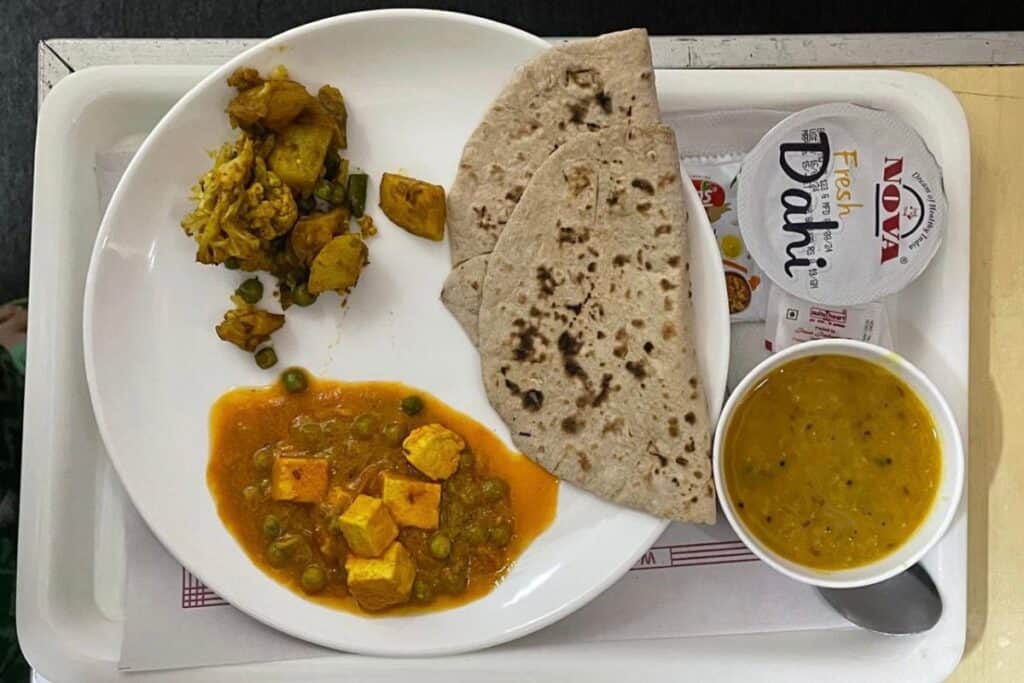
I’ve taken the Rajdhani Express overnight from Pathankot to Delhi a couple of times. While nothing ultra fancy, service is reliable, includes a hot meal and the bunks come with bedding (clean on both of my trips). Toilets are located at the end of each car.
Best classes for tourists are AC1 (the best) or AC2 (a lot of middle class Indian families, still pretty good). AC3 is available, but it’s more crowded with sleeper bunks are tiered three high instead of two.
Shatabdi Express
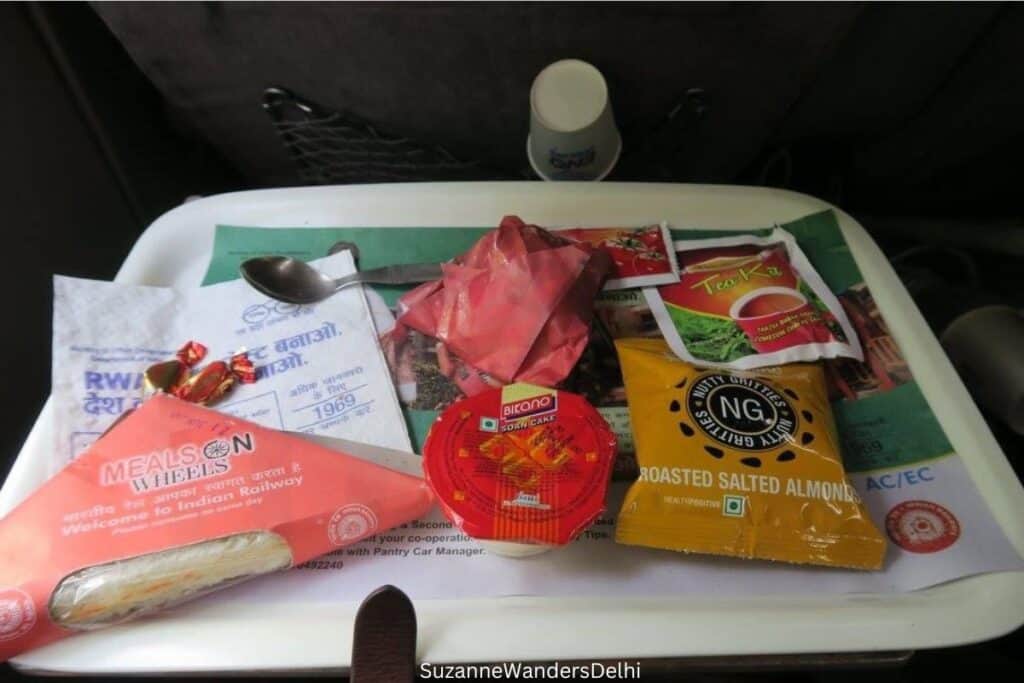
These are express day trains that connect major cities in India. Classes are Executive Anubhuti Chair (EA – the best), Executive Chair (EC) and Chair Class (CC). EA isn’t available on every route.
The 12015 Ajmer Shatabdi Express is an excellent Delhi to Jaipur train if you want to have most of the day in Jaipur. It departs New Delhi Railway Station at 6:10 am (you can sleep on the train) and arrives in Jaipur at 10:40 am.
I’ve taken the Shatabdi Express from Delhi to Amritsar (just over 6 hours), and it was very comfortable. A hot meal was served. I’ve also taken it to Agra.
Don’t confuse Shatabdi Express with Jan Shatabdi Express trains – which are also good, but not quite as nice and don’t get rail priority over higher category trains. They are a lower category of train.
Duronto Express
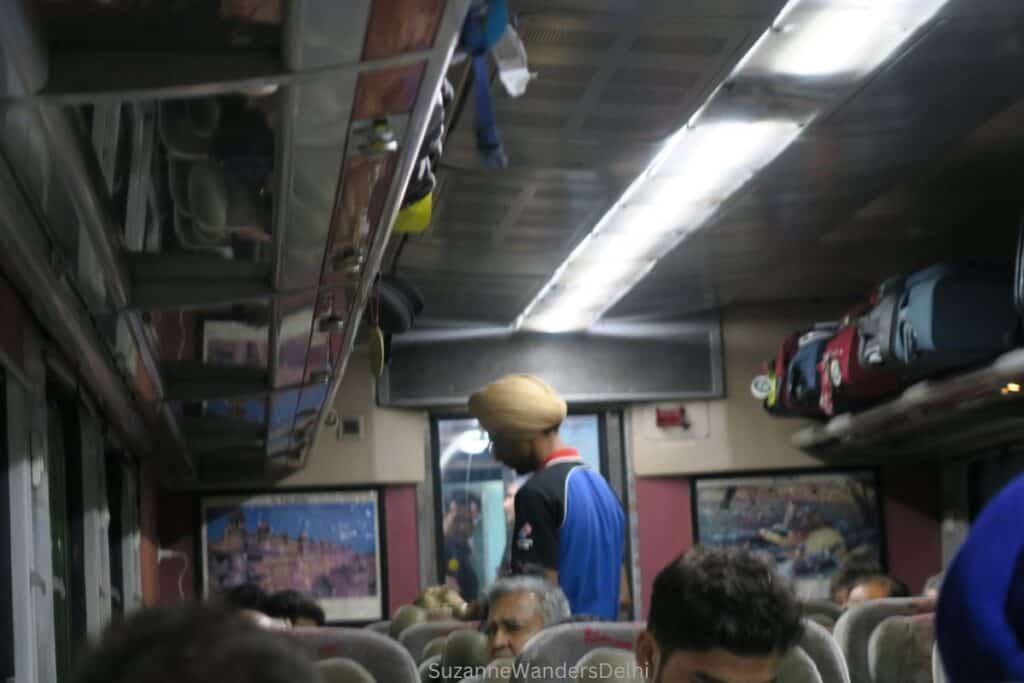
This is another good one to take on long distance routes (like the Rajdhani Express). The name Duronto means ‘nonstop’ in Hindi, which most of the Duronto routes are.
They have sleeper compartments and chair classes. The sleepers are two berth or 4 berth, but you cannot specify which one you want.
Best tickets for tourists are AC1 (the best) or AC2 (a lot of middle class Indian families, still pretty good). AC3 is available, but it’s more crowded with sleeper bunks three high instead of two high.
Express or Mail
Basically, Mail trains run up to 50 km/hour and are lower priority than Express trains. If given a choice, always book an Express train over a Mail train.
India Train Ticket Classes: Quick Guide
- AC1 (Air Conditioned 1st Class): best sleeper class with private compartments and bunks two high; bedding is provided
- AC2 (Air Conditioned 2 Tier): next best sleeper class with curtains instead of private compartments, bunks are two high; bedding is provided
- AC3 (Air Conditioned 3 Tier): similar to AC2 but no privacy curtains and bunks are three high; bedding is provided
- SL (Sleeper Class): crowded and basic with no AC (or heat); bedding is not provided
- EA (Executive Anubhuti Chair): best class on day trains – similar to EC but with seat back TVs and leg rests
- EC (Executive Chair): comfortable class on day trains; seats are 2 + 2 configuration
- CC (Chair Class): comfortable, but seats are 3 + 2 configuration
- 2S or GN (Second Class or Unreserved): uncomfortable and crowded, very basic
The Indian Train Reservation System
Just when you thought it couldn’t get more confusing, there’s the fantastically complicated, but efficient Indian train reservation system.
I’m only going to get into the quotas that tourists would have to deal with. Otherwise this article would be twice as long.
Foreign Tourist Quota
The most popular routes with tourists have seats reserved for foreigners, this is the tourist quota. Sometimes when the general quota is full, you can still find a seat on the tourist quota.
You can book these tickets online (by paying with an international credit card), or in person by paying in foreign currency or rupees if you show some kind of receipt for the rupees (ATM record, exchange house receipt, etc.) You will have to show your passport.
These tickets are a little more expensive than general quota, so try and get general quota first. If general quota is full, try foreign tourist quota.
General Quota
This is where most of the seats are. Try this quota first. If it’s full, then try foreign quota or Tatkal.
Tatkal
Basically, this is a last minute booking made the day before travel. You can book online or in person. Only two tickets can be purchased by a single user.
I definitely would not count on this – there is no guarantee there will be tatkal tickets available on any given day.
These tickets are sold at a higher premium, with 10-30% of the original ticket priced added on.
Ticket Confirmation Status & PNR
When you book a ticket with Indian Railways, your ticket will be given a status. It could be CNF, RAC or WL.
CNF means your tickets is confirmed, you have an assigned seat or berth. You’re good to go.
RAC (Reservation Against Cancellation) means you have a place on the train, but your seat or berth is not assigned yet. Before departure check your PNR (Personal Name Record) online, or check the posted reservation list at the station for your assigned seat or berth.
❗If you can’t get a CNF ticket, but are offered RAC, take it – at least you’re on the train. You’ll get your assigned seat or berth before departure.
WL (Wait Listed) is like flying standby. Depending on where you are on the list, you may not know if you are on the train until shortly before departure when the final passenger list is posted.
If you are WL and you’re promoted to RAC, that’s great – it means you’re on the train. Check your PNR for updates on your assigned seat or berth.
Here’s How to Check Your PNR
To check the updated status of your ticket, confirm your PNR online at www.indianrail.gov.in/enquiry. This site won’t work if you’re not in India (or you can access it with a VPN).
Common Scams to Avoid
These are the 3 scam I have seen and experienced at the New Delhi Railway Station, but there are many more.
To avoid being scammed ignore anyone who approaches you, do not believe anything they say (even if they have ID and look official), and just proceed. This goes for Delhi in general, but there are a lot of touts around the train stations.
1.The Ticket Office Scam
You will be told the ticket office is closed, burned down, relocated etc. This is a ploy to get you into a travel agency, where they will sell you tickets, with a surcharge. They may even tell you there are no train tickets available and you’ll have to hire a car (which they can arrange) to get to your destination.
The travel agency may look official (like Tourism India), but trust me, it isn’t.
2. Your Ticket isn’t Valid
This happened to me just outside the New Delhi Train Station at security. A uniformed person asked to see my tickets and told me they were not valid.
I was still pretty green at the time, so I called an Indian friend who spoke to this ‘railway official,’ and suddenly the ticket was fine. This whole thing took place right beside a real railway security employee, who said absolutely nothing.
3. Porters
Hang on tight to your bags, because the porters can be aggressive. They’ll just grab your bags, look at your ticket and start walking away toward your platform.
If you don’t agree on a price ahead of time (about 100 INR per bag is reasonable) you will get gouged. It’s hard to argue about the amount when the porter has all your luggage. I got scammed for INR 1000 this way.
❗If you’re staying in Delhi, don’t stay near the railway station. Paharganj is cheap, but it’s not an area I recommend for visitors. There are better budget options in safer, and more convenient neighbourhoods.
Last Words on How to Buy Train Tickets in Delhi
The Indian Rail booking system is a bit complicated, but it can be conquered. My advice is to book your tickets yourself and use the official IRCTC website whenever possible.
Keep in mind the railways are an integral part of India’s culture and economy. And it’s more than just seeing the countryside go past, what happens in the train can be just as interesting – like a Domino’s pizza delivery to a passenger while we were stopped enroute!