Raj Ghat: A Local Guide to Delhi’s Gandhi Memorial 2026

Raj Ghat is the sacred memorial dedicated to Mahatma Gandhi, considered the Father of the Nation by all Indians. Gandhi is still widely revered across India.
Gandhi was the leading force behind India’s freedom movement, but his teachings reached far past India and influenced the entire world. His philosophies guided Martin Luther King and Nelson Mandela, and are the core principles the United Nations is built on.
A visit to Delhi is not complete unless you visit Raj Ghat. It does not matter how many times I go to there, the serenity and simplicity never fail to move me.
Visiting Raj Ghat: Overview
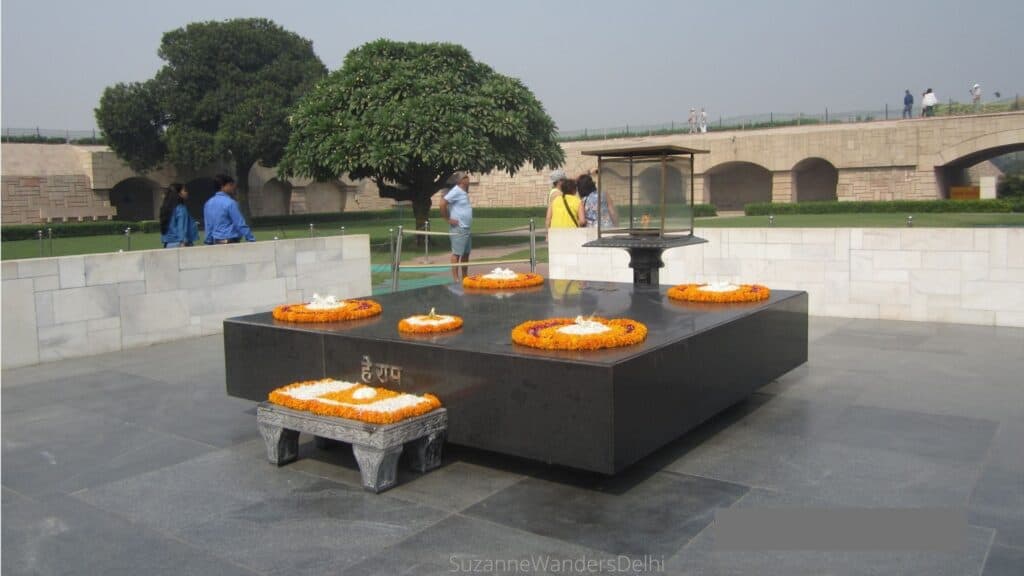
Raj Ghat is more than a memorial, it is the place where Gandhi was cremated on January 31, 1948 the day after his assassination.
Thousands of people from across the world come here to pay their respects, including all visiting dignitaries and heads of state. In fact, when world leaders visit Delhi, Raj Ghat is usually the first official stop.
Raj Ghat is free to visit. It’s open every day 6:00 am – 6:00 pm. Bring water, a hat and sunscreen. The area is not shaded, and drinks and food are not sold there.
At the centre of the site, a black marble platform rests on the place Gandhi was cremated. It is always adorned in flowers and an eternal flames burns. The simplicity of the memorial is meant to reflect the simplicity of Gandhi’s life.
What To Expect
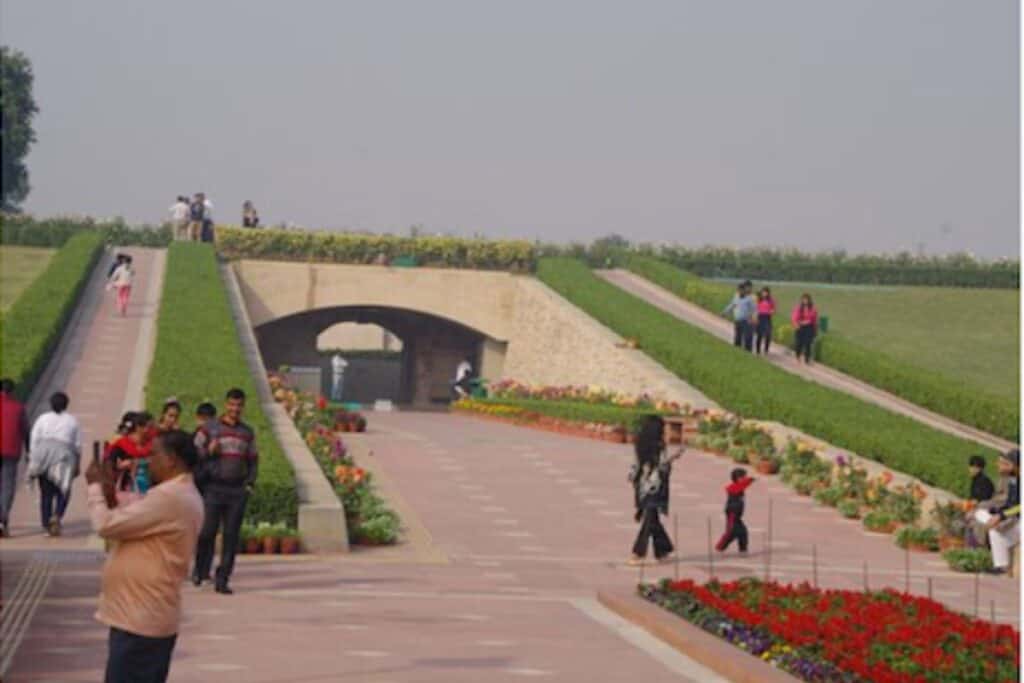
Once you enter the site, and before you head to the memorial, you will have to remove your shoes. There’s a shoe counter and an attendant who will give you a token. There’s no fee for this.
There are toilets, though the last time I was there they were not the cleanest.
The site is laid out in a sunken courtyard, with the memorial itself in the middle. You can walk around it if you want, but it’s not necessary.
There are two levels around the circumference of Raj Ghat, both wheelchair accessible. It’s a large open space, and although it gets a lot of visitors, it never feels crowded.
You can comfortably do the site in an hour. It’s expansive, but apart from seeing the memorial and walking around the periphery, there isn’t much else there.
Raj Ghat History
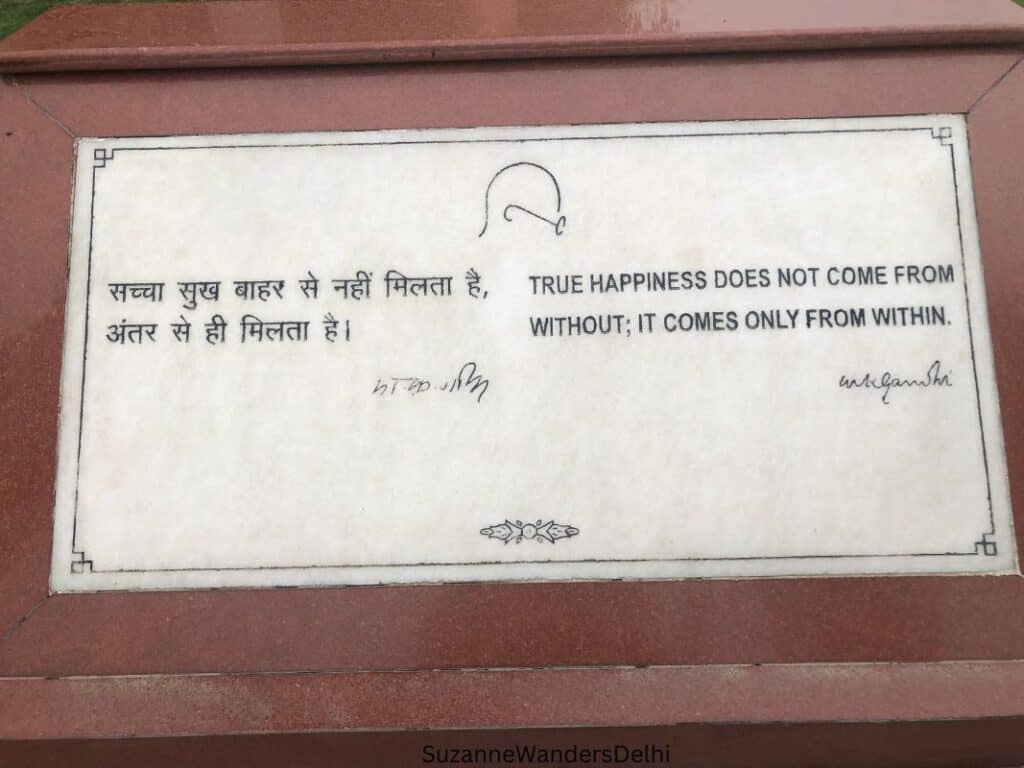
The memorial at Raj Ghat is the exact place where Gandhi’s last rites were performed, and he was cremated on January 31, 1948.
The simple memorial was created by Vanu G. Bhuta. It was designed to reflect Gandhi’s beliefs of simple living and higher thinking.
Raj Ghat is named after a historical ghat (steps leading down to a river) not far from the memorial. It was part of the old walled city of Delhi, Shahjahanabad.
Gandhi Darshan is directly across the street. Gandhi Darshan is a park and exhibition hall based on Gandhi’s life and his message of non-violence. Admission is free and hours are 10:00 am – 5:30 pm. It is closed on Sunday.
Kitty corner to Raj Ghat is the National Gandhi Museum and Library. It offers a view into the daily life of Mahatma Gandhi and has an impressive and moving collection of his personal items. Admission is free and hours are 10:00 am – 5:00 pm. It is closed on Monday.
How To Get To Raj Ghat
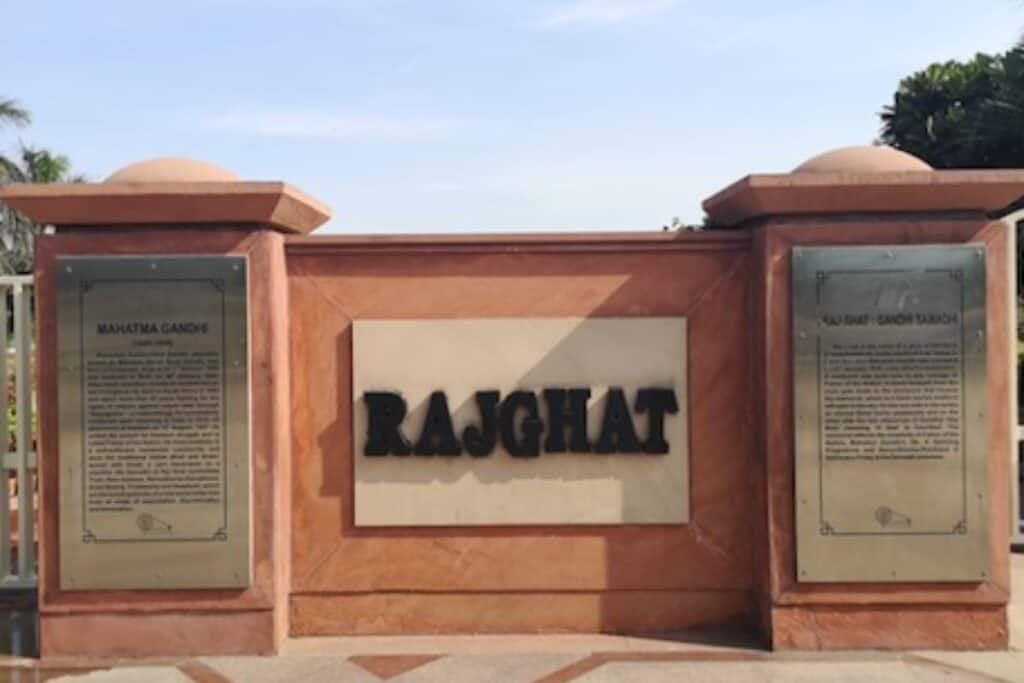
The easiest way to get to Raj Ghat is by Uber. Uber is widely used in Delhi and very safe. It’s also inexpensive.
Another good option is the Delhi metro. The nearest station to Raj Ghat is Delhi Gate (Violet line). I recommend taking an auto rickshaw to Raj Ghat from the metro station. It’s not far, but you have to cross a busy road which can be challenging in Delhi.
The Delhi metro is an excellent system and easy to use. If you want more information, you can read all about using the Delhi metro here.
Where To Stay in Delhi
In Delhi, where you stay matters. Not only because the city is massive and you want to be near the sites, but also in terms of safety. The best area to stay in is South Delhi.
I am very familiar with these properties, and recommend them because they are exceptional and in good neighbourhoods. They are also well located for seeing Delhi.
- Leela Palace New Delhi (luxury): 5 star property and considered Delhi’s finest hotel. It’s beautiful and traditional, with exceptional service and comfort. Well located for seeing the sites in Delhi’s most exclusive neighbourhood near the embassies.
- Lutyens Bungalow (mid-range): Heritage boutique property in one of the best areas of the city next to Lodhi Garden. Fantastic area near many sites. Breakfast is included.
- Prakash Kutir Bed & Breakfast (budget): Family run guest house in a very good area of South Delhi, near the metro and easy to explore the whole city from. Spotlessly clean. Home-cooked breakfast is included.
Last Words on Raj Ghat: A Local Guide To Delhi’s Gandhi Memorial
Raj Ghat is one of the most important sites in Delhi. Mahatma Gandhi is considered the foremost human rights activist of all time. Don’t miss the opportunity to pay your respects to Gandhi, and contemplate the beliefs of one of the most significant people in modern history.