Is Delhi Safe for Tourists?

Is Delhi safe for tourists? The answer is yes and no. Delhi does have a high crime rate compared to the rest of the country, but crimes against tourists are rare. My personal experience of Delhi is that it’s safe as long as you are careful.
How Safe is Delhi – is it Safe for Tourists?
I lived in Delhi for years and still return each year. I have explored the city top to bottom, mostly solo. Apart from a few annoying touts, I have never been harassed or felt my safety was compromised, but I am careful.
The truth is Delhi does have a reputation for being unsafe, particularly for women. And that is not totally unfounded. Should that stop you from travelling to Delhi? I don’t think so.
Anyone can safely explore or live in Delhi, but it requires common sense plus a bit of extra caution. In this article I’m going to cover:
- tips on personal safety and where to stay
- transportation options
- food and water safety
- air pollution and how to stay healthy
My Top Tips for Staying Safe in Delhi
These are all just common sense things, but in Delhi you really should follow them:
- Stay in a better South Delhi neighbourhood – avoid Paharganj and Old Delhi. I recommend specific hotels and areas below.
- Keep personal belongings close. Purse snatching and pick pocketing does happen, especially in crowded areas like bus or train terminals, tourist attractions and markets.
- Do not ride the city buses, especially after dark.
- Use the metro to get around during the day. Women should ride in the women’s carriage (first carriage of the train in the moving direction).
- Use Uber or Ola ride share services which are trackable. Always check the car plate to confirm it is your ride before getting in.
- Do not listen to strangers. Delhi is full of scammers who will lie and tell you a monument or site is closed to try and redirect you somewhere else.
- Do not walk alone after dark.
- Dress conservatively. Knees, shoulders and chest covered. Ladies, keep a dupatta with you (Indian head scarf). It adds modesty to any outfit.
- When in doubt seek advice from hotel staff. Do not trust the ‘tourist offices.’
The Safest Areas to Stay in Delhi
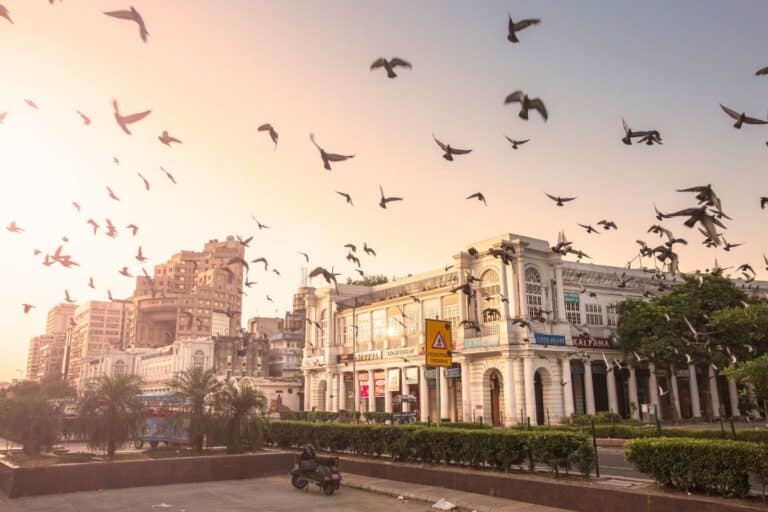
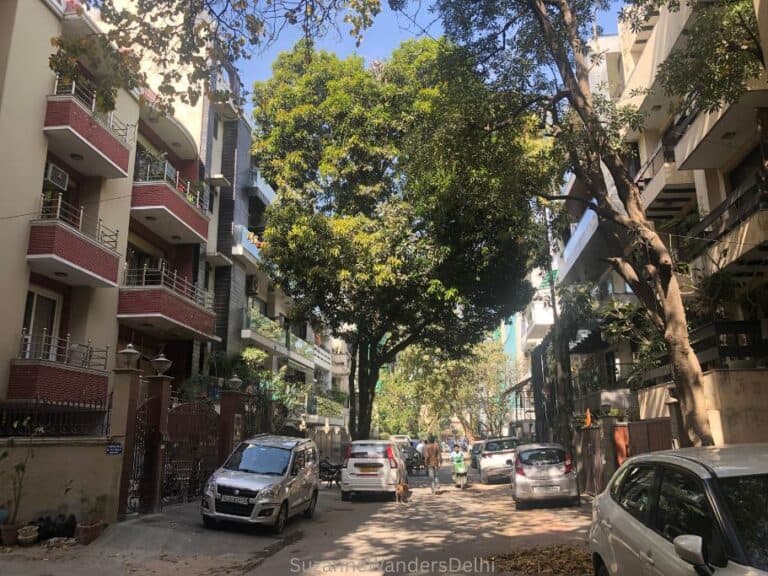
Where you stay in Delhi matters. South and Central Delhi (up to Connaught Place) are the best and safest areas to stay in. These are more affluent neighbourhoods, and you’ll be close to many attractions and sites.
Neighbourhoods like Greater Kailash, Vasant Vihar, Hauz Khas, Golf Links, Shanti Niketan, Nizamuddin East, Saket, Chanakyapuri, Connaught Place and Defence Colony are all good options. I highly recommend these places to stay:
- The Imperial (luxury): Delhi’s finest heritage hotel and my personal favourite. Superb location, within walking distance of numerous shops, restaurants and attractions.
- Lutyens Bungalow (mid-range): Heritage boutique property in one of the best areas of the city next to Lodhi Garden. Fantastic area near many sites. Breakfast is included.
- Prakash Kutir Bed & Breakfast (budget): Family run guest house in a very good area of South Delhi, near the metro and easy to visit all the sites. Home-cooked breakfast is included.
If you want to know more, these are the best areas and hotels to stay in Delhi.
Delhi’s Gated Neighbourhoods
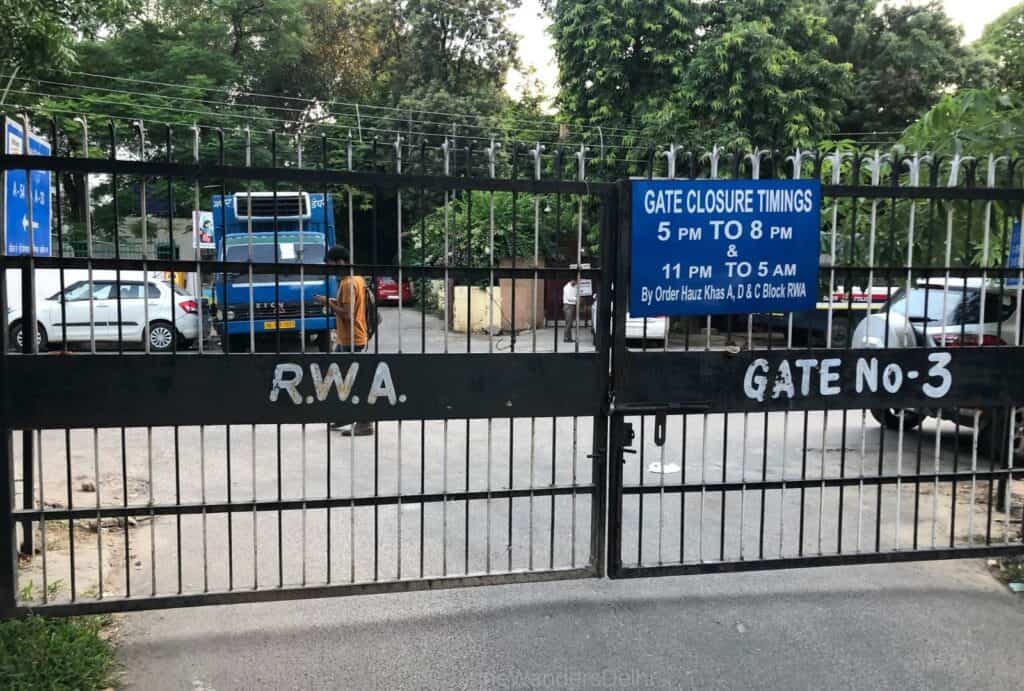
Delhi has gated neighbourhoods. Some areas may have 4 or 5 different gates which close at night, blocking traffic and pedestrians.
Each neighbourhood keeps at least one gate open overnight and it’s important to know where it is. GPS does not indicate which gates are open, and your driver may not know either. Always confirm which gates are open and where they are, so you can re-enter the neighbourhood.
I once attended a Mehndi (pre-wedding henna party) five houses down from my Airbnb. When I left to walk back to my place I discovered a closed and locked gate across the street blocking my way. Luckily the party hosts were able to telephone the patrolling security guard, and he came to unlock it and let me through.
You do not need to worry about this if you are staying at a major hotel on a main road. They have their own 24 hr security. But always verify this before heading out for the evening, just in case.
Security in Delhi
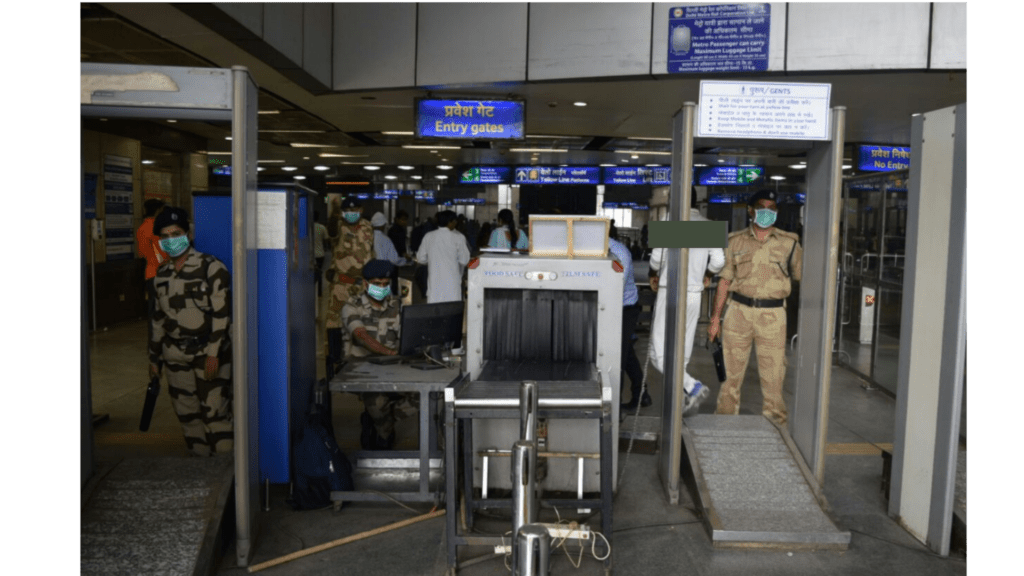
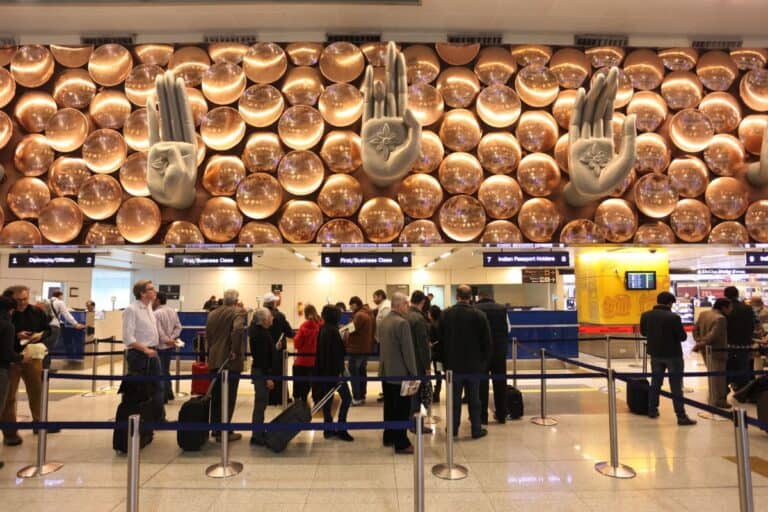
Delhi has a lot of security – it’s everywhere. There are segregated security checks and scanners at all major attractions, metro, bus and train stations, 5 star hotels, shopping malls, and even some restaurants.
Initially I found this alarming and comforting at the same time, but I’m so used to it now, I hardly notice.
Terrorist Attacks
Attacks on Delhi are very rare. The last major terrorist attack was in December 2025, when a car full of explosives went off near the Red Fort in Old Delhi. Before that, the last major attack was 15 years prior in 2011.
Is Delhi Safe for Women?
Delhi is reasonably safe for female tourists, but some precautions are smart. The most important thing is to dress modestly. Delhi is a very conservative society, and you will avoid a lot of unwanted attention by covering up.
Shoulders and knees should be covered and absolutely no cleavage. It’s fine to be less modest where that is the norm (like a night club), but cover up outside the venue.
Here’s everything you might want to know about what to wear in Delhi.
Most foreigners stand out, it’s unavoidable, but try to blend in as much as possible. I’m blonde with fair skin and blue eyes – it’s nearly impossible for me to blend in, but I try!
Always carry a dupatta (light scarf). It’s an extremely useful Indian fashion accessory that can be used as a covering for head, shoulders, chest, or as a shawl when cool. You’ll also need one to enter gurudwaras and mosques, so it’s handy to have one with you at all times.
At night, do not walk alone and avoid rickshaws and taxi cabs. Instead, use a ride sharing program like Uber or Ola.
If taking the metro, use the women’s carriage and do not ride alone after 9:00 pm.
If you’re coming during the Indian festival of colour, Holi, be really careful about where you go to celebrate it. Streets get crowded and there’s a lot of intoxicated men out.
If you want to know more, here’s everything you need to know to safely celebrate and play Holi in Delhi.
Is Delhi Safe for Families?
Indian culture is very family oriented and wonderful with children, so from that respect India is great for families. But there are other things that may affect you decision to travel to Delhi with children.
Safety standards are not the same as in North America or western Europe. Things like stairs without handrails, roof top patios without proper guardrails and unmarked holes in sidewalks are common.
Delhi is also not a very walkable city. There is a general lack of sidewalks and traffic lights. There’s also lots of noise, traffic, and it’s crowded.
If you’re travelling to Delhi with kids, you might find these helpful:
The area around the embassies (Chanakyapuri) and the area that is called Lutyens Delhi has good sidewalks and more greenery. This would be a good area to stay in with children.
Safety tips for children:
- Use a driver to get around (ask your hotel or guest house to arrange this).
- Always drink bottled water.
- Temper spicy food with yogurt, rice and naan.
- Do not eat raw food.
- Avoid street food, and instead eat at a restaurant like Haldiram’s.
- Use mosquito repellent and sunblock.
Is Delhi Safe for LGBTQ Travellers?
After Mumbai, Delhi is India’s most queer friendly city, and there’s a thriving LGBTQ community.
Homosexuality was decriminalized in India on September 8, 2016, and anti-discrimination laws on the basis of sexual orientation were enacted.
So yes, Delhi is safe for LGBTQ tourists but no, you cannot flaunt it. This has nothing to do with sexual orientation, it is because public displays of affection are not culturally accepted.
It is considered taboo for a couple to kiss in public, except maybe a quick peck on the cheek, and it’s only in the last decade or so that couples have begun holding hands publicly.
Men hold hands in India, but it has nothing to do with sexuality. Same sex hand holding is a sign of affection, bonding and camaraderie in India, not romance. However, same sex hand holding by foreigners may be seen as romantic, and for that reason I would refrain.
There is little in the way of night life exclusively for the LGBTQ community at the moment. Depot 48 in Greater Kailash II does host events and is openly supportive of LGBTQ.
Is Delhi Safe at Night?
It is not safe for tourists to walk around alone at night in Delhi. Use the ride share programs Uber or Ola (apps can be downloaded to a mobile). Check the car plate to confirm it is your ride before entering the vehicle.
In restaurants and clubs, never accept a drink from a stranger and watch the bartender mix your drink (especially in clubs). Do not leave your beverage unattended.
Here’s a list of things you can do in Delhi at night.
Is Public Transit Safe In Delhi?
Delhi city buses are not safe for tourists. They are notoriously unsafe for women and overcrowded. Avoid them. Instead, use the Delhi metro.
The Delhi metro is safe, clean, efficient, cheap and it goes everywhere. It’s also very user friendly. All riders must go through security, and the first carriage in the moving direction of the train is for women only.
If you want to know more about the metro, see my guide on how to ride the Delhi metro.
Delhi auto rickshaws are safe for tourists during the day, and can be used for short trips or in conjunction with the metro to reach door to door. I would not ride them alone at night.
Are Taxis Safe in Delhi?
Flagging taxis and using taxis off the street is not a safe option in Delhi for tourists. I recommend using the ride share programs Uber or Ola. Uber is more common, and that’s the one I use almost all the time.
Make sure the OTP (one time password) for the ride matches the one the driver has.
Women With Wheels (Sakha Cabs) is a cab company with female drivers for female passengers. They also offer chauffeur services by the hour or day, and have a booth at the airport in Terminal 3 for airport transfers.
Is it Safe to Drive in Delhi?
No, it is not safe for tourists to drive in Delhi! Not only is it one of the most difficult cities in the world to navigate, traffic is terrible and normal rules of the road do not seem to apply.
Motorcycles, overburdened lorries, trucks, private cars, bicycles and rickshaws, cows, dogs and pigs share the roads. Most drivers do not signal, but use their horn to indicate intent to pass or change lanes.
There’s a lack of traffic lights and no stop signs, and many drivers plow right through them anyway. It’s just not safe to drive yourself in Delhi.
Instead, use a ride share program like Uber to hire a driver for a half day or day, or use the metro to get around. The Delhi metro is excellent and the fastest way to navigate city.
Is it Safe to Cycle in Delhi?
Delhi is not a pedestrian or cyclist friendly city. There are very few bike lanes, and traffic is horrendous with some truly awful drivers. I do not recommend cycling in the city.
Joining a bike tour is a good alternative, Delhi By Cycle offers cycle tours that start early in the morning before traffic really takes off. I’ve done one of these tours and it was great.
Is the Food Safe in Delhi?
There is always a risk of contamination at any restaurant or public eatery, but generally speaking food in restaurants that cater to tourists have higher hygiene standards and will be safe to eat at.
The Indian restaurant chain Haldiram’s serves traditional food and chaats (snacks), and is also very hygienic.
Delhi grocery stores sell safe food items, and local markets have all kinds of produce, which is safe for tourists to eat once washed in filtered water.
Street Food
Delhi has a vibrant street food scene, and I personally think that’s where the best food is. There is a higher risk of food borne bacteria when eating on the streets, but you can dramatically lower that risk with a few simple precautions.
Street food is a huge part of the culture in Delhi, and it would be a shame not to experience it.
How to safely eat street food:
• Choose busy stalls with a lineup or steady flow of customers.• Do not eat or drink anything with unfiltered water like gol gappa or lassi.• Do not eat meat.• No ice.• Drink water from a sealed bottle.• Wash your hands or use antibacterial wipes before eating.• Roasted and cooked foods are okay.• Chai (milk tea) is safe from a paper cup.
Is Delhi’s Water Safe to Drink?
Delhi’s water is not safe for tourists to drink. Never drink the water straight from the tap. Always drink filtered or branded, bottled water.
Hotels and guest houses will provide bottled water. High end hotels and many Airbnbs will have a water filtration system (commonly called an RO system), and you should ask about this before booking.
Use bottled or filtered water for cooking, and making coffee or tea. I’ve never used bottled water for teeth brushing, but you could as an extra precaution.
Beware of the Bottled Water Scam
Some vendors package water in the same bottles with almost identical labels as branded bottled water. The only difference is the brand name will have a very slight change. It’s basically knock off water. This water may not be filtered.
While visiting the Qutub Minar once, I purchased a bottle of water from a vendor just outside the entrance. I thought I was buying Bisleri water. This water was labelled Bliseri. It wasn’t until I drank most of it that an Indian friend noticed. I was fine, but be wary of this trick.
The most popular brands of water and their correct names are Bisleri, Kinley, Aquafina, Himalayan and Pure Life.
How Much Pollution is There in Delhi?
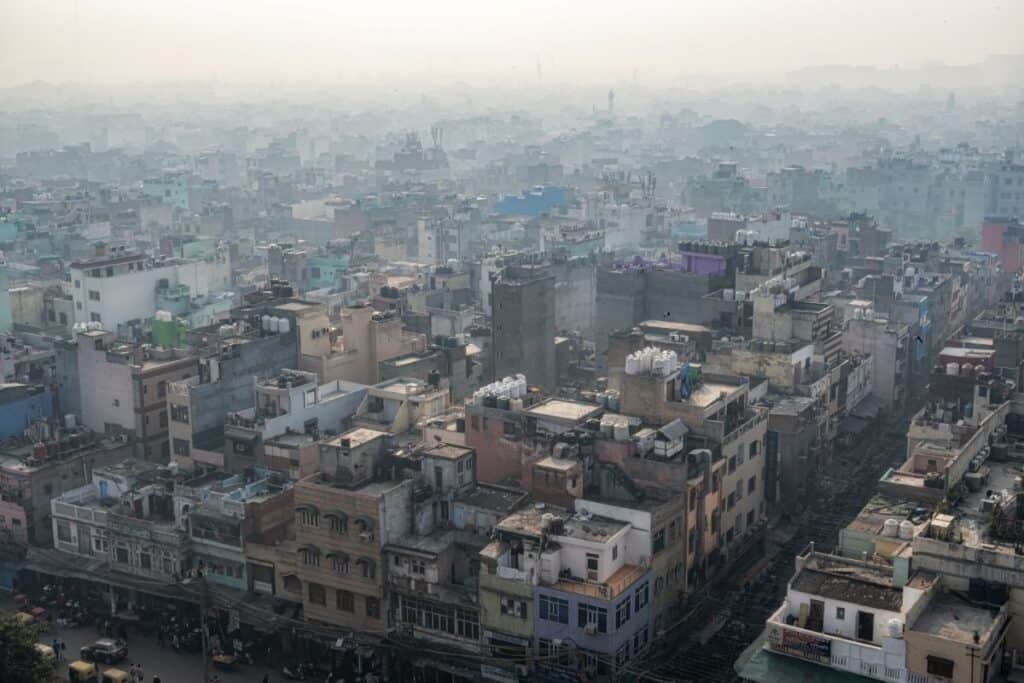
Unfortunately the answer is a lot. Delhi is one of the most polluted capitals in the world. If you have any kind of respiratory issues, avoid Delhi in winter.
The air is bad all year round, but air quality tanks in the winter months of November, December and January.
The air becomes extra toxic then because of fireworks from Diwali (in December) and stubble burning of farmers’ fields in neighbouring states. The government often shuts down schools and factories during the worst days.
Many luxury hotels and private residences use air purifying systems. If you plan to come to Delhi between November and January you should inquire if your accommodation has air purifiers.
How to Deal with Mosquitos and Heat
These are real concerns when visiting Delhi, but a little foreknowledge goes a long way.
Protection Against Mosquitos

Mosquitos in Delhi can carry dengue, chikungunya and malaria. They are worse in the summer, when temperatures are routinely above 35° C (95° F) and humidity rises.
Many Delhi visitors take malaria pills, and I strongly recommend using a mosquito repellent like Odomos which is safe for tourists.
Odomos is one of the best brands and widely available. It does not contain dangerous chemicals, but works by masking the body odour that mosquitos detect on humans.
I also use a product called 4 Dots. It’s a citronella fabric roll on that is applied to clothing at the shoulders and ankles. It can also be rolled onto the 4 corners of bedding. There are also many plug in repellents you can buy at local shops.
All of these products can be purchased at local shops and are not expensive.
Avoiding Heat Stroke
Heat stroke can be a real danger in Delhi when temperatures soar to 45° C (113° F) during the summer.
May and June are the hottest months and locals avoid spending time outside during the day. The best time to visit Delhi is February, March, October and November.
Tips on Avoiding Heat Stroke
- Wear loose, light weight clothing (Indian clothing is excellent for this).
- Wear a hat and sunglasses.
- Use sunscreen.
- Keep hydrated (coconuts are great because they replace electrolytes and are hygienic – skip the straw and just tip the water into your mouth).
- Take it easy during the hottest parts of the day.
Last Words on Is Delhi Safe for Tourists
Speaking as a solo female, Delhi is safe for tourists if you follow safety tips and err on the side of caution, especially dressing conservatively and not going out alone at night.
Delhi is a city of 33 million people and some extreme poverty, so there is crime – it’s unavoidable. But crimes against visitors are not the norm.