Famous Delhi Street Food: A Guide for Beginners

If you are a lover of food, you will adore India’s capital city. Delhi has one of the most diverse street food cultures anywhere in the world.
Enjoying street food is one of the most iconic and authentic experiences a traveler can have in Delhi. It’s one of my most favourite things to do in Delhi, and I eat street food every chance I get.
Famous Delhi Street Foods
Delhi’s food is heavily influenced by Punjabi and Mughal cuisines, but the large immigrant population added their own flavour to make the city’s street food some of the best in the world.
These are the best and most common street foods in Delhi:
Golgappa (aka Pani-Puri)
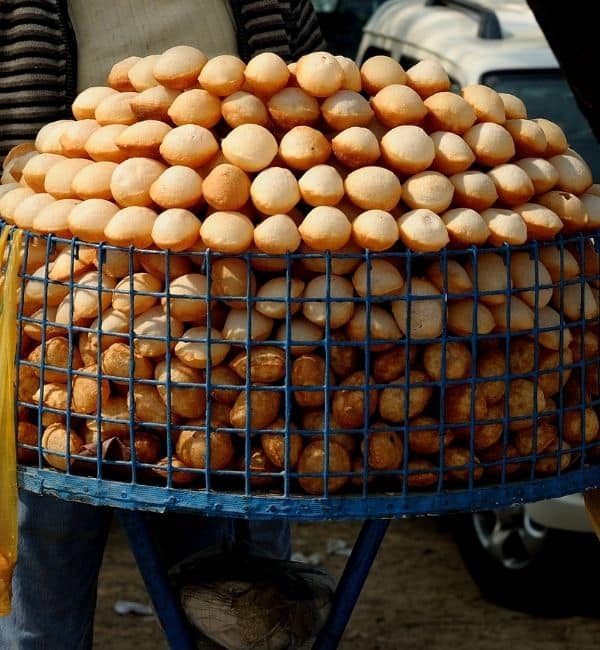
This is a very popular street food in Delhi with locals. You’ll see stacks of these hollow bite size balls all over Delhi. But this is the one snack I don’t recommend you eat from the street.
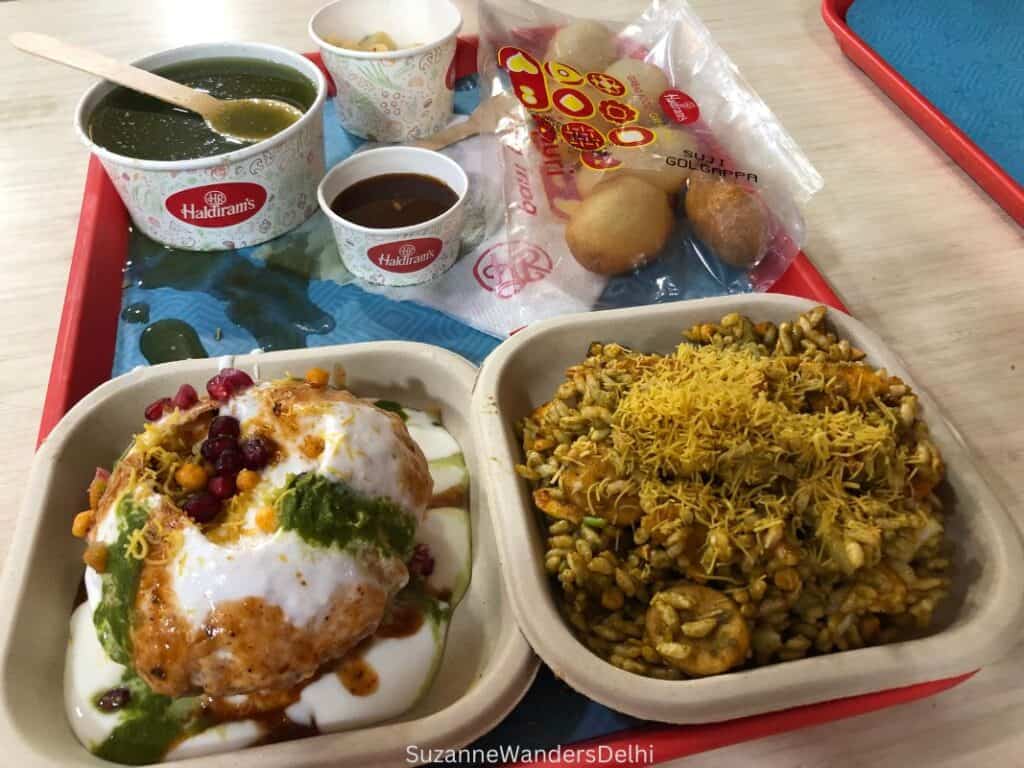
Golgappa are filled with a mixture of onion, potato, chickpeas and spiced water. But not all vendors use bottled water. Tap water is not safe to drink in Delhi. I recommend trying golgappa from a restaurant like Haldiram’s instead.
The proper way to eat these is to pop the whole golgappa in your mouth.
Dahi Puri
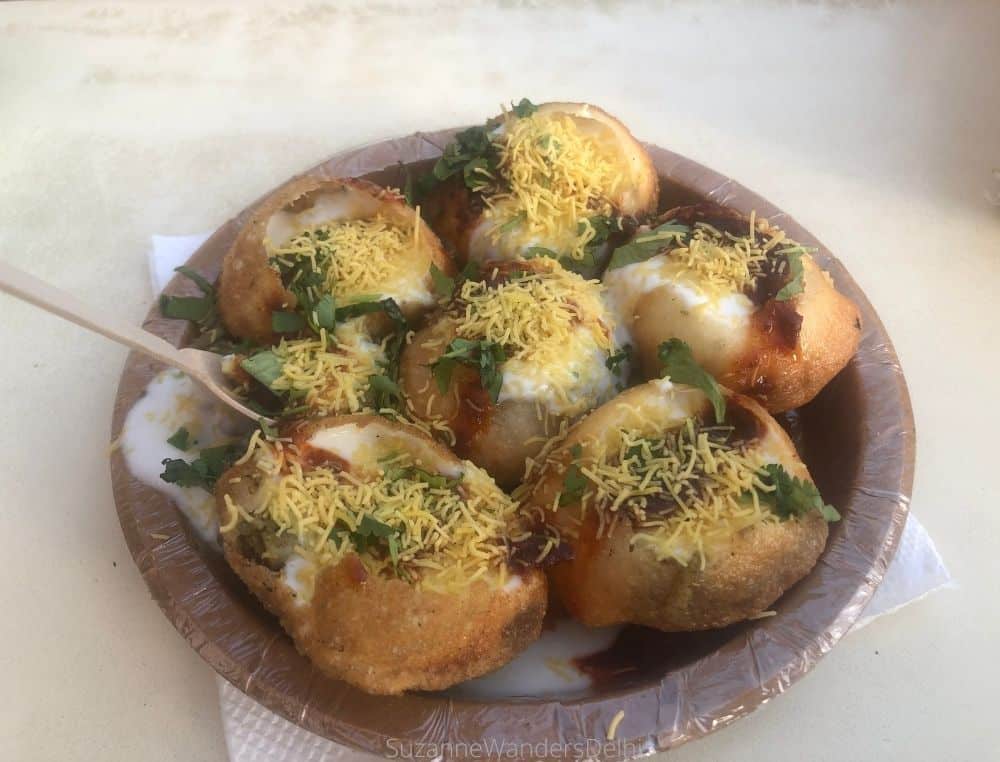
Dahi puri is made from the same hollow dough balls as golgappa, but instead of being filled with a spicy water mixture, they are filled with potato, yogurt and spicy chutneys.
It’s all topped off with more yogurt, tamarind sauce, sev (fine, crunchy noodles made from chick pea flour) and cilantro.
This is a popular chaat (snack) that originated in Mumbai. Like most chaats, it’s a mix of sweet, sour, soft and crispy.
Chole Bhature
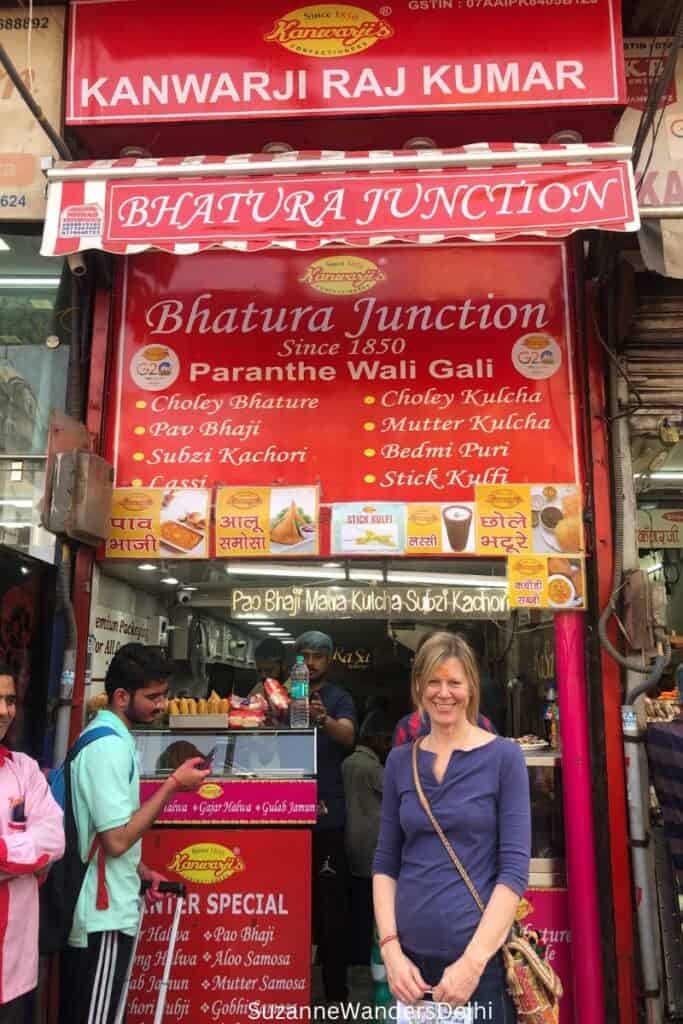
Chole Bhature is a spicy chick pea curry served with puffy fried bread. Believe it or not, this is an extremely popular breakfast dish in Delhi. Chole is the chick pea curry and bhature is the puffy bread.
I find it a bit heavy for breakfast, but I always grab a plate every time I’m in Chandni Chowk from Kanwarji Raj Kumar for lunch. This place is well known to Delhiites and the chole bhature is amazing!
Aloo Tikki
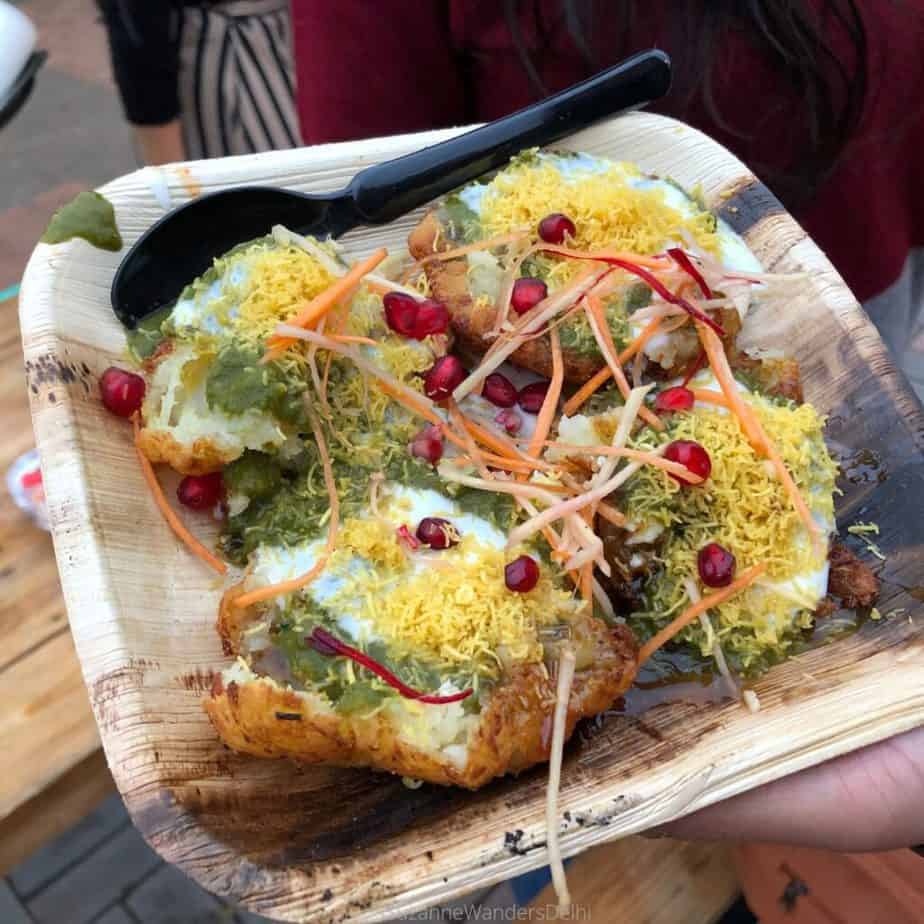
This is another street food you’ll find everywhere. It’s basically the Indian version of a giant hash brown.
A patty made of mashed potato, lentils and spices is fried, then smushed and smothered in yogurt, tamarind sauce and raw vegetables. It’s one of the most popular street foods all over northern India.
Kathi Rolls
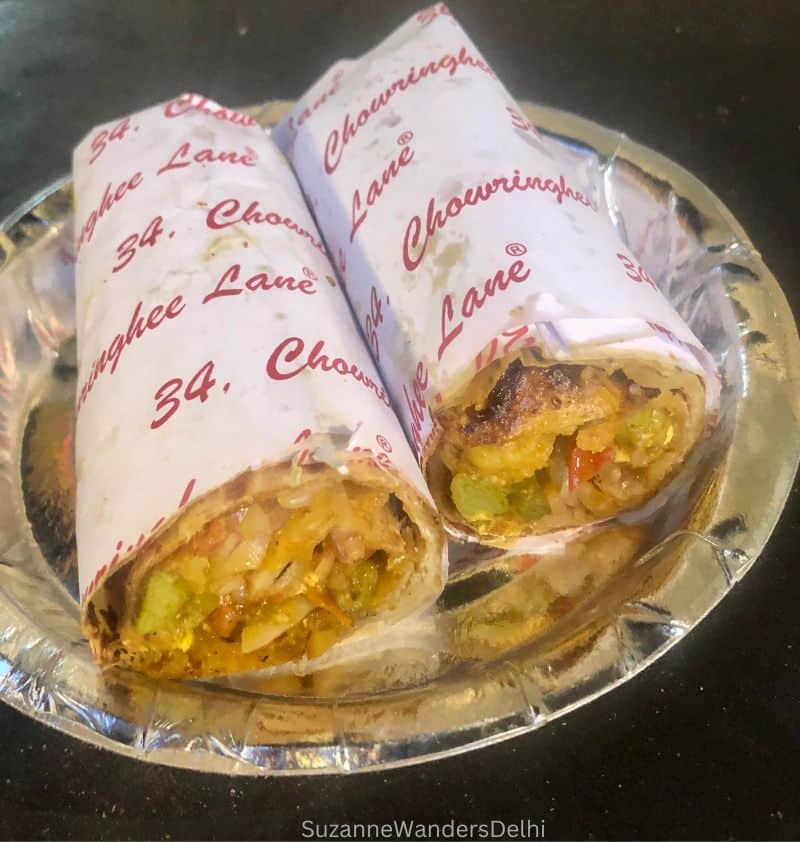
Kathi roll is India’s version of a wrap, made with a layered parantha instead of a tortilla. The street food originated in Kolkata, but now can be found in Delhi.
Traditionally kathi rolls were served stuffed with skewers of meat, but the popular street food is also made with egg, chicken and vegetables. It’s a delicious and filling street snack. Pair it with a cup of chai and you have a full meal.
I’ve been lucky enough to eat kathi rolls from the original Nizam’s in Kolkata, but now Nizam’s have locations across Delhi.
Samosa
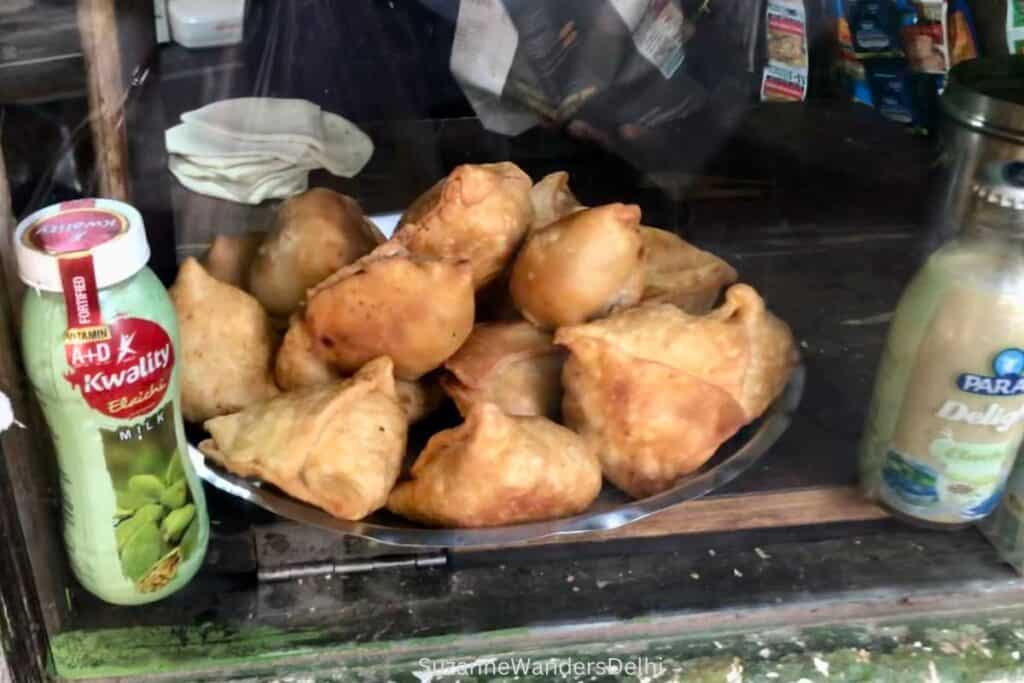
India’s most famous snack is sold everywhere in Delhi. The common samosa has been the ruin of many diets, and it’s almost impossible to stop at one.
Most street stands sell the traditional potato and vegetable version, but some shops like Kumar Samosa Wala have multiple varieties including meat and chocolate.
Samosas are usually served with mint chutney and make a great portable snack.
Ram Laddu
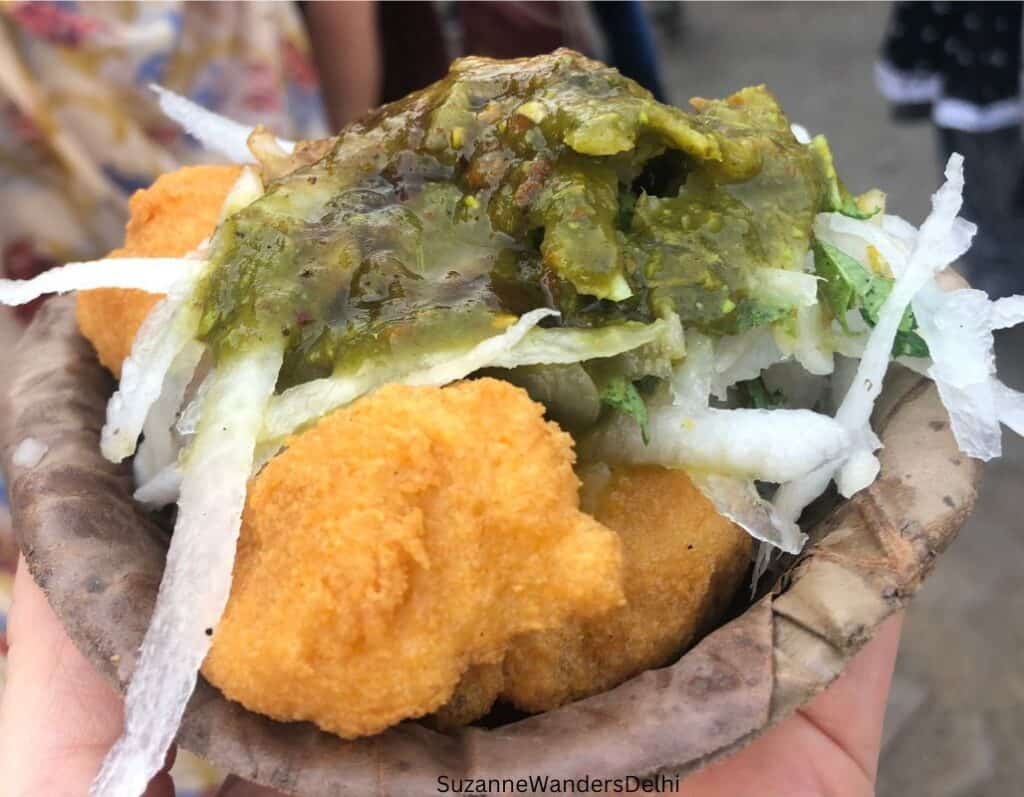
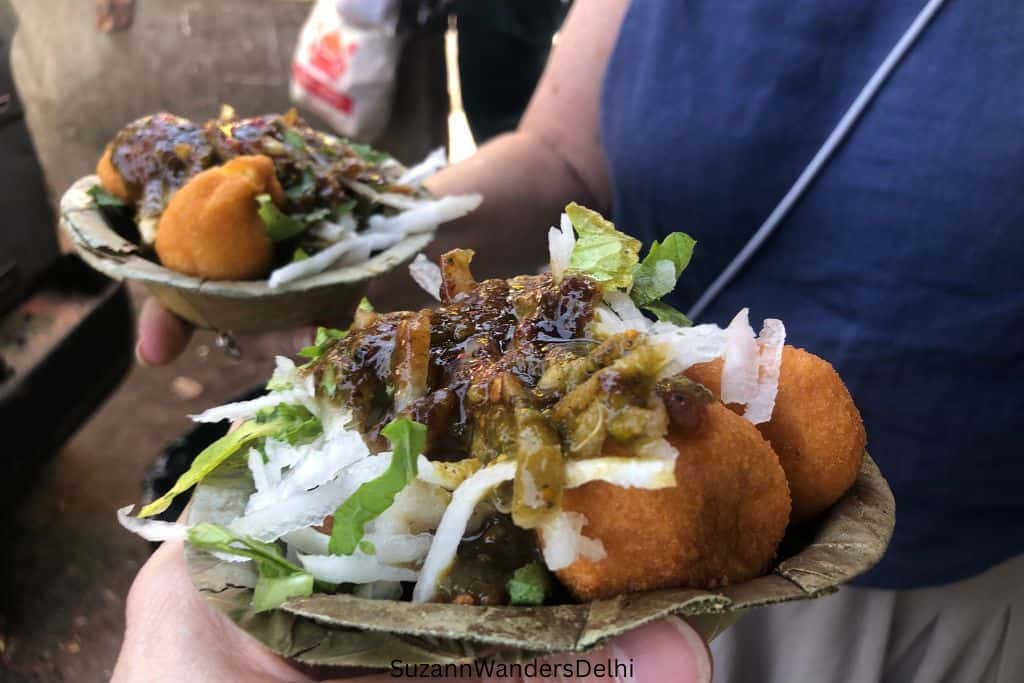
Ram laddus are crispy little dumplings made from mung dal and chana dal (lentils). Of all the fried Delhi street foods, this is probably the healthiest.
The laddus are smothered in grated radish and topped with tamarind and mint chutneys; it’s the perfect sweet, sour, crunchy and soft combination.
Kachori
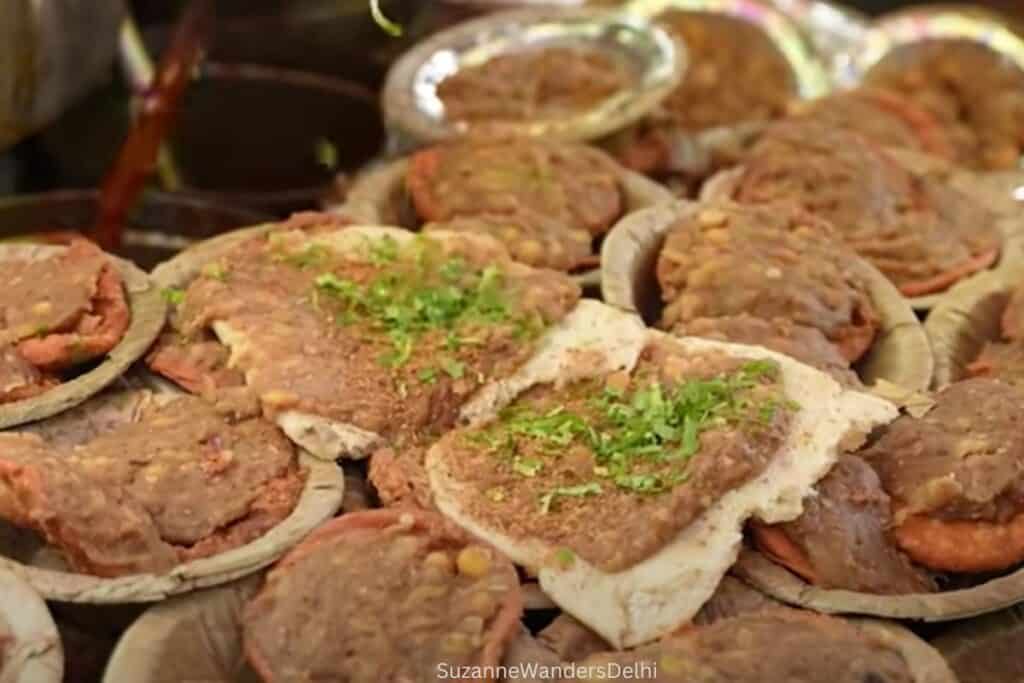
Kachori is a deep-fried, pastry disc that you will see at many street foods stands.
The most common ones in Delhi are aloo kachori (kachori with potato) and kachori chole (kachori with chick pea curry). Many of the kachoris sold in Delhi are filled with lentils and spices.
Delhi’s most famous kachori is at Fateh Chand ki Kachori. The stand (which is actually a bicycle) has been in the family for over 80 years and their kachori chole is legendary.
Papdi Chaat
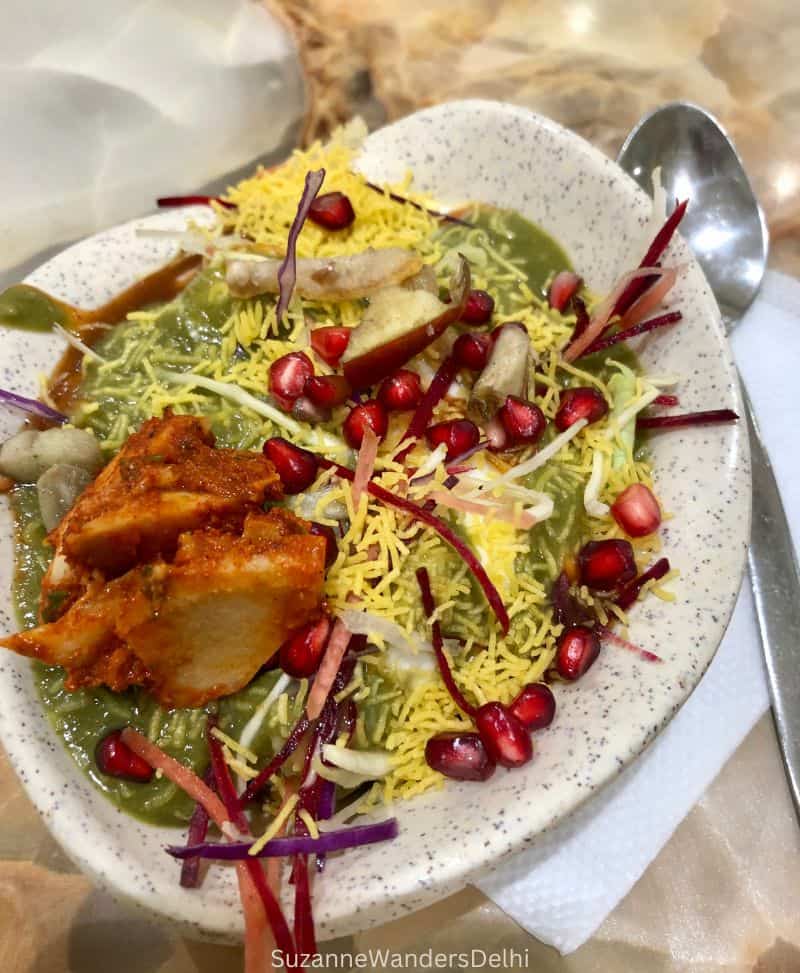
You’ll find papdi chaat everywhere in Delhi: on the streets, in restaurants and most Indian buffets.
Papdi are thin cracker like wafers made from wheat flour. They are then topped with potato, chick peas, yogurt, sev (thin, crunchy noodles made from chick pea flour), mint chutney and garnished with raw radish, onion, cilantro and pomegranate seeds.
For a gluten free option, request the chaat be made with potato instead of the papdi.
Momos
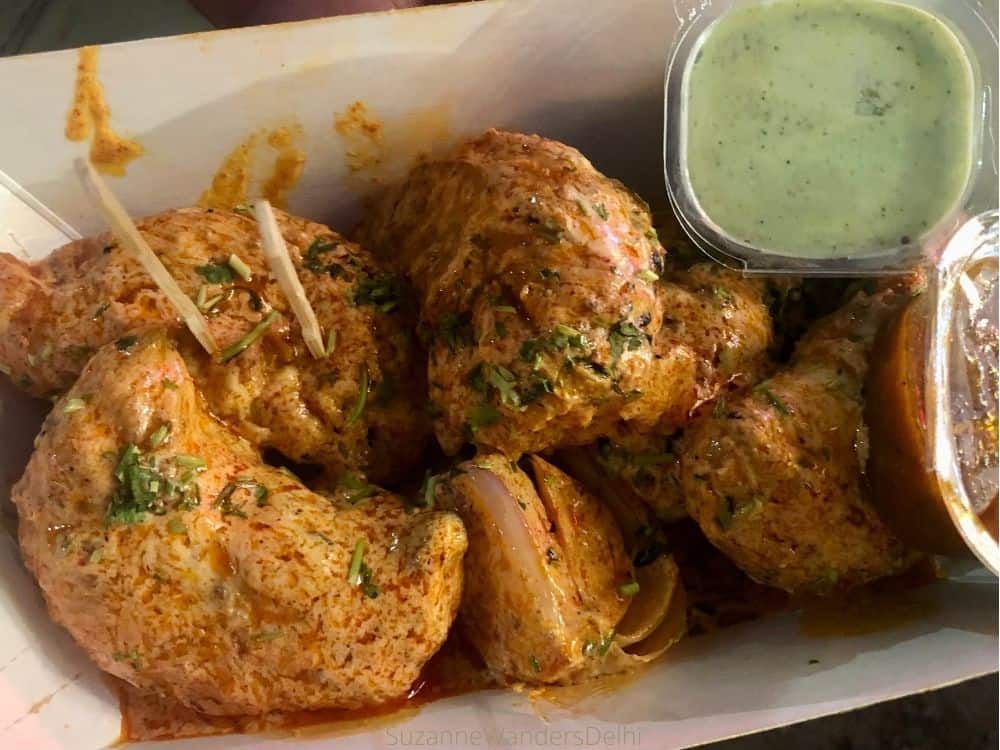
Momos are delicious little steamed or fried dumplings filled with meat or vegetables.
The momo is a staple snack of Himalayan countries, like Nepal and Tibet, but found its way to Delhi in the 1960s when so many Tibetans followed the Dalai Lama in exile to India.
You’ll find momos all over Delhi – you can recognize a momo stand by the huge, round metal steamers. Most common varieties are veg or chicken and if you get the steamed version, they’re actually pretty healthy.
Stuffed Parantha
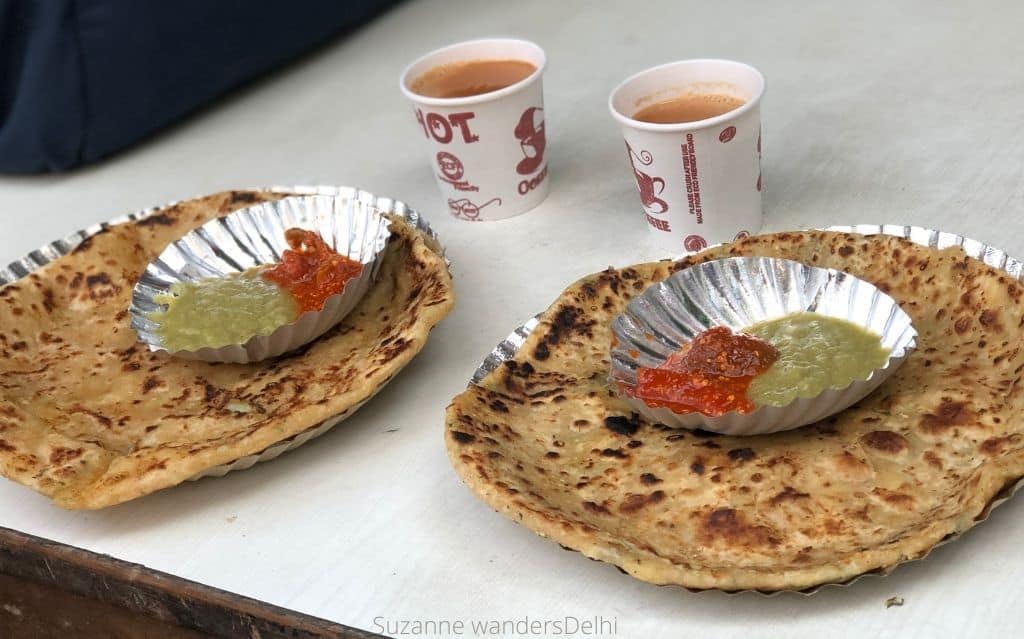
You’ll find these stuffed flatbreads being served all over Delhi, especially in the morning. They are a popular breakfast food.
Paranthas can be filled with just about anything, but the most common are potato, cauliflower and onion or a combination of these.
They are most often cooked on a hot griddle, but in Old Delhi they are usually deep fried.
Kebab
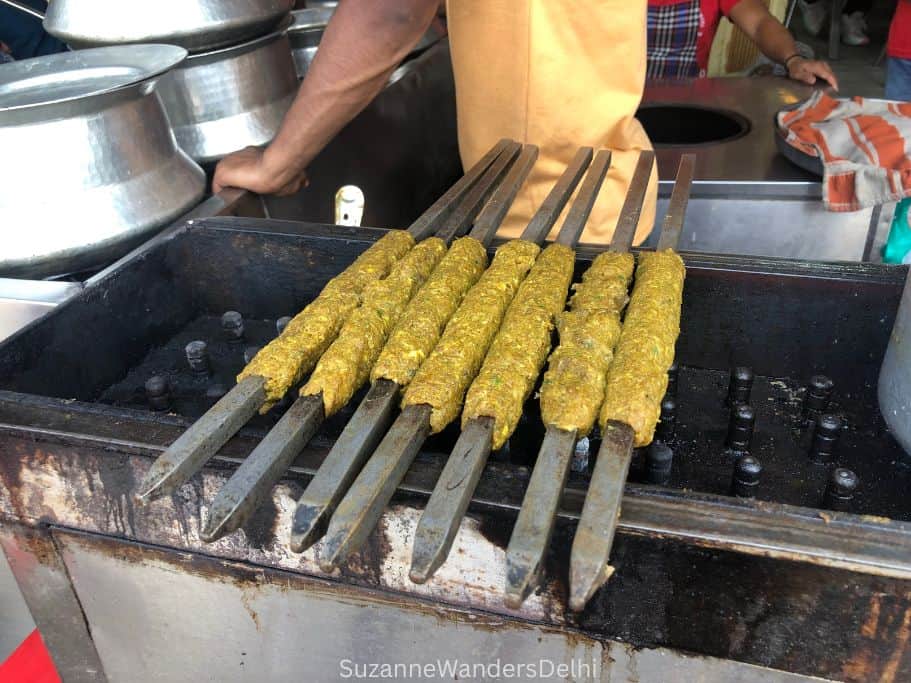
If you explore the lanes of Old Delhi around Jama Masjid you will undoubtedly smell the kebabs grilling at little shops on the street.
Most kebab stands have been in the same family for generations (like Qureshi Kabab Corner near Jama Masjid) and have their own secret spice blends. Minced mutton and chicken are the most common, but some shops may sell paneer kebab as a vegetarian option.
Kebab is available all over Delhi, but since so many Hindus are vegetarian, they are mostly found in Islamic neighbourhoods.
Laphing
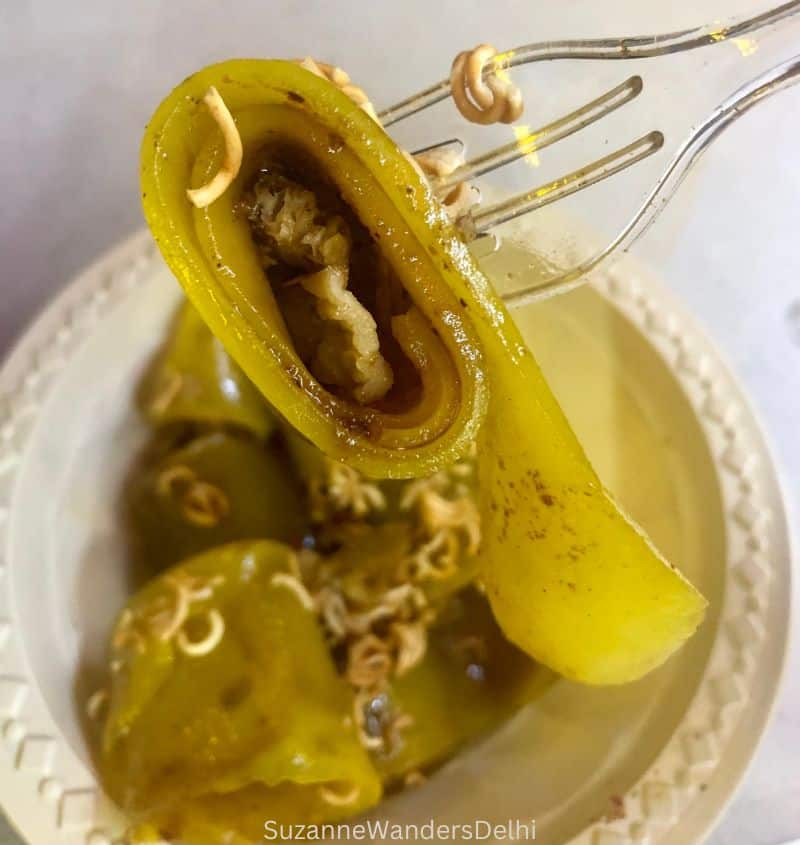
This Tibetan street food is another that came to Delhi with the refugees that followed the Dalai Lama in exile to India.
If you like momos you will probably love laphing, and as far as street foods go it’s one of the healthiest options.
Laphing is a cold, marinated noodle made from mung dal, potato starch and flour. It’s rolled up around a filling of chili paste or vegetables and sliced into bite size pieces. It comes in two version: wet (in broth) and dry (without broth).
You can find laphing in the Tibetan areas of Delhi, like Majnu ka Tilla, but my favourite spot is Aunty Momo in Amar Colony Market.
Bhel Puri
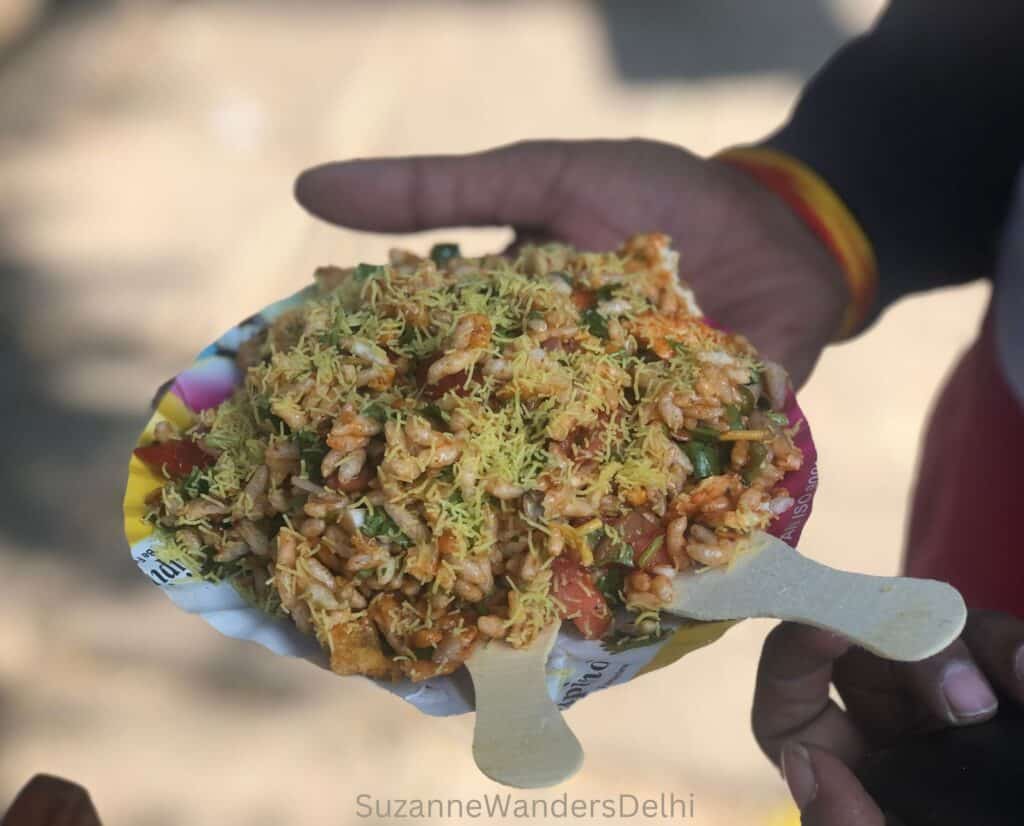
This is one of the most popular Indian street foods. It’s a savoury mix of puffed rice, raw vegetables, tangy chutneys, peanuts, coriander and sev.
Of all the Indian chaats (savoury snack), this is my favourite. It’s a perfect mix of crunchy, soft, sweet and sour, and simply delicious.
Originally this street food came from Chowpatty Beach in Mumbai, but now it can be found all over Delhi.
Shakarkandi ki Chaat
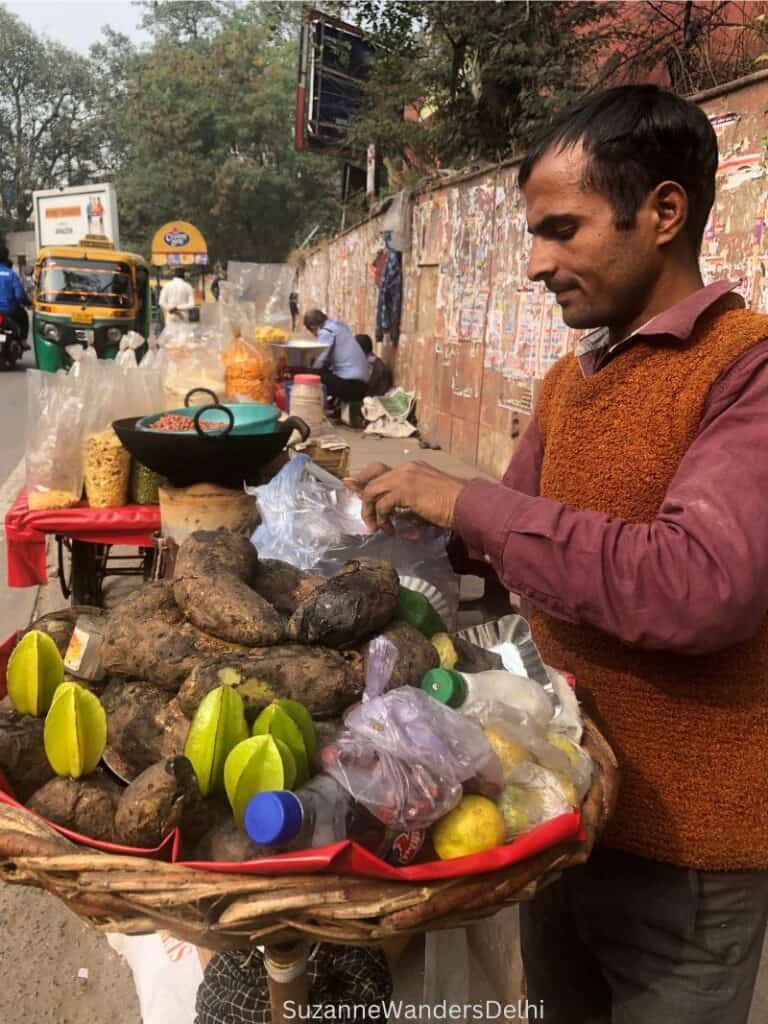
You know winter is approaching when these portable stands pop up all over the Delhi streets. This is one of the best winter street foods you’ll ever try, and it’s also super healthy.
Sweet potatoes are slow roasted over coals or wood, then peeled, chopped up and tossed with masala spices and lemon juice . It’s often served with roasted star fruit.
The recipe is pretty basic, and there are literally hundreds of these stands over the city, so feel free to try it anywhere.
Fruit Chaat (Kuliya Chaat)
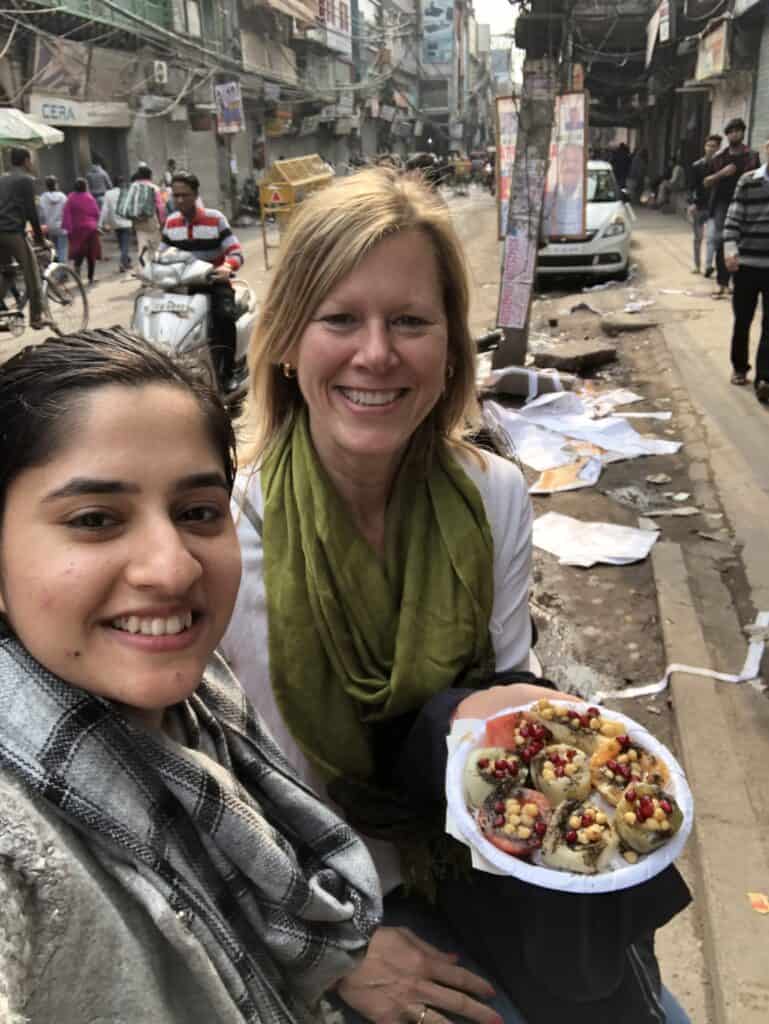
This is absolutely one of my all time favourite chaats. Fresh chunks of seasonal fruit are filled with a spicy mixture of black salt, cumin, lemon juice, chaat masala, chick peas and pomegranate seeds. It’s a very healthy Delhi street food.
Fruit chaat is also made with cucumber, sweet potato and tomato. Every time I’ve ordered it, the plate always includes one or two of these.
The best place to get fruit chaat is Old Delhi. If you explore Chawri Bazaar, go to Hira Laal Chaat Corner. Don’t let the non-descript appearance put you off. This shop has been making fruit chaat for generations and is the best in Delhi.
Dahi Bhalla and Dahi Vada
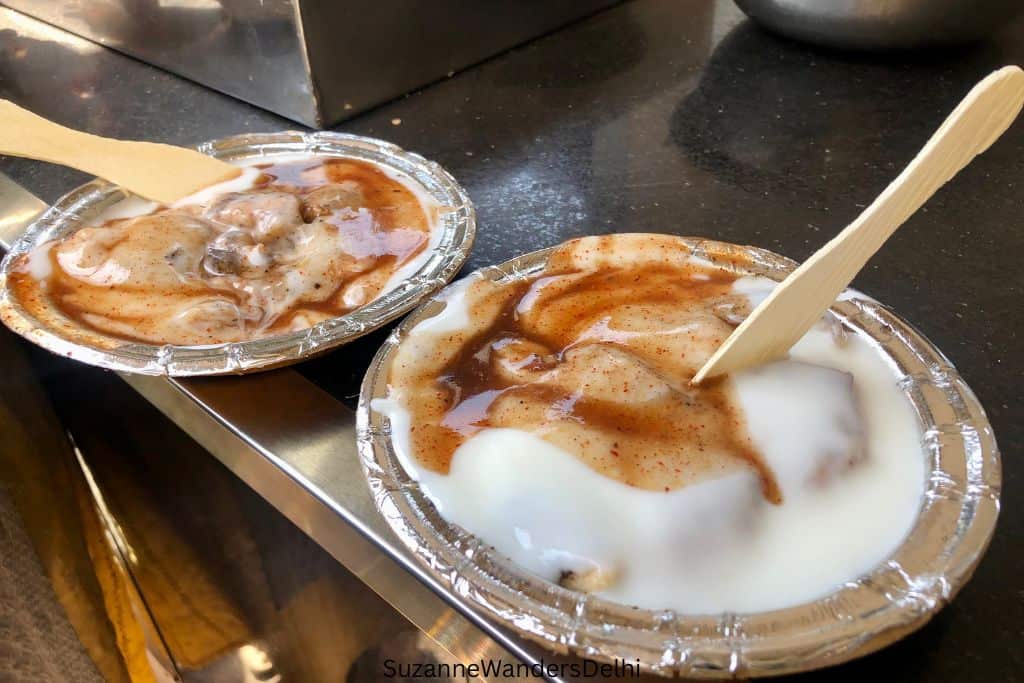
Dahi Bhalla is the perfect chilled and savory food during summer. Lentil fritters are soaked in yogurt and topped with sweet and tangy chutneys and spices. It’s often served at festivals, weddings and parties.
Dahi vada is basically the same, but made with urad dal, while dahi bhalla has some mung dal added to the batter. Both versions are delicious and refreshing.
Sweet Delhi Street Foods
Indians love sweets and Delhi has sweet street food also. Here are the most popular ones:
Rabri Faluda
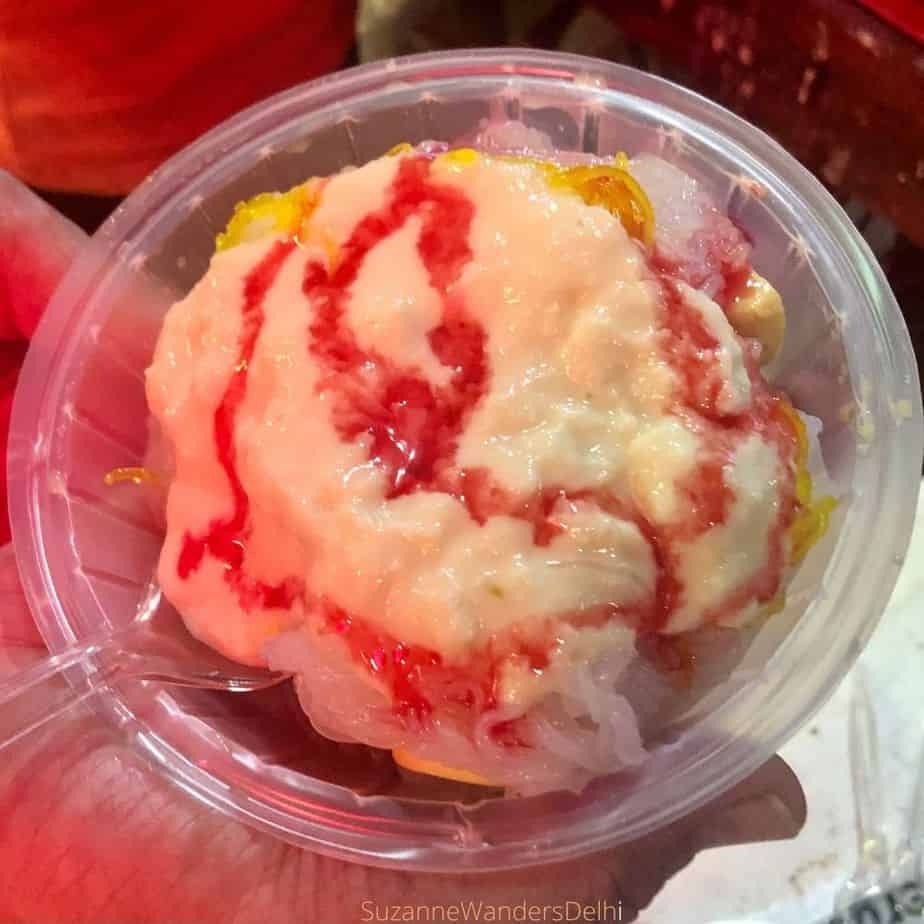
Rabri faluda is a cold Indian dessert made from rabri (a cream based pudding), kulfi (Indian ice cream) and faluda (sweet vermicelli noodles). It’s a favourite summer time sweet in Delhi.
It is served two ways: either on a plate or in a tall glass, like an ice cream sundae. Simple versions will have crushed ice and rose syrup, while the more elaborate ones will be layered concoctions including dried fruit.
I always ask they don’t use the crushed ice, just in case it wasn’t made with filtered water.
Daulat ki Chaat
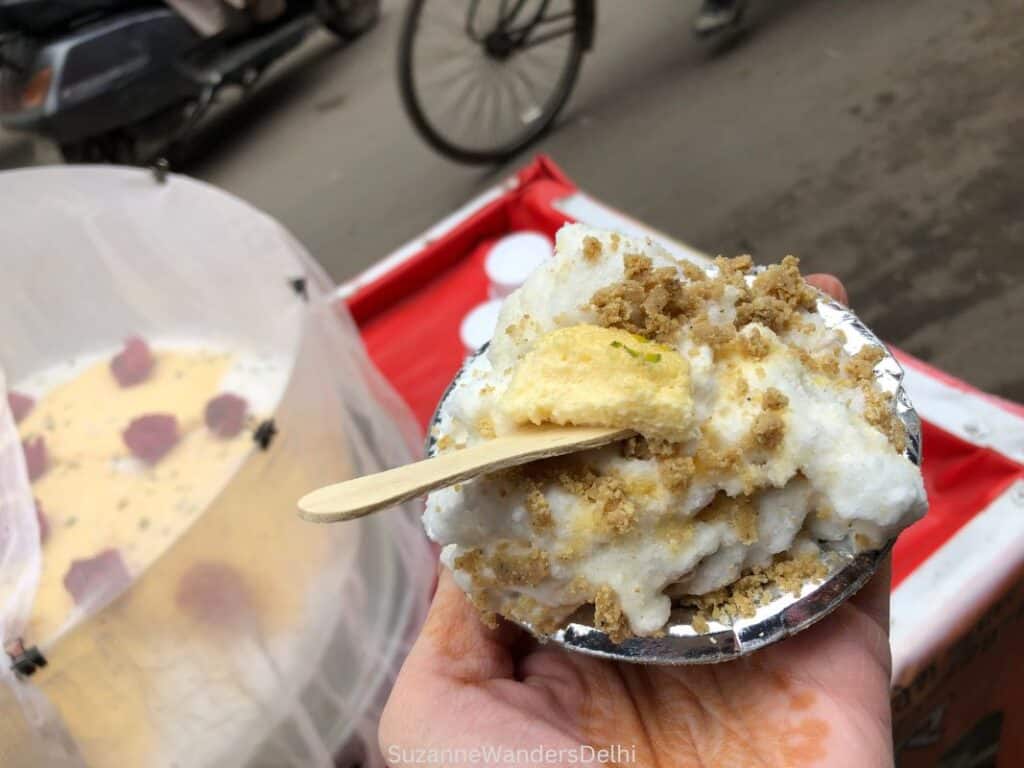
Daulat ki chaat is a traditional winter sweet. It’s mostly found in Old Delhi, and you’ll see pop up stands with huge bowls of the dessert covered by mesh.
This frothy dessert is made from whipping full fat milk at cool temperatures for hours until it becomes light and airy. Powdered sugar and saffron are added for sweetness and its golden colour.
Sometimes it is garnished with edible silver and finely ground pistachios.
Jalebi
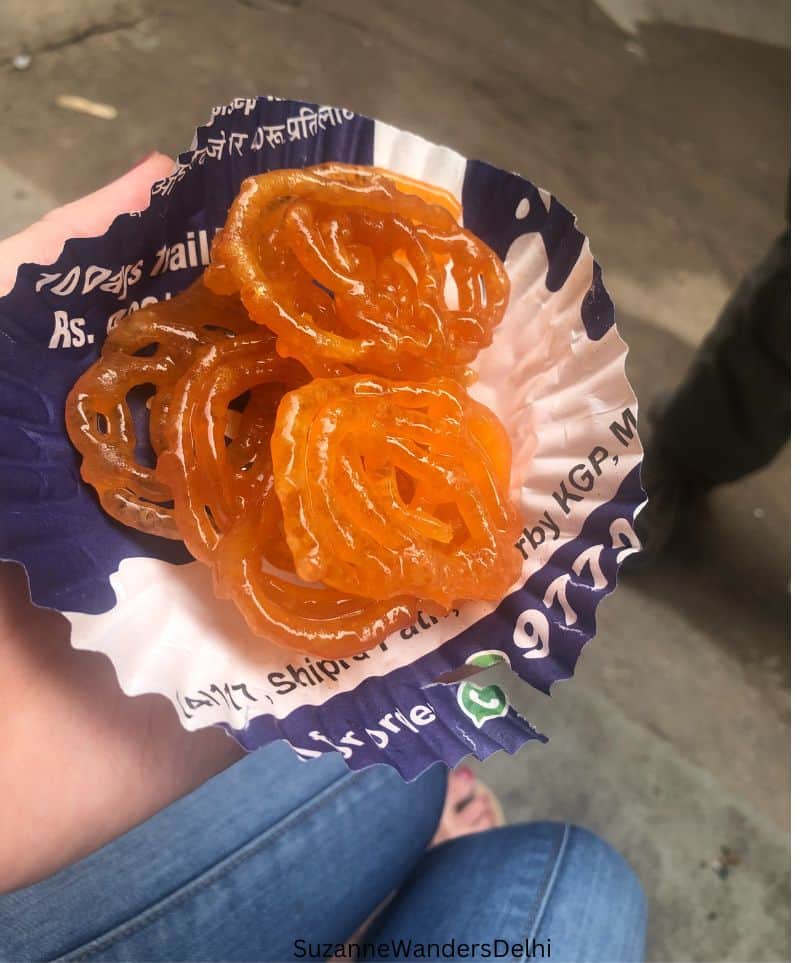
Perhaps the most famous of Indian sweets, jalebis are available everywhere. These crispy spiral treats are soaked in a saffron infused syrup which gives them their iconic orange colour.
My favourite are black jalebis – they’re not as sweet as the orange ones and a little thicker. The orange ones are made from wheat flour, but the black ones are made from a mixture of thickened milk and potato starch – this is what gives them their dark colour.
You’ll find black jalebis in Old Delhi in the lanes near Jama Masjid.
Halwa
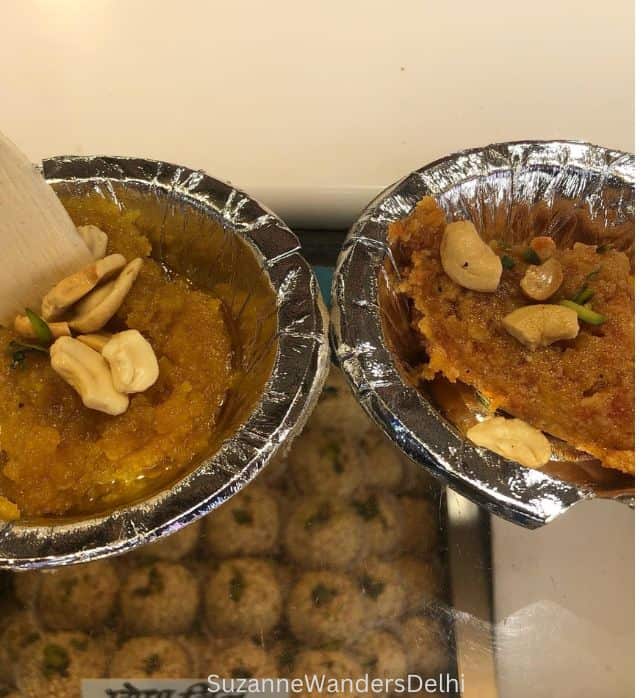
There are many kinds of halwa, but in Delhi the most common ones are semolina, gajar (carrot) and mung dal. Halwa is available all year round, but gajar halwa and mung dal halwa only appear in winter.
Halwa is a heavy dessert made from slow cooking the ingredients with sugar and milk. It’s not hard to make, but takes hours and it’s hard to match the taste of the halwa at the sweet shops in Delhi.
Shahi Tudka
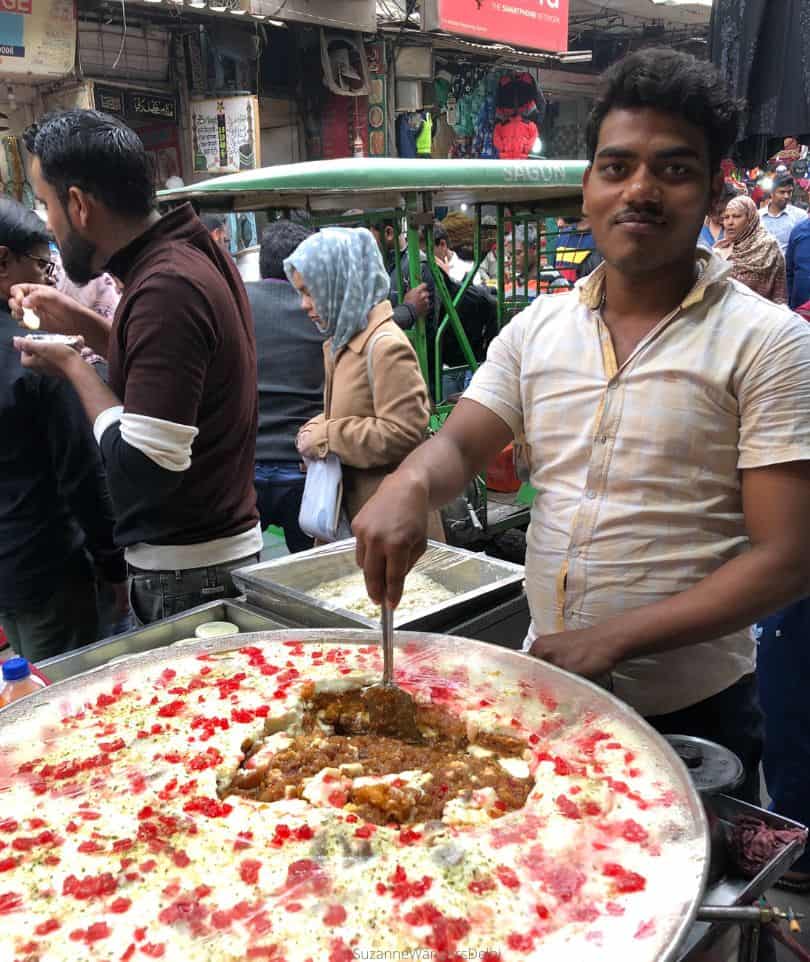
Shahi tudka is the Indian version of bread pudding. The dessert is from the Mughal period of Delhi history and literally translates to ‘royal bite.’
Slices of bread are fried in ghee (clarified butter) and then layered in huge vats with rabri (a sweet, thick milk custard), saffron, nuts and dried fruits. It’s a wonderfully rich and creamy dessert.
If you’re having it in summer, I recommend topping it off with ice cream.
Kulfi
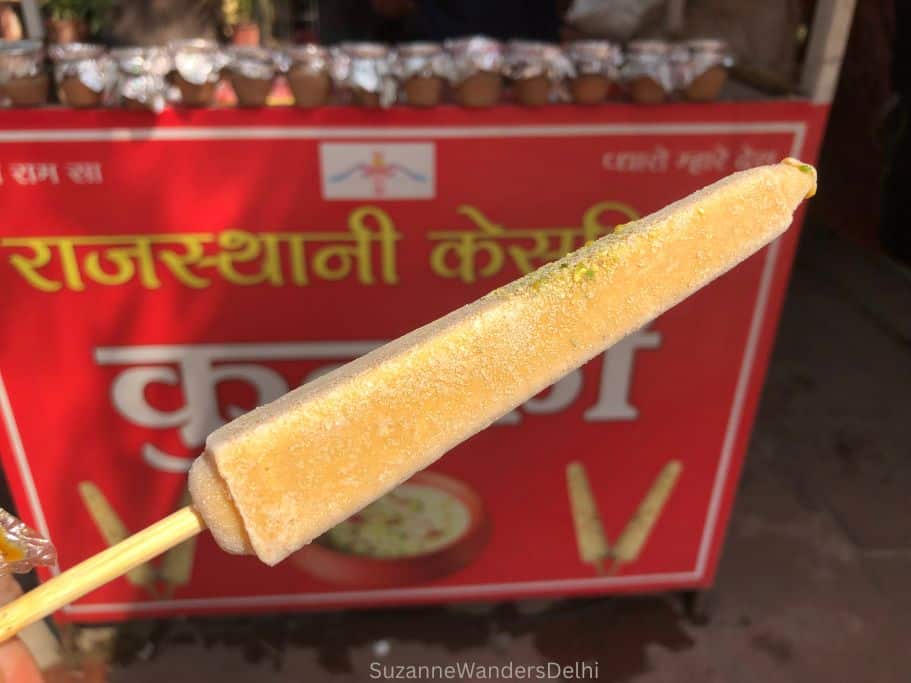
India’s version of ice cream is immediately identifiable by its long, conical shape.
Kulfi is served on a stick and has a rich texture and flavour due to the long cooking process. It is more dense than ice cream.
In summer kulfi walas ply their metal carts on Delhi streets, and serve kulfi directly from the conical molds. Traditional flavours are pistachio, kesar (saffron), rose, cardamom and mango.
If kulfi isn’t your thing and you’re craving traditional ice cream, these are the best ice cream shops in Delhi.
Best Places in Delhi for Street Food
Street food is practically on every corner in Delhi, but there are some areas which are famous for their many street food options.
These are the areas I go to when I want to do my own street food tour.
1. Chandni Chowk & Chawri Bazaar (Old Delhi)
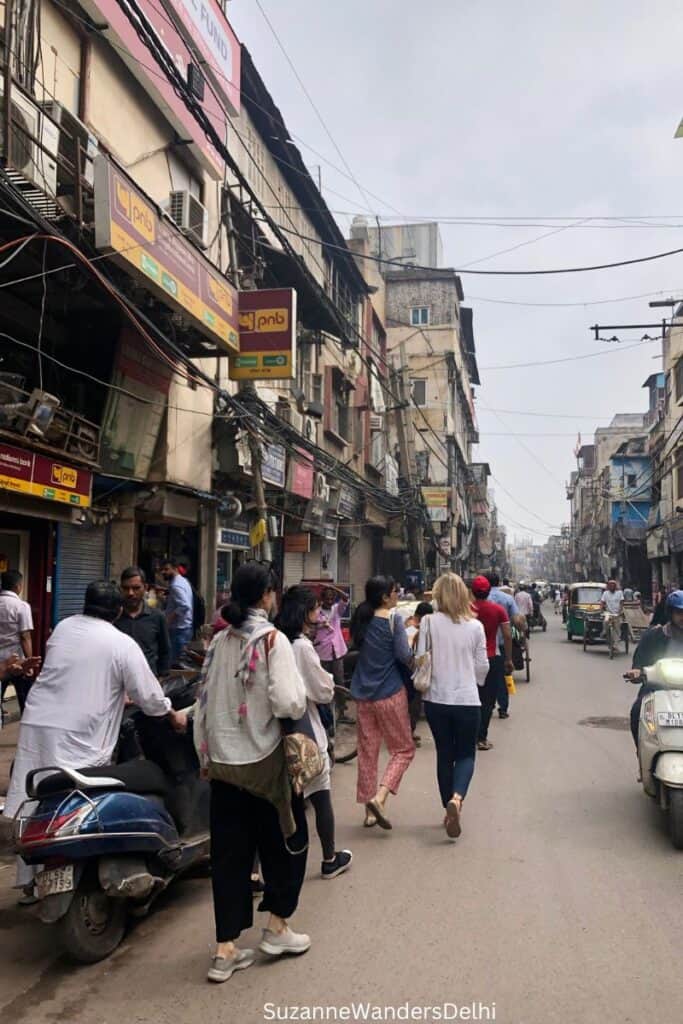
This is considered street food headquarters in Delhi. The area is extremely congested and generally bonkers, but the street food is legendary.
There are 2 main areas that make up the street food scene: Chawri Bazaar and Chandni Chowk. They are side by side and you can walk between them.
Most of the food stands have been in the same family for generations and foods are heavily influenced by Mughlai and Punjabi cuisines. Some of the best food stands are off the main roads, so don’t be afraid to wander the lanes.
These markets are closed on Sunday.
My favourite Old Delhi street foods spots:
- Ashok Chaat Corner (papdi chaat & aloo chaat), Chawri Bazaar
- Hira Laal Chaat Corner (fruit chaat), Chawri Bazaar
- Shyam Sweets (halva, gulab jamun, laddu), Chawri Bazaar
- Qureshi Kabab Corner (kebab), Jama Masjid
- Khanwarji Raj Kumar (chole bhature), Chandni Chowk
2. Central Market Lajpat Nagar
This is one of the best known and oldest markets in Delhi. The market sprang up when the area was developed in the 1950s, primarily for Hindus and Sikhs moving to Delhi from Pakistan after Partition in 1947.
It’s actually one of the best markets to shop for local clothing on a moderate budget, as well as street food.
Central Market Lajpat Nagar is closed on Monday.
My favourite Central Market Lajpat Nagar spots:
- Ram Laddu Food Corner (ram laddu)
- Chat Corner (aloo tikki)
- Dolma Aunty Momos (momos)
- Jhakkas Bombay Pav Bahji (pav bhaji dabeli)
- Siyaram ke Chole Kulche (chole kulche) – on the sidewalk across from Shyam Garments, beside the park.
3. Amar Colony Market
This is my favourite market in Delhi for street food. It’s a compact market that’s easy to move around and there’s delicious food from India, Afghanistan, Tibet and Pakistan.
Amar Colony was mostly settled by refugees and immigrants after Partition in 1947, and the food in the market reflects the diverse cultures.
The market is also famous for Indian suits, so if you need something special for a wedding, this is a great place to shop on a budget.
Amar Colony market is closed on Monday.
My favourite Amar Colony Market street food spots:
- Hunger Strike (chicken tandoori momos)
- Tunday Kababi (mutton galouti kebab)
- Aunty Momo (veg dry laphing)
- 34, Chowringhee Lane (kathi rolls)
- Famous Rabri Faluda Wala (rabri faluda) – cart set up in front of Lenskart.com, across the lane from Hunger Strike
Cost of Delhi Street Food
Eating street food in Delhi is not only a valuable cultural experience, it’s super cheap.
Most chaats (snacks) cost between INR 50 and INR 100 and full plates of food (such as chole bhature) are about INR 120. The cost of one meat kebabs is about INR 70, depending if it’s chicken or mutton. Kulfi is approximately INR 80 per stick.
If you’re traveling on a budget, eating Delhi street food is a great way to keep costs down. But even if you’re not on a strict budget, eating Delhi street food is an experience you should not miss.
How to Eat Delhi Street Food Safely
Thousands of locals and visitors eat street food with no problems at all. There’s no guarantee you won’t experience a tummy upset, but there is a lot you can do to reduce the risk and eat street food safely.
I eat street food every chance I get, and have only been sick a few times, usually because of something stupid I did (like eating a yogurt soaked chaat in the middle of monsoon season).
These are my best tips on eating street food safely:
- avoid street food in the hot summer months when food spoils quickly
- eat from busy stalls with high turnover; food will be fresh
- don’t eat street meat, unless it’s from a very busy kebab stand
- do not eat or drink anything with water (except chai which is boiled), unless you are sure it came from a sealed bottle
- go easy on the sauces, they may or may not have been made with filtered water
- wash hands with sanitizer before eating
Still not convinced? A very good option is the casual restaurant chain Haldiram’s. Haldiram’s sells a slot of traditional street food snacks and are known for their high sanitary standards. I eat there all the time.
Another great way to experience Delhi street food is to take a street food tour. A tour will bring you to the best places, and you’ll not only get to try the street foods, but learn the stories behind them.
How to Get Around Delhi to Try the Street Food
The best way to move around Delhi is by metro. Surprisingly, it’s one of the best metro systems in the world.
Auto rickshaws are very convenient for short distances. Uber is also widely used in Delhi and very cheap. Here’s more about how to get around Delhi.
Last Words on Famous Delhi Street Food: A Guide for Beginners
One of the very best things about Delhi is the street food. It’s delicious, fresh, and super cheap. Keep in mind the safety tips, and get out there and have your own authentic Delhiite food experience.