How to Buy a Real Pashmina

Pashminas are a beautiful souvenir, but they are also the thing most visitors to India get scammed on. I’m going to show you how to buy a real pashmina and tell the difference between fake and real.
I’ve learned a lot about pashminas living in Delhi and visiting Kashmir, and own a couple myself. I also deal with a reputable Kashmiri wholesaler who taught me a lot about how to buy a pashmina.
How to Buy a Real Pashmina
A pashmina shawl is one of the most versatile and beautiful items you can have in your wardrobe. Timeless and elegant, a pure pashmina will keep you warm on cool evenings, elevate the wow factor of any outfit, and last for decades if properly cared for.
What is Pashmina?
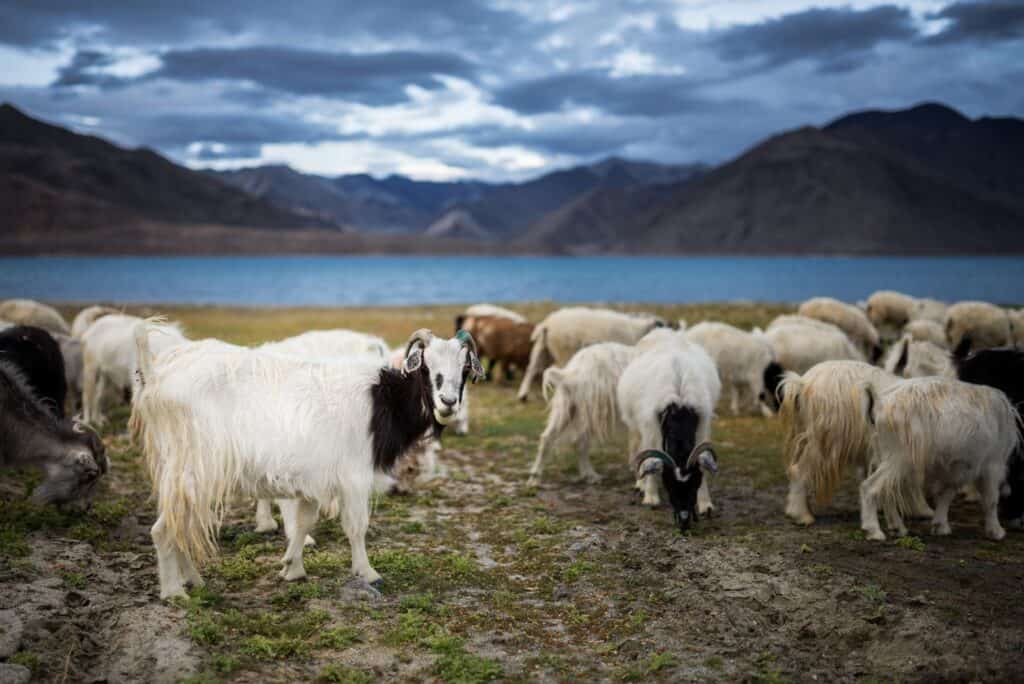
Pashmina comes from the Changthangi goat which lives in the Ladakh region of India, part of the Himalayas. The goats live at a high altitude of 4,000 to 7,000 metres and are tended by the Changpa tribes.
Temperatures can drop to -40C and the goats produce fine down on their necks and underbellies to keep warm. This type of wool is cashmere, and it is the manual process of turning the cashmere wool into fabric which makes it pashmina.
Are Cashmere and Pashmina Wool the Same Thing?
Cashmere is the actual raw product, the wool removed from the goat. The process of turning that raw product into yarn and the yarn into fabric on wooden hand looms in Kashmir is what makes it pashmina.
Similar products are produced in countries such as Nepal, China and Afghanistan, but Kashmir is the only producer of authentic pashmina.
How Can I Tell if it is Pure Pashmina ?
Unfortunately, there are a lot of fake pashminas on the market and visitors are prime targets.
India, China and Nepal are notorious for manufacturing viscose, acrylic or wool blend shawls and scarves, and passing them off as pashminas. Local markets and shops are full of these fakes which are sold to unsuspecting shoppers.
But there are ways to differentiate real pashmina from fake. This is how to make sure you are buying a real pashmina:
1. Weight – pashmina is very light
Pashmina is extremely light. A shawl measuring 200 cm x 100 cm weighs about 400 grams, depending on how tight the weave is and the amount of embroidery work. Some shawls weigh less than 200 grams.
2. Pashmina is very soft
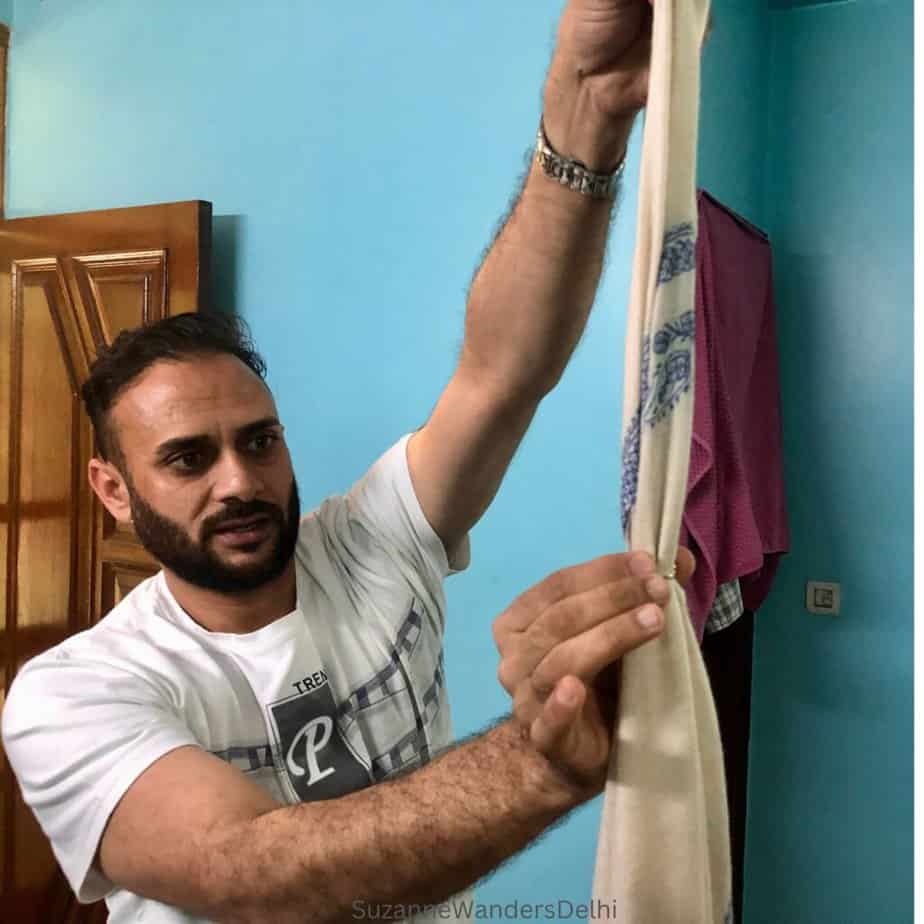
The down used to produce pashmina comes from the neck and underbelly of the goat. It is so soft it is often called soft gold. A pure pashmina scarf will easily pass through a ring and feel extremely soft to the touch.
3. Genuine pashmina is not perfect
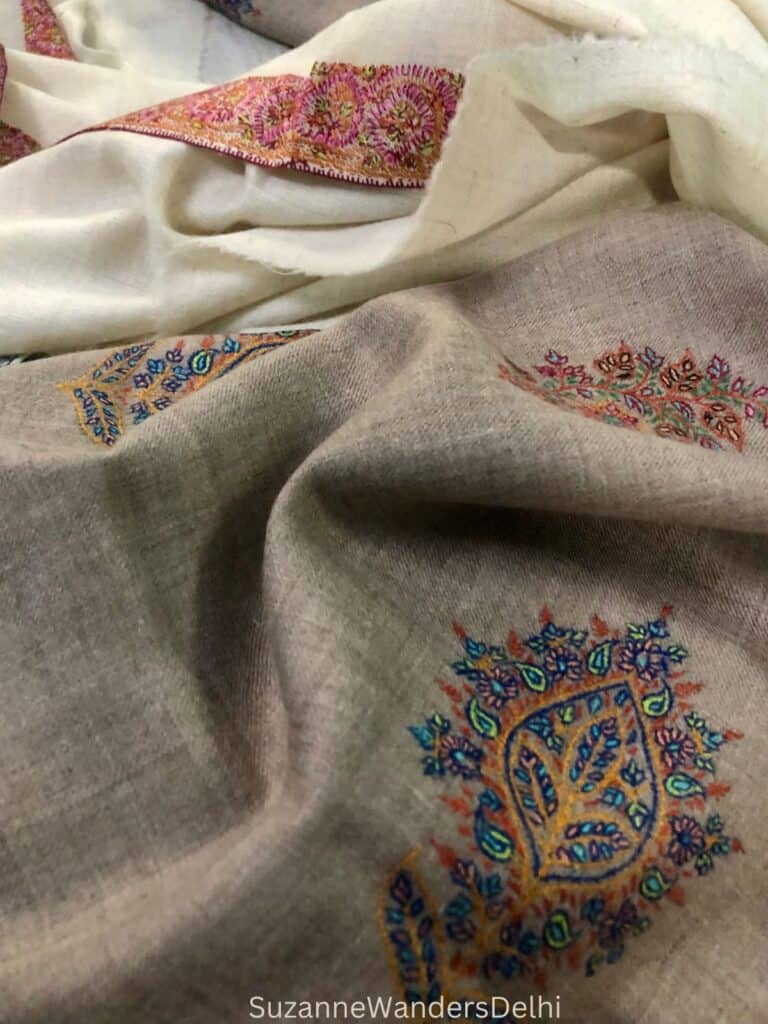
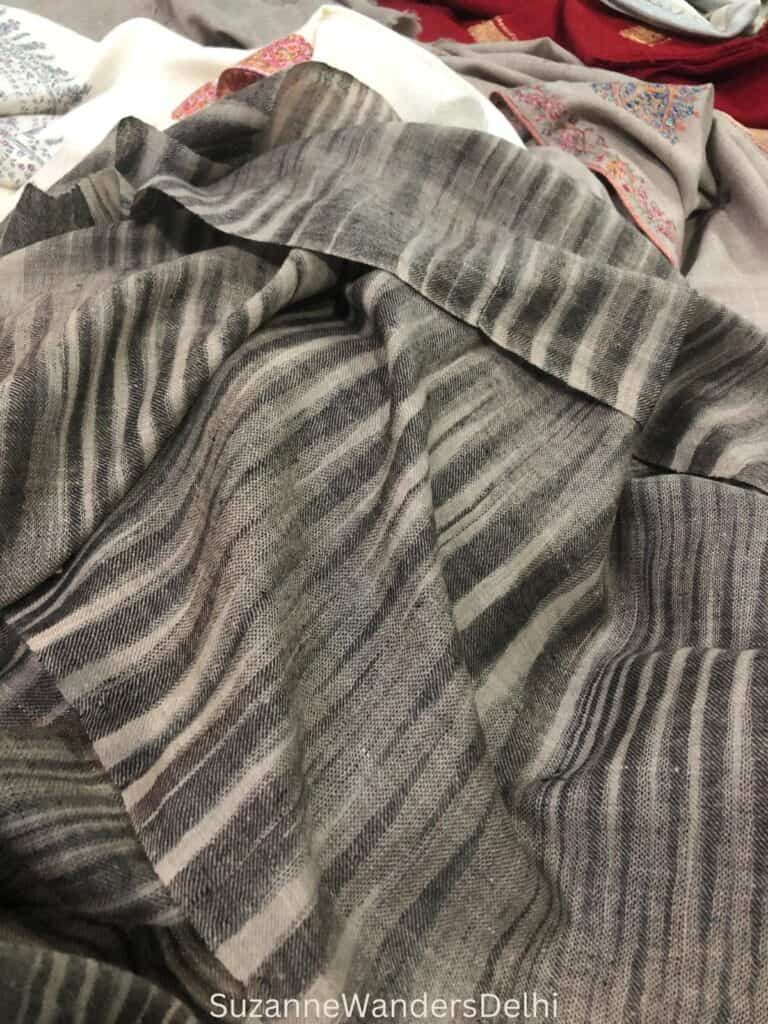
Pashmina is 100% handcrafted, right from the spinning of the wool to the fine embroidery on a woven scarf or shawl. There should be slight irregularities in the weave or colour.
A machine woven cloth will be completely even and perfect, as will any embroidery work.
4. Pashmina does not create static electricity
There should be absolutely no static electricity if you rub two sides of a pashmina together. Synthetic fibres like polyester and acrylic create static electricity.
5. The ends of a pashmina are unfinished
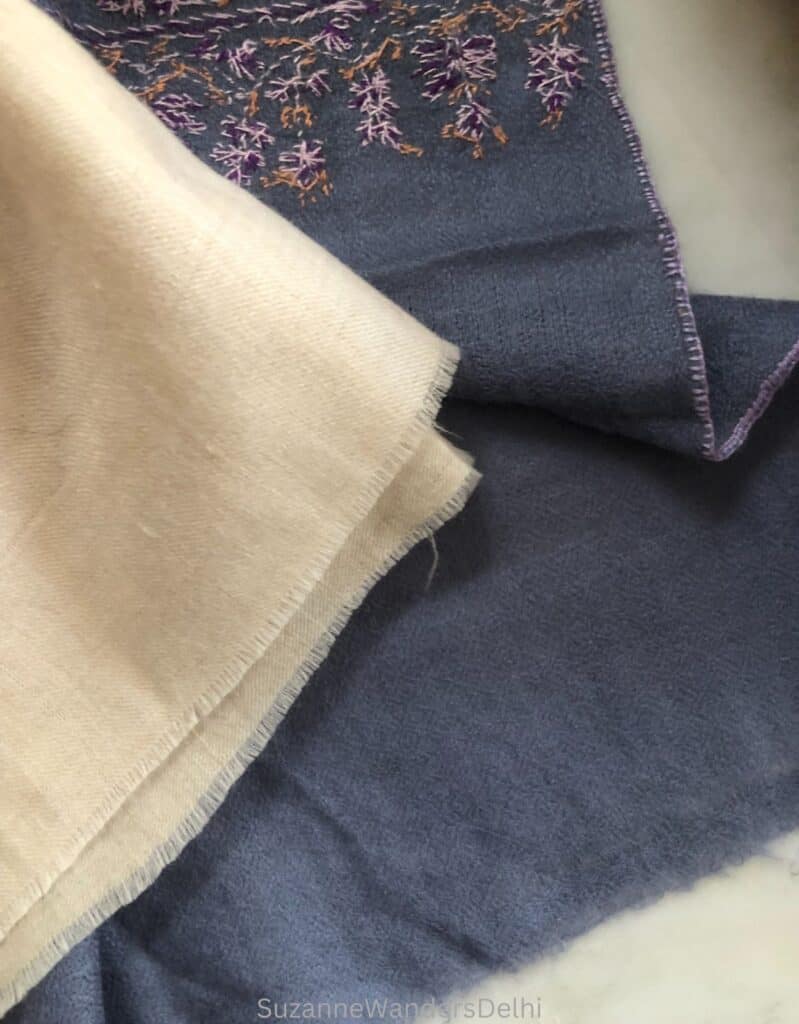
The two ends of a pashmina (the short sides) are always unfinished. They have a frayed look. Ends of a pashmina are never braided – that is a sure sign of a fake.
6. There should be no shine
The fibre produced is a 100% animal product and should have no sheen or extreme shine. Embroidery work may have a shine, and this is usually indicative of silk thread which is more valuable than cotton thread.
7. The burn test
Pashmina is made from goat hair and should smell like burnt hair if burnt. No, don’t set the pashmina on fire! Gently pull out a thread from one of the unfinished ends. You can also pull out one of the fine hairs sticking out of the fabric (another sign of a real pashmina) and burn it.
If it smells like burnt hair and gently dissolves to a fine ash it is probably pashmina.
8. Pashmina is expensive
If you are being offered a pashmina for less than US$100 it is not real. A completely plain scarf (no embroidery) can cost US$110 at wholesale prices.
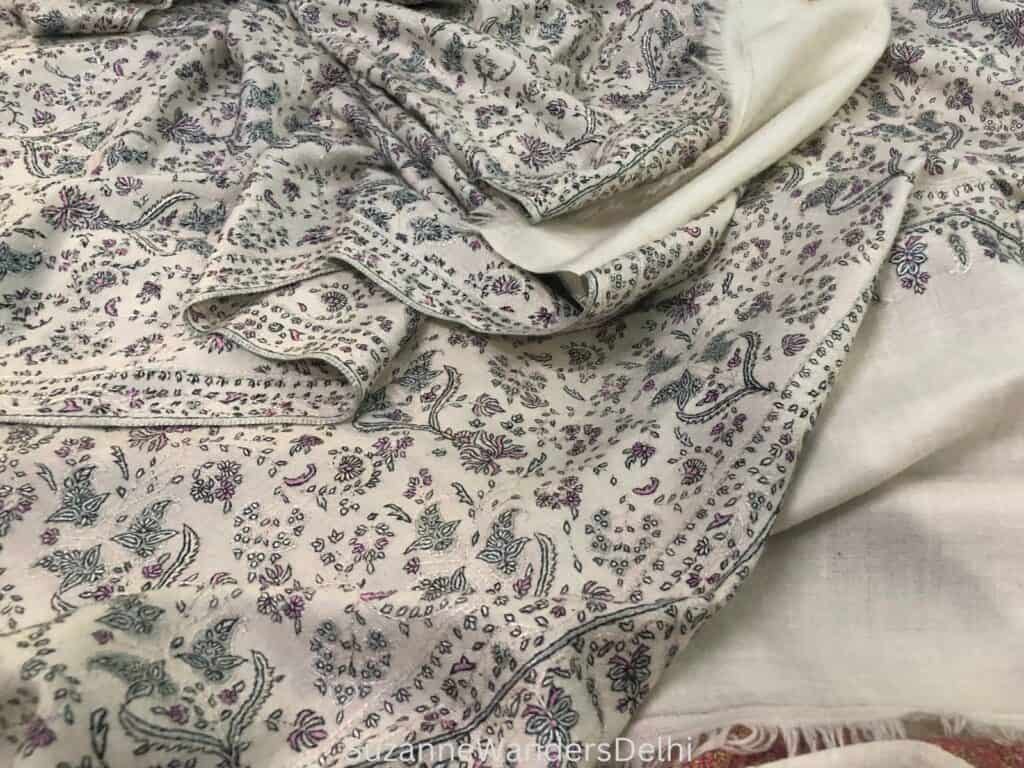
The more embroidery, the higher the price. Shawls are larger and more expensive than scarves. Some shawls cost well over US$1,000.
Why is Pashmina So Expensive?
Pashminas can cost hundreds or thousands of dollars. No wonder they are so cherished and handed down from mothers to daughters. But what makes them so expensive?
The down used to make pashmina is rare
The down used to make pashmina comes from a rare mountain goat found only in remote areas of the Himalayas. A single goat produces about 150 grams of cashmere a year, and 3 to 4 goats are required to make one shawl.
Pashmina is 100% handcrafted
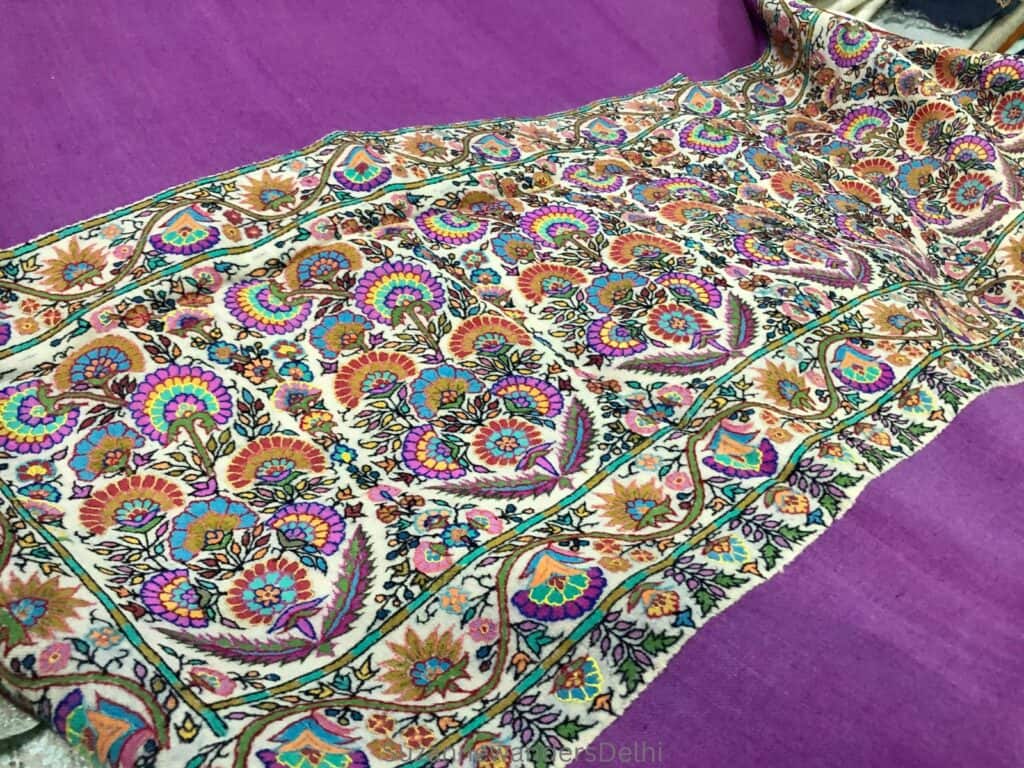
The raw down in transported to Kashmir where it is spun and woven in handloom factories. It can take 3 to 4 days to produce one shawl (fabric only). Embroidery is hand stitched.
A machine woven ‘pashmina’ is not a real pashmina. It is the actual hand process of turning the cashmere wool into shawls that makes it a pashmina.
It can take 2 years to embroider one pashmina shawl
The amount of embroidery is directly linked to the cost of the finished shawl or scarf. The more embroidery, the higher the price. Shawls that are almost entirely covered in embroidery can take 2 years to complete and cost over US$1,200.
Some shawls are embroidered with silk thread instead of cotton, or a combination of both. Silk is more expensive than cotton and will raise the price of a pashmina.
Silk has more shine than cotton and the embroidery should stand out when compared to cotton embroidery.
If the Label Says 100% Pashmina, is it Really Pure Pashmina?
The word pashmina is widely, and in many cases, loosely used. So far pashmina is not a protected, designation of origin product (like Parmesan or Champagne).
Even a label claiming 100% pure pashmina is no guarantee.
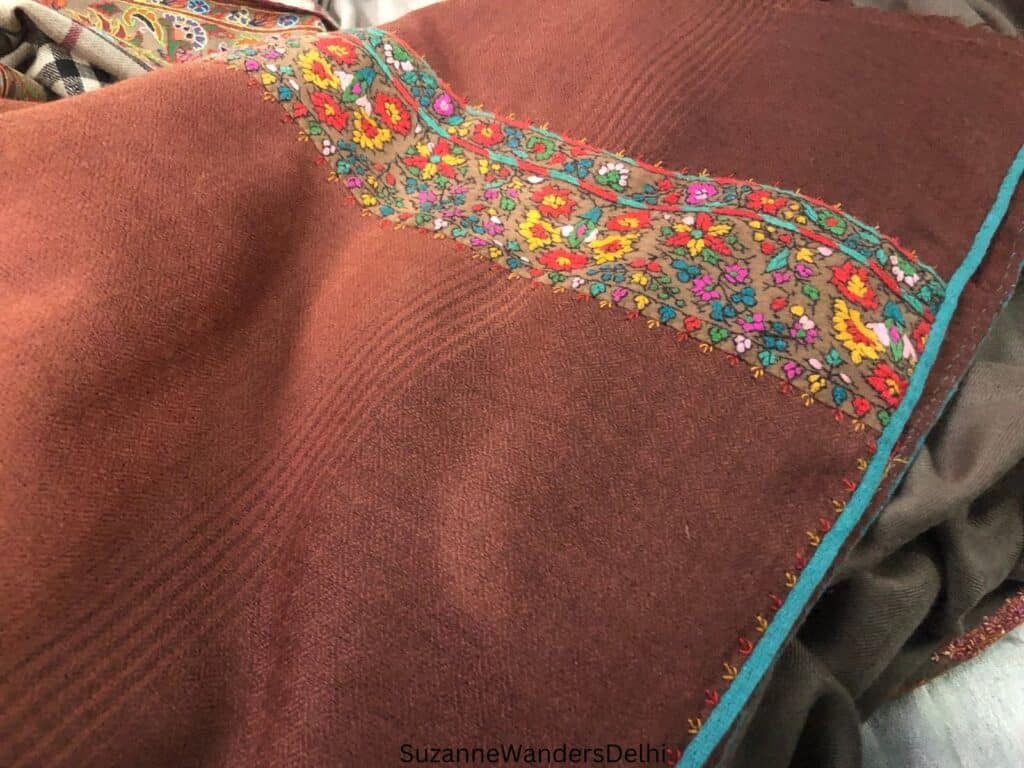
So how do you know? Check the item very carefully for authenticity in the ways mentioned above. If the label indicates the product was made anywhere other than Kashmir (including elsewhere in India) it may not be authentic.
Authentic pashmina is only made in Kashmir on a handloom. There is no such thing as a pashmina made in China, for example.
The most common fibres to mix with, or replace cashmere are viscose, acrylic and wool. These shawls are usually made on machines and often woven into a diamond pattern (especially wool blends). If you see a diamond pattern on the shawl, it is not pure.
Is Pashmina Ethical?
Pashmina is extremely ethical and environmentally friendly.
The down is removed from the animal without harming it. In many cases, the goat is not touched at all because the down gets caught on bushes and twigs on the mountainside and is removed from there.
The entire pashmina process is done manually. Fabric is woven on hand loom machines and embroidery is hand stitched.
Pashmina is durable and will last for decades if properly cared for. In fact, many Indian mothers hand down their pashminas to their daughters.
Is Pashmina Legal?
Pashmina is legal, but there is a type of shawl called shahtoosh, which not.
Shahtoosh is the finest quality of wool in the world. It comes from the fur of an undomesticated goat called a chiru (also known as a Tibetan antelope), an endangered species. Chirus cannot be shorn, so are killed for their wool.
The manufacturing of shahtoosh is banned worldwide, and in India it is illegal to even own a shahtoosh shawl. However, the illegal manufacturing continues. Once in a while I come across a news story about the busting of a shahtoosh ring.
Under no circumstances purchase a shahtoosh. Not only is it unethical, you could also get into very serious trouble with Indian authorities.
Where Can I Buy an Authentic Pashmina?
The very best place to buy a pashmina is in Kashmir, the only place where authentic pashmina is manufactured. If a trip to Kashmir is not practical, there are many places in Delhi you can buy a pashmina.

Shaw Brothers by Mifi & Mubi at D-47 in Defence Colony is a well regarded pashmina shop. Even though this is a known and respected shop, you should still exercise caution and test the pashminas in the ways I suggest.
Another option is a wholesaler. I deal with a Kashmiri seller that keeps a small office and showroom in Jangpura, Delhi. He can be reached on WhatsApp at 91 70068 25030.
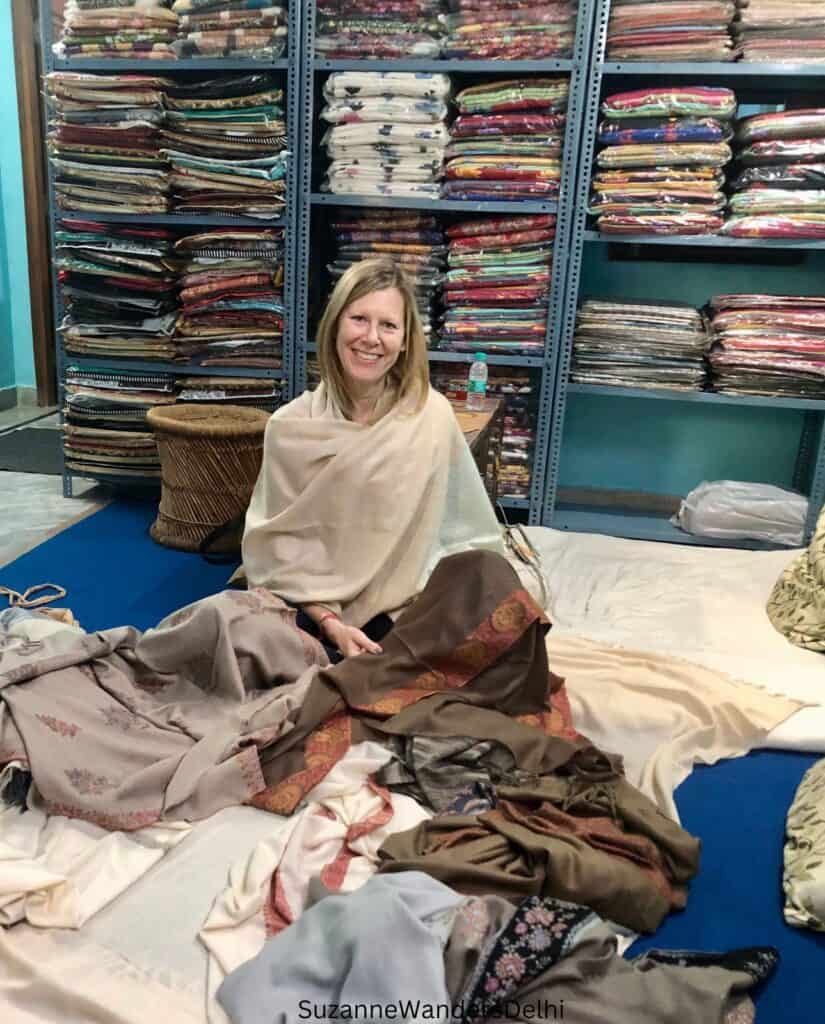
Many Indian families have a shawl wala (shawl seller) they have dealt with for years, sometimes decades. If you know a family that has a shawl wala they trust, that would also be a good source.
Last Words on How to Buy a Real Pashmina
Pashminas are wonderful, versatile investments to have in your wardrobe. It’s amazing how warm and stylish they are. Everyone in Delhi wears them in winter, even men. And now that you know how to buy a real pashmina you can start your own collection.