Chawri Bazar: Exploring the Vibrant Chaos of Old Delhi’s Market

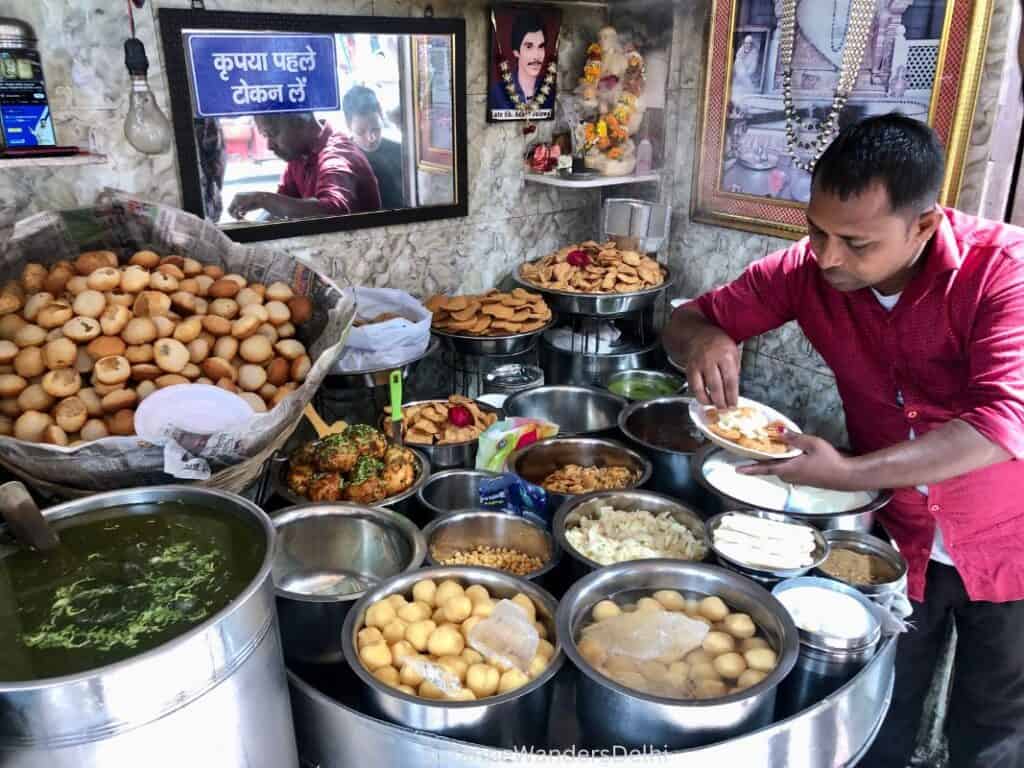
Chawri Bazar is one of Old Delhi’s most historic markets. Today it is famous for street food and paper products, but it has other charms too. I have been many times, and each time I go I discover something new.
After Chandni Chowk, this is the most famous and historic market in Delhi. It’s a warren of back lanes with surprises around every corner: hidden havelis (traditional mansions), old temples, and food stalls only the locals know about.
There is so much history and so many stories in this part of Old Delhi.
Visiting Chawri Bazar: Overview
Most tourists spend their time in Old Delhi on Chandni Chowk, but Chawri Bazar is worth visiting, and you can easily walk between the two.
The main bazar is located on Chawri Bazar Road between Hauz Qazi (the junction where the Chawri Bazar metro station Gate 3 is located) and Jama Masjid.
Many shops are in old havelis built in the 1800s. If you look up to the second and third stories you can see the street facing balconies, a classic haveli design element.
- Location: Chawri Bazar Road, Old Delhi
- Hours: Shops are open 11:00 am – 7:00 pm and food stands are open longer, but this varies. Closed Sunday.
- Price: No entry fee. Not all places accept cards.
What To Expect

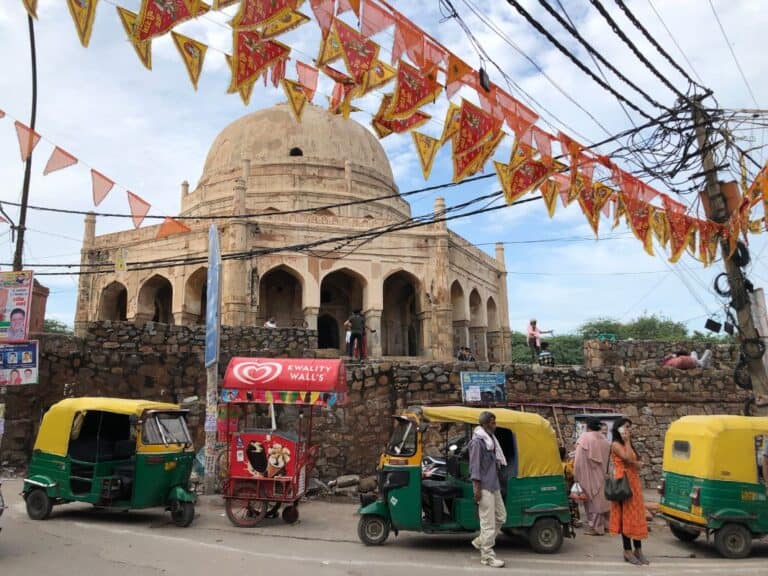
Chawri Bazar Road is not very wide, and it is dirty, noisy and congested. Pedestrians have to share the walking space with motorcycles, auto rickshaws, cycle rickshaws and vehicles. Sidewalks are not great and often non-existent. It is a full blown Old Delhi experience.
The area surrounding the main road is full of narrow streets and tight windy lanes. These lanes have all sorts of small temples, mosques and old havelis.
The distance between Hauz Qazi and Jama Masjid Road (where Chawri Bazar ends) is 700 metres, and if explore a few lanes and side roads it will take about 1.5 hours.
Be prepared for walking and bring a dupatta or scarf, hat and bottled water.
There aren’t many toilets in this area. Some of the restaurants near Jama Masjid have them, but I recommend using the toilet at the Chawri Bazar metro station, Gate 3 (at Hauz Qazi). The toilet is inside the paid area, but it’s reasonably clean.
Chawri Bazar History
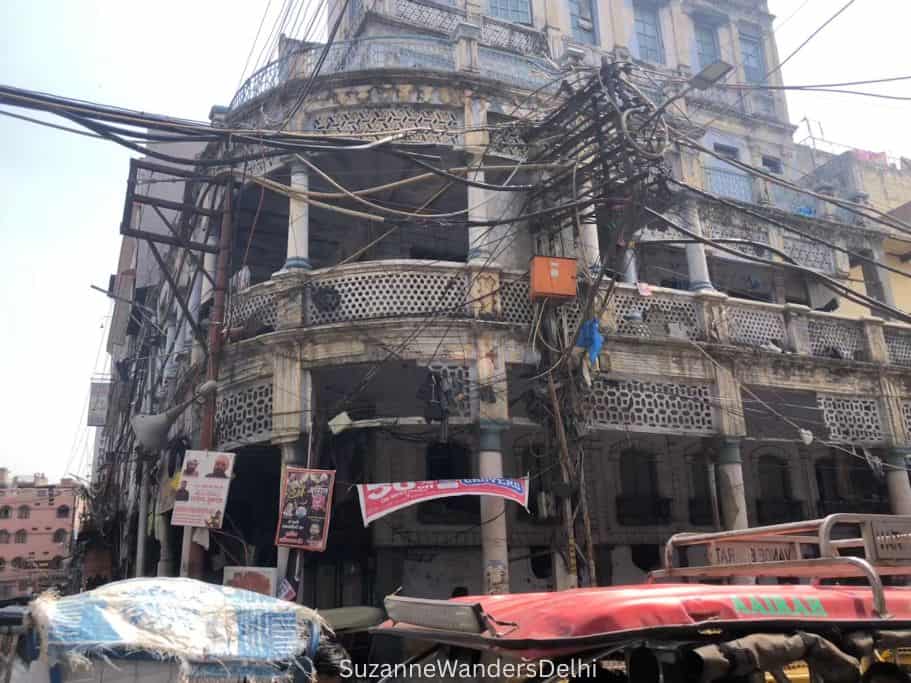
The market was first established between the 18th and 19th centuries. It’s hard to imagine, but Chawri Bazar was originally lined with havelis, beautiful town homes belonging to the wealthy.
It was a popular promenade, especially among men as this is where the famous taiwafs resided and entertained. Taiwafs were the most accomplished of courtesans, and they had considerable influence. They were skilled dancers, singers and entertainers whose patrons were nobility.
If you look above the shops of Chawri Bazar you can still some see of these havelis with their long balconies and intricately carved arches.
During the Mutiny of 1857 many havelis were destroyed and the taiwafs were moved to MG Road (considered the Red Light district), gradually losing their power and prestige.
Chawri Bazar used to be a popular copper and brass market, but today it’s better known for paper products and street food.
What To Do and See in Chawri Bazar
Besides wander the lanes and marvel at the chaos, these are the best things to do in Chawri Bazar:
1. Shop for Indian Stationary
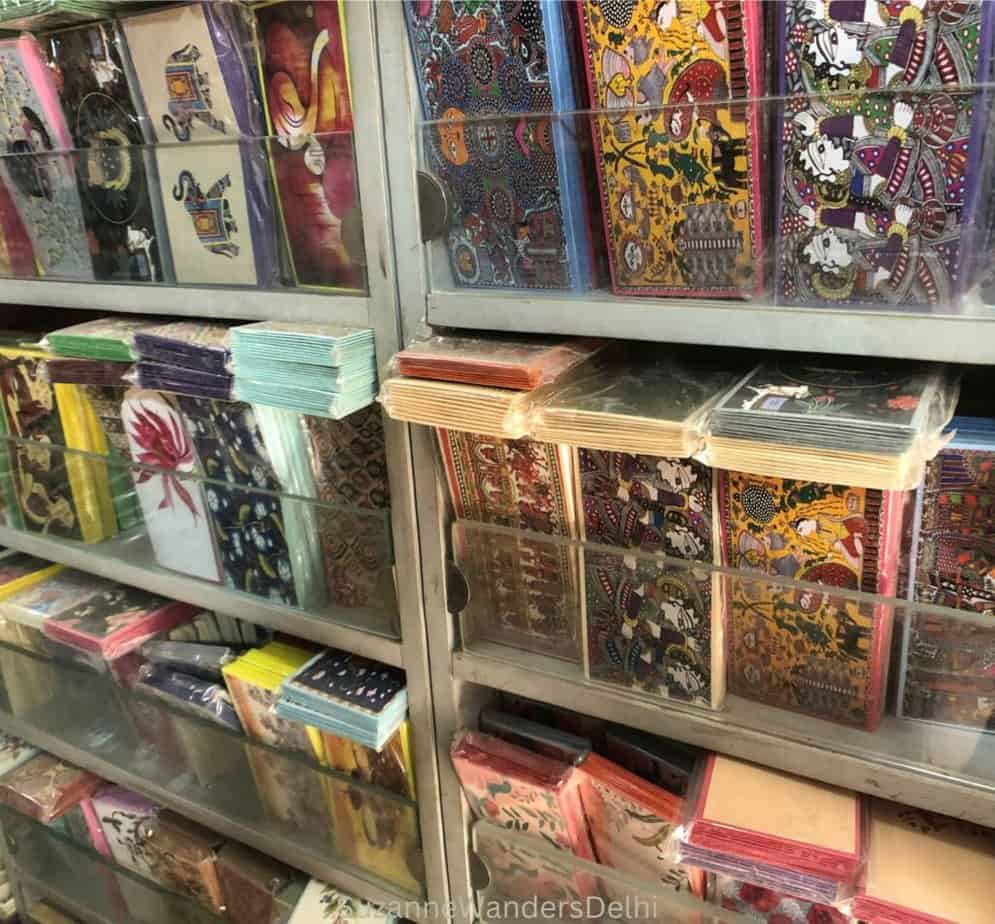
As you get closer to the Jama Masjid end of Chawri Bazar you’ll see a lot of paper shops. Some of them sell gorgeous wedding invitations and stationary in colourful Indian designs.
My favourite of these shops is Matak Shatak, their envelopes make great gifts.
2. Eat Street Food
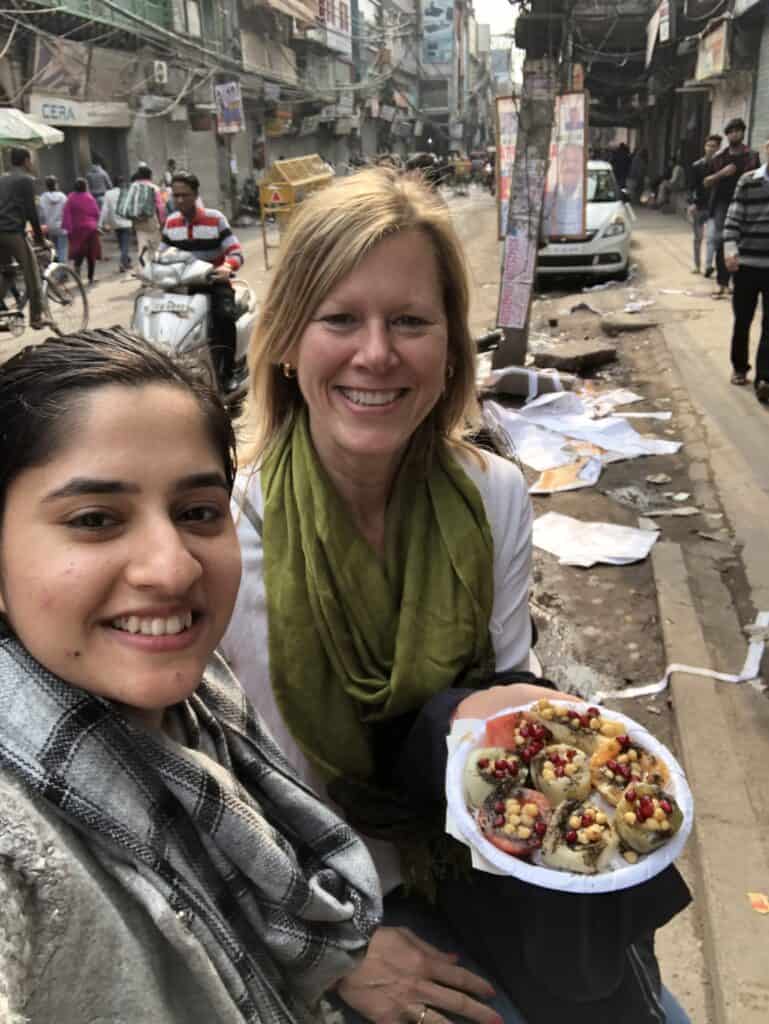
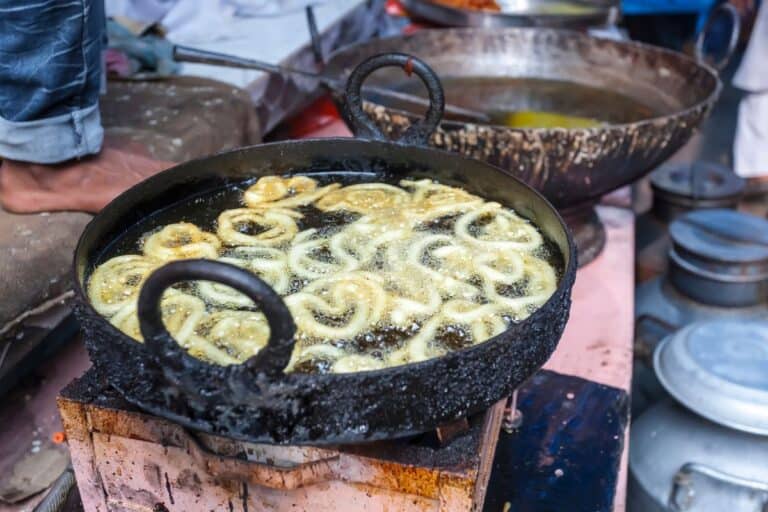
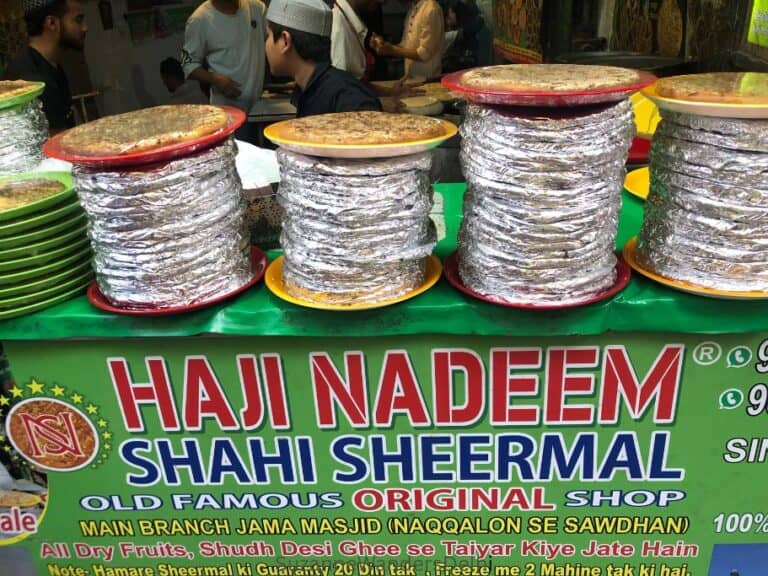
Chawri Bazar is street food ground zero. It’s easy to do your own street food tour, but these are some of my favourite stands and what you should eat. They’re all on Chawri Bazar Road, so relatively easy to find:
- Ashok Chaat Corner – papdi chaat & aloo chaat
- Shyam Sweets – gajar or mung dal halwa & bedmi puri with aloo sabzi
- Hira Lal Chat Corner – kuliya chaat
3. See Delhi’s Largest Mosque, Jama Masjid
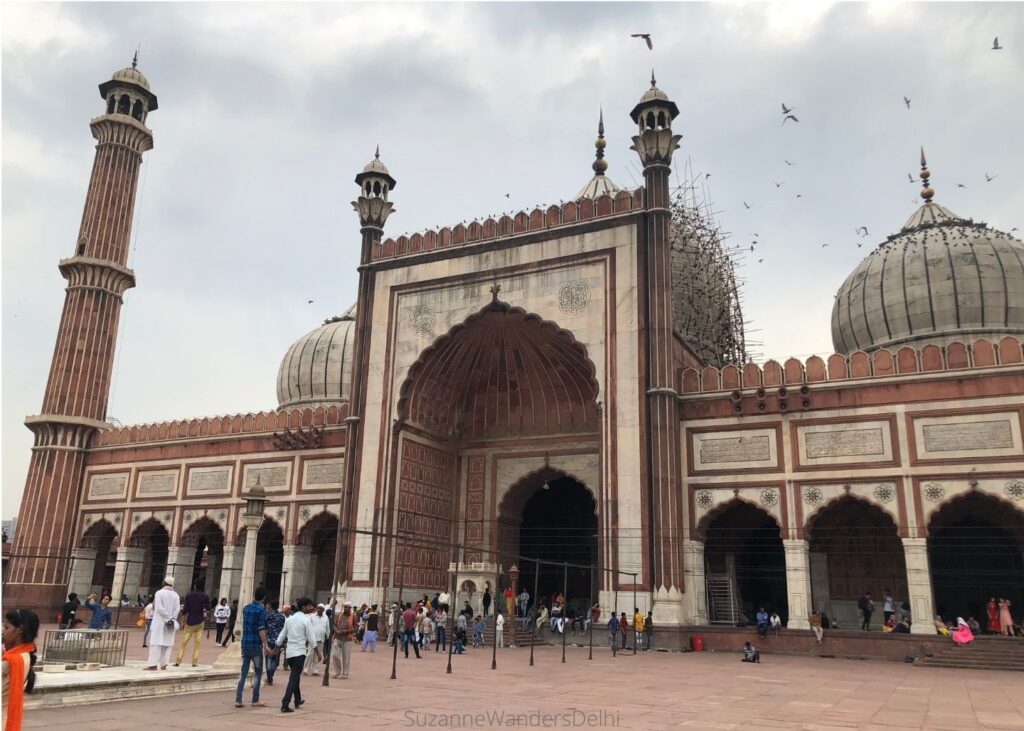
This is the largest mosque in Delhi. It was built by the Mughal emperor Shah Jahan in the 1650s. You’ll be able to see it clearly as you walk down Chawri Bazar Road.
This is an active mosque and there’s a strict dress code. Knees and shoulders must be covered. Women should cover their heads, and shoes must be removed. The mosque has cover ups you can borrow.
On my last visit they were enforcing a INR 300 entrance fee for foreigners. If you enter from the less touristy side at Meena Bazaar, you’re less likely to be charged. There is always a fee to bring in a camera.
4. Visit Haveli Mizra Ghalib

Mizra Ghalib is Delhi’s most beloved and some say the greatest Mughal poet. The haveli he lived in has been turned into a small museum.
Ghalib loved Delhi and wrote many poems about the city, including some very sad ones after he witnessed its destruction by the British in the 1850s.
Admission is free, but it’s closed on Monday. You’ll have to walk through a series of lanes to get there, and you’ll see a part of Old Delhi most visitors don’t.
5. View Masjid Mubarak Begum
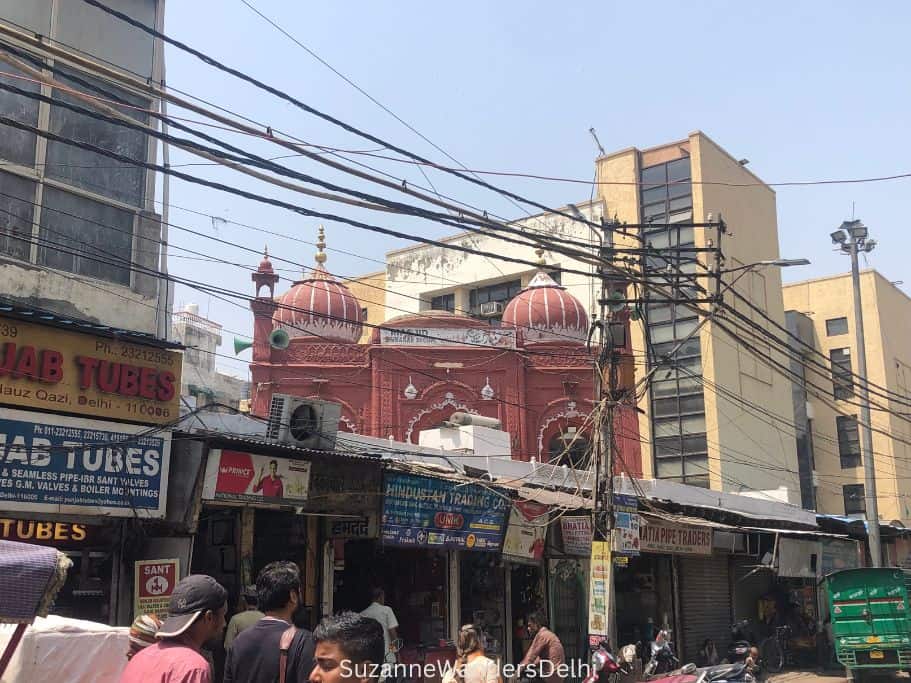
This small but pretty red mosque was built in the early 1800s. It was named after the favourite wife of David Ochterlony, a major general in the British army who completely embraced Mughal culture.
Mubarak Begum was originally a highly regarded courtesan, and the mosque is commonly known as Randi ki Masjid (translated as ‘prostitute’s mosque’), but it’s not quite true. A randi was the highest level of courtesan and very respected.
The mosque is located very close to Hauz Qazi on Lalkuan Bazar Road. Look up because it’s elevated. Women have to cover their heads and shoes must be removed.
How To Get To Chawri Bazar

The best way to get to Chawri Bazar is by metro. The nearest metro station is Chawri Bazar (Yellow line, exit at Gate 3). This will put you right in the middle of Hauz Qazi, the main junction. From there you can walk straight across Chawri Bazar Road.
Incidentally, this is one of the deepest metro stations in Delhi, at 21 metres. This section was one of the most challenging to build because of the historic and somewhat unstable city above.
You can also reach Chawri Bazar by Uber or auto rickshaw, but a lot of drivers won’t come here because it’s so congested and takes too long.
Where To Stay Near Chawri Bazar
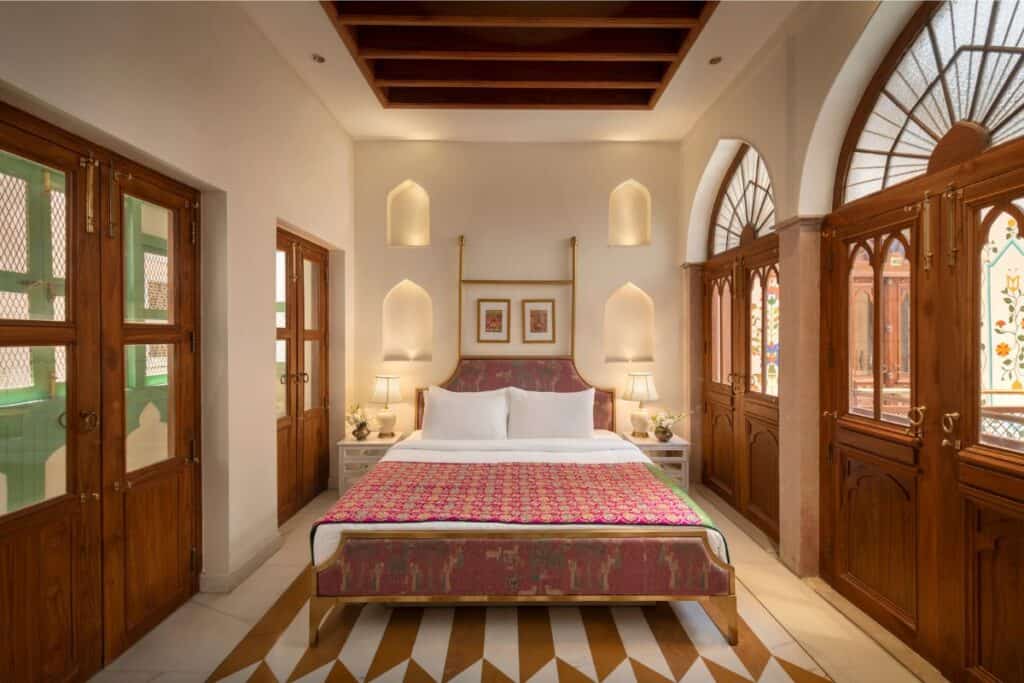
Central Delhi is a good area to stay in if you want to be near Chawri Bazar and Old Delhi.
I do not recommend staying in Old Delhi (with the exception of Haveli Dharampura) or neighbouring Paharganj. These are congested, noisy and not very safe parts of Delhi (at night), especially Paharganj.
- Haveli Dharampura and Golden Haveli (luxury): Two beautifully restored historic havelis. Most of Old Delhi’s havelis are severely dilapidated, so this is a unique opportunity. I don’t usually recommend staying in Old Delhi, but these are very special properties. Walking distance to Chawri Bazar.
- Metropolitan Hotel & Spa (mid-range): It’s the only 5 star hotel at this price point, and the location is very central. Excellent value. You’ll be able to easily explore all of Delhi from here, including Chawri Bazar.
- CP Villa Bed & Breakfast (budget): Excellent location in a quiet enclave near Connaught Place. Simple rooms, but clean and with private bathrooms. Also well located for exploring Delhi.
Last Words on Chawri Bazar: Exploring the Vibrant Chaos of Old Delhi’s Market
When tourists come to Old Delhi, they mostly visit Chandni Chowk and the Red Fort (UNESCO World Heritage Site). But there’s much more to Old Delhi.
Chawri Bazar is worth seeing if you want to explore more off the beaten path. Although a bit gritty, Chawri Bazar is rich in history, full of life and a great place to try Delhi’s famous street food.