Iron Pillar of Delhi: the Truth About the Pillar at Qutub Minar

Have you heard of the mysterious Iron Pillar of Delhi? It’s an iron pillar from the time of Chandragupta II, who ruled India between 375 and 415 AD. That makes the iron pillar 1,600 years old!
In all those years, the iron pillar has never rusted, something that has confounded scientists and historians.
The Iron Pillar of Delhi is located in the Qutub Minar complex, a UNESCO World Heritages Site. I have visited many times, and you can easily see both attractions at the same time.
- Hours: 9:00 am to 8:00 pm, daily
- Cost: INR 600 for foreigners, children under 15 free
- Location: Qutub Minar Complex, Mehrauli, Delhi
Visiting the Iron Pillar of Delhi: Overview
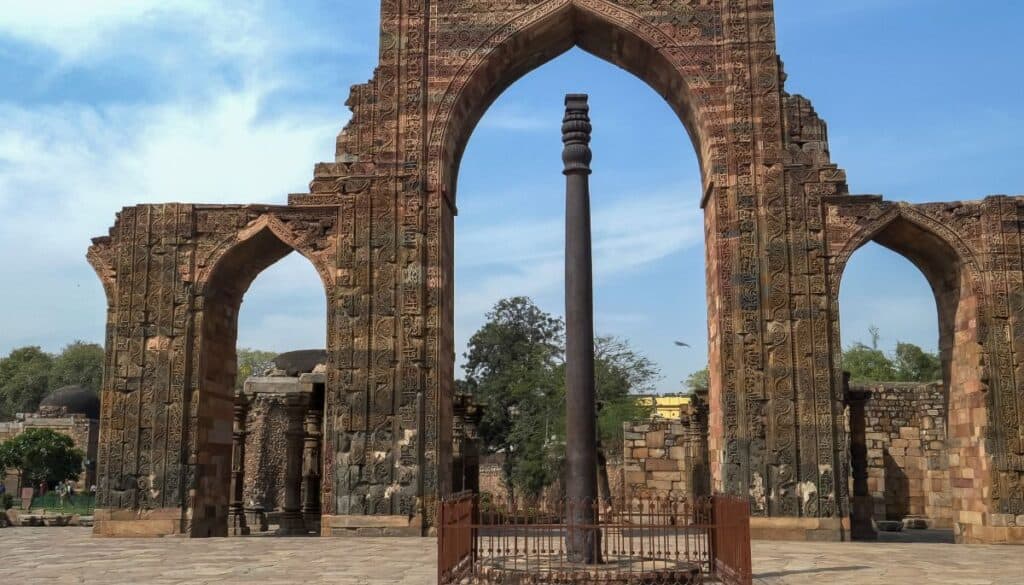
The Iron Pillar of Delhi is considered one of the greatest feats of ancient engineering, but it still mystifies historians and scientists.
Were iron workers that advanced 1,600 years ago, or was this some kind of lucky accident? How did the metal pillar get to its current location? What do the ancient inscriptions on the pillar mean? These are questions we may never have answers to.
At one point, it was even suggested extra-terrestrials might be responsible for the iron pillar of Delhi! This has since been refuted.
The History of the Iron Pillar of Delhi
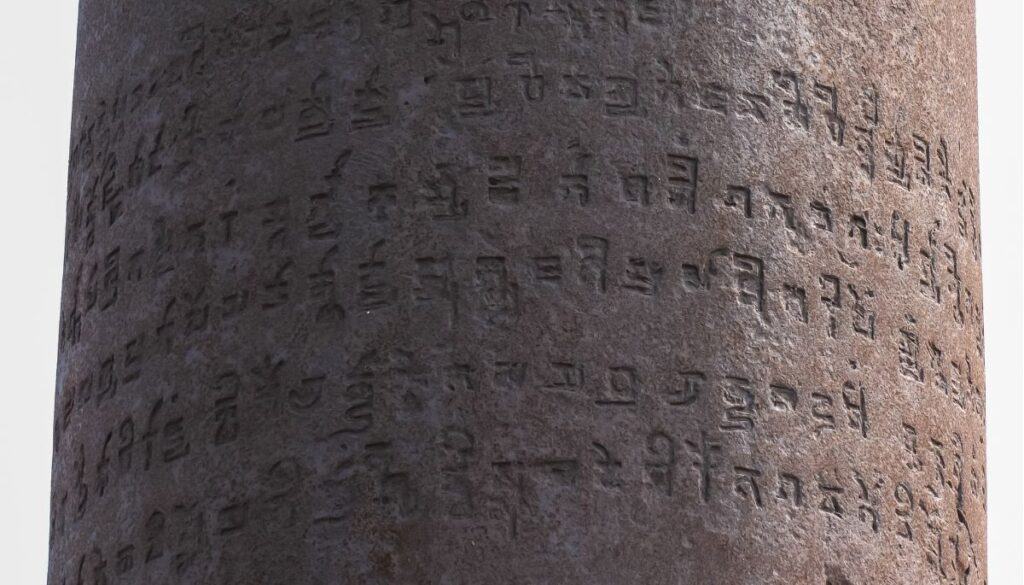
The iron pillar was constructed between 375 and 415 AD, during the reign of Chandragupta II, one of the most important Gupta emperors.
It is believed the pillar was erected elsewhere in India and moved to the Qutub Minar in the 11th century. How it was moved is another mystery, as the pillar weighs 6 tons.
Historians cannot agree if Chandragupta II was already deceased when the pillar was constructed, where the pillar was erected originally, or even when it was moved to the Qutub Minar and by which emperor.
Inscriptions on the pillar are in Sanskrit, and like everything about the pillar, have been the subject of much debate.
It’s believed anyone who stands with their back to the pillar and can wrap their arms around it will have good luck. So many visitors were trying to do this, a fence was erected around the pillar to prevent any possible damage.
Why Has the Iron Pillar Never Rusted?
Experts analyzed the metallurgical composition of the iron pillar to figure out why it has never rusted in 1,600 years, despite Delhi’s extreme weather.
They discovered a high level of phosphorus in the metal, something most blacksmiths remove today. The phosphorus reacts with Delhi’s rain and air to create a very thin layer of rust which acts as a seal. Nothing can get through the seal to further rust the iron.
What To Expect When Visiting the Iron Pillar
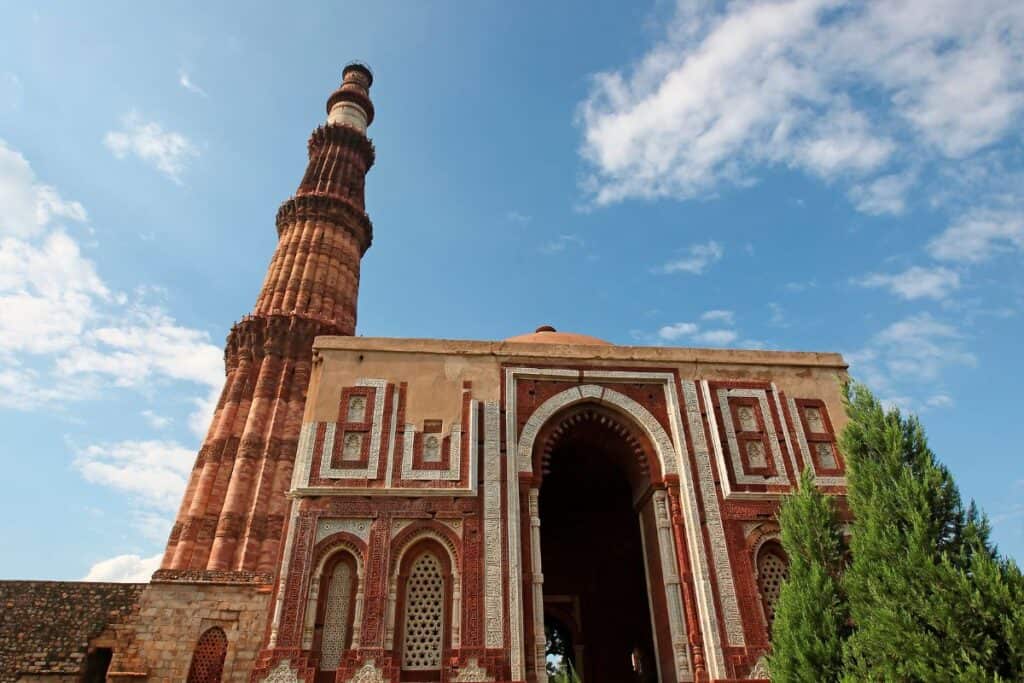
The iron pillar is part of the Qutub Minar complex, a UNESCO World Heritage Site. It is in the courtyard of the Quwwat-ul-Islam mosque, one of the oldest mosques in India.
The iron pillar itself does not take long to see, but you’ll want to see the rest of the Qutub Minar complex while you’re there. Most visitors see everything in less than 2 hours.
The site is relatively compact, but there is some walking. There are toilet facilities. Bring water and a hat because there is not a lot of shade, and it is entirely outside.
You’ll have to buy a ticket for the Qutub Minar to see the iron pillar.
How to Get to the Iron Pillar
The iron pillar at Qutub Minar is in the far south section of Delhi. The easiest way to get there is by Delhi metro (Qutub Minar or Saket on the Yellow line are the closest stations), or by Uber.
If you take the Delhi metro, you’ll have to grab an auto rickshaw from the station to the Qutub Minar entrance. Delhi has a great metro system, and it’s very user friendly.
There is Uber in Delhi and it’s widely used and reliable. Ola is another app-based ride share program used a lot in Delhi. Both are cheap.
Where To Stay
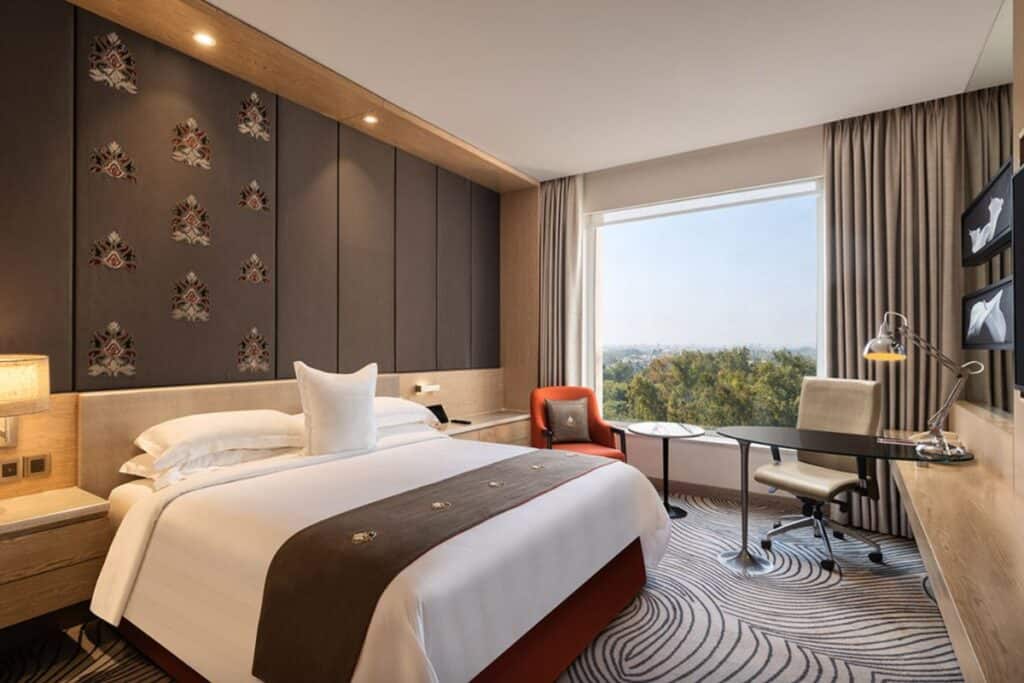
Delhi is a massive city and where you stay matters. Not only to be near the sites, but because of safety. I know these properties very well and recommend them because they are in safe areas near Delhi’s iron pillar.
- Leela Palace New Delhi (luxury): The most luxurious hotel in Delhi. Lovely location in the Diplomatic Enclave in the greenest part of New Delhi. You’ll be able to easily explore all of Delhi from here. An exceptional property.
- Sheraton New Delhi (mid-range): Excellent full service hotel in South Delhi near the metro and Select City Walk Mall. Numerous dining and shopping options within walking distance. A good base for sightseeing.
- Tree of Life (budget): Lovely bed and breakfast with views of the Qutub Minar. Rooms are clean and comfortable with ensuite bathrooms, free Wi-Fi and plenty of hot water. It’s located on a quiet residential street in Saket. The metro is within walking distance.
Last Words on the Iron Pillar of Delhi
Even today, the Iron Pillar of Delhi is steeped in mystery. There are many theories about its age, purpose, where it was built, when and how it ended up at the Qutub Minar. For now it will remain one of the greatest mysteries in India’s history.