Delhi Itineraries: How to Spend 5 Epic Days in Delhi

Delhi was my home for several years, and I absolutely love it, but it’s a city you have to make an effort to know. I designed these Delhi itineraries to help visitors so they don’t feel so overwhelmed.
This is one of the most fascinating and historic cities in the world, but it’s also home to 33 million people and huge. These itineraries will take you to the best and most interesting sites of Delhi. You won’t need to do any additional planning.
Delhi Itineraries: How to Spend 5 Epic Days in Delhi
I guarantee if you follow these itineraries, you will be fascinated by Delhi. These itineraries will help you tackle Delhi and see all it has to offer, including off the beaten path gems that will make this an unforgettable trip.
If you’re still unsure about exploring Delhi on your own, why not take one of these 6 Delhi sightseeing tours? A tour is a great way to ease yourself into a new destination and build confidence, so you can explore independently after.
Day 1: A Soft Landing
These Delhi itineraries are designed to ease you into Delhi. Day 1 starts in one of the loveliest parts of South Delhi.
Morning: Lodhi Garden
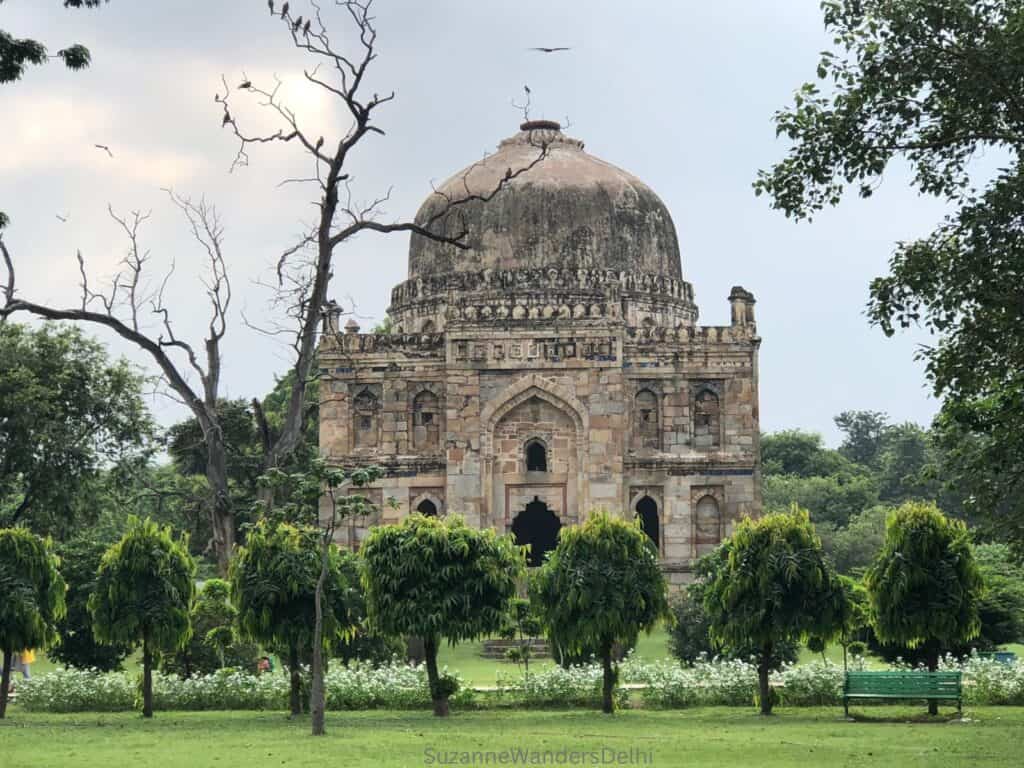
Delhi is a very historic city, and nowhere is this more apparent than in the most beautiful public park, Lodhi Garden.
The park has over 100 species of trees, shrubs and flowers which are home to a variety of native birds and butterflies. But the real magic are the monuments from the Sayyid and Lodhi periods that were built between 1414 and 1526.
Hours and Cost: 6:00 am to 7:30 pm, daily – free
Lodhi Art District
Across the street from Lodhi Garden is India’s first outdoor art district. Huge murals depicting social and environmental themes are painted on the sides of the residential buildings.
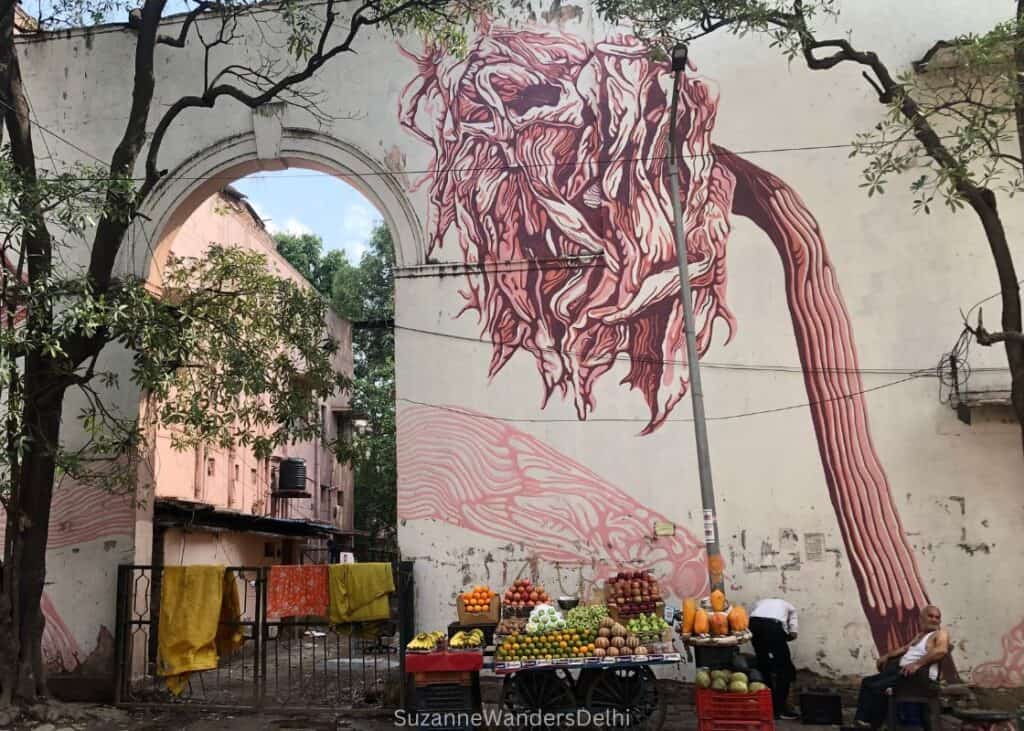
It’s a calm neighbourhood (by Delhi standards) to stroll through. While you’re there stop at Devan’s South Indian Coffee, one of the best coffee shops in Delhi.
Hours and Cost: 24/7 but to see the murals go in the daytime – free
Afternoon: Khan Market & Lunch
Khan Market is Delhi’s favourite upscale market and it will be a great place for lunch. It’s super easy to get to from Lodhi Colony – just grab an auto rickshaw for the short ride.
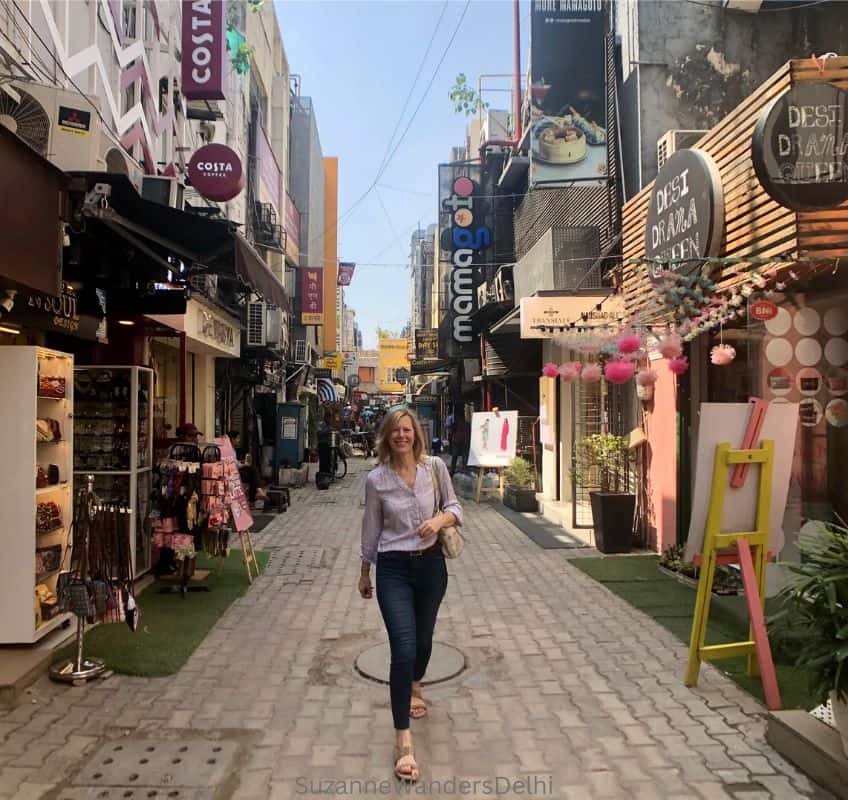
Khan Market is has terrific shopping and many excellent restaurants for lunch. Good lunch options are The Big Chill, Sly Granny, Yum Yum Cha or Punjab Grill.
Hours and Cost: 10:00 am to 12:00 am, daily – free
Gandhi Smriti Museum (aka Birla House)
From Khan Market take an auto rickshaw to Birla House. Birla House is where the Gandhi Smriti Museum is located. This is where Mahatma Gandhi lived before he was assassinated on the grounds.
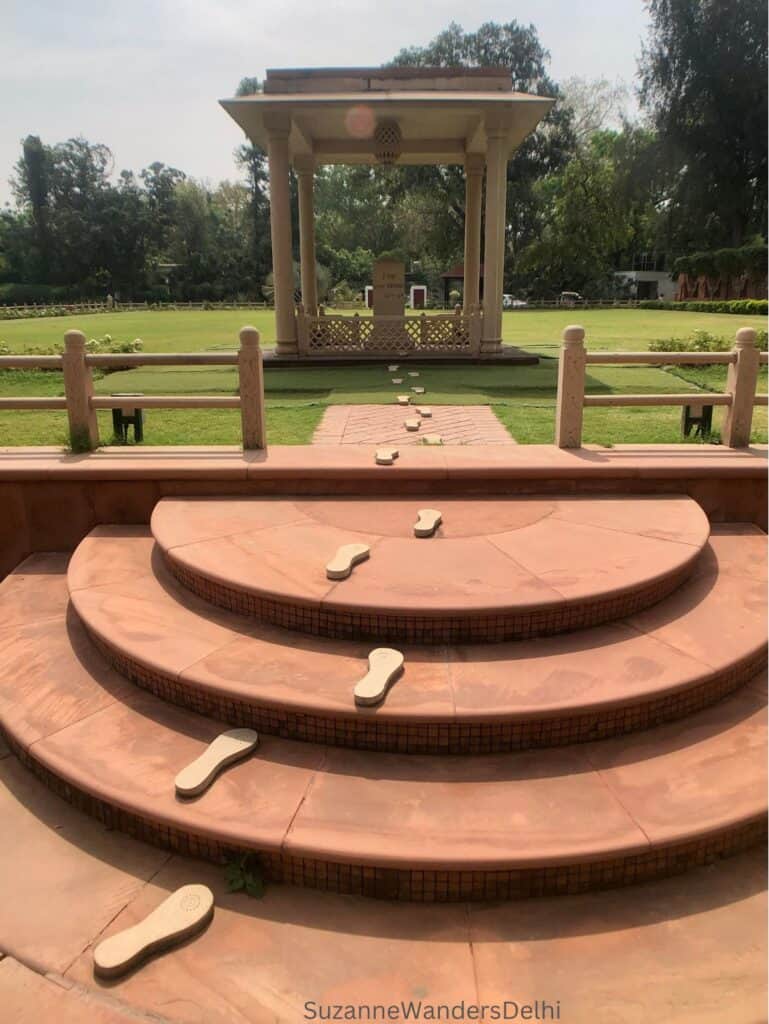
The rooms where Gandhi lived have been carefully preserved. The museum is very moving and many visitors report feeling a sense of Gandhi’s presence.
Gandhi lead the independence Movement of India (from British colonial rule) is considered the Father of the Nation. He is still revered all across India.
Hours and Cost: 10:00 am to 4:30 pm (closed Monday) – free
India Gate
Take an auto rickshaw to India Gate. This is one of Delhi’s most iconic sites.
India Gate is located at one end of Kartavya Path which is lined with India’s government and parliament buildings. At the opposite end of Kartavya Path is Rashtrapati Bhavan – the president’s office and residence.
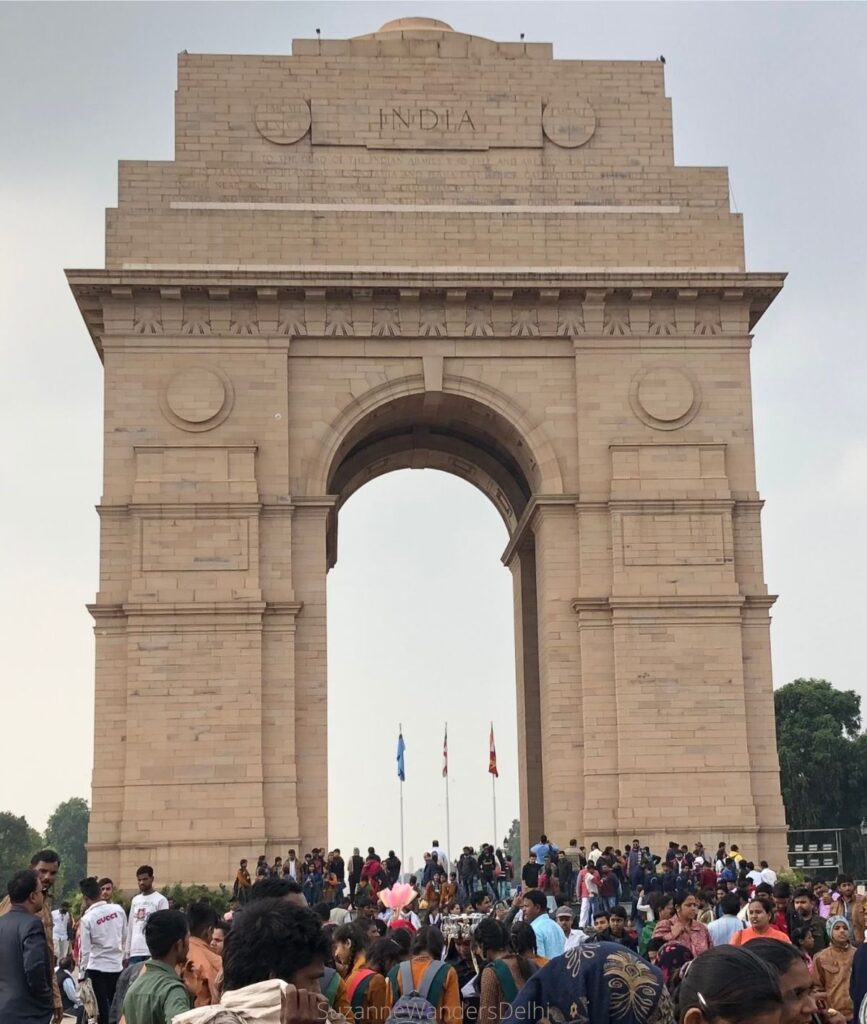
Indians are fiercely patriotic, and the area is a constant hive of activity. School children, hawkers, street food vendors, families – it’s almost a festival atmosphere.
Hours and Cost: 7:00 am to 11:00 pm, daily – free
Bikaner House
If you have time, walk across the street to Bikaner House. This used to be the palace of the Maharaja of Bikaner, but is now open to the public as an art and cultural centre.
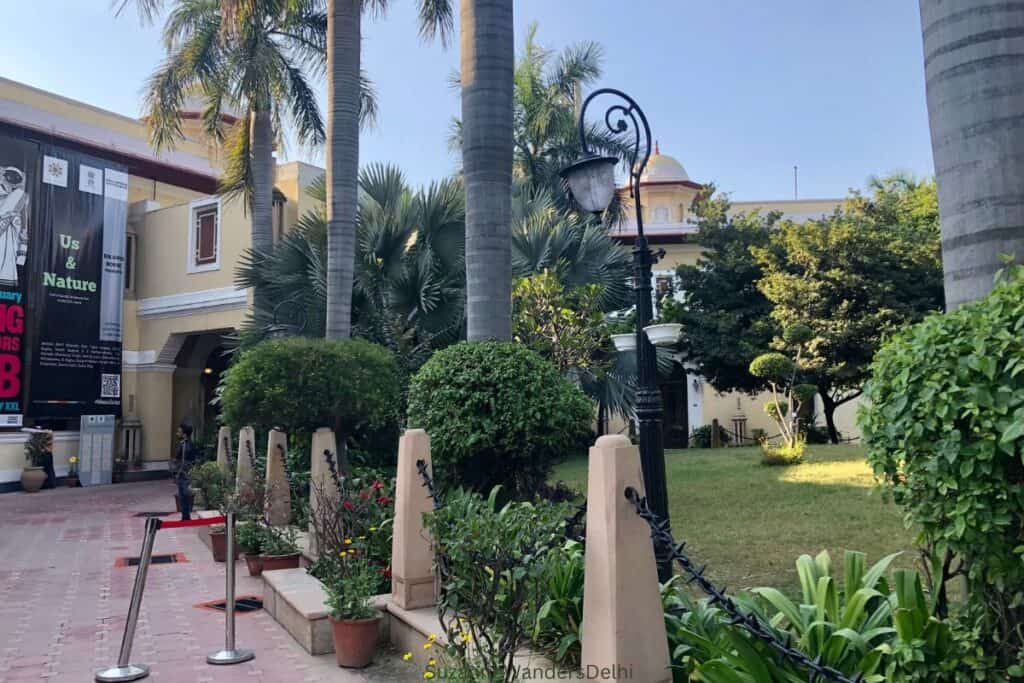
The grounds and building are beautiful and peaceful, and it’s a chance to see a real Maharaja palace. There’s several good cafes on site if you want a snack or drink.
Hours and Cost: 11:00 am to 7:00 pm, daily – free
Evening: Dinner at Pandara Road Market
Pandara Road Market is a small plaza of Indian restaurants a 5 minute walk from Bikaner House.
I really like Gulati and have eaten there several times. They have excellent Indian food. If you go after 8:00 pm you may have to wait for a table.
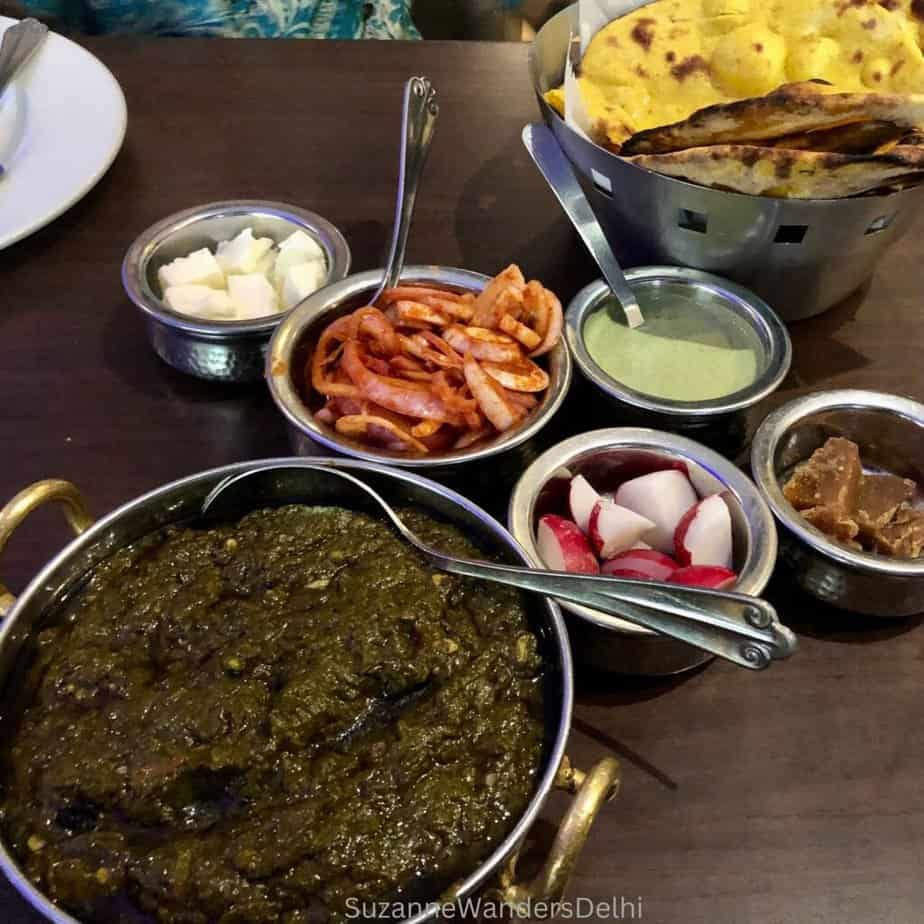
Save room for Indian ice cream for dessert. There’s a Krishna di Kulfi stand right beside Gulati. They have some of the best kulfi in Delhi.
Hours: 12:00 pm to 12:00 am, daily
Optional: Night Cap with a View at Cirrus 9, the Oberoi
If you’re not ready to go back to your hotel, take an auto rickshaw to the Oberoi Hotel. The rooftop bar Cirrus 9 has a really nice outdoor terrace with panoramic views of Delhi and Humayun’s Tomb (UNESCO).
The Oberoi is a luxury hotel so drinks aren’t cheap, but they are served with bar snacks and service is impeccable.
Hours: 5:00 pm to 1:00 am, daily
Day 2: Getting off the Beaten Path
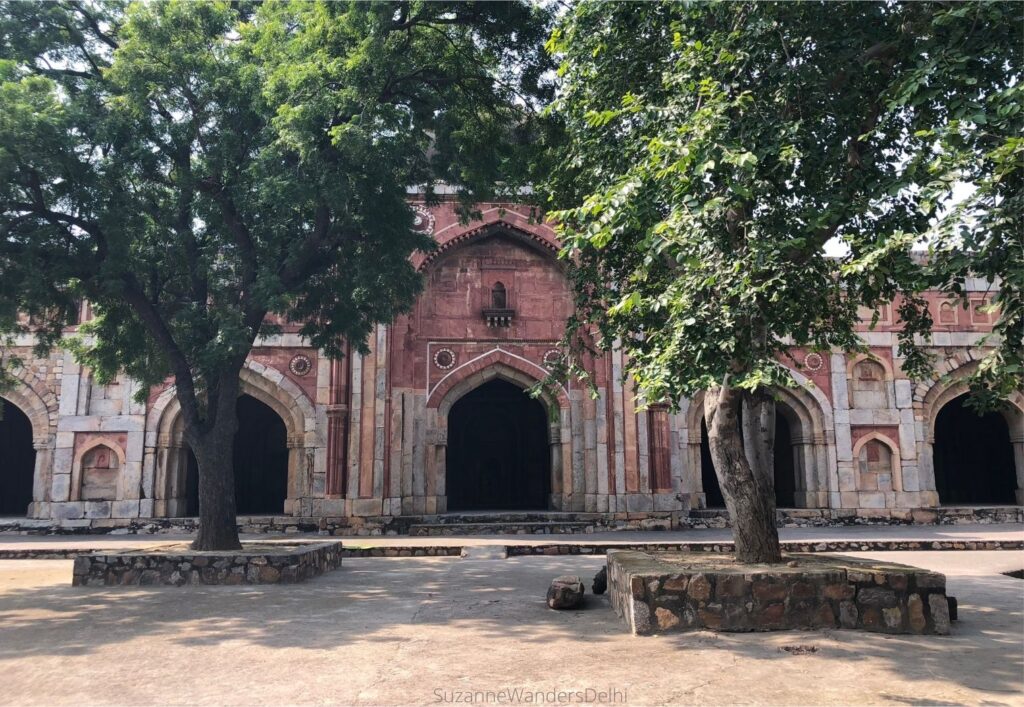
This is going to be a big day, so fuel up on breakfast and wear comfortable shoes. You’re going to visit a UNESCO site and some incredible under the radar gems.
Take an Uber to the first site – the Qutub Minar.
Morning: Qutub Minar Complex (UNESCO World Heritage)
The Qutub Complex is a historic complex dating back to 1192. The most famous site at the complex is the Qutub Minar, the tallest brick minaret in the world.
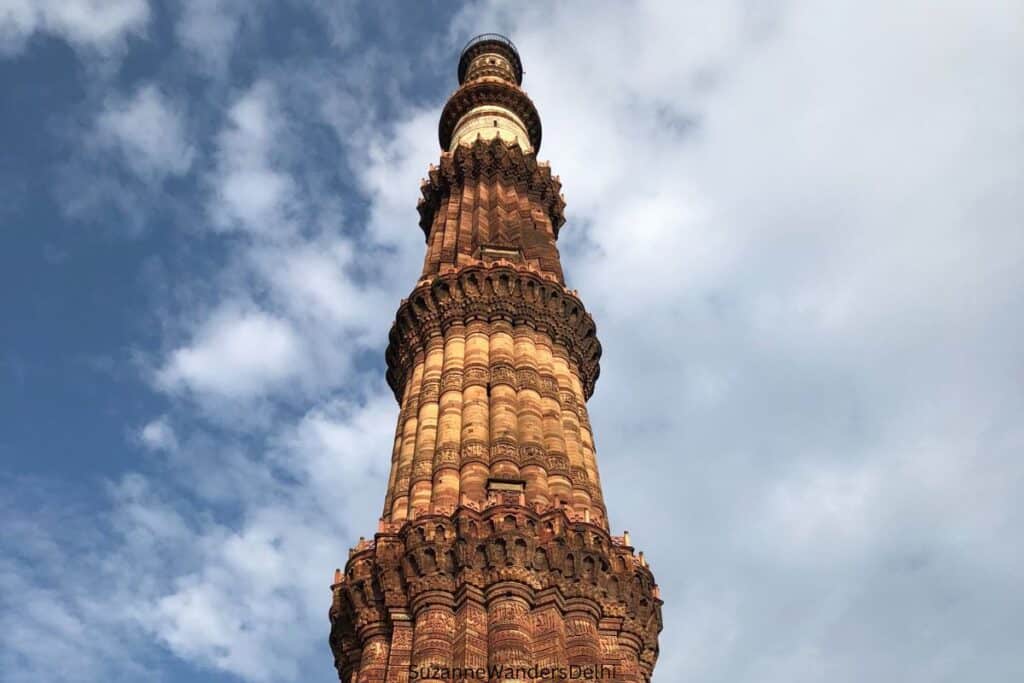
The Qutub Minar is on the site of ancient Hindu and Jain temples which were torn down to build the existing Islamic buildings.
Some of the stones from the Hindu temples were re-used in construction of the Quwwat-ul-Islam mosque. You can see Hindu and Jain deities and designs in the columns if you look. This sort of archeological pillaging was common practice at the time.
Hours and Cost: 9:00 am to 8:00 pm, daily – INR 600 for foreigners, children under 15 free
Mehrauli Archeological Park
This is Delhi’s only archeological park, and it’s spectacular. You can easily walk to the ticket booth from the Qutub Minar, it’s just down the road.
Mehrauli Archeological Park is part parkland, forest, and gardens with the most amazing ruins ranging from pre-Islamic to the late Mughal eras.
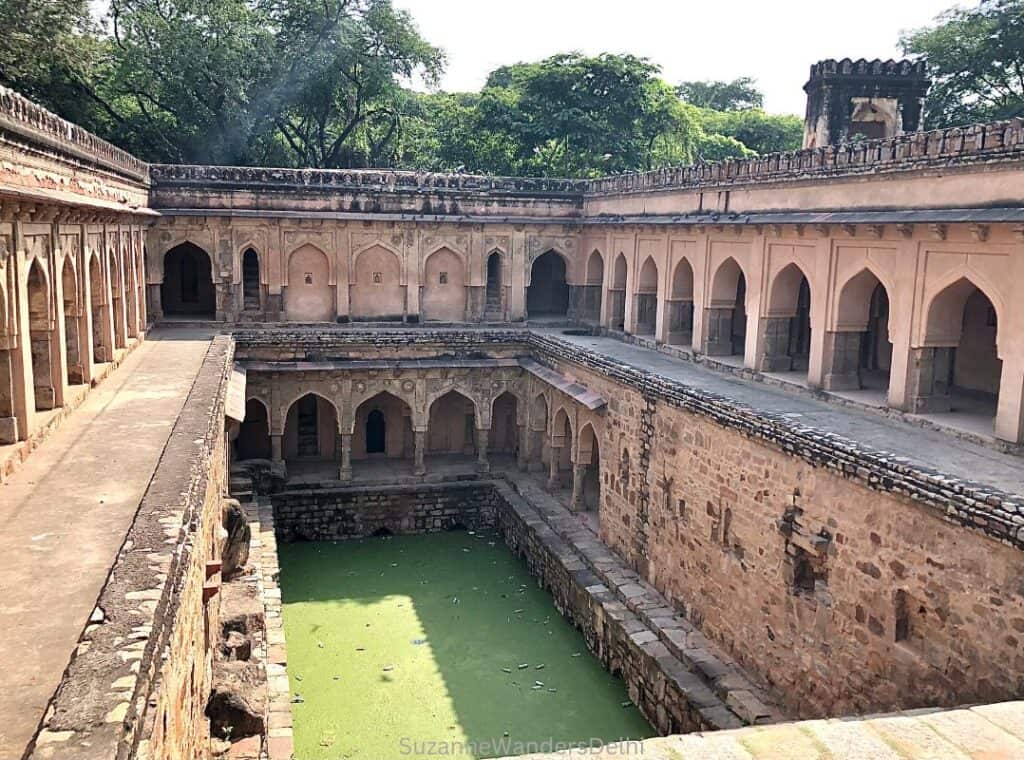
The ones you cannot miss are the Rajon ki Baoli (one of Delhi’s most spectacular stepwells), the Jamali Kamali mosque, and the tomb of Muhammad Quli Khan. There are many others ruins throughout the park.
Hours and Cost: 7:00 am to 7:00 pm, daily – INR 500 for foreigners
Afternoon: Dastkar Nature Bazaar & Lunch
From Mehrauli Archeological Park take an auto rickshaw to Dastkar Nature Bazaar. This is a wonderful market for Indian handicrafts that most tourists don’t know about.
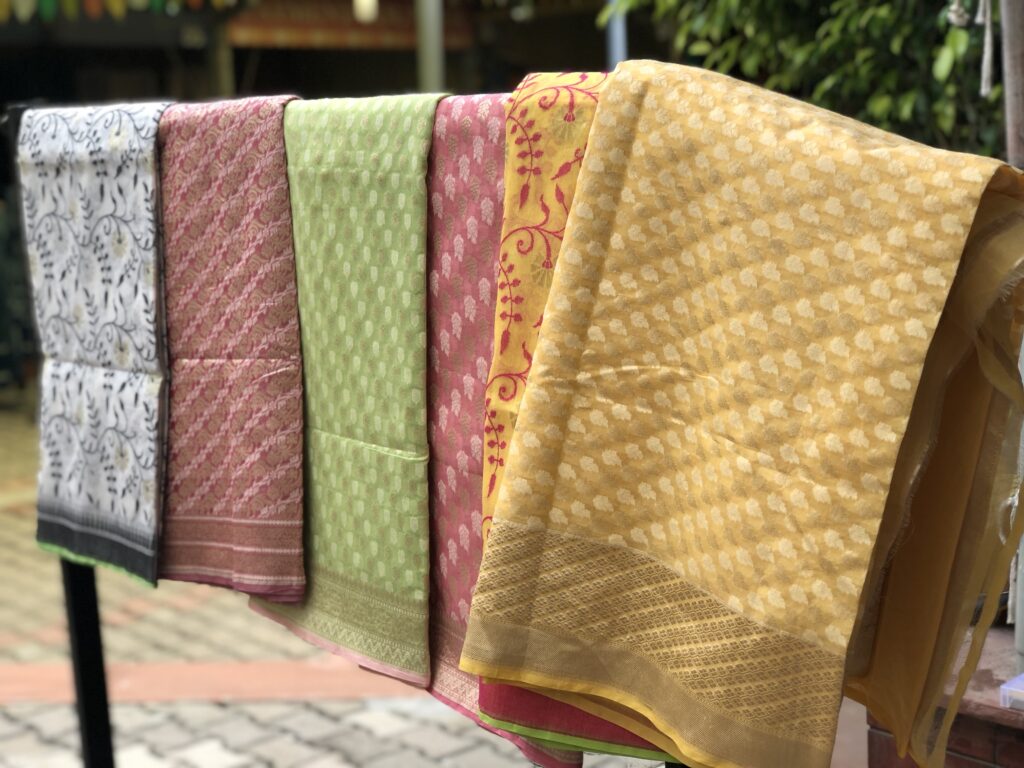
There’s a small food court so if you’re hungry grab some lunch.
This market is a joint project of Delhi Tourism and NGO Dastkar. It was started to support crafts people by giving them opportunities to upgrade their skills and have access to wholesale buyers and the retail market.
Hours and Cost: 11:00 am to 7:00 pm (closed Wednesday but open daily during the monthly 2 week fair) – INR 30
Kururattha-Khmeraram (Cambodian Monastery New Delhi)
Right beside Dastkar Nature Bazaar is this lovely Cambodian temple. The architecture is unique – it’s the only Cambodian temple in Delhi.
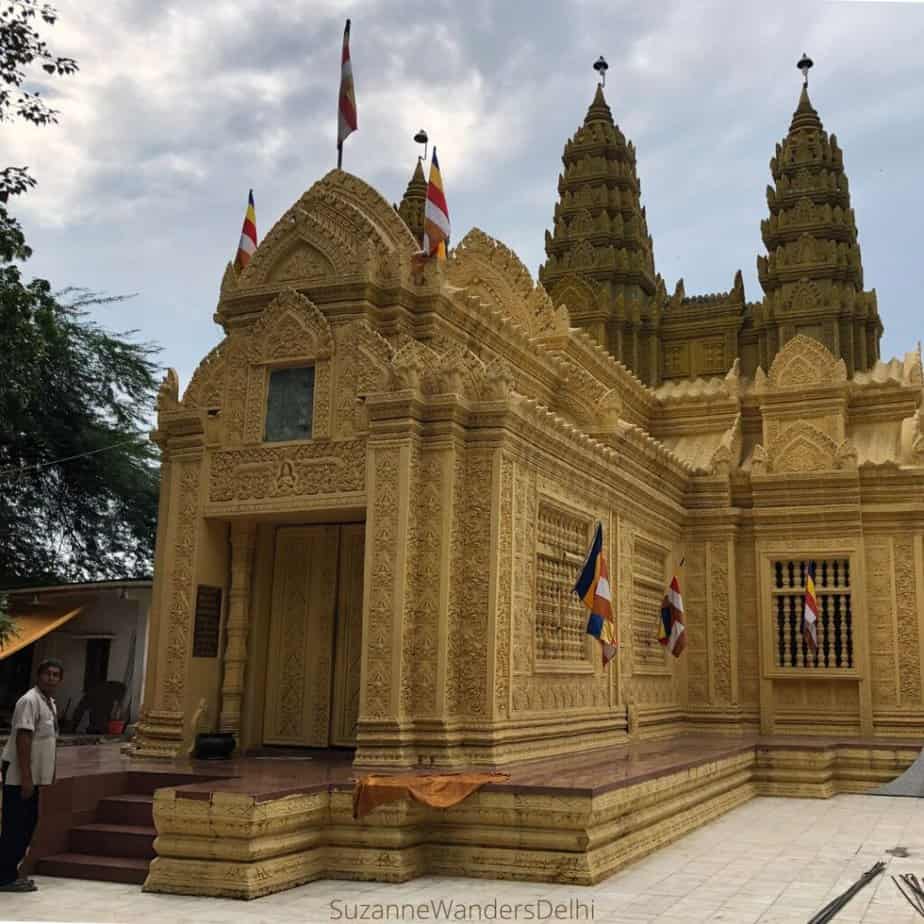
The exterior is golden and intricately carved in classical Khmer style. The interior is simple but beautiful with a large golden Buddha on a lotus flower.
There is usually a caretaker on duty, and if the temple is locked you can ask him to let you inside. He may expect a small tip for this. Remove your shoes before entering.
Hours and Cost: 6:00 am to 12:00 pm & 1:30 pm to 6:00 pm, daily – free
Kiran Nader Museum of Art
This is another gem most tourists don’t know about. The museum is private and focuses on Indian contemporary art. Almost all Delhi itineraries miss this art museum and it’s a shame – the collection is fabulous.
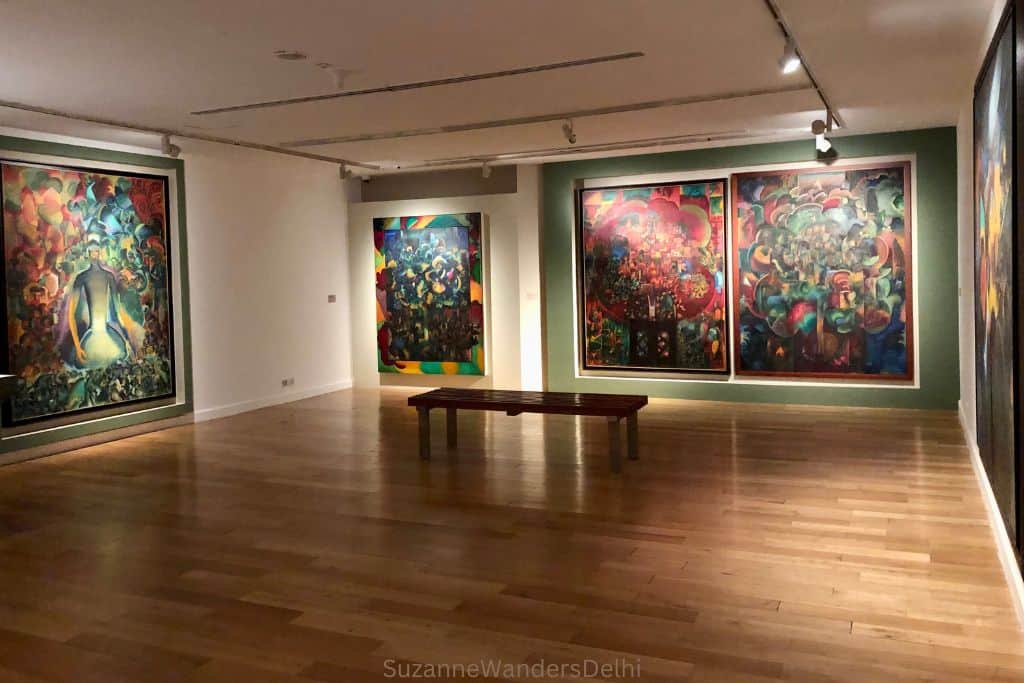
To get here from the Cambodian temple, either take the metro from the Chhattarpur station to the Saket station (2 stops). From the Saket metro take an auto rickshaw to the museum. Or just take an Uber.
Hours and Cost: 10:30 am to 6:30 pm (closed Monday) – free
Khirki Masjid
You can either walk or take an auto rickshaw from Kiran Nader Museum of Art to Khirki Masjid, it’s not far.
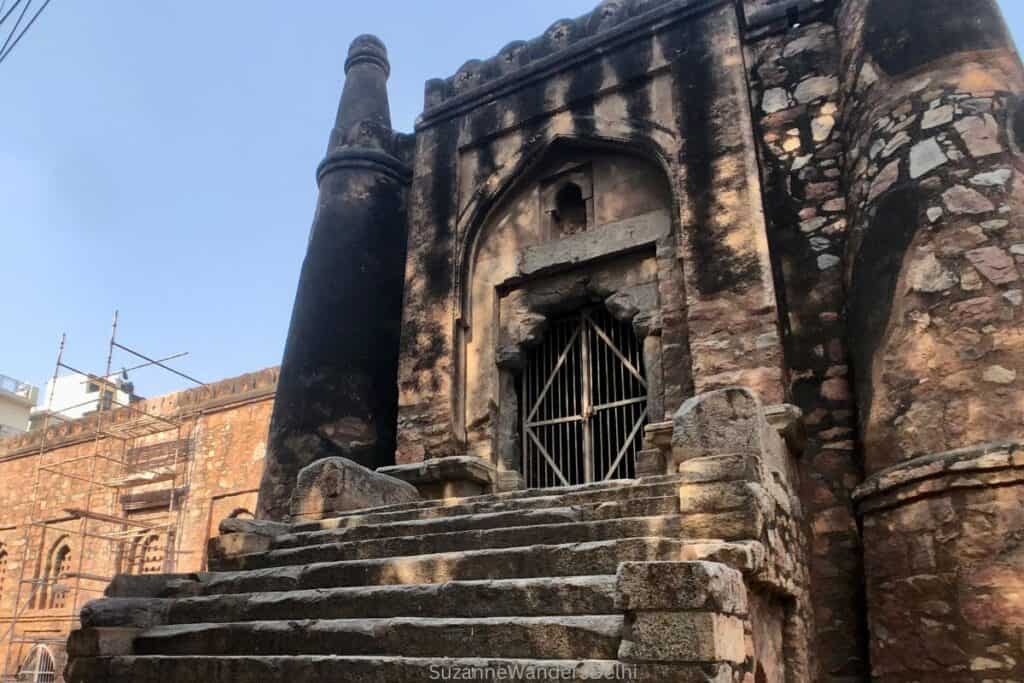
Khirki Masjid is one of Delhi’s most spectacular hidden gems. It was built in 1351 during the Tughlaq period and the architecture is very unusual for a mosque – it looks like a fortress.
You’ll end up walking through one of Delhi’s urban villages to get here, Khirki Village – like I said, this is off the beaten path. But trust me it is worth it.
Make sure you find the caretaker and ask him to let you inside. He’ll expect a small tip (INR 100 should do). The interior is a labyrinth of columns and arches that seem to go on forever.
Hours and Cost: 11:00 am to 6:00 pm (the hours when the caretaker is there) – free
Evening: Dinner at Select Citywalk Mall
Walk back across Press Enclave Marg to Select Citywalk, one of the best malls in Delhi. There are many great restaurants to choose from. Some of my favourites are: Burma Burma, Pind Balluchi, Pa Pa Ya, The Big Chill, Social and Harajuko Tokyo Cafe.
Take an Uber back to your hotel.
Day 3: Temples and Street Food
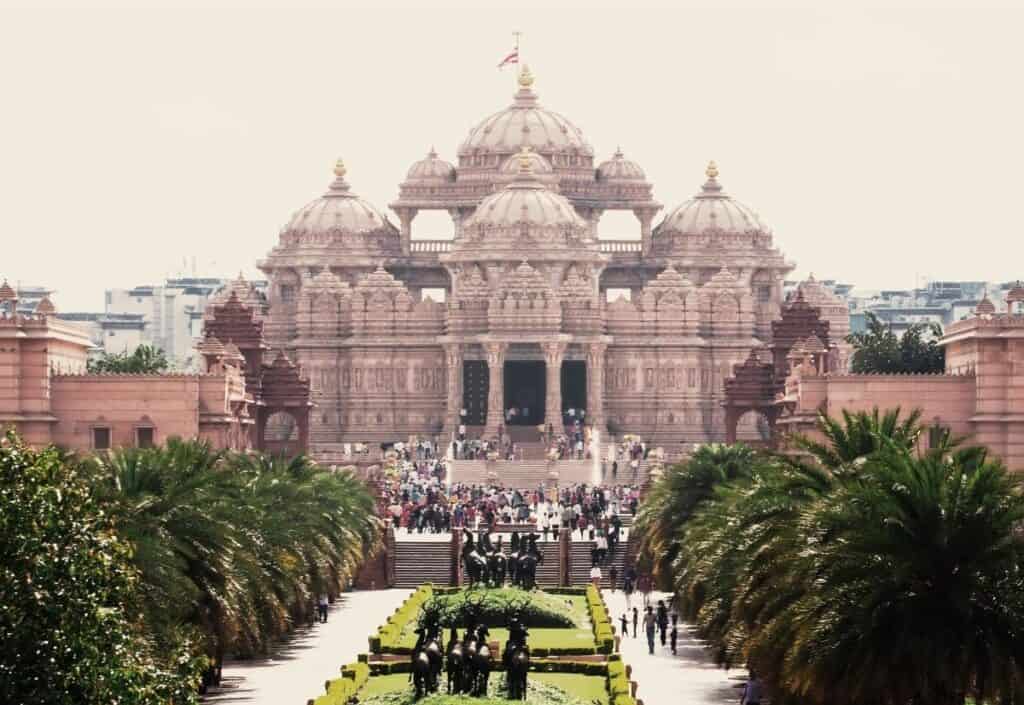
Today these itineraries will take you across the Yamuna River to the other side of Delhi. Have a good breakfast and head out to your first stop.
Morning: Akshardham Temple
The easiest way to reach Akshardham Temple is by Delhi metro. The Akshardham metro station is a 10 minute walk from the temple entrance.

Not only is Akshardham Temple one of the largest Hindu temples in the world, it’s also one of the most exquisite. It’s made entirely of hand carved Carrara marble and pink sandstone without any structural steel.
Akshardham also has an excellent food hall, so if you’re hungry it’s a good place to grab something.
You have to remove your shoes to enter the temple and dress modestly (knees and shoulders covered). All electronic devices must be left at the security counter. Photography is not allowed.
Hours and Cost: 10:00 am to 7:00 pm (closed Monday) – free
Humayun’s Tomb (UNESCO World Heritage)
To get to Humayun’s Tomb, either take an Uber from Akshardham Temple or take the metro to Supreme Court station and grab an auto rickshaw from there.
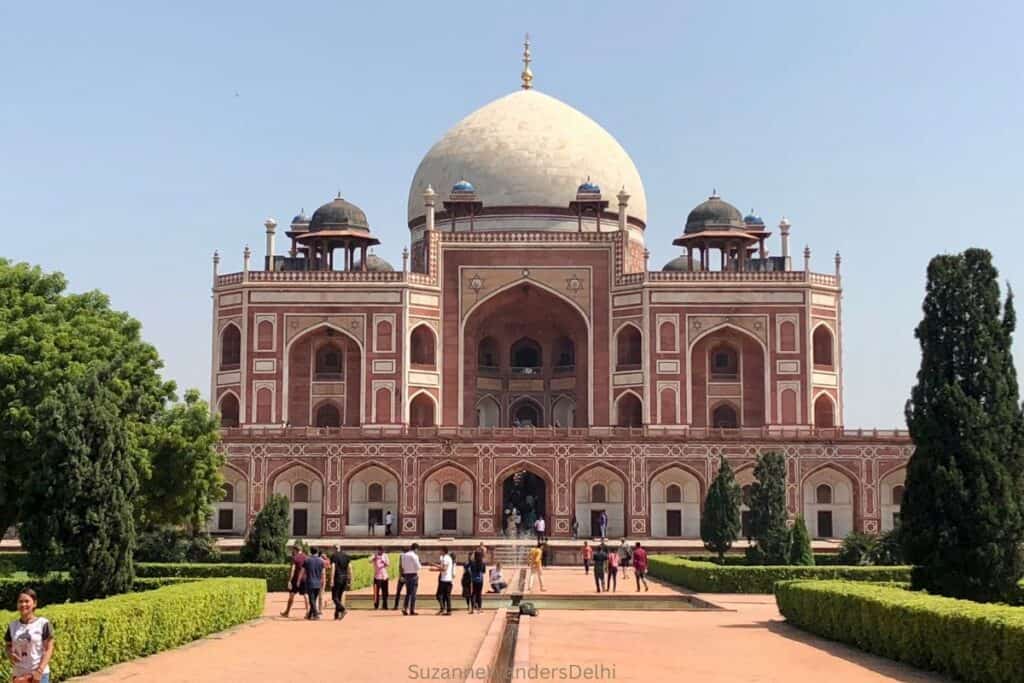
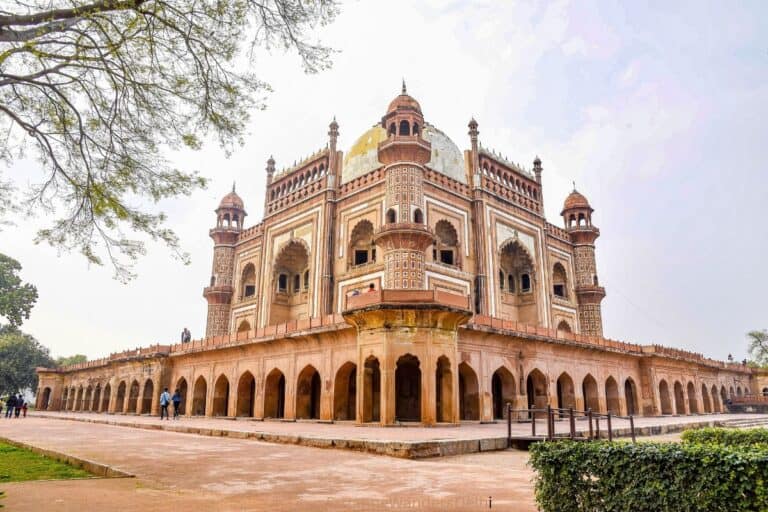
Humayun’s Tomb is the first garden tomb built in India, and one of the tombs that inspired the design of the Taj Mahal. It was built in 1569 for the Mughal Emperor Humayun by his favourite wife who was devastated by his death.
The complex has several other beautiful mausoleums, Persian gardens and the graves of 150 Mughal royals and their entourage. If you’re awake early today you can do Akshardham Temple and Humayun’s Tomb in reverse – Humayun’s Tomb opens early at 8:00 am.
Hours and Cost: 8:00 am to 6:00 pm, daily – INR 600 for foreigners, children under 15 free
Afternoon: Amar Colony Food Market
This is one of the best places in Delhi for street food – and it’s not in Old Delhi! To get here just take an Uber from Humayun’s Tomb.
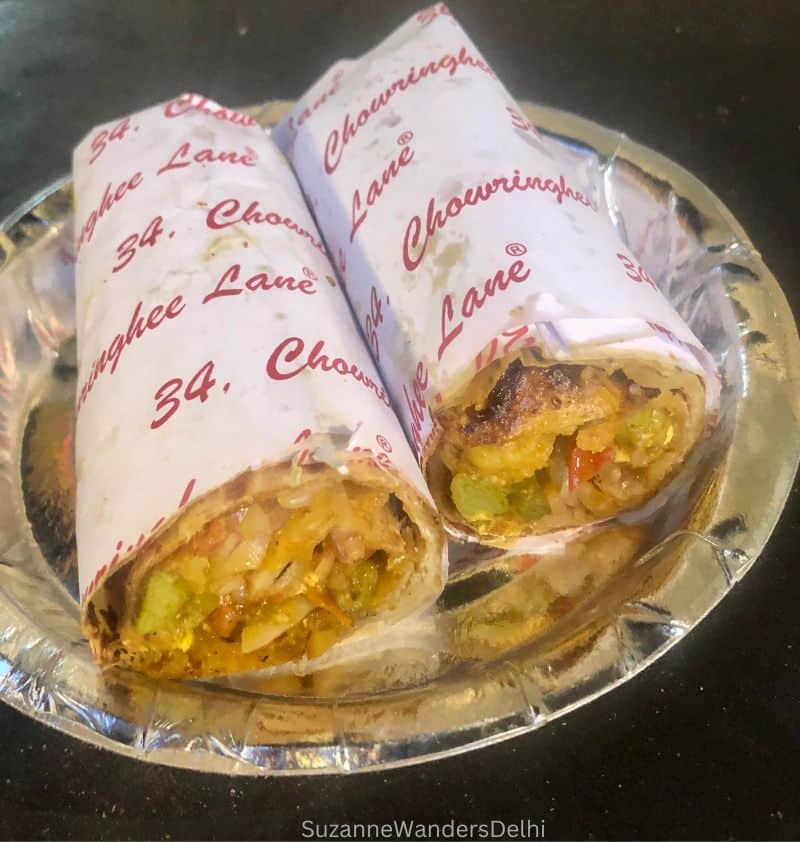
Most street food tours and Delhi itineraries focus on Old Delhi, but I prefer the quieter and easier to navigate Amar Colony Food Market.
Amar Colony is a mix of immigrants, refugees and Indians, and the market reflects the mix of cultures. This is where you find delicious Afghani shawarma, mutton kababs, sweet faluda, Tibetan laphing and traditional Indian chaats, all in one compact area.
Before eating street food, see my tips on how to eat local and stay healthy. It is absolutely doable to eat street food and not get sick. Eating street food is one of the most authentic cultural experiences you can have in Delhi – don’t miss out.
Hours and Cost: 12:00 pm to 9:00 pm, hours can vary (closed Monday) – prices range from INR 80 to INR 300.
Bahai Lotus Temple
To reach the Lotus Temple from Amar Colony Food Market, take the metro from Kailash Colony station to Kalkaji Mandir station (2 stops). You can walk to the Lotus Temple from there.
The Bahai Lotus Temple is one of the most famous religious buildings in the world. Built of marble in the shape of a lotus flower, it is on the UNESCO World Heritage Tentative List.
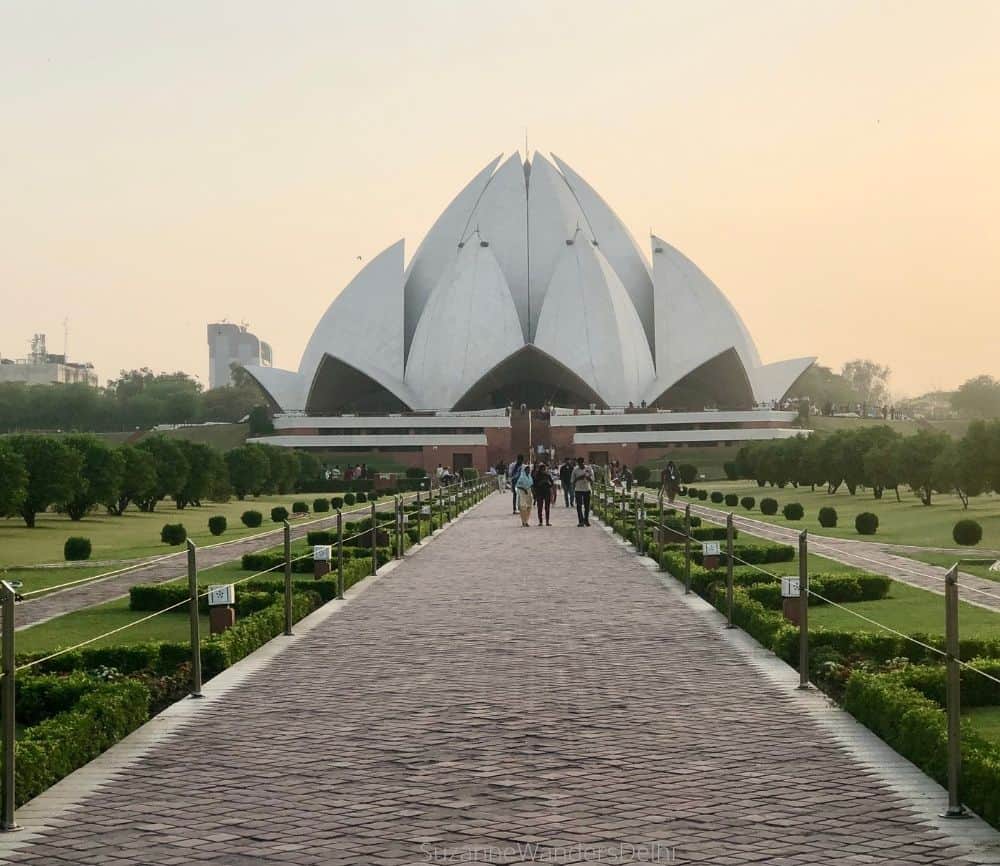
Bahais believe in the oneness of God and unity of all people. There are no deities or religious images inside the prayer hall. It is an expansive and calm space, beautiful in its simplicity.
The temple gets very busy on weekends and there’s usually a line up. While it’s not on most Delhi itineraries, it gets a lot of domestic visitors. Shoes must be removed before entering. Photography is not permitted inside the temple.
Hours and Cost: 8:30 am to 5:00 pm (closed Monday) – free
Evening: Dinner and a Night Cap at one of Asia’s 50 Best Bars
Take an Uber to one of the best dining spots in Delhi, the GK2 M Block Market. You will have many options for dinner in this neighbourhood hot spot. Some of my favourites are:
- Miss Margita (Mexican)
- Carnatic Cafe (South Indian)
- YouMee (Pan Asian)
- Fig & Maple (European)
- Moti Mahal (North Indian)
After dinner stop in at Sidecar, one of the best bars in Delhi. Listed as one of Asia’s 50 best bars, Sidecar is famous for its cocktails.
Day 4: Old Delhi
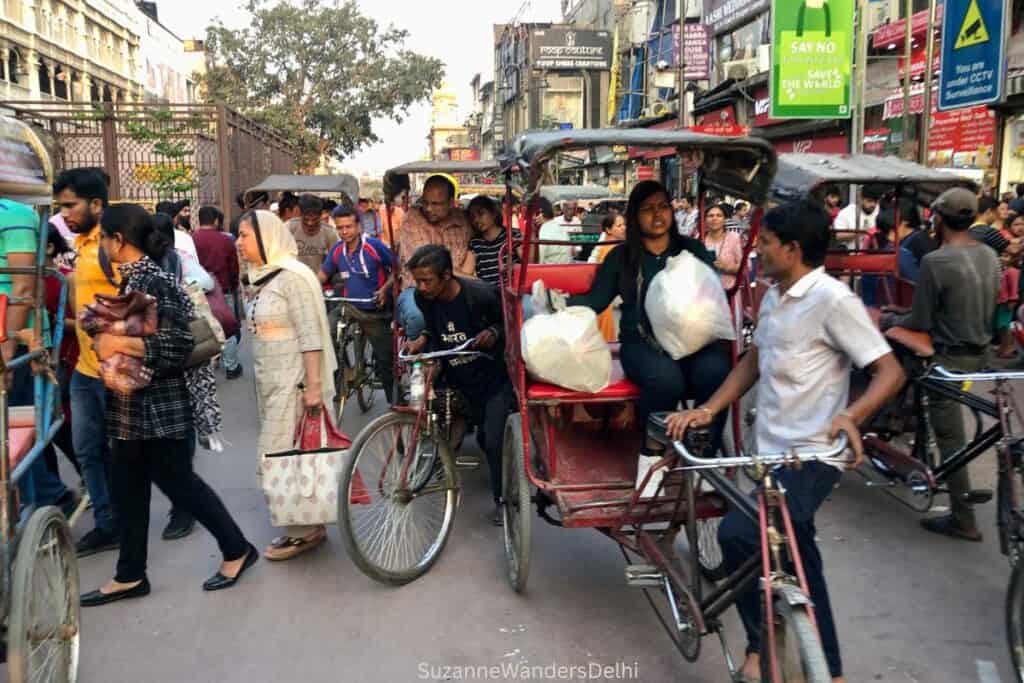
Now that you are somewhat acclimatized to Delhi, it’s time to head to the oldest and craziest part of the city, Old Delhi. Either take the metro or an Uber to your first stop, the Red Fort.
Morning: Red Fort (UNESCO World Heritage)
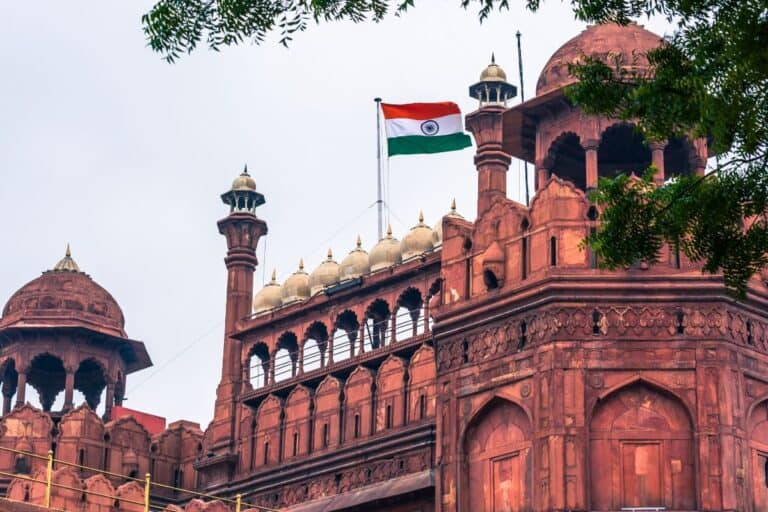
The Red Fort is one of the most visited and magnificent sites in Delhi. It can get busy, so I recommend going as early as possible and buying your tickets in advance on the ASI portal: https://asi.payumoney.com.
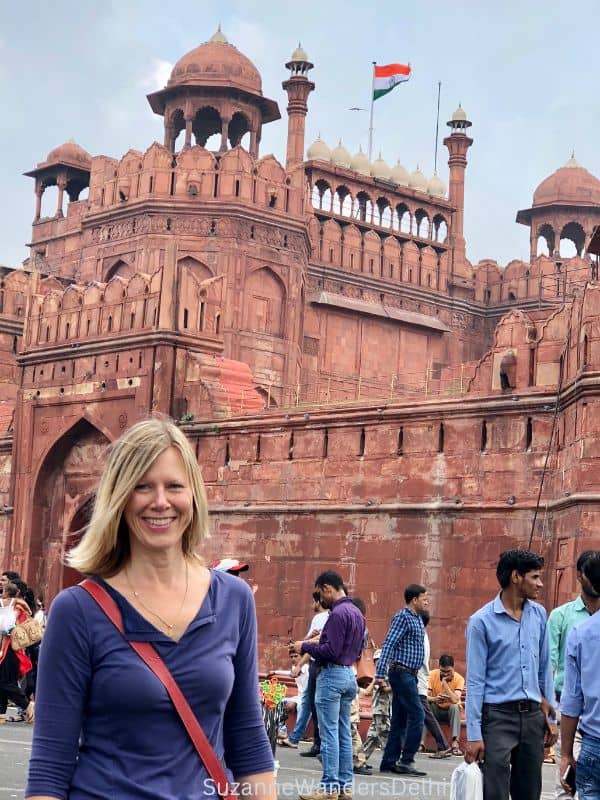
Mughal Emperor Shah Jahan (who built the Taj Mahal) built the Red Fort in 1639. It remained the main residence of all successive Mughal rulers until the British imprisoned and ousted the last ruler in 1857.
During Mughal rule, the Red Fort was a world in itself with beautiful gardens, marble audience halls, palaces, baths and its own covered bazaar so the women did not need to leave the palace grounds. Hundreds of people resided and worked within the fort.
Many of the buildings were destroyed by the British during the 1857 rebellion but you can still get a feel for its past splendour.
Hours and Cost: 8:00 am to 9:00 pm, daily – INR 600 foreigners, children under 15 free.
Gurudwara Sis Ganj Sahib
From the Red Fort, walk up the main road, Chandni Chowk about 10 minutes to the Sikh temple, Gurudwara Sis Ganj Sahib.
Chandni Chowk is the main road that runs from the Red Fort to Fatehpuri Masjid at the opposite end.
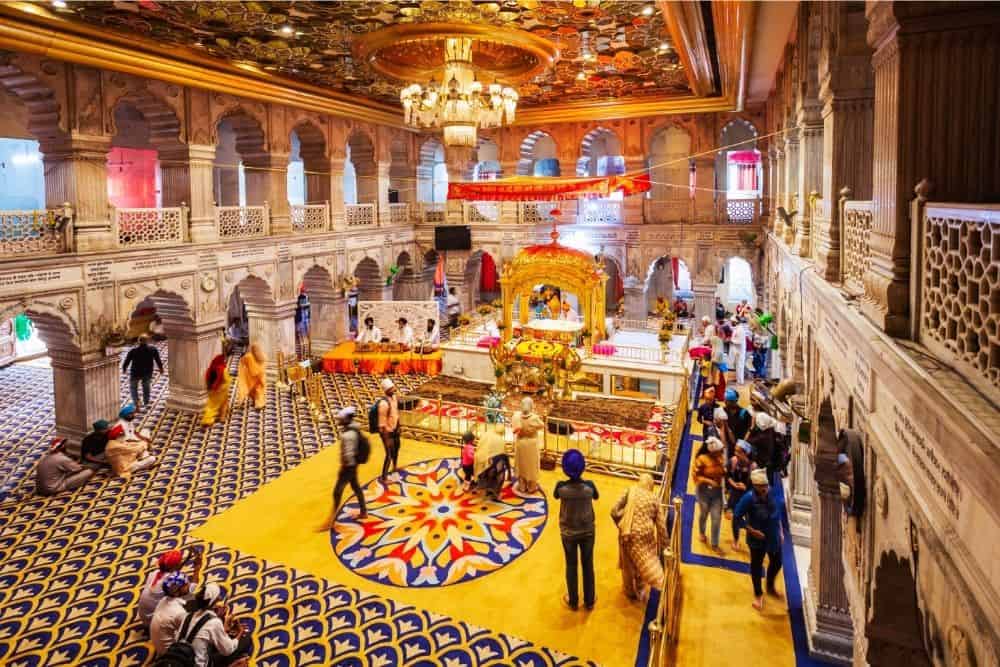
This is one of the most prominent Sikh temples in Delhi. Everyone is welcome to visit the gurudwara, but shoes must be removed and heads covered.
Ask a volunteer to show you the massive kitchen where devotees prepare food to serve in the langar hall. Langar is the free vegetarian meal provided by the gurudwara and is open to all, regardless of age, race or religion.
Having langar is a special experience and I encourage you to join the community meal – you will be welcomed.
Hours and Cost: 24/7 – free
Take a Cycle Rickshaw or Walk through Chandni Chowk
Chandni Chowk is the main road that runs from the Red Fort up to Fatehpuri Masjid at the opposite end. The name also refers to the general area.
During the day the main road is closed to motorized traffic, so it’s fairly easy to walk. Explore the lanes and markets which run off of the main road. They’re narrow and crowded, but interesting!
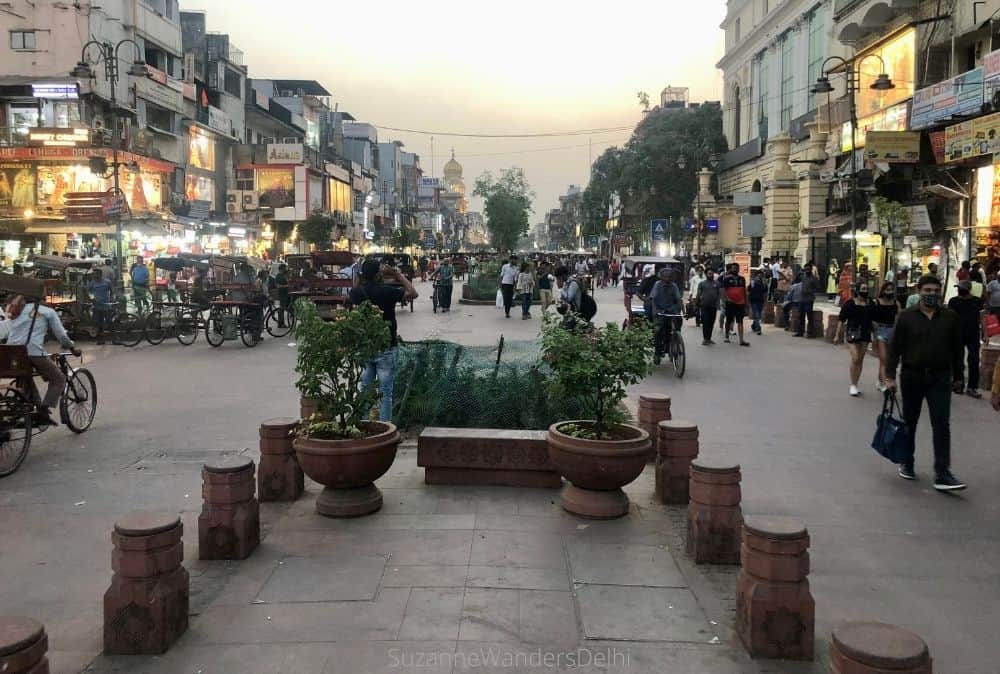
If you don’t feel like walking, take one of the cycle rickshaws and ask the driver to take you around the different markets of Chandni Chowk. Agree on a price first (it should be no more than INR 300).
The famous spice market Khari Baoli is at the far end of Chandni Chowk, around the corner from Fatehpuri Masjid.
Afternoon: Lunch at a Local Dhaba
Assuming you end up at the far end of Chandni Chowk, near Fatehpuri Masjid and Khari Baoli (the spice market), have lunch at one of Delhi’s most famous dhabas, Kake di Hatti.
A dhaba is a very casual roadside eatery. You’ll probably be the only non-local in there but don’t let that put you off, the food is excellent. Even Jamie Oliver ate at Kake di Hatti!
Hours: 8:00 am to 1:00 am, daily
Jama Masjid
From Chandni Chowk take an auto or cycle rickshaw to Jama Masjid. Jama Masjid was built in 1656 as the mosque for the palace (the Red Fort) and Emperor Shah Jahan.
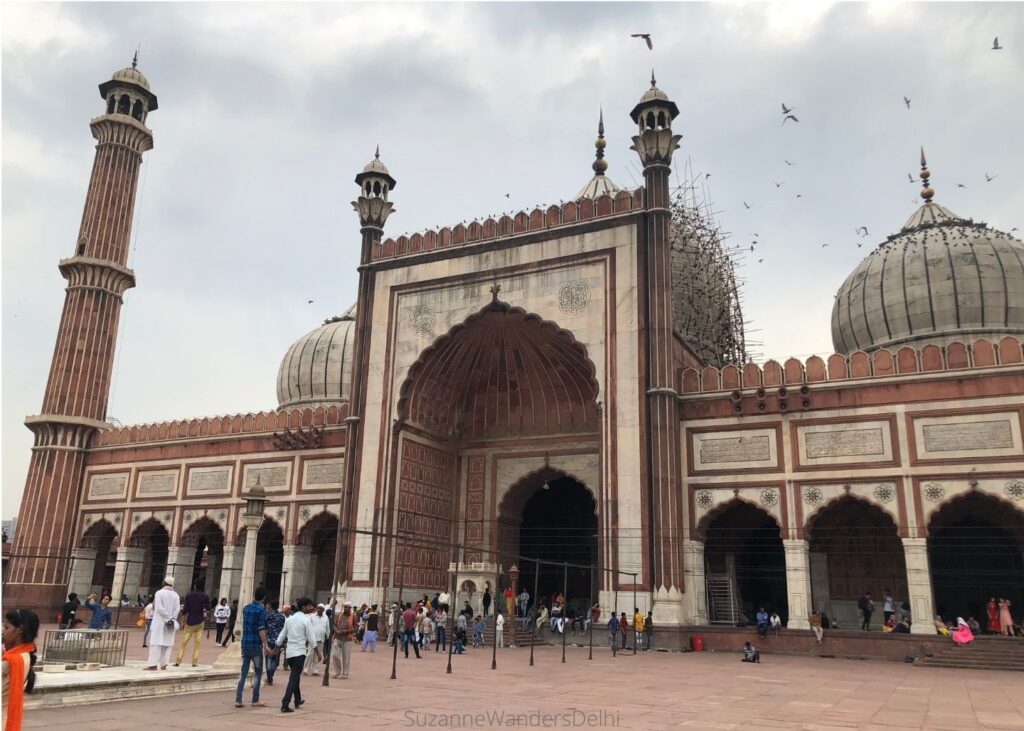
It is a beautiful marble and red sandstone mosque with three gates, four towers and two minarets. Please remember when visiting this is a working mosque and visitors must remove shoes, and women must cover their heads.
Arms, legs and shoulders should be covered – the mosque enforces this strictly but has cover ups available to borrow.
Hours and Cost: 7:00 am to 12:00 pm & 1:30 pm to 6:30 pm, daily – free but there is an INR 300 fee for taking a camera in
Partition Museum
Take an auto rickshaw from Jama Masjid to the Partition Museum. If the driver doesn’t know where it is, tell him Ambedkar University on Lothian Road.
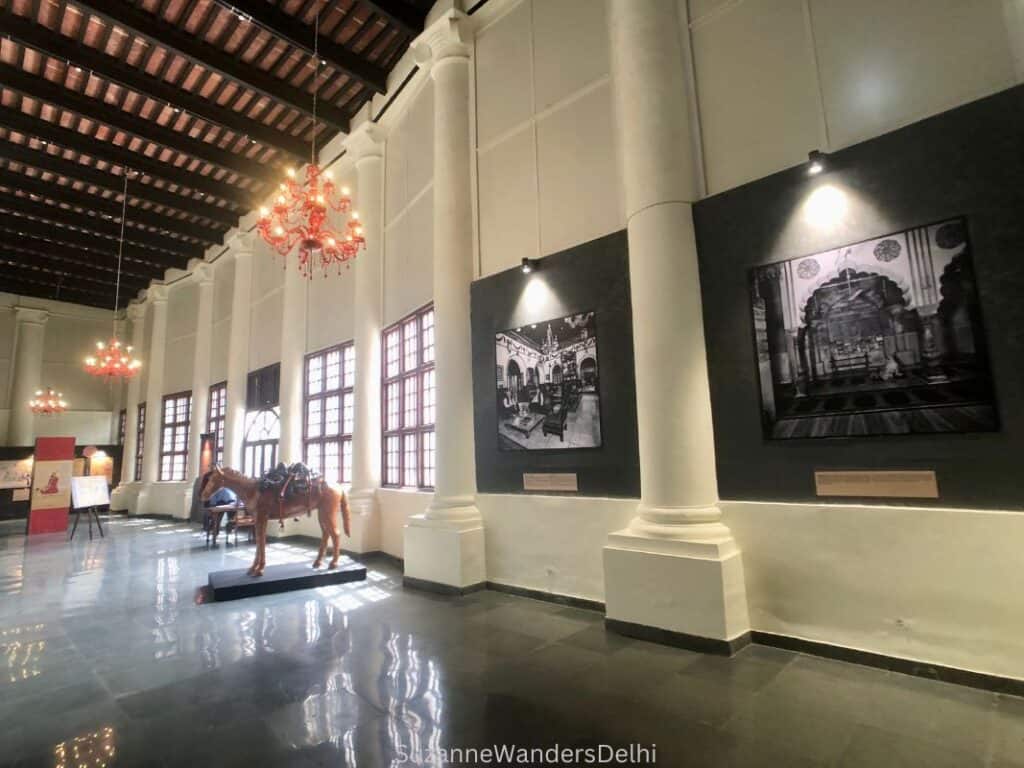
This museum is a must for anyone wishing to understand India and its people.
Partition was the most defining and catastrophic moment in recent Indian history. On August 14, 1947, India was divided into India and Pakistan. The very next day India gained independence from Britain.
These events created one of the most violent and devastating exchanges of population in history, over a million people died.
Tickets are issued by a registration and token system on the museum website: www.partitionmuseum.org.
Hours and Cost: 10:00 am – 5:00 pm (closed Monday) – free
Evening: Dinner at one of Delhi’s Best Restaurants
After the noise and craziness of Old Delhi you probably want a peaceful dinner. Tonight eat at one of Delhi’s most famous restaurants specializing in Indian cuisine:
- The Spice Route (as famous for its artistic decor as the food) – The Imperial Hotel
- Bukhara (Delhi’s most acclaimed restaurant is recognized as one of the 50 best restaurants in the world) – ITC Maurya Hotel
- Indian Accent (contemporary Indian food by chef Manish Mehrota, one of the top chefs in Asia) – The Lodhi Hotel
I recommend making a reservation – they are difficult to get into without one. These are nicer restaurants, so you can dress up a bit if you want to.
Day 5: Tughlaqabad Fort and Central Delhi
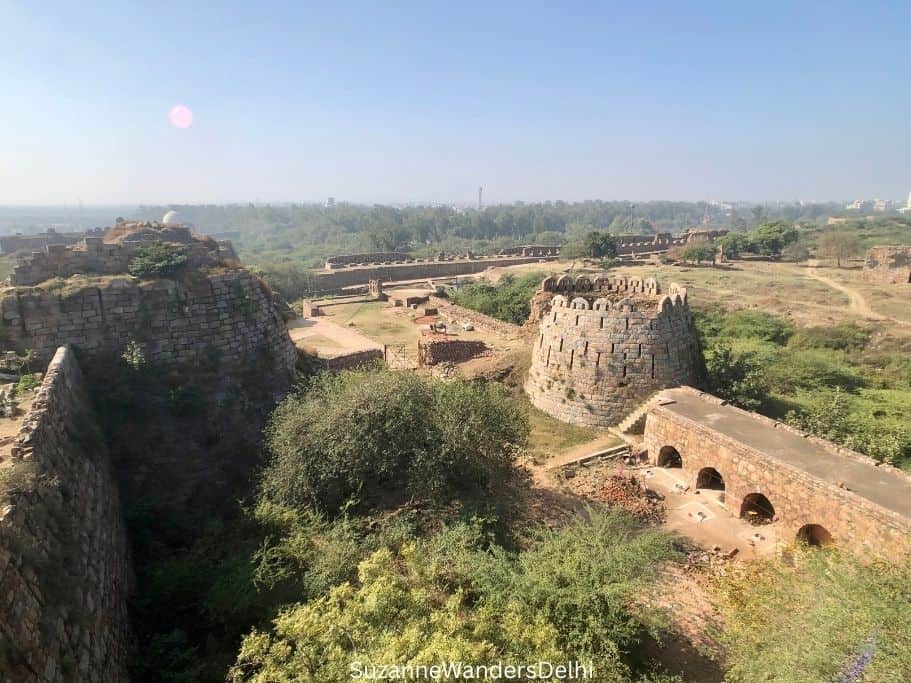
This is the last day of your Delhi itineraries. Today you will see one of the most impressive, but under-visited forts in Delhi, a couple of hidden gems and have a chance to do some shopping.
Morning: Tughlaqabad Fort
This is one historic site that does not get the attention it deserves. It is the largest defensive fort in Delhi.
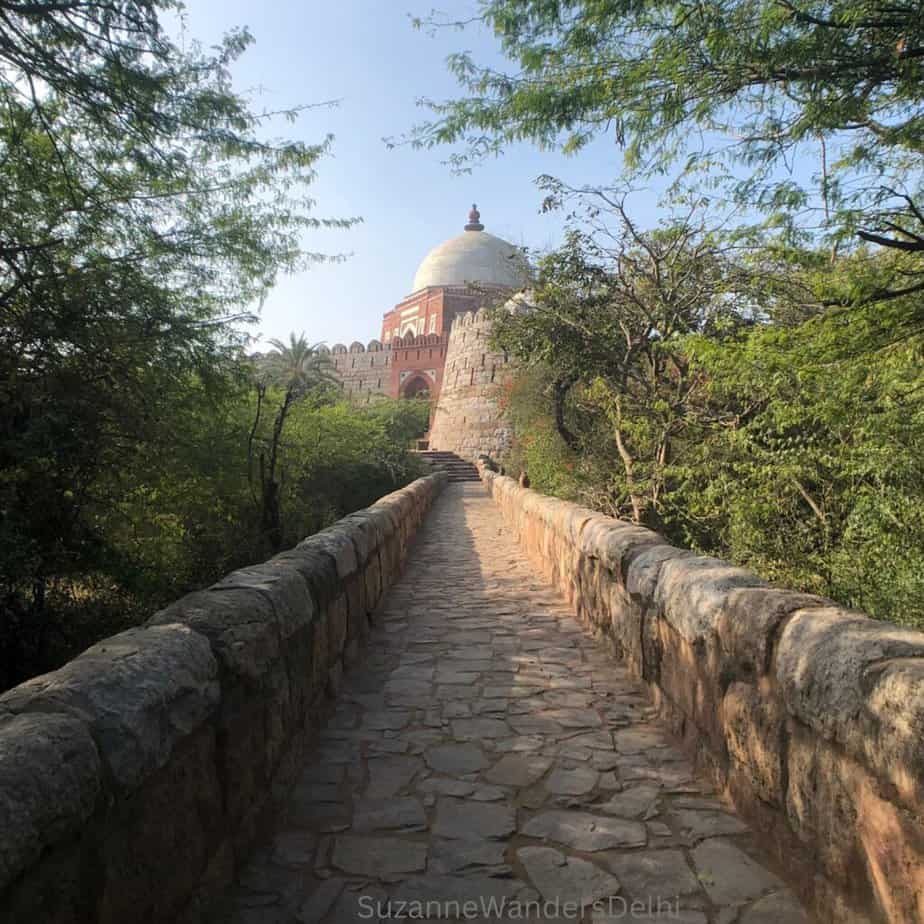
Built in 1321 by the ruler Ghiyasuddin Tughlaq, the fort has a massive citadel, giant rampart walls, parapets, underground passages, water reservoirs, a mosque, hammam, one of the deepest stepwells in Delhi, and thirteen remaining stone gates.
The fort is steeped in legend and even today believed to be cursed.
I recommend you purchase your ticket online through the ASI portal: https://asi.payumoney.com. The fort is never busy, but the last time I was there the ticket seller was late and had no change.
Hours and Cost: 9:00 am – 6:00 pm, daily – INR 300 for foreigners, children under 15 free
Agrasen ki Baoli
Either take an Uber from Tughlaqabad Fort to Hailey Lane where Agrasen ki Baoli is located, or take the metro from Govindpuri station to Janpath station.
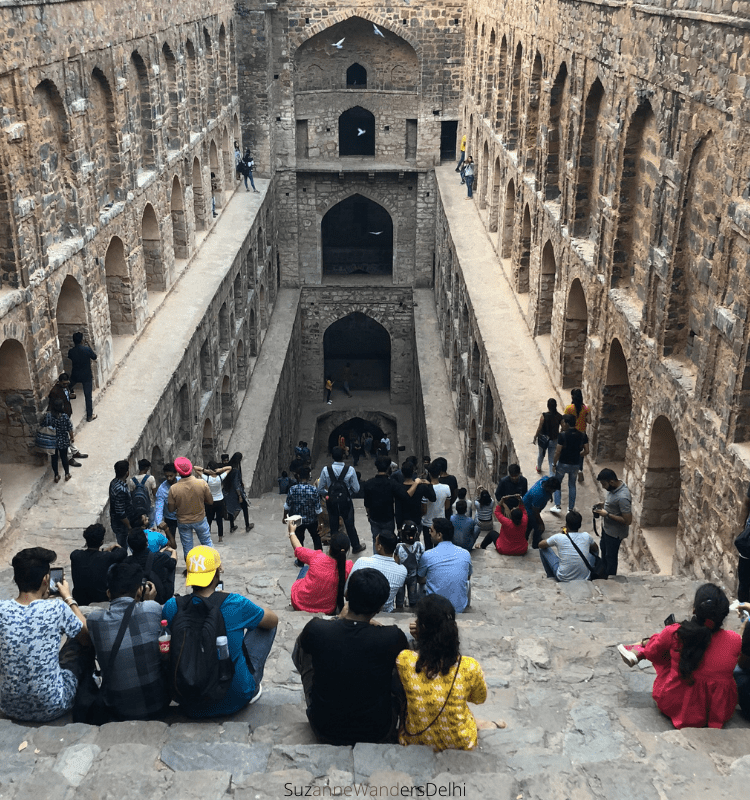
Agrasen ki Baoli is the most beautiful stepwell in Delhi. Make sure you have your camera with you.
The original stepwell dates back to 3000 BC. The current one was built in the 14th Century by the Agrawal community. Ruins of an old mosque are also on the site, at the top of the top of the stepwell near the entrance.
Hours and Cost: 7:00 am to 6:00 pm, daily – free
Devi Prasad Sadan Dhobi Ghat
Exit Agrasen ki Baoli and turn right down the lane. You will come across one of the last remaining dhobi ghats (outdoor laundries) in Delhi.
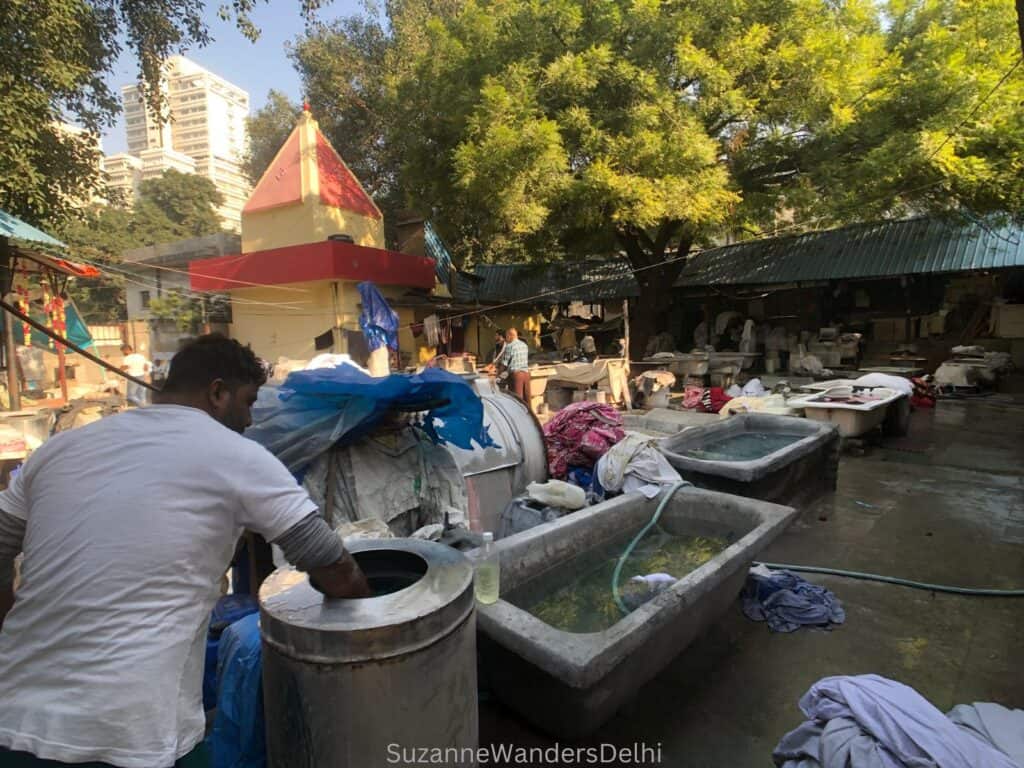
It’s like stepping back in time to see the hand crank spinners, tubs filled with soapy water and cement slabs used for beating the laundry. These dhobis have been here for generations, but the future is uncertain as the younger generation don’t want to take over.
The dhobis are a friendly community but please be respectful – this is not a tourist site, it is their place of livelihood.
Hours and Cost: 5:00 am to 2:00 pm (laundry time), daily – free
Afternoon: Lunch on Janpath Road
Walk over to Janpath Road from the dhobi ghat for lunch. My top pick is Saravana Bhavan for really good South Indian food, but Pind Baluchi, Punjab Grill and Cafe Delhi Heights are good too.
Janpath Market
After lunch, cross Janpath Road to the other side and you’ll see one of Delhi’s best street markets, Janpath Market.
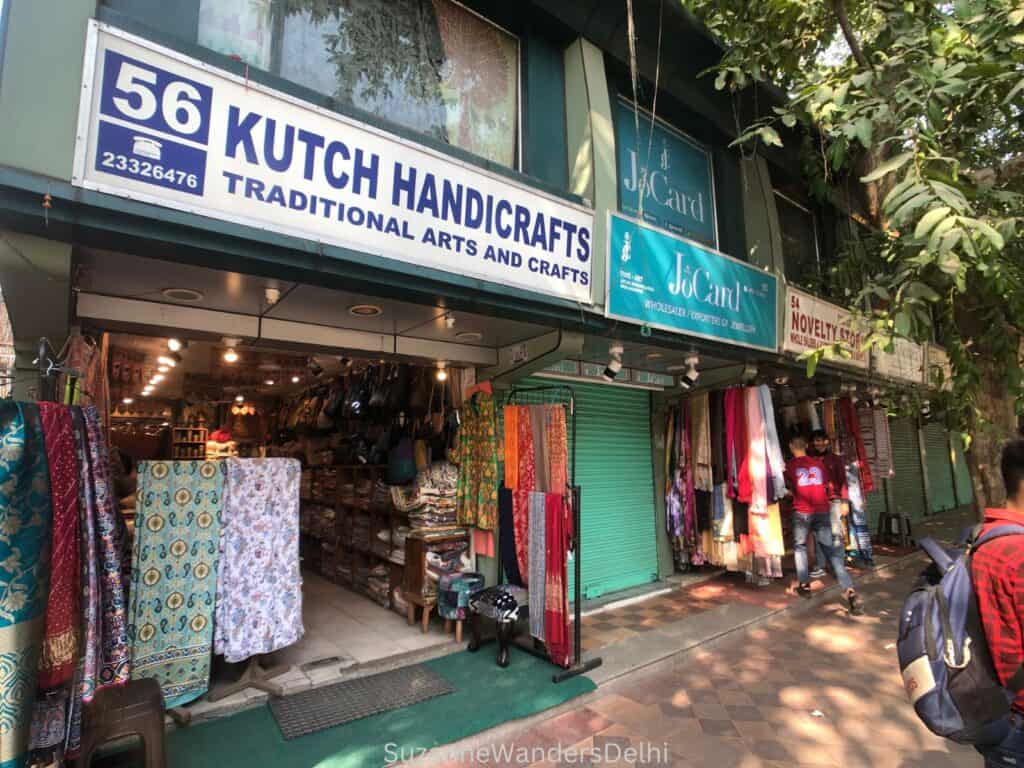
Janpath Market is 4 markets in one. There’s Tibetan and Gujarati sections, a main market and a street/flea market. You’ll find all sorts of souvenirs, clothing and small household items. Make sure to bargain.
I’m not sure why this market doesn’t feature on more itineraries, it’s one of the best in Delhi and is very centrally located.
Hours and Cost: 11:00 am to 9:00 pm, daily – free
Jantar Mantar
Jantar Mantar is a group of 13 architectural astronomy instruments built in 1724. It’s a 10 minute walk from Janpath Market.
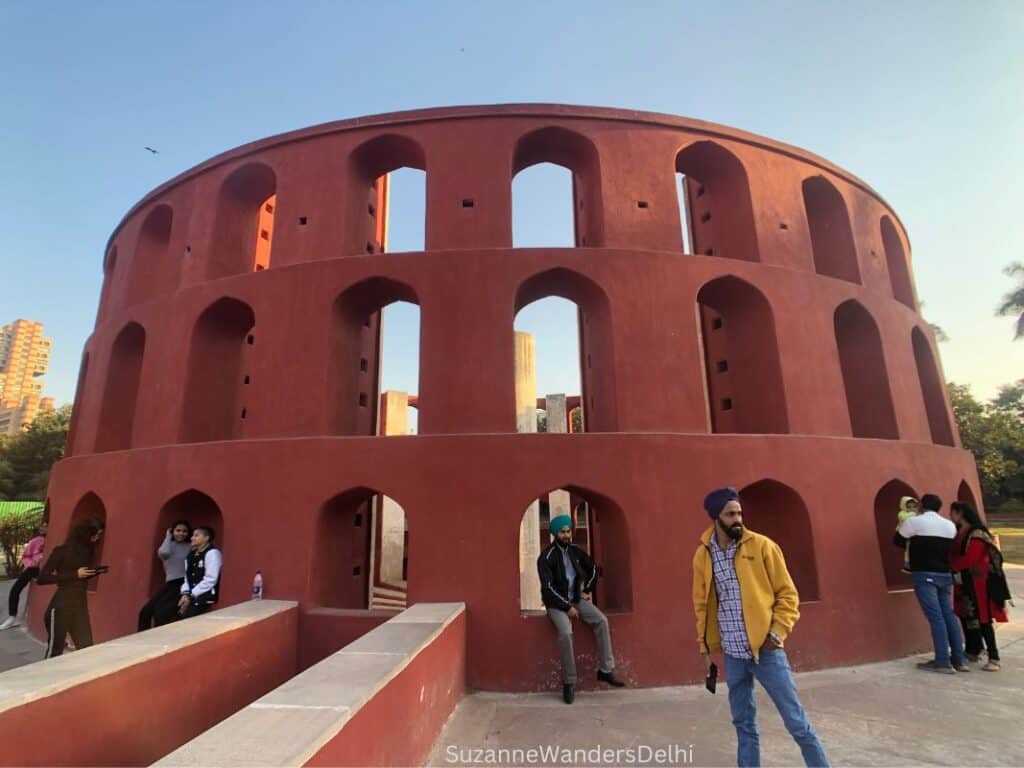
The Delhi Jantar Mantar is actually one of four remaining jantar mantars built by Maharaja Jai Singh II in India (the largest is in Jaipur).
These instruments are massive, and they were incredibly accurate. Today the fine calibrated markings are severely eroded and they are in need of restoration and protection.
Hours and Cost: 6:00 am to 6:00 pm, daily – INR 300 for foreigners, children under 15 free
Evening: Dinner at Connaught Place
Finish your Delhi itineraries by visiting the unofficial centre of Delhi for dinner, Connaught Place.
To get there, just walk straight down Sansad Marg to the inner circle of Connaught Place (about 10 minutes) – or take an auto rickshaw.
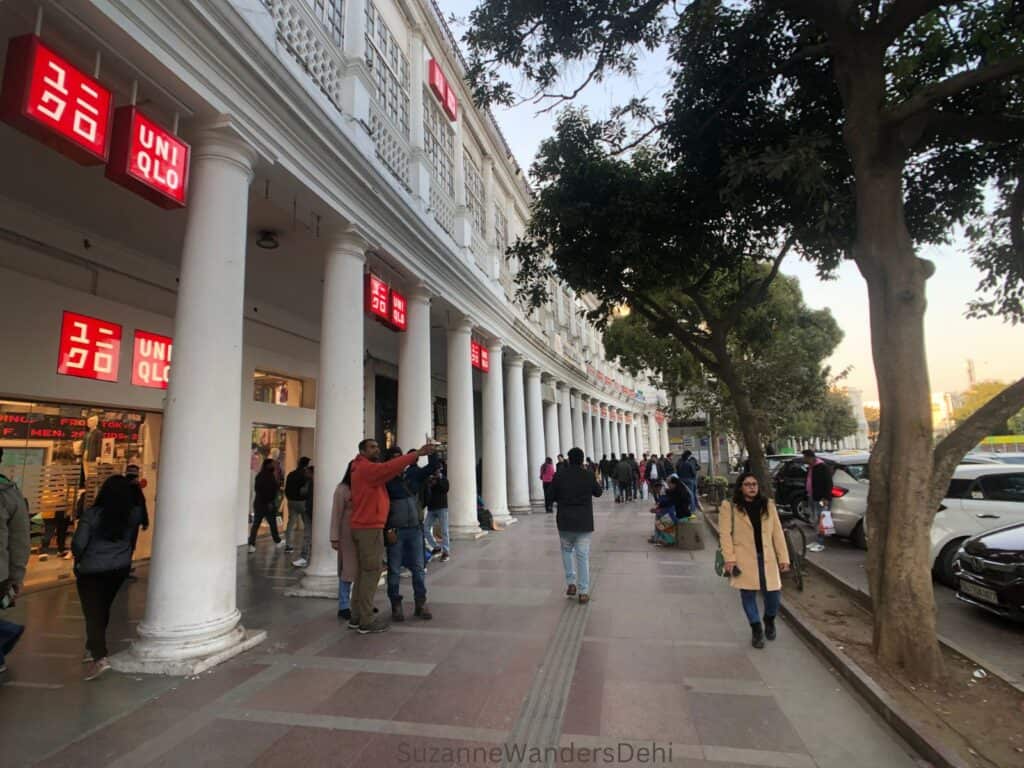
Built by the British in the 1930s, it is the city’s central shopping and commercial hub. Known locally as CP, it is a favourite meeting and hang-out spot for locals.
Do a little window shopping and people watching in CP while you head to dinner.
Some favourites restaurants are: Naivedyam, Lazeez Affaire CP, Kwality and Zaffran. Unplugged Courtyard has a great terrace with brick oven pizza and live Indian music on weekends.
Is Delhi Safe?
Delhi does have a reputation for being unsafe, particularly for women, and it’s not completely without merit.
The truth is, in the day Delhi is quite safe. You have to exercise the usual precautions you would anywhere else, but you can safely explore the city.
It’s not as safe at night – mostly for women. You should not walk anywhere alone, or take an auto rickshaw or ride the metro on your own after dark. The best way to get around at night is by Uber.
I lived alone in Delhi and travelled to and from Delhi and around Delhi extensively. I still spend time there every year. I’ve never had an issue – but I’m careful.
Here’s a list of things to do in Delhi at night.
Where to Stay in Delhi
In Delhi, where you stay matters. Not only because the city is massive and you want to be near the sites, but also in terms of safety. The best area to stay in is South Delhi.
I am very familiar with these properties, and recommend them because they are exceptional and in good neighbourhoods. They are also well located for seeing Delhi.
- Leela Palace New Delhi (luxury): 5 star property and considered Delhi’s finest hotel. It’s beautiful and traditional, with exceptional service and comfort. Well located for seeing the sites in Delhi’s most exclusive neighbourhood near the embassies.
- Lutyens Bungalow (mid-range): Heritage boutique property in one of the best areas of the city next to Lodhi Garden. Fantastic area near many sites. Breakfast is included.
- Prakash Kutir Bed & Breakfast (budget): Family run guest house in a very good area of South Delhi, near the metro and easy to explore the whole city from. Spotlessly clean. Home-cooked breakfast is included.
How to Get Around Delhi

It’s actually pretty easy to get around Delhi. The best ways are by metro, auto rickshaw and Uber.
The Delhi metro is the fastest way to get around the city. It’s a modern, easy to use system and goes everywhere. It’s terrific for longer distances. The metro is cheap, clean and safe. See my step-by-step guide on how to use the Delhi metro.
For short distances I take auto rickshaws. They’re easy to find and perfectly safe during daylight. I also use auto rickshaws to get me to and from metro stations if I don’t feel like walking.
Uber is also convenient and very cheap in Delhi. You’ll need a local SIM to use the app (get one at the airport when you arrive). Ola is also popular in Delhi (Indian version of Uber).
Last Words on Delhi Itineraries: How to Spend 5 Epic Days in Delhi
If you follow these Delhi itineraries you’ll experience some of the most incredible things that Delhi has to offer.
Delhi isn’t everyone’s cup of tea – the city is a lot to take in. But, if you’re passing through anyway take the time to see it properly. I think you’ll agree it is one of the most fascinating cities in the world.