Golden Triangle India: How to Do It On Your Own

The Golden Triangle in India is Delhi, Agra and Jaipur, 3 cities in Northern India. It’s one of the most popular tourist routes in the world, and a fantastic introduction to India if it’s your first time.
Not only is it possible to do the Golden Triangle in a limited time (you could do it in 7 days if you had to), it’s a well travelled route with solid tourist infrastructure. This means you don’t have to rely on an organized tour or travel agents to manage it.
It’s also beautiful! The Golden Triangle is one of the most magical areas in India. It feels like there is something spectacular everywhere you look. I did the Golden Triangle on my first trip to India and was so captivated I returned 5 times in 18 months!
What is the Golden Triangle in India?
The Golden Triangle is the popular route of Delhi, Agra and Jaipur in Northern India. As you can see, these cities form an almost perfect triangle when viewed on a map.
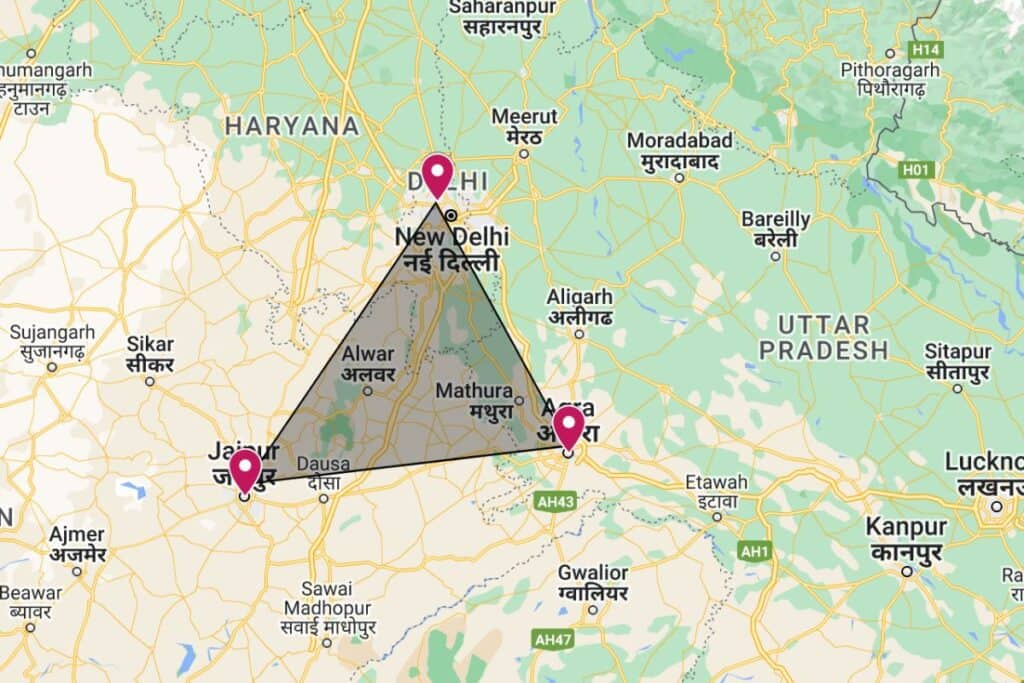
It’s immensely popular, not only because of the rich cultural history of the area, but because it’s relatively easy to travel, and you don’t need weeks to do it. In fact, Delhi to Agra is a popular day trip.
It’s not hard to do the Golden Triangle on your own. I’ve done this route myself and have returned to Agra and Jaipur separately from Delhi several times. You can easily book your own hotels, train tickets, and take Uber around to the different sites.
Why Is the Golden Triangle Special?
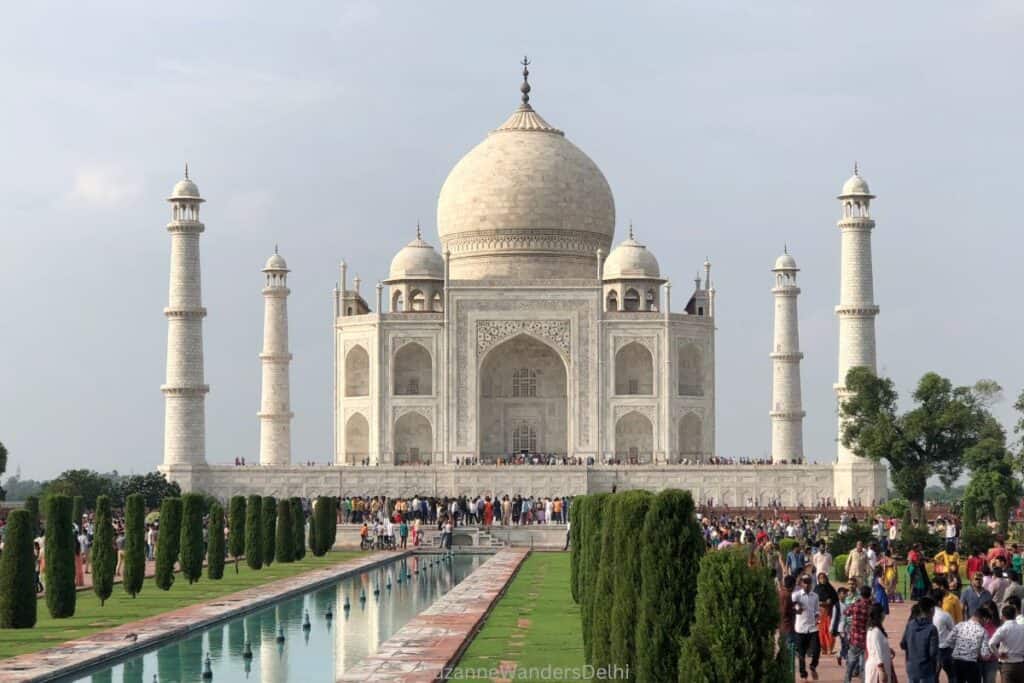
India’s north was the Mughal stronghold of India, and they left their mark on this region with stunning architecture. There’s ancient temples, majestic forts and palaces that will take your breath away.
The whole area is rich in history and culture. There is something so iconically Indian around every corner. It really is one of the most enchanting parts of the country.
If all you see in India is the Golden Triangle, you’ll have seen some of most beautiful and cultural areas of the country, including several UNESCO world heritage sites. It’s a good overview of the best of India.
How to Do the Golden Triangle India
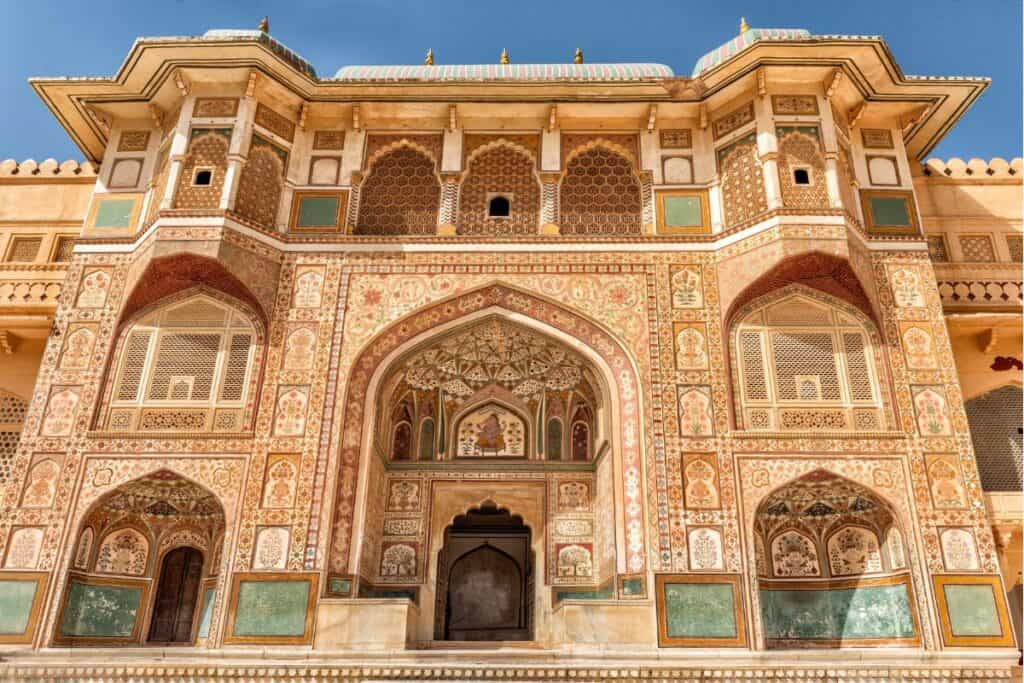
The best route for the Golden Triangle is Delhi-Agra-Jaipur. You could do it the other way around, Delhi-Jaipur-Agra, but there’s really good connections from Delhi to Agra, so it’s the more logical route.
The best way to travel between these cities is train. There’s great rail connectivity between Delhi, Agra and Jaipur and excellent (fast) trains. Besides, Indian train travel is an iconic experience you should try at least once.
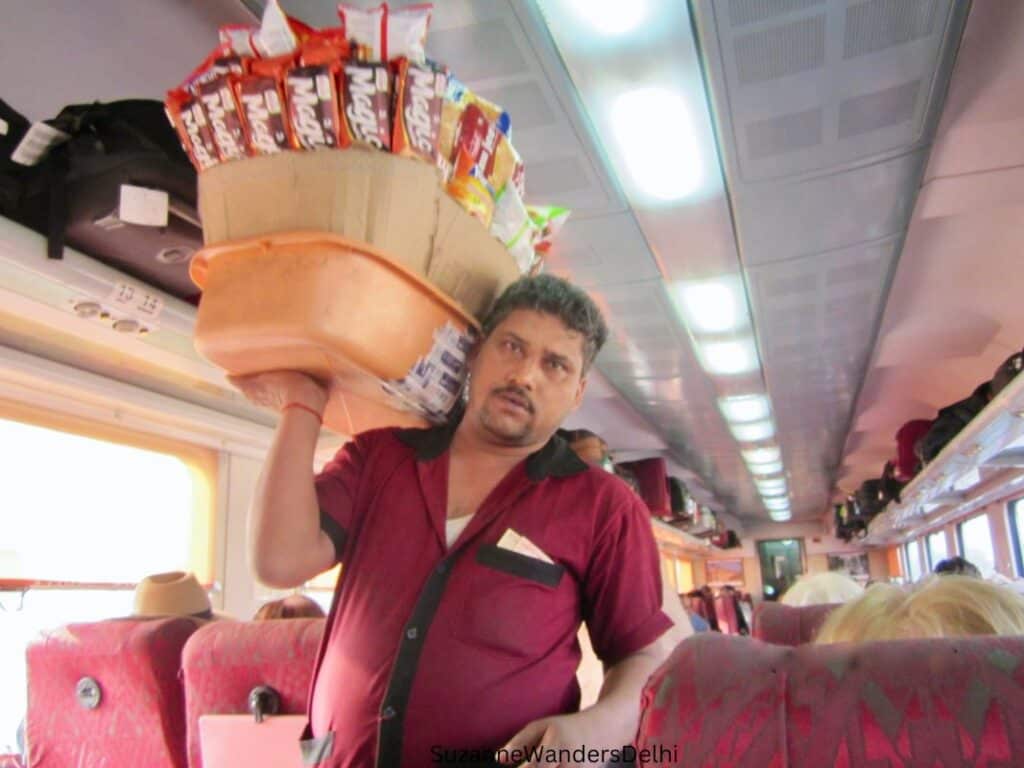
You can also take a bus, Uber or hire a car with driver. The bus is the cheapest option, then train, then Uber. The most expensive option is to arrange a car and driver through your hotel.
The Taj Mahal is closed on Fridays. Keep this mind when planning your itinerary.
1. By Train
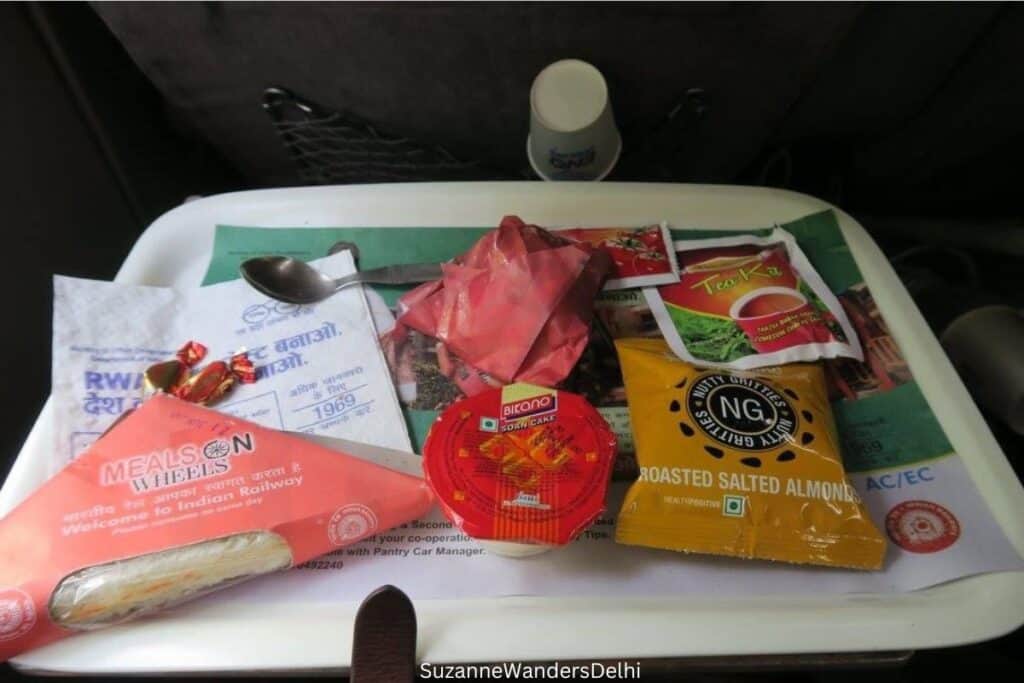
Train tickets can be booked 60 days in advance. Golden Triangle routes, especially on the fast trains, sell out quickly. It’s a good idea to organize your train tickets early.
You can book tickets directly on the official Indian Railway website. You’ll have to register first for a small fee, but after that you’ll have full access to every train in India with no service fees.
An easier option is to book through 12Go Asia. They don’t show every train, but they have the popular routes, and this website is easier to use. Tickets are a bit more expensive here.
India has different types of trains and classes of tickets. The best trains for these routes are Vande Bharat Express, Rajdhani Express and Shatabdi Express, and the most comfortable carriages are AC1, EA, EC, and CC.
Read more about how to buy Indian train tickets here.
⚠️ Delhi has 4 passenger rail stations. Make sure you check which train station you’re departing from!
2. By Bus
I don’t recommend the bus, it’s slower and not as comfortable as the train. But, if you choose to go by bus, you can use the MakeMyTrip website to book tickets.
I’ve used this website to book domestic plan tickets many times without any issues.
3. By Uber or Private Car
Uber is a fantastic (and cheap) way to travel between Delhi, Agra and Jaipur. Agra to Jaipur can cost as little as INR 3600 ($38 USD), and Delhi to Agra can cost INR 3000 ($32 USD).
You can also book a private car with driver. This will probably be more comfortable than Uber, but more expensive. A private driver with car can be booked through sites like MakeMyTrip, Viator and GetYourGuide.
I’ve used MakeMyTrip for rides between Delhi and Rishikesh and Delhi to Agra without any issue.
How Many Days do You Need for the Golden Triangle?
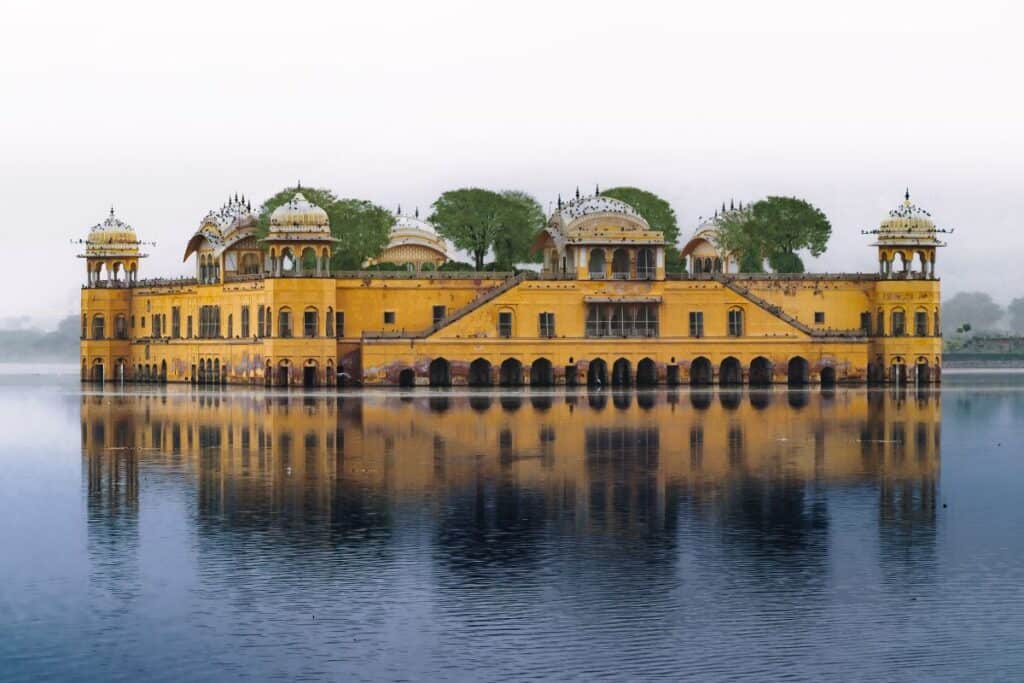
At a minimum I recommend 3 days in Delhi (including arrival day), then 2 days in Agra, and 2 days for Jaipur. But if possible spread it out over 8 days and spend an extra day in Jaipur.
- Delhi is the capital and there are amazing things to see. You can easily spend a week or more exploring and barely scratch the surface. If you want some ideas, check out these itineraries for Delhi.
- Agra has a couple of worthwhile sites, but it’s not a pretty city. I wouldn’t stick around after seeing the Taj Mahal and Agra Fort.
- Jaipur on the other hand is a different story. It is a charming city, full of lovely architecture and gorgeous palaces. Plus there’s great shopping. You could easily spend 3 or 4 days there.
Insider tip: I recommend stopping at Fatehpur Sikri and Chand Baori (both UNESCO) on your way to Jaipur after Agra.
Golden Triangle Itinerary
I’ve done this route and visited all these places independently. Here’s how I recommend you see India’s Golden Triangle:
Day 1: Arrive Delhi
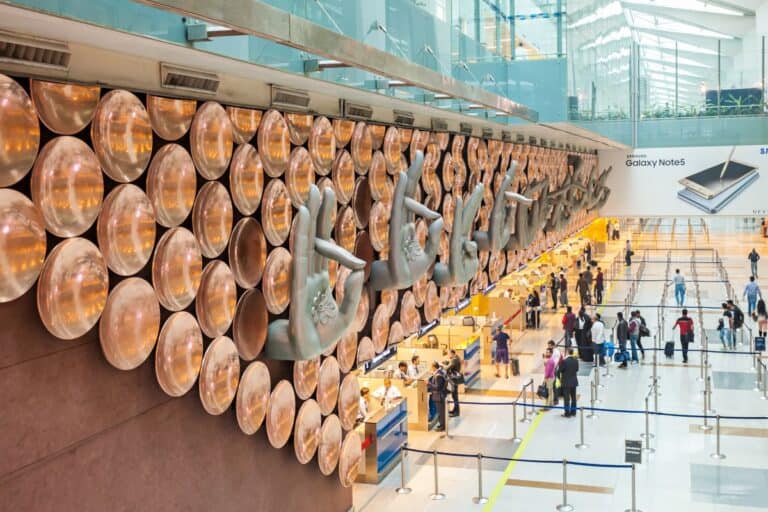
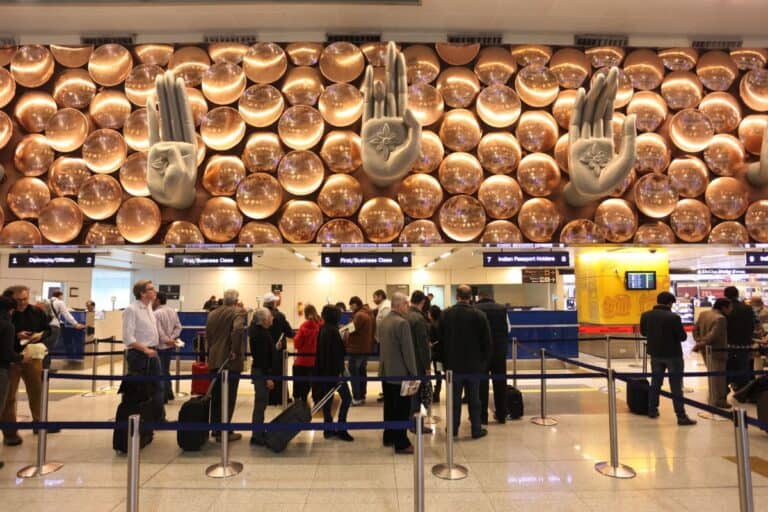
Delhi is bonkers and a lot of people find it overwhelming. The airport is calm and organized, but once you step outside it’s madness. Just keep in mind Delhi is one of the most historic cities in the world and worth seeing, but you have to give it chance.
There’s several ways to get into Delhi from the airport, but the metro and Uber are the best.
Day 2: Sites of New Delhi
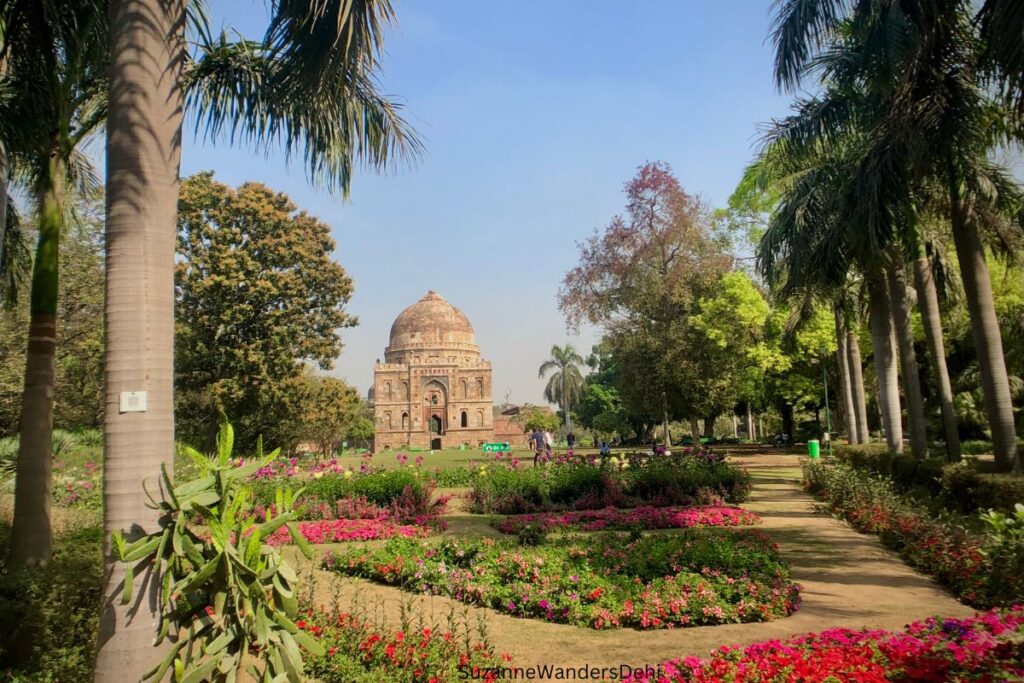
Today focus on the highlights of New Delhi while you get acclimatized.
Delhi has hundreds of sites but these are what I consider easier things to manage on your first full day in the city:
- India Gate: Delhi’s monument to fallen soldiers is at the centre of New Delhi and a great first stop for Delhi newbies. It’s near India’s parliament buildings in the heart of Lutyens’ Delhi. It’s a festive spot with hawkers, street food stands and lots of people just enjoying the iconic monument. Free.
- Lodhi Garden: The most beautiful heritage park in Delhi. There’s all sorts of Indian trees and flowers, but also incredible tombs built between 1414 and 1526. An absolute must-visit site. Free.
- Khan Market: An upscale market near Lodhi Garden that is extremely popular with locals. It’s a great spot to do some souvenir shopping and have a meal, a couple of Delhi’s best cafes are in Khan Market.
- Humayun’s Tomb (UNESCO): This was the first garden style tomb built in India and it was one of the tombs that inspired the design of the Taj Mahal. Several smaller, but well preserved tombs are on site too, as well as a museum and one of the best restaurants in Delhi, Nisaba. Tickets are INR 600.
The best ways to get around Delhi are the metro, Uber and auto rickshaws. Depending on where you’re staying, you may be able to just take auto rickshaws to these sites. Rickshaws are ideal for short distances.
Day 3: Sites of Old Delhi
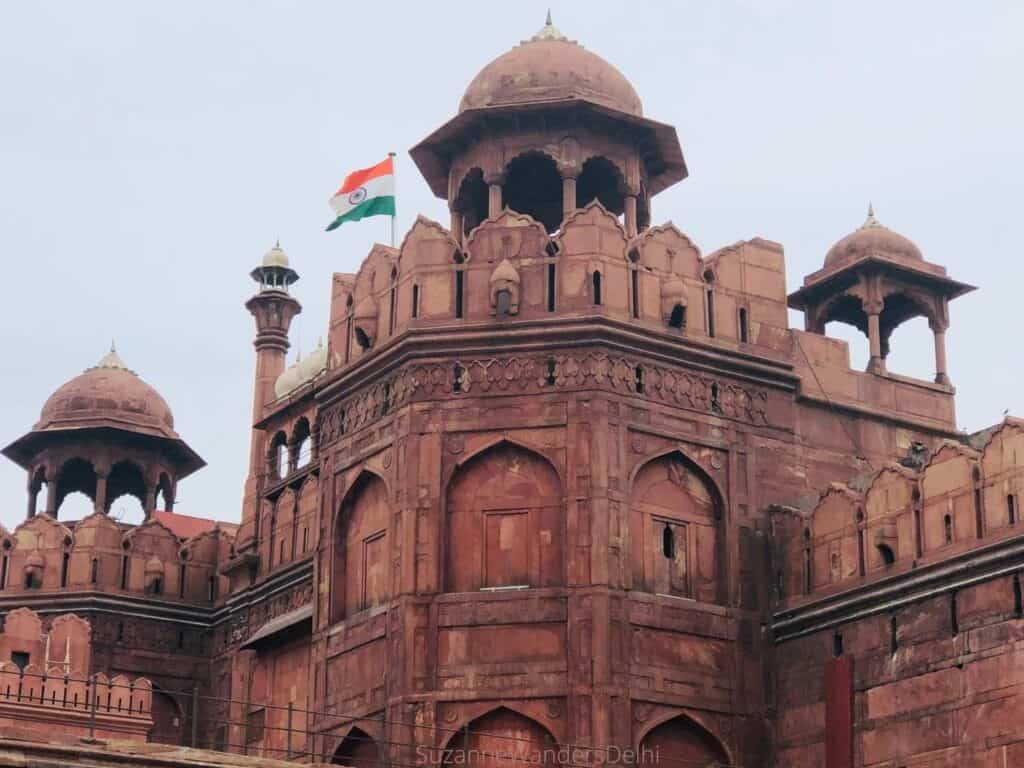
Now that you are hopefully a little acclimated to Delhi, it’s time explore Old Delhi. Old Delhi is extremely important from a historical perspective – it was built by Shah Jahan (who built the Taj Mahal) in the 1600s.
You can walk from one site to the next, but this is a very congested and noisy part of Delhi. If you get tired, just hop into a rickshaw.
- Red Fort (UNESCSO): This is Delhi’s most famous site. It was built in 1639 and remained the main residence of the Mughal empire until the British ousted the last ruler in 1857. During Mughal times the Red Fort was a world unto itself, housing hundreds of royals, their entourage and staff. Entrance fee INR 600.
- Jama Masjid: Within walking distance of the Red Fort is the Jama Masjid, the largest mosque in Delhi. It was built in the 1600s by Shah Jahan for the royal family. It’s a working mosque, so shoes must be removed and women must cover their heads. Modest dress is required. Entrance fee of INR 300.
- Chandni Chowk: The most famous street in Delhi. It is incredibly historic and lined with famous temples, mosques, markets, shops and food stands. It is 1.8 km long, starting by the Red Fort and ending at Fatehpuri Masjid, around the corner from the famous spice market, Khari Baoli.
Here is my detailed DIY Heritage Walk of Old Delhi, so you don’t miss a thing.
I recommend using the metro to reach Old Delhi. Because of traffic and the fact that Chandni Chowk is closed to motorized traffic during the day, it’s the easiest way.
Where to Stay in Delhi
In Delhi, where you stay matters. Not only because the city is massive and you want to be near the sites, but also in terms of safety. Here are a few excellent properties that are well located for sightseeing and in good neigbourhoods:
- Imperial Hotel New Delhi (luxury): Delhi’s finest heritage hotel and my personal favourite. Excellent walkable area in Connaught Place.
- Lutyens Bungalow (mid-range): Heritage boutique property in one of the best areas of the city next to Lodhi Garden. Breakfast is included.
- Prakash Kutir Bed & Breakfast (budget): Family run guest house in a residential area, near the metro and easy to explore the whole city from. Home-cooked breakfast is included.
Day 4: Travel to Agra
Get up early today and make your way to Agra, the capital of India before it moved back to Delhi. Depending on what time you get in you may be able to see the Taj Mahal at night.
The Taj Mahal changes colour during the day because of the white marble, so try to see it at night and at sunrise – these are the two most magical times.
Day 5: Sights of Agra
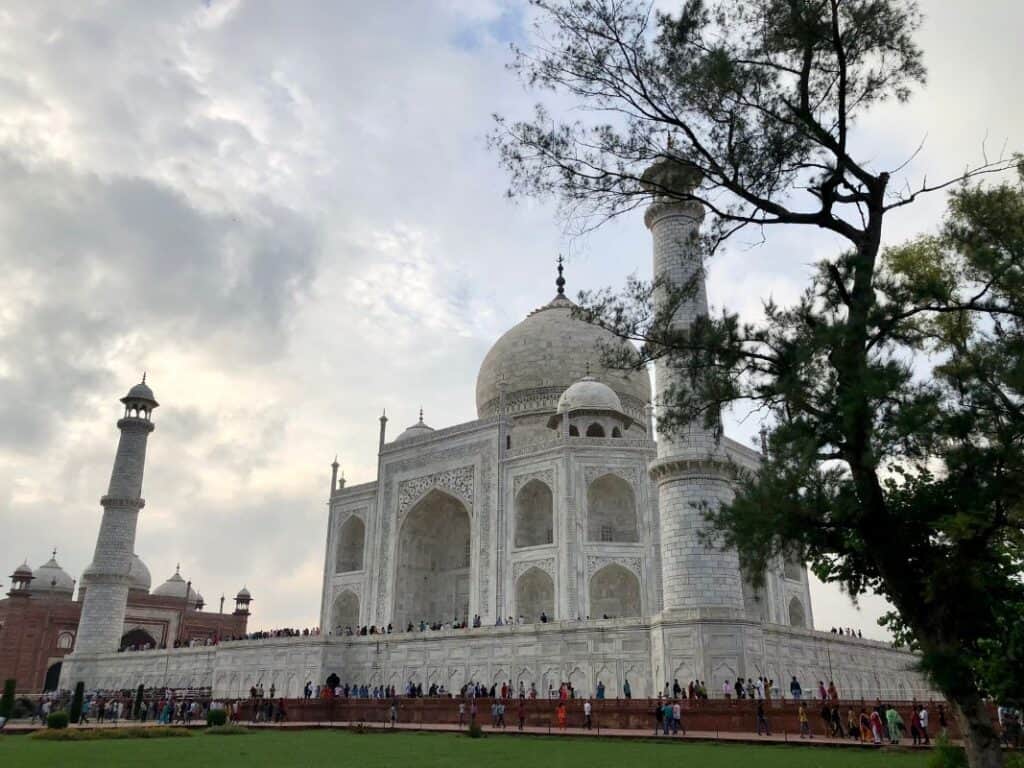
While Agra is not what I consider a very atmospheric or lovely city, there are some sites in addition to the Taj Mahal that are worth seeing.
Agra is also famous for inlay marble, and it’s for sale everywhere. I bought a gorgeous set of coasters there. Make sure you bargain because prices are inflated for foreigners.
- Taj Mahal (UNESCO): India’s most famous site and considered to be one of the most beautiful buildings in the world. The Taj Mahal is a mausoleum built between 1631 and 1648 for Emperor Shah Jahan’s favourite wife, Mumtaz Mahal. Go as early as possible – it gets very crowded (like a sardine can in the tomb). Sunrise is beautiful. Closed Friday. Entrance fee INR 1300.
- Night Viewing of the Taj Mahal: Every month during the full moon (except during Ramadan), the Taj Mahal is open for night viewing. If you have a chance to see the Taj Mahal on one of these 5 nights, do it. It’s magical! Night viewing tickets must be purchased in advance through the Taj Mahal website.
- Agra Fort (UNESCO): After the Taj Mahal, Agra Fort is the most important historical site in Agra. It was the main residence of the Mughal rulers until 1638 when the capital moved to Delhi. It is here Shah Jahan died in 1666. Entrance fee: INR 600.
- Etimad-Ud-Daulah’s Tomb: This beautiful mausoleum is often referred to as the Baby Taj. It’s the first tomb in India to be built completely of white marble and is meant to resemble a jewel box. Entrance fee: INR 300.
- Mehtab Bagh: This park is on the Yamuna River, directly across from the Taj Mahal and it has spectacular views. The garden was built in the 1500s and Shah Jahan used to come here to gaze at the Taj Mahal. He intended to build his own tomb here of black marble, but he was imprisoned by his son in Agra Fort before he could. Entrance fee: INR 300.
Agra is a lot smaller than Delhi, you can easily get around using Uber or auto rickshaws. There’s a metro, but it’s still under construction. However, the section between the Taj Mahal and Agra Fort is operational.
Where to Stay in Agra
Agra is the top tourist destination in India and has plenty of accommodation choices. Hotels are more expensive and it will cost to be closer to the Taj Mahal, but for a once in a lifetime trip it might be worth it. My tops picks are:
- The Oberoi Amarvilas (luxury): Finest hotel in Agra. Every guest room has a view of the Taj Mahal, and it’s only 600 metres away from the famous site.
- Ekaa Villa (mid-range): Lovely boutique hotel, 4 km from the Taj Mahal. Rooms are spacious, comfortable and super clean.
- Coral Court Homestay (budget): Excellent location, just 700 metres from the Taj Mahal, and with rooftop views of the Taj. Breakfast in included.
Day 6: Agra to Jaipur
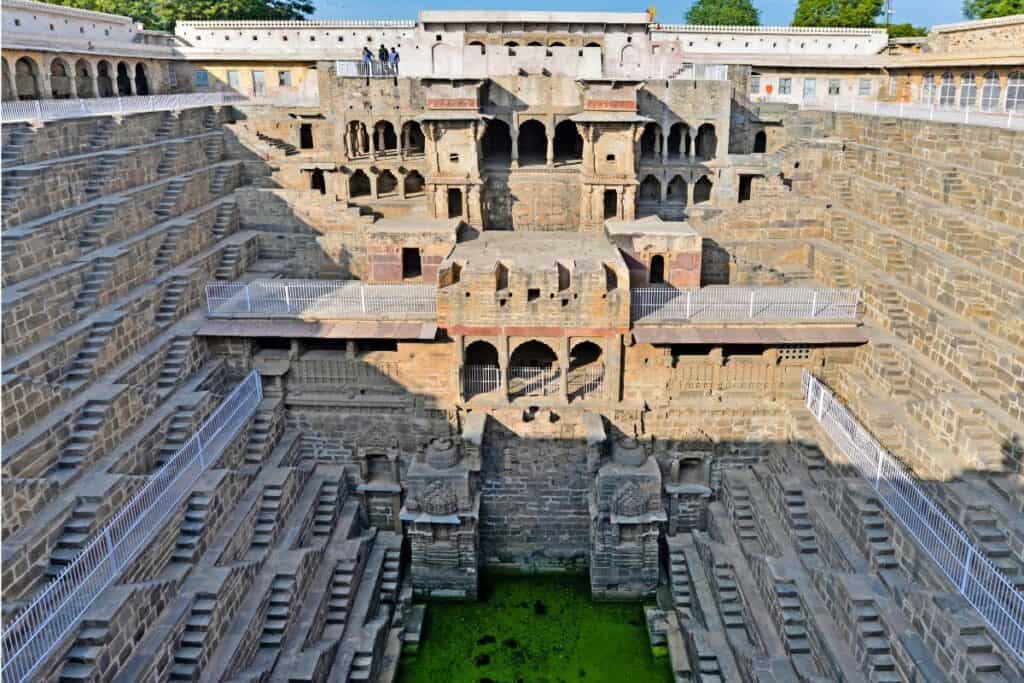
You can easily take a train from Agra to Jaipur, but if you hire a car you can stop at Fatehpuri Sikri and Chand Baori on your way to Jaipur.
- Fatehpur Sikri (UNESCO): A historic walled city built in 1569 by Mughal Emperor Akbar. Fascinating and large site with monumental gateways, a palace complex, tombs and huge mosque. Go in the morning before it gets hot. Entrance fee INR 600.
- Chand Baori (UNESCO): One of the largest stepwells in the world, built in the 8th century. It has 13 levels and 3500 steps in a stunning upside down pyramid pattern. It’s in the village of Abhaneri, 80 km from Jaipur. A permit is required to go into the stepwell, but for a ‘donation’ the guards may let you. Entrance fee INR 300.
Day 7: Sites of Jaipur
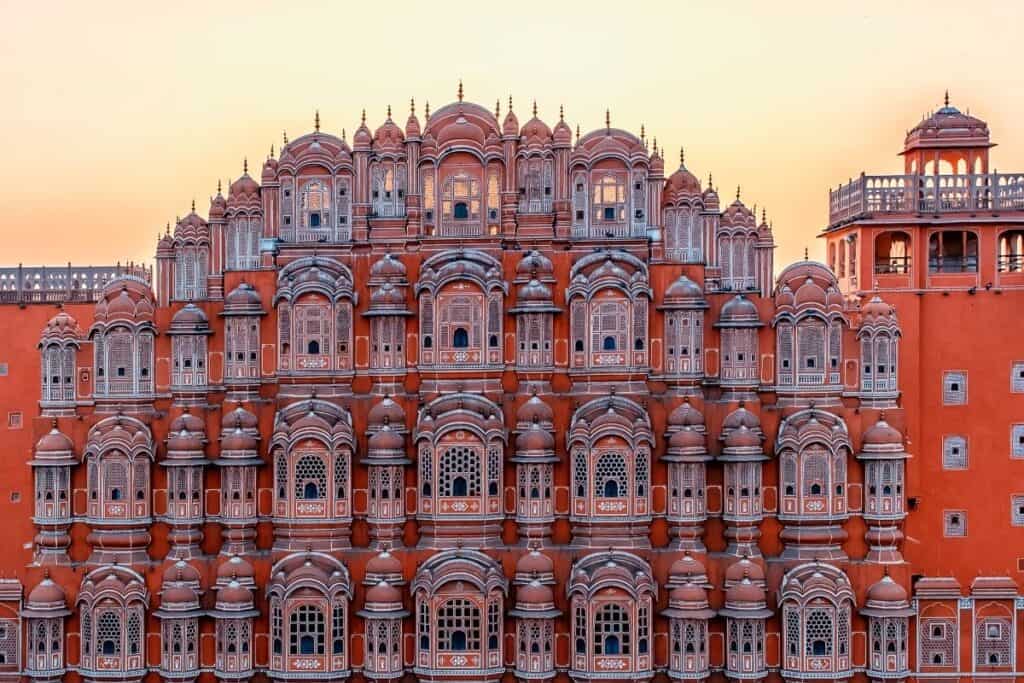
Jaipur is the capital of the princely state of Rajasthan. It was founded in 1727 and is famous for its pink hued buildings and traditional handicrafts. It’s the most enchanting city of the Golden Triangle in India and recognized as a world heritage site by UNESCO.
- The City Palace: The most captivating site in Jaipur. The palace is still the residence of the Jaipur royal family, but parts are open to the public. Make sure you see the four gates. The Royal Splendour Tour is expensive (INR 4000), but worth it – you’ll get access to stunning galleries otherwise closed to the public. Entrance fee INR 1000.
- Hawa Mahal: Known as the Palace of Winds, this is one of the most distinctive buildings in Jaipur. Built in 1799 as a summer palace, the eastern facade is a series of latticed windows which allowed the ladies of the palace to look out without being observed.
- Jantar Mantar (UNESCO): This is a group of 16 architectural astronomical instruments built in 1734. Maharaja Sawai Jai Singh II, built five of jantar mantars across India, but the one in Jaipur is the largest.
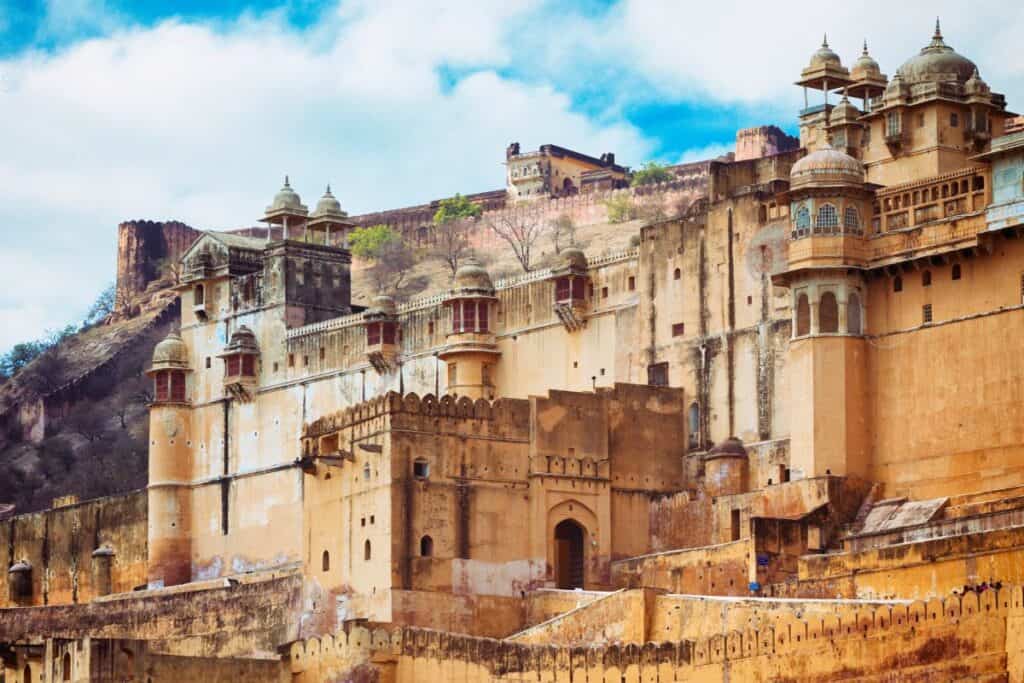
- Amer Fort (UNESCO): Located just outside of Jaipur (you can take an Uber to get there), is the incredible Amer Fort. This is one of a series of forts built by the Rajputs in the surrounding hills, all grouped together as a UNESCO heritage site. Amer Fort was the royal residence and is the most magnificent of the these forts. Please do not ride the elephants here – they are not treated well and there is talk about discontinuing this.
- Raj Mandir Cinema: If you have energy left in the evening, go see a Bollywood film here – it’s the most famous cinema in India. The opulent theatre is kind of art nouveau meets India style. It doesn’t matter what movie is playing – go for the experience of seeing a movie there. The audience can be very enthusiastic.
Apart from Amer Fort and the other hill forts, the main sites are central. If you’re staying near the Walled City you can easily take an auto rickshaw, or an Uber to get around. The Jaipur metro is good (new and efficient), but not extensive.
Where to Stay in Jaipur
Immerse yourself in the history of Rajasthan by staying in a historic haveli (mansion) . The havelis in Jaipur are famous, and many have been converted into guest houses and hotels.
It’s best to stay close to the Walled City where most of the attractions are.
- Samode Haveli (luxury): Stunning historic haveli of an aristocratic family who still reside there. There’s a stunning pool in the traditional courtyard, a gym, spa and dining room.
- Alsisar Haveli (mid-range): Gorgeous property not far from Jaipur’s most famous sites. The haveli has a lovely pool, restaurant and spa.
- Bhola Bhawan Bed & Breakfast (budget): Excellent budget option run by a local family, a 20 minute walk from the main sites. Rooms are comfortable and breakfast is included.
Important: The Jaipur Literature Festival is held in Jaipur every January or February. If you’re planning to visit Jaipur at this time book your hotel and transit far in advance. For more information visit the Jaipur Literature Festival website.
Buy Tickets in Advance on the Official Government Site
You can save time and money by buying your tickets online for monuments overseen by the Archeological Survey of India (ASI).
You can buy tickets for these monuments on the ASI website:
- Delhi: Red Fort & Humayun’s Tomb
- Agra: Taj Mahal, Agra Fort, Etimad-Ud-Daulah’s Tomb, Mehtab Bagh & Fatehpur Sikri
- Jaipur: Chand Baori at Abhaneri
Tickets are INR 50 less on the ASI website, and you’ll avoid the ticket lines. Not many foreigners take advantage of this website, but I use it whenever I can.
FAQs About the Golden Triangle in India
These are the most asked questions about visiting India’s Golden Triangle:
Is the Golden Triangle worth visiting?
Yes, the Golden Triangle in India is worth visiting. It’s a very historic and culturally important route showcasing the most famous sites of India. You’ll see India’s capital city, Delhi, the Taj Mahal in Agra and the famous forts and palaces of Rajasthan in Jaipur.
How many days do you need in India’s Golden Triangle?
You need a minimum of 7 days to see India’s Golden Triangle, but a more comfortable pace would be 10-12 days. This area is extremely historic and charming – you can easily spend longer in this part of India.
What is the best month to visit the Golden Triangle in India?
October, November, February and March are the best months to visit the Golden Triangle in India.
Northern India is subject to extreme cold in winter and heat in summer, and the capital city of Delhi is plagued by high pollution levels in December and January.
Last Words on Golden Triangle India: How to Do it On Your Own
The Golden Triangle is one of the easiest parts of India to explore on your own. The cities are well connected, and it’s straightforward to book your own trains, hotels, tickets and transportation.
You don’t need to take an expensive tour or go through a travel agent. Just be prepared for a little chaos that is typical of India in general. I did this very route on my own first trip to India and was completely captivated!