What to Do in Delhi if It’s Your First Time

If it’s your first time in Delhi and you’re wondering what to do, this list is all you need. I completely understand how overwhelming Delhi can feel and have handpicked the best sites to help you adjust.
These sites are the most important and will give you a very good idea of the enormous cultural and historical significance of Delhi. Most of them are central and easy to reach.
I recommend saving Old Delhi until you’ve gotten a bit acclimated. Old Delhi is very important, but chaotic and crowded, so don’t tackle it on your first day.
What to Do in Delhi if it’s Your First Time
When people ask me what they should do in Delhi, this is the list I give them. I have personally visited all of these, some of them many times. They never get boring.
1. India Gate
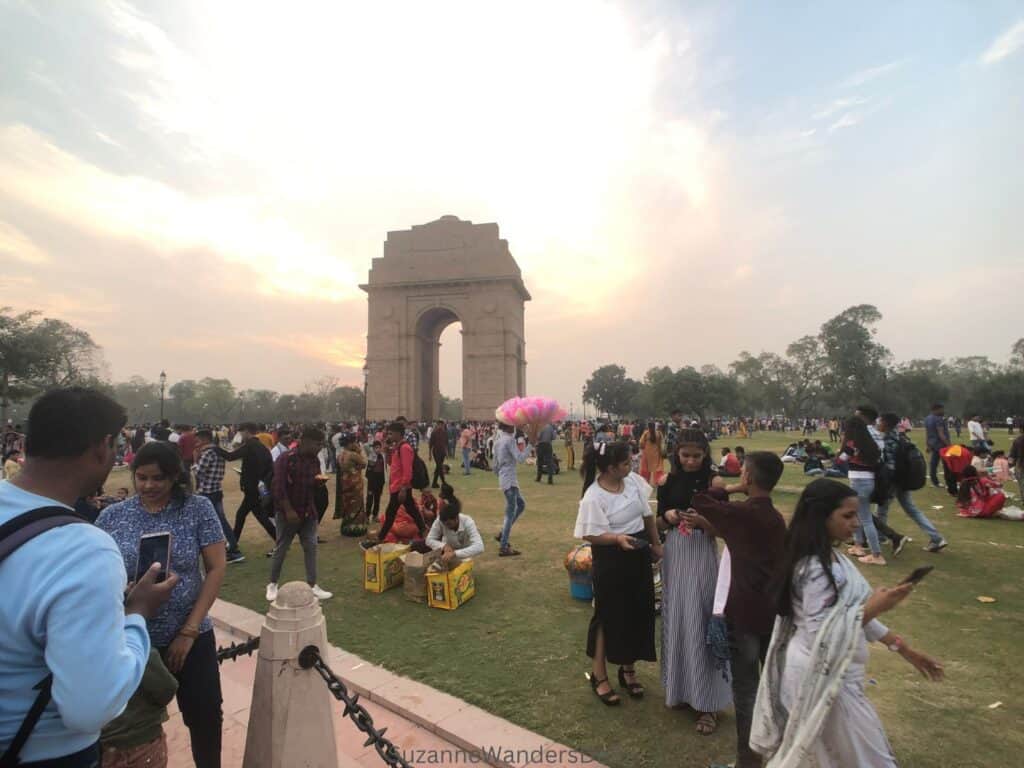
This is a really easy first stop in Delhi. Even though it’s a war memorial, it is not somber at all. In fact, it’s a favourite spot for domestic tourists who come with their families to picnic, eat cotton candy and generally enjoy themselves.
India Gate is located at one end of Kartaya Path, the street lined with India’s parliament and federal government buildings. Rashtrapati Bhavan (President of India’s office and residence) is at the other end.
Directly across the street is Bikaner House – a former prince’s palace that is now a free cultural centre. There’s also several nice cafes at Bikaner House. All of these sites are free.
2. Lodhi Garden
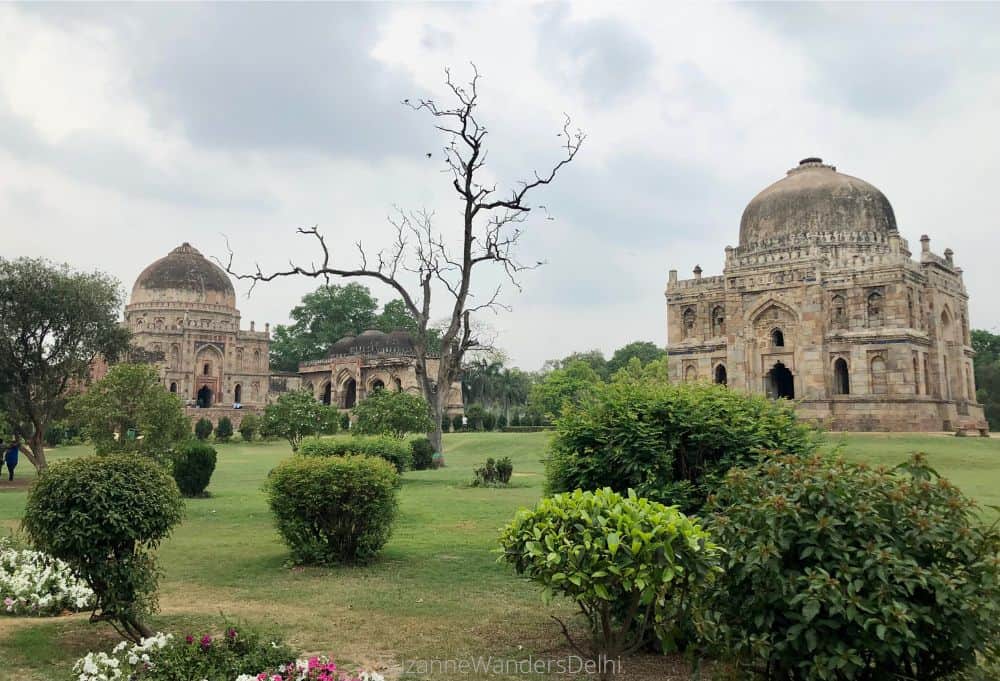
Lodhi Garden is the most popular park in Delhi, and as a first time visitor you will be captivated. The park has beautiful trees, gardens and ruins dating back to 1444. I always bring my visitors here – it’s magical.
Among the gardens and tree lined paths are tombs from the Sayyid and Lodhi dynasties, the beautiful gateway of Bara Gumbad, a three domed mosque and arched bridge built by the Mughal ruler Akbar.
After you can easily cross the street to see the 50+ murals in Lodhi Art District, or head up to Khan Market for shopping and lunch. All free.
3. Humayun’s Tomb (UNESCO)
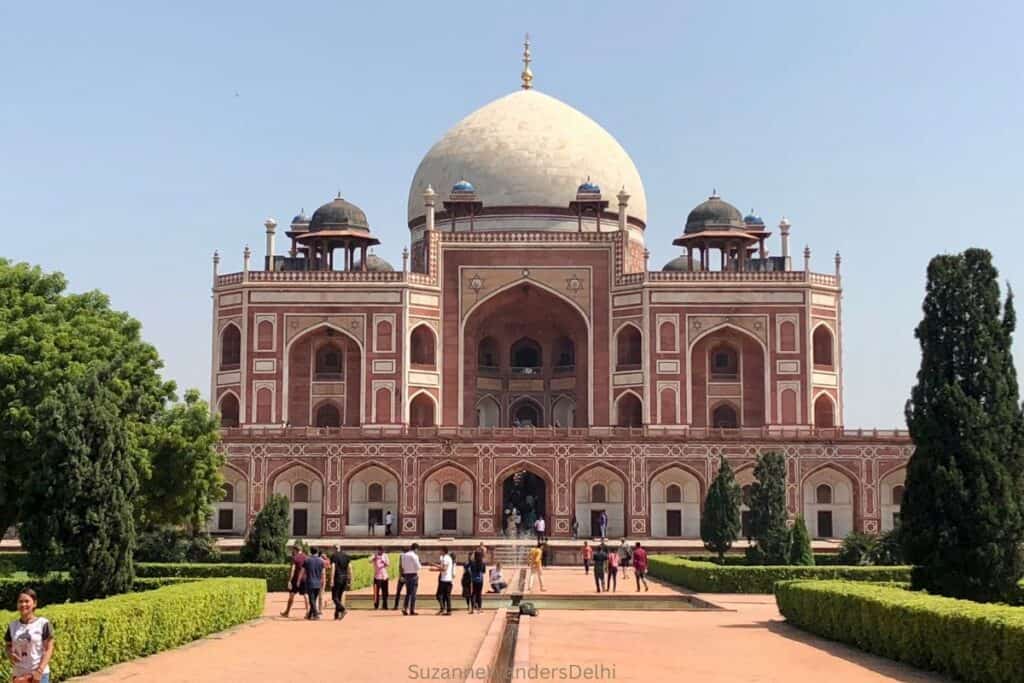
Personally, I think this is the most worthwhile of Delhi’s UNESCO world heritage sites.
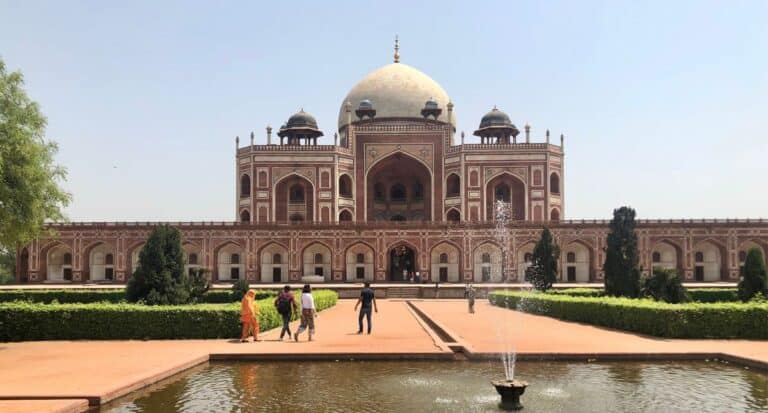
Humayun’s Tomb is a beautiful example of Mughal architecture and was the first garden tomb in India. It is one of the tombs that inspired the design of Taj Mahal.
The tomb was built in 1571 for Mughal emperor Humayun. The complex has several other well preserved tombs, Persian gardens and the graves of 150 Mughal royals and their entourage.
Admission is INR 600.
4. Qutub Minar (UNESCO)
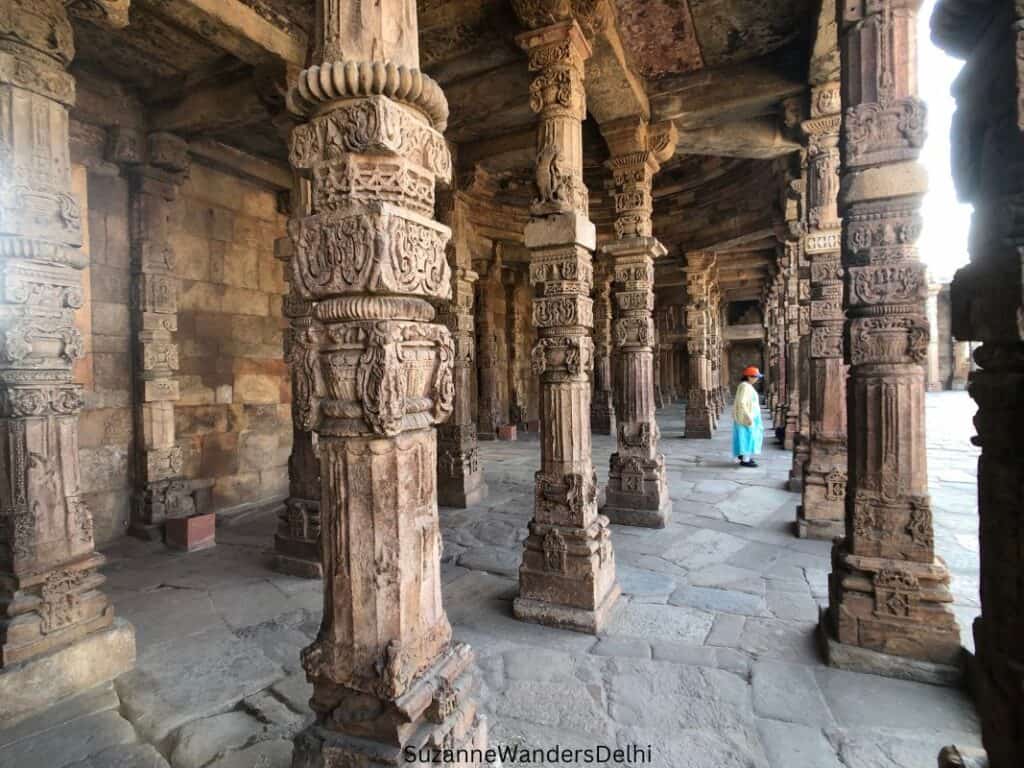
The Qutub Minar complex is a world heritage site. I really like the Qutub complex – it’s evocative and atmospheric. It’s located in the far end of South Delhi in one of the most historic parts of the city.
The main feature of the complex is the Qutub Minar, the tallest brick minaret in the world built in 1192. It is considered a wonderful example of Indo-Islamic-Afghan architecture.
But there are also tombs of former rulers, the ruins of a mosque in which you can see pieces of a demolished Hindu temple in its columns, a madrassa, an unfinished minar and a famous ancient iron pillar that has never rusted in thousands of years. Admission is INR 600.
The Mehrauli Archeological Park is very close to the Qutub Minar (you can easily walk there). I highly recommend seeing it.
5. Mehrauli Archeological Park
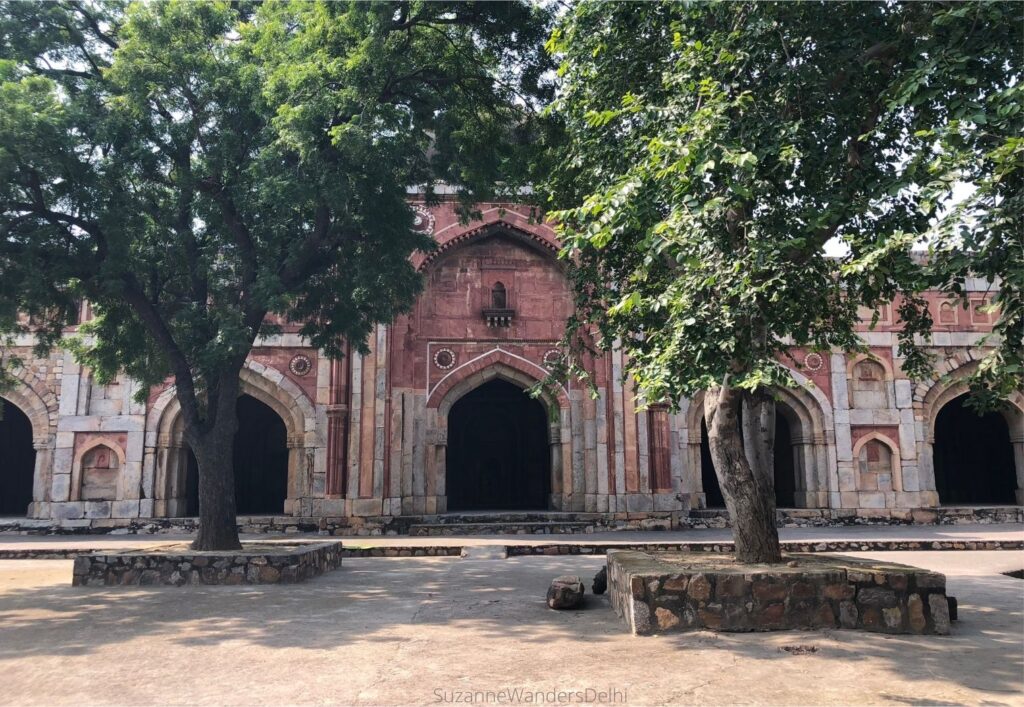
Mehrauli Archeological Park is a heritage park/forest very near the Qutub Minar. It underwent a major restoration a couple of years ago, and I was blown away by the transformation. It’s almost unrecognizable from the inhospitable, scrubby forest it used to be.
Visitors can now stroll through gardens, forest, and walkways leading to historical monuments from the pre-Islamic to late Mughal periods. Several monuments that were closed to the public are open now, as well as a large area of ruins.
The monuments are amazing, especially the Rajon ki Baoli, Jamali Kamali Mosque and tomb of Quli Khan. Admission is INR 500.
6. Connaught Place
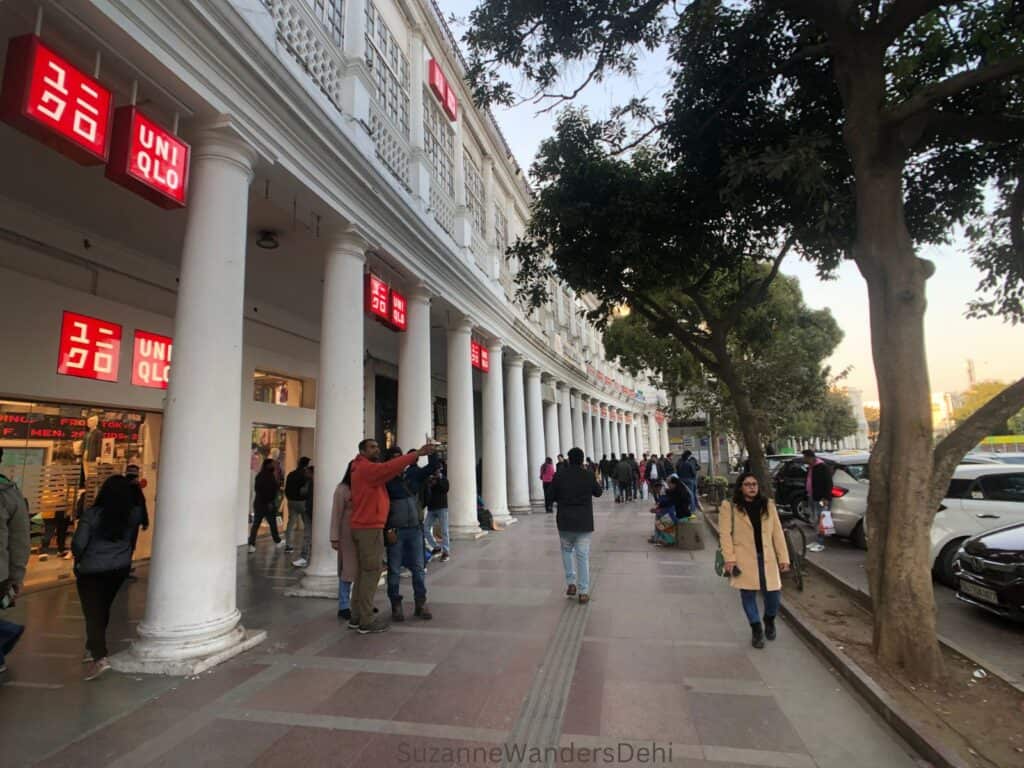
Connaught Place is the British built commercial and shopping hub of Delhi and the unofficial centre of the city. It’s a favourite meeting and hang-out spot for visitors and locals.
Everything is at Connaught Place (locally known as CP) – art galleries, international and Indian brand stores, tech stores, restaurants, money exchanges, book shops, movie theatres, bazaars, clubs and bars, and street vendors.
Apart from the touts who frequent CP and prey on tourists (completely ignore them), this is a great area to walk around, window shop, have a bite to eat or a coffee and just observe Delhi.
7. Agrasen ki Baoli
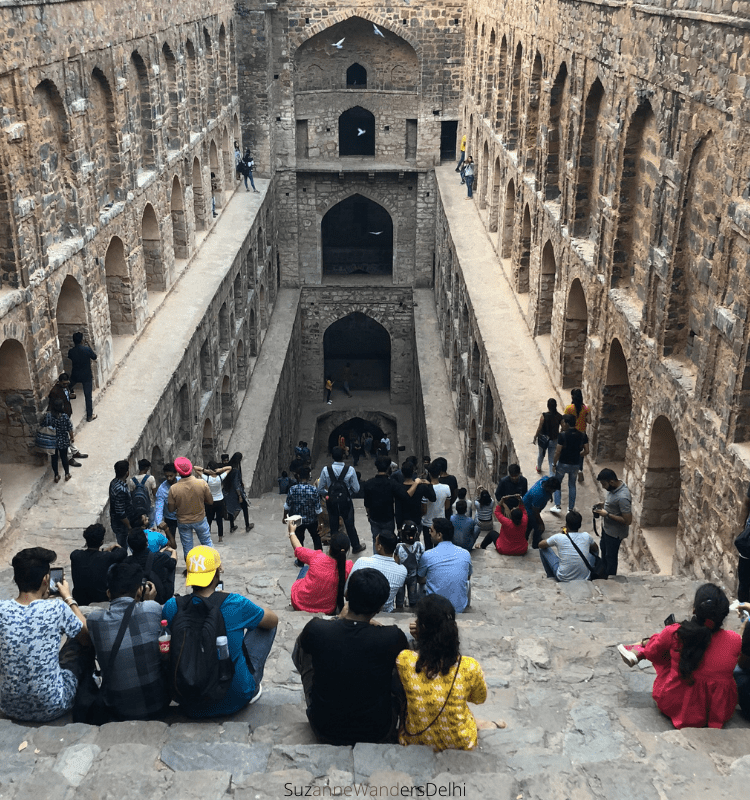
Agrasen ki Baoli is a very large, ancient stepwell. I think it’s the most beautiful of Delhi’s remaining stepwells. It’s very central, close to many other sites like Connaught Place and Jantar Mantar.
The current stepwell was rebuilt in the 14th Century by the Agrawal community, but the original dates back to 3000 BC. Some people believe the black water at the bottom of the well has mystical powers. It’s free.
If you see laundry drying on the lanes beside Agrasen ki Baoli, it’s from Devi Prasad Sadan Dhobi Ghat, one of Delhi’s last outdoor laundries. You can take a look if you want, just be respectful because it’s not a tourist attraction.
8. Jantar Mantar
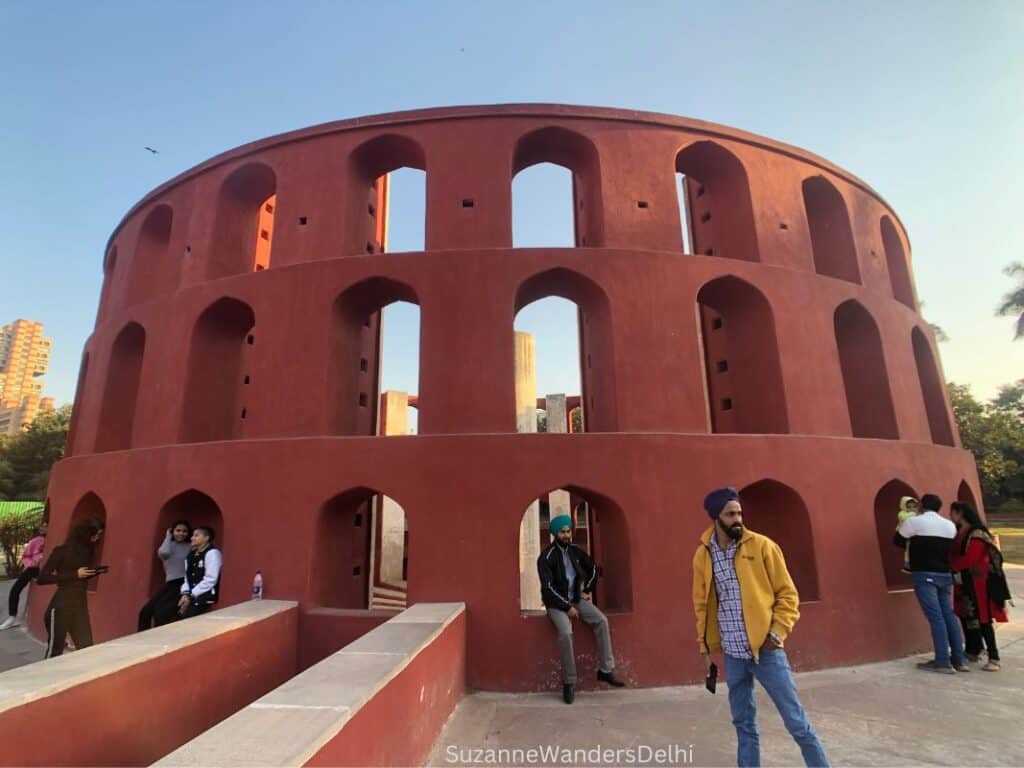
Jantar Mantar is a group of 13 architectural astronomy instruments built in 1724 that were incredibly accurate. Now the fine calibrated markings on the instruments are severely eroded and in need of restoration.
This particular jantar mantar is one of five built in India by the Maharaja Jai Singh II (four remain). The largest one is located in Jaipur. The Delhi Jantar Mantar is not far from Agrasen ki Baoli. Admission is INR 300.
9. Gurudwara Bangla Sahib
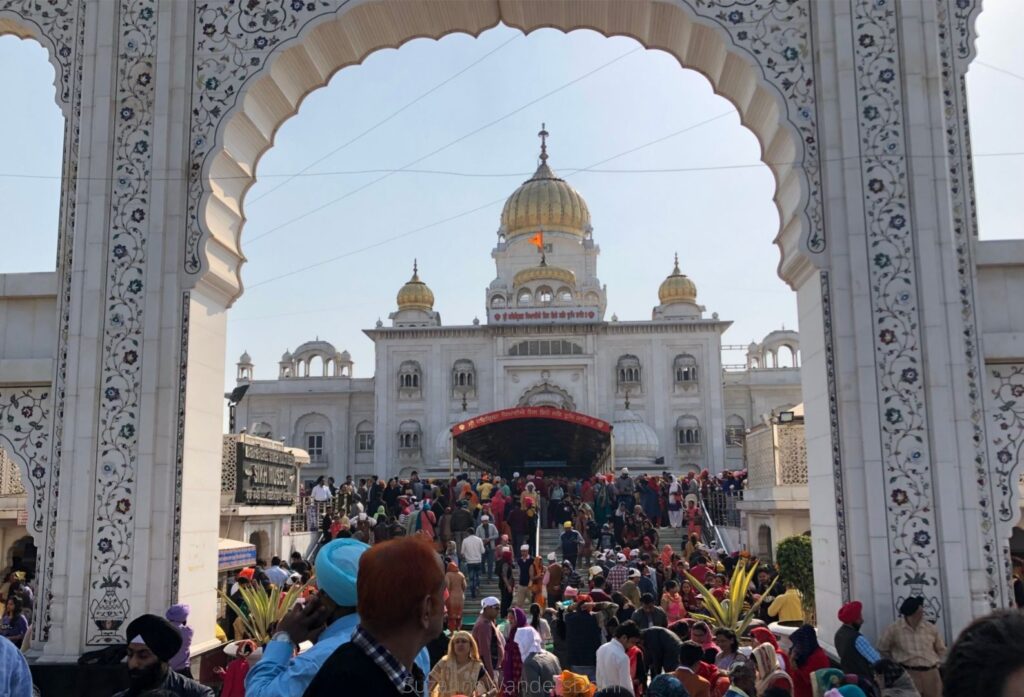
Gurudwara Bangla Sahib is the most prominent gurudwara (Sikh temple) in Delhi for the Sikh community. It’s a large complex with prayer hall, two langar halls, a museum, offices, hospital and accommodation for pilgrims. All religions, races and nationalities are welcome.
The most important things to do at the gurudwara (besides visiting the prayer hall) are circumventing the Sarovar (holy pool) and having langar in the dining hall. Langar is a free vegetarian, community meal open to everyone.
There’s a visitors centre where you can leave your shoes and get a bandana to cover your head. I never use the visitors centre personally, but first time visitors will find it easier. Free.
10. Hauz Khas Village & Fort
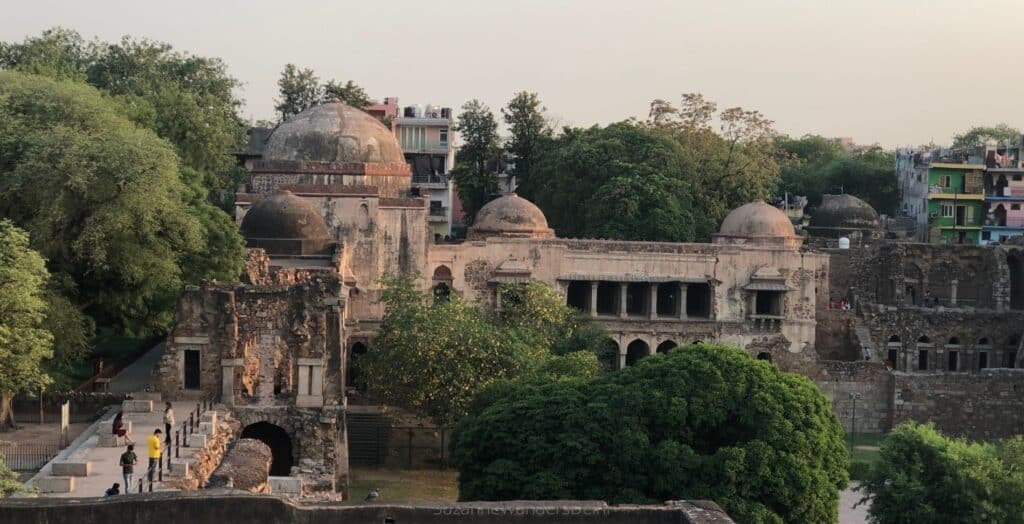
Hauz Khas Village is a pedestrian friendly, trendy urban village characterised by winding lanes with shops, boutiques, restaurants and clubs.
If you’re wondering what is the best thing to do on your first day in Delhi – this is a good one. The hip urban village is unique in Delhi, and Hauz Khas Fort (at the end of the lane) was built in the 1300s. It’s part of the second of Delhi’s historic cities, Siri.
After, have lunch on the terrace at Social. They have great views of the fort and the food is good. Entrance to Admission to Hauz Khas Fort is INR 300.
Next to Hauz Khas Village is Deer Park. It’s one Delhi’s nicest parks, and also has historic mausoleums.
11. Dilli Haat INA
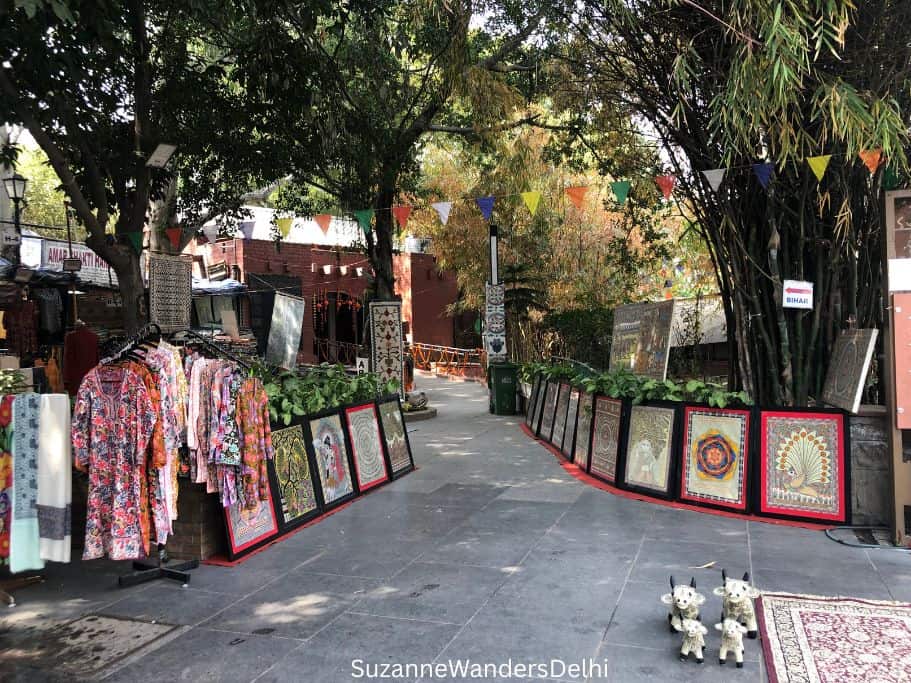
Dilli Haat is a pedestrian only, outdoor craft and food market. Artisans and craftspeople from all over India come here for two weeks at a time to sell their products.
I actually came here on my very first day in Delhi in 2016 (I’ve been many times since then). It’s probably the best place for souvenir shopping if it’s your first day or two in Delhi. Locals shop here too – I always see a mix of Delhiites and foreigners.
It’s an excellent place to find authentic handicrafts from around the country. There’s also a large food court offering foods from states all across India. Admission is INR 100.
12. Bahai Lotus Temple
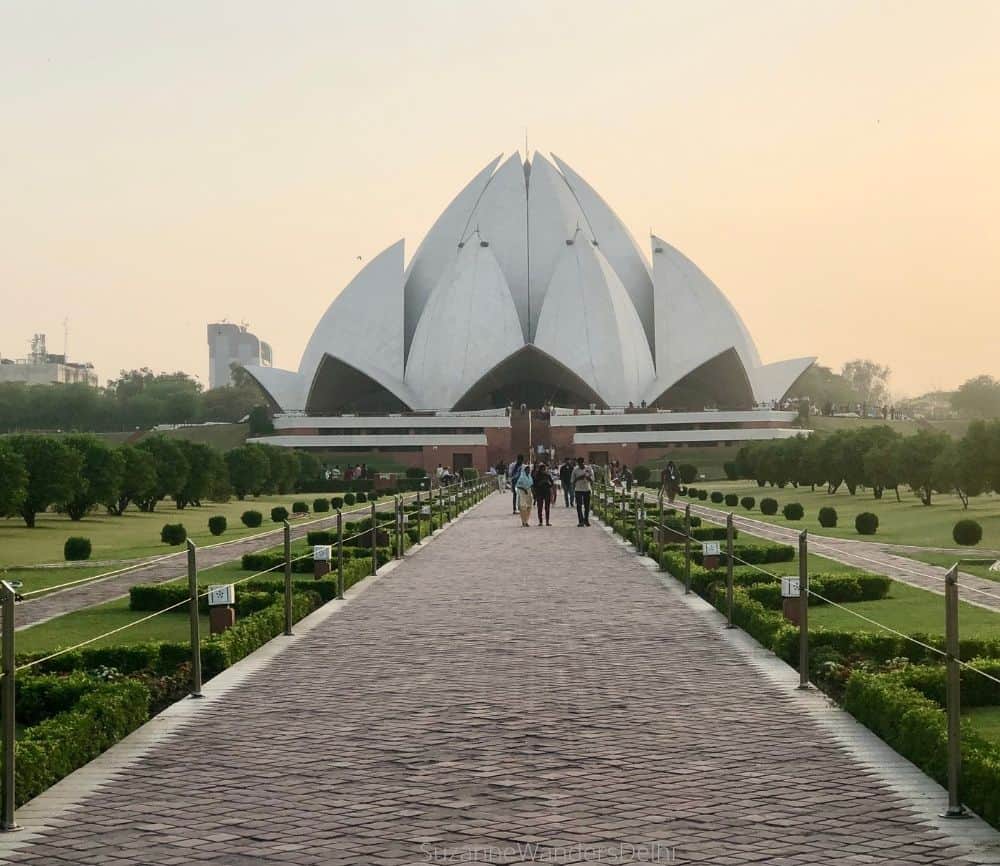
The Bahai Lotus Temple is one of the most visited religious buildings in the world. The temple is built from white marble in the shape of a lotus flower. Everyone is welcome.
It’s not as central as most of the other things on this list – so if you’re really pressed for time you may want to pass, but if you have time you should see it. It’s a very unique temple – and very peaceful inside.
On weekends and holidays the lineup can take an hour. Try to go earlier in the day. You will need to remove your shoes before entering the temple. Free. Closed Monday.
13. Old Delhi
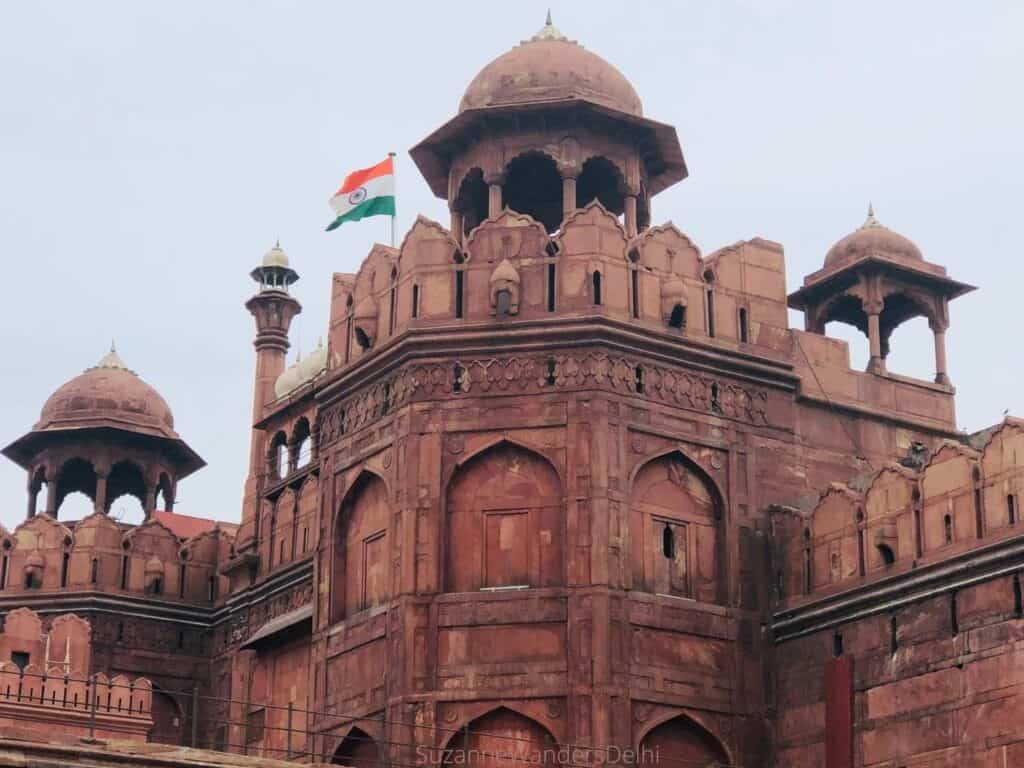
Historically this is the most important part of Delhi, but it’s bonkers. Save it until you’ve had a day or two to adjust to Delhi.
Old Delhi was primarily build by Shah Jahan (who built the Taj Mahal) in the 1600s and is the last of Delhi’s 7 historic cities.
This is one area where it would be helpful to take a guided tour, especially if it’s your first time in Delhi. You’ll get valuable information about the history of the area and see things you wouldn’t on your own.
Both Delhi Heritage Walks and India City Walks offer heritage walking tours which give you the highlights and include sampling street food.
If you’d rather do it yourself, here’s my DIY heritage walk of Old Delhi.
Important and most visited sites of Old Delhi are:
- Red Fort (UNESCO): Built in 1639 this was the palace and main residence of all Mughal rulers until the British deposed the last ruler in 1857. Admission INR 600.
- Chandni Chowk: The most famous street in Delhi, it runs between the Red Fort and Fatehpuri Masjid. It is lined with historic sites, like Shri Digambar Jain Lal Mandir, Gurudwara Sis Ganj Sahib and Kinari Bazaar. No motorized vehicles are permitted during the day, making it easy to explore on foot. Free.
- Fatehpuri Masjid: Mosque built for Fatehpuri Begum in 1650 (one of Shah Jahan’s wives). It’s a working mosque, so shoes must be removed and ladies must cover their heads. Free.
- Khari Baoli (Spice Market): Historic spice market and one of the largest wholesale spice markets in Asia. It starts around the corner from Fatehpuri Masjid. Free.
- Jama Masjid: The largest, and one of the oldest mosques in Delhi. It was built in the 1650s by Shah Jahan. It’s a working mosque and has a strict dress code – modest clothing is essential to visit. Free, but they sometimes charge tourists.
14. Raj Ghat (Gandhi Memorial)
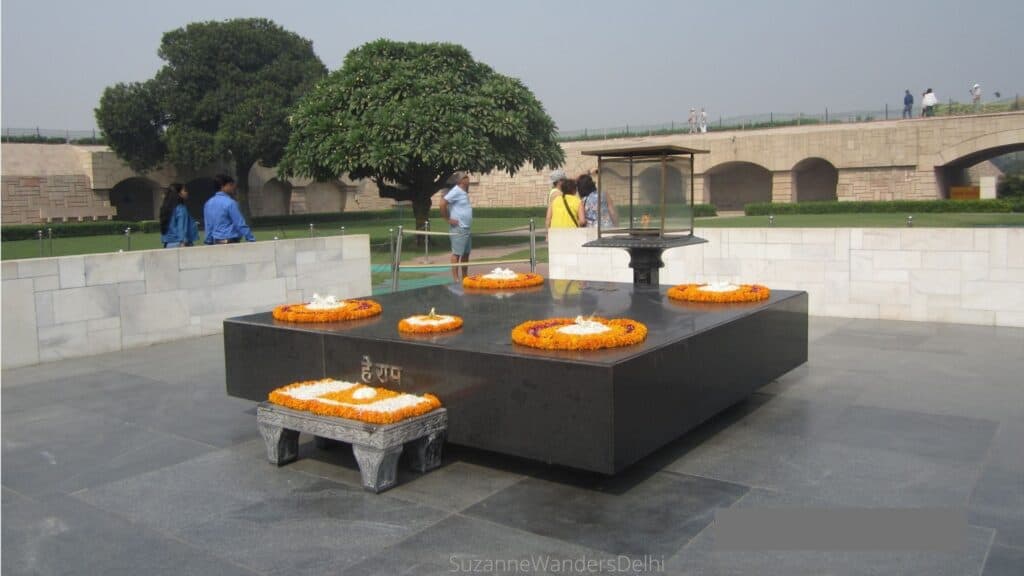
Raj Ghat is where Mahatma Gandhi’s last rites were performed, the day after his assassination on January 30, 1948. The memorial itself is simple – a black marble platform with an eternal flame, meant to reflect the simplicity of Gandhi’s life.
Gandhi is still venerated across India. He is considered the father of the nation. His birthday, October 2nd, is a national holiday, his face is on the currency and his portrait hangs in government offices.
In my opinion, a visit to Delhi is not complete without visiting one of the sites dedicated to Mahatma Gandhi. This one is closer to Old Delhi. But Gandhi Smriti Museum is another really good site and it’s more central.
Shoes must be removed. Raj Ghat is free.
15. Swaminarayan Akshardham
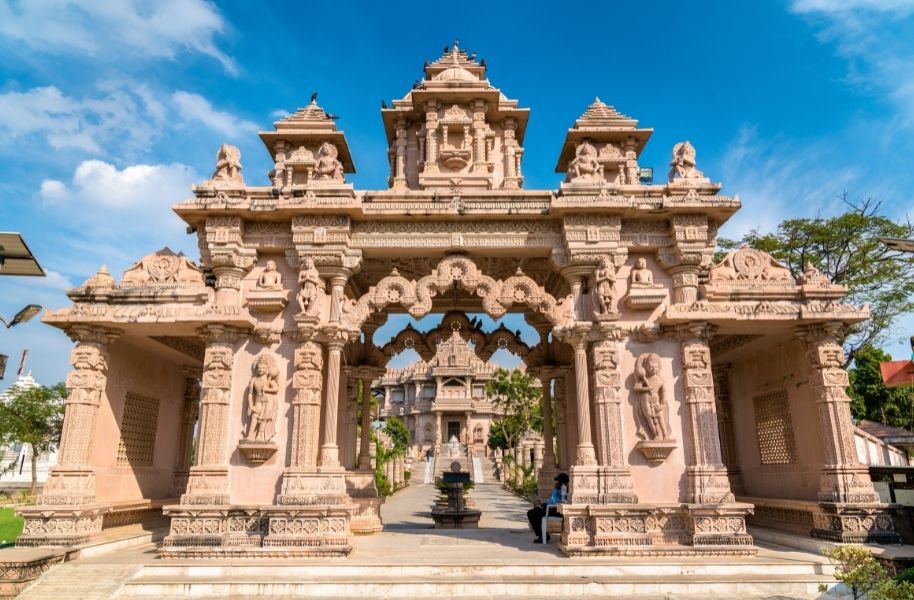
Akshardham Temple is one of the largest Hindu temples in the world. It is a stunning masterpiece of intricately carved marble from floor to vaulted ceiling, and some of the most breathtaking architecture I have seen in India.
The temple is the main focal point, but there is also a museum, cultural boat ride, large food court and shop. The food court is good – I usually eat there when I visit Akshardham.
The temple is in east Delhi, but very easy to reach by metro. Closed on Monday, free. Strict dress code (shoulders, knees covered). You also have to leave all electronics at security.
16. Indian Food Cooking Class
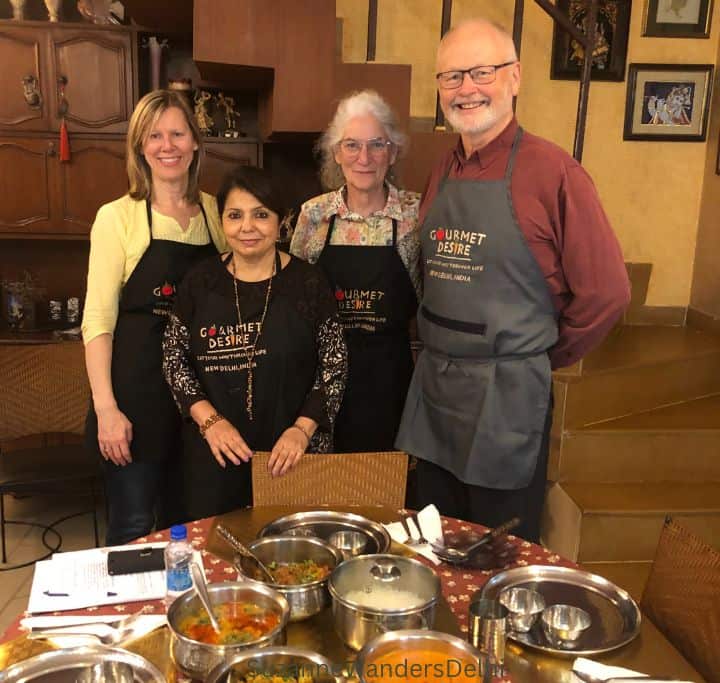
If you’re thinking about an Indian cooking class, I highly recommend Gourmet Desire. Classes are taught by Jyoti Agarwal in her home – and she is excellent.
Not only did Jyoti teach us how to make a delicious meal, she taught us about Indian family dynamics, table manner and food customs. You’ll also get to see a typical South Delhi home.
Jyoti gave me the name of her favourite spice shop in Delhi (I’ve been going there ever since), and sent us all home with recipes and a care package of spices.
17. Walking Tour with Unfold Delhi
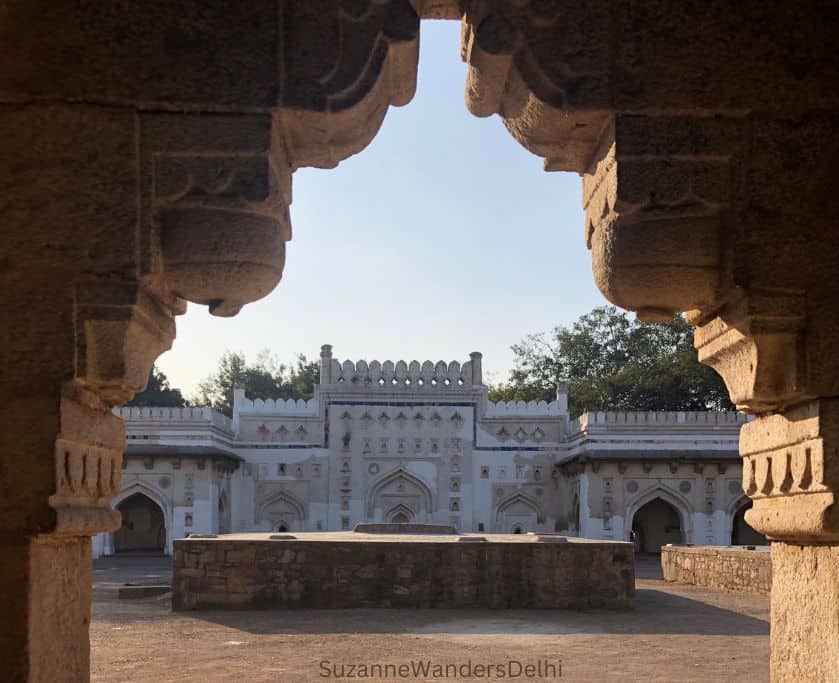
These walks are kind of an insider secret in Delhi. Unfold Delhi has been around for a while, but they don’t maintain a website. They post upcoming walks on the Unfold Delhi Instagram page.
Walks are usually Saturday or Sunday and often to completely under the radar hidden gems. These walks are one of my favourite things to do in Delhi. Even I discovered places I didn’t know about, and I have explored Delhi thoroughly!
Moby Sara Zachariah, a local historian with over 13 years of heritage walk experience conducts most of the walks. The fee is INR 600-750 per tour – it’s a great deal.
Where to Stay in Delhi
In Delhi, where you stay matters. Not only because the city is massive and you want to be near the sites, but also in terms of safety. The best area to stay in is South Delhi.
I am very familiar with these properties, and recommend them because they are exceptional and in good neighbourhoods. They are also well located for seeing Delhi.
- Leela Palace New Delhi (luxury): 5 star property and considered Delhi’s finest hotel. It’s beautiful and traditional, with exceptional service and comfort. Well located for seeing the sites in Delhi’s most exclusive neighbourhood near the embassies.
- Lutyens Bungalow (mid-range): Heritage boutique property in one of the best areas of the city next to Lodhi Garden. Fantastic area near many sites. Breakfast is included.
- Prakash Kutir Bed & Breakfast (budget): Family run guest house in a very good area of South Delhi, near the metro and easy to explore the whole city from. Spotlessly clean. Home-cooked breakfast is included.
How to Get to Get Around Delhi
The best ways to get around Delhi is by metro, Uber, auto rickshaw, or any combination of these.
The Delhi metro is really good – don’t be nervous about using it. And auto rickshaws are everywhere and super convenient. Uber is also good in Delhi, and very cheap.
Last Words on What to Do in Delhi if it’s your First Time
What you choose to do in Delhi on your first day or two matters. It’s a huge city with an enormous number of things going on. You don’t want to be overwhelmed.
By sticking to sites in less chaotic parts of the city that are important culturally and historically, you’ll get to see the best of Delhi and slowly acclimate. Don’t visit Old Delhi on your first day. Save it for the end.