First Time in Delhi Survival Guide

Is it your first time in Delhi? Travelling to Delhi for the first time is an unforgettable experience. Most visitors find India’s capital city overwhelming, but it is manageable.
Delhi can be noisy, crowded, smelly, and confusing. But it is also a fascinating city with so much history and culture, you will be captivated if you give it a chance.
I lived in Delhi for several years, and still return regularly for extended stays. The advice in this article will transform your first visit to Delhi into a positive experience.
First Time in Delhi Survival Guide
Delhi is one of the oldest cities in the world, and together with its status as the capital of India, it is a place like no other on earth.
In this first time visitor survival guide, I’m going to cover everything to help you plan and have a great first visit to Delhi.
Quick Glance Summary for Delhi
- Visa on Arrival: No – apply online in advance
- Where to stay: South Delhi
- Money: Indian rupee
- Stay Connected: Local sim available at airport
- Electricity: 230V/50Hz – C, D, & M outlets
When to Visit Delhi
February, March, October and November is the best time to visit Delhi, especially for a first time visitor. Temperatures are pleasant and pollution levels are lower in these months.
The summer and monsoon months are very hot and humid, and most people avoid going out during the day. Temperatures can reach over 45°C in May and June.
December and January are cool and foggy, with increased levels of pollution. Most places do not have central heating, just electric or oil heaters. It can get chilly indoors as temperatures go down to the single digits.
Read my guide to visiting Delhi in winter if you’re planning to come at that time.
Where to Stay in Delhi if it’s Your First Time
The best areas to stay in for a first time visitor are South Delhi or Central Delhi up to and including Connaught Place. Most of Delhi’s things to see are in these areas, and it’s where the best hotels are.
Avoid Paharganj and Old Delhi. Paharganj is the backpacker area, full of cheap hotels. It is dirty, congested, noisy and has a higher crime rate. Old Delhi is enormously important historically and you should visit, but don’t stay there.
I don’t understand why anyone would recommend a first time visitor stay in Paharganj or Old Delhi. If you want to hate Delhi then stay there, otherwise stay in South or Central Delhi in one of the budget options I suggest below.
If you’re looking for budget lodging, here are the best budget places in Delhi for tourists.
These are the best places to stay at in Delhi, whether it’s your first or tenth trip. There’s options for all budgets here.
Best Hotels and Guest Houses for Delhi First Timers
- The Imperial Hotel, New Delhi (luxury): A beautiful heritage hotel full of charm and character. The location is perfect for first time visitors, on Janpath within walking distance of many sites, restaurants, shops and Connaught Place. A very walkable area. This is my favourite Delhi hotel. From $300 USD.
- Bloomrooms @ Janpath: (mid-range) Comfortable minimalist hotel in excellent area of Connaught Place. It is just around the corner from the Imperial Hotel, and you can walk to all kinds of restaurants, shops and many sites from here. Excellent location at this price. From $120 USD.
- Hotel Palace Heights: (mid-range) A small hotel located right in the centre of Connaught Place. This location is busier with lots of foot traffic, but it does quiet down at night. Easy to navigate area with shops, restaurants and the Delhi metro just outside the door. From $80 USD.
- Prakash Kutir Bed & Breakfast (budget): Family run guest house in a residential neighbourhood of Hauz Khas, South Delhi. Immaculately clean. A local market with amenities and the Delhi metro are a short walk away. Great location to explore Delhi from. From $65 USD (breakfast included).
- YWCA International Guest House: Amazing location in Connaught Place, close to many 5 star hotels. The hotel is no-frills, but rooms are large, clean, have AC and ensuite bathrooms. It’s the best deal in this area, which is one of the most exclusive in Delhi. From $37 USD (breakfast included).
- Hosteller Delhi: Popular hostel located within walking distance of the Delhi metro. Hosteller has a friendly atmosphere, onsite cafe and hosts events for guests. There’s private or shared rooms, a common kitchen and wifi. From $10 USD.
For more suggestions, see this detailed article on which areas and hotels to stay in Delhi for every budget.
Should You Stay by the Airport?
I don’t recommend you stay near the airport unless this is a really short in and out Delhi trip. Aerocity hotels are very convenient for the airport, but they’re 16 km from the centre of Delhi and it can take an hour or more by car or metro.
Airbnbs for Delhi First Timers
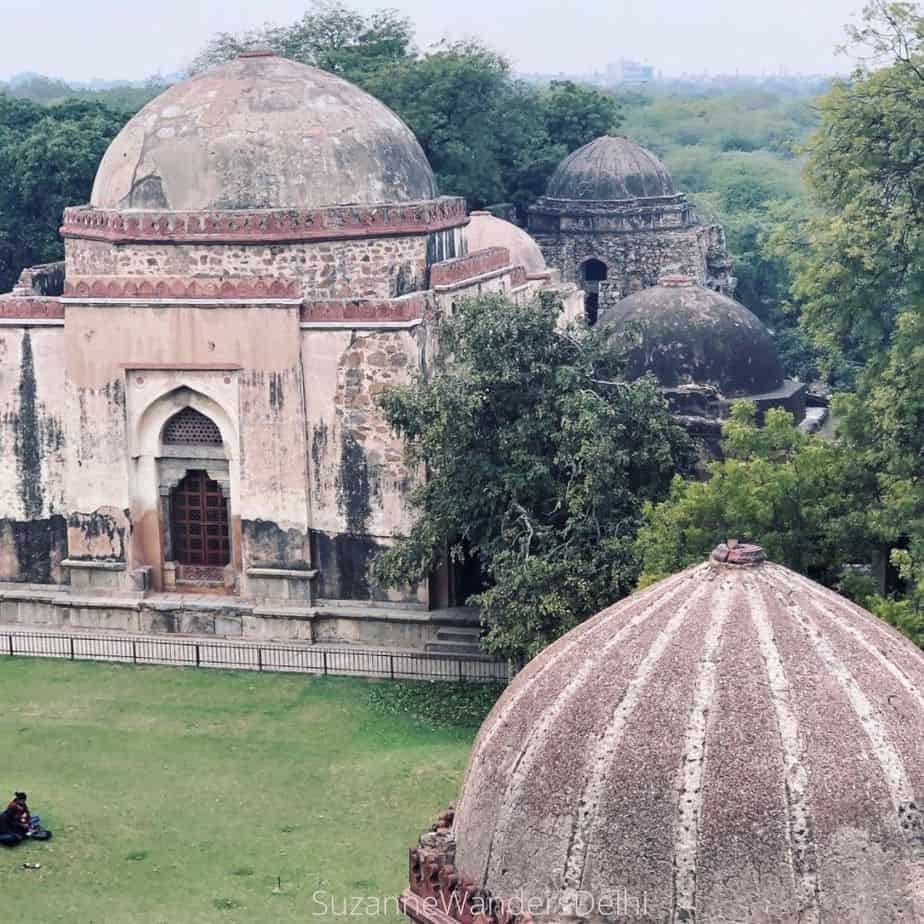
South Delhi is the best area to rent an Airbnb. Before I leased an apartment, I would stay in Airbnbs in South Delhi.
The neighbourhoods of Greater Kailash I, Hauz Khas, Defence Colony, Lodhi Colony, Safdarung, Jorbagh, Nizamuddin East, Chanakyapuri, Green Park and Panchsheel Park are all good for a first time visitor in Delhi.
I like and have stayed at this Airbnb: Hauz Khas Village Apartment.
Ashrams in Delhi
Delhi has many ashrams that offer accommodation for those wishing to deepen their yogic understanding and look within.
These are not hotels, but if you are looking for an opportunity to slow down and recharge your emotional and spiritual batteries, an ashram stay might be for you.
How to Get from the Airport into Delhi
Ignore anyone who approaches you outside the airport terminal. They are all touts, and many tourists have been scammed.
Here’s how you can get into Delhi from the Indira Gandhi International Airport:
- Book a private transfer through your hotel or guest house. It’s the most expensive, but convenient option. Drivers wait inside or just outside the terminal.
- Welcome Pickups airport transfer service. Drivers speak English and monitor your flight. Very convenient.
- Pre-paid taxi with Mega Cabs or Meru Cabs. Booths are located on the first ‘island’ across the roadway when you exit the terminal. Cost is about INR 800 to the centre.
- Delhi metro airport express line. The airport metro station is beside terminal 3. You can buy tickets from the ticket machine.
- Uber or Ola ride share apps. The pick up point is in the parking garage across from the terminal exits. It’s signed. Make sure you select the correct terminal for pick-up. The pick-up area is a bit chaotic, so watch for your car.
Getting WiFi or a Data SIM Card in Delhi
You can get a tourist SIM card at the airport when you arrive. There is an Airtel kiosk in arrivals at Terminal 3, before the exit.
The last time I did this there was a crowd and it took a while, but it’s way easier getting it at the airport than in Delhi. Airtel is one of the best cell providers. I was in Delhi 3 months last time, and would just go into a local Airtel shop to top it up each month.
India has excellent WiFi, and data is inexpensive. I paid around 400 INR for a month with lots of data in 2025 (after the initial purchase at the airport, where they charge a premium).
If you didn’t get a SIM card at the airport head to a Reliance Jio, Vi or Airtel shop to get a pre-paid SIM card. Be prepared to provide your passport, a passport size photo, entry visa and possibly proof of residence or where you’re staying. It should be activated while you are in the shop.
ATMs and Exchanging Money if It’s Your First Time in Delhi
I think the most convenient way to get money is through an ATM, but I’ll tell you how to exchange cash too.
ATMs in Delhi
ATMs are everywhere and often give the best conversion rates. Some ATMs give the option “with or without conversion.” Always select WITHOUT conversion. That way the conversion is done at your bank, usually with a better rate.
Not all ATMS take foreign cards – look for an ATM with the logo of an international banking system like Cirrus, Maestro, AMEX or Visa. Transaction fees also vary bank to bank. I usually use HDFC or ICICI bank machines.
Many ATMs only allow a withdrawal of INR 10,000 at a time. You can withdraw more, but have to do it in multiple transactions.
Where to Exchange Cash in Delhi
Avoid banks and hotels, which have terrible rates. Forex Money Exchange has a number of locations across Delhi. You can check their daily rate here: Forex Money Exchange website
For cash exchanges I use these two places which both have competitive rates:
- Damini Money Changer: M Block Market, GK1 (don’t ask me why, but he sells perfume too) 10:00 am – 8:00 pm, closed Sunday
- Tradex Financial Services: L-4, Connaught Place (next to Haldiram’s) 10:00 am – 8:00 pm, closed Sunday
Can You Use Digital Payments in Delhi?
Digital payments are widely used in Delhi, but you need a local SIM and Indian bank account. So, generally speaking digital payments are not an option for tourists.
How to Get Around Delhi if it’s Your First Time
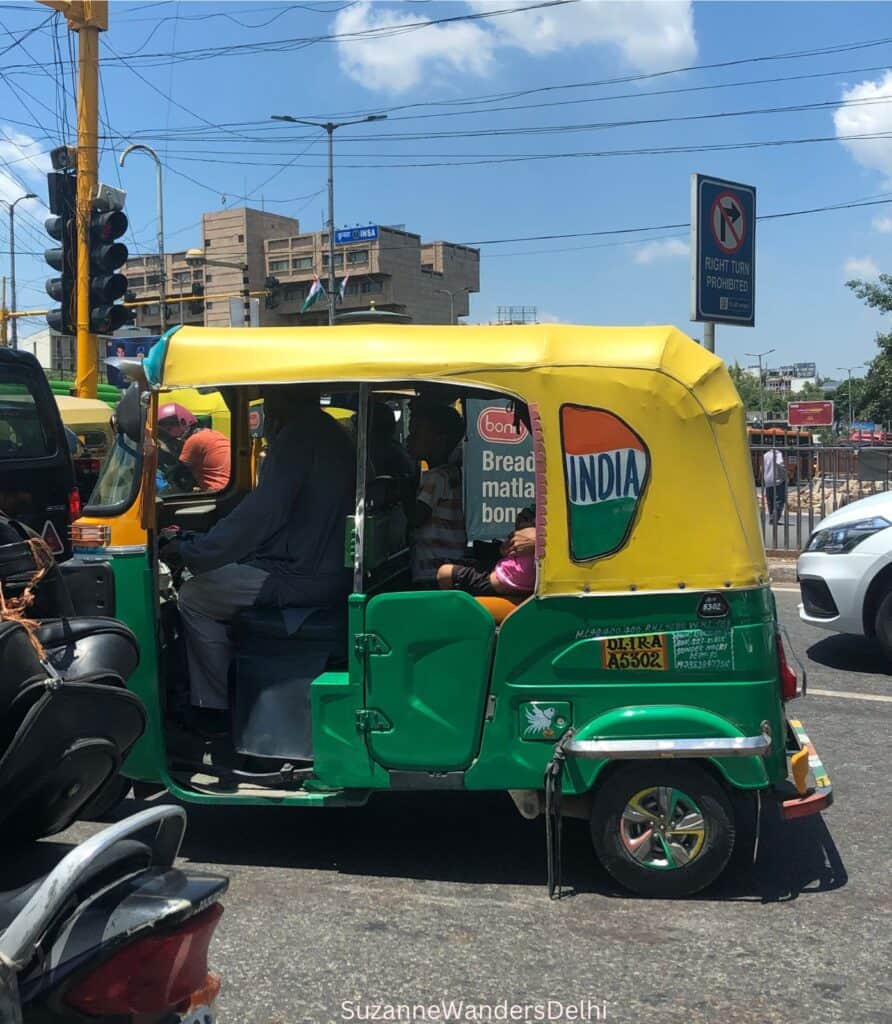
Considering how large and populated Delhi is (33 million), it’s remarkably easy to get around. There are several ways that are good for Delhi first time visitors: the Delhi metro, auto rickshaws and Uber.
Using Uber in Delhi
Uber and Ola (India’s version of Uber) are widely used all across Delhi. I prefer Uber because almost every time I use Ola the price increases during the ride.
Both have apps you download onto your phone. You’ll need data to use them, so pick up a SIM card at the airport when you arrive.
The Delhi Metro
First time visitors in Delhi are always surprised at how good the metro is. It’s a newer system and has won lots of awards. Don’t hesitate to use it. The Delhi metro is bilingual in English and Hindi.
Delhi’s metro goes everywhere, and is by far the most efficient way to move around. It’s cheap, user friendly and clean. The first car in the moving direction is reserved for women only. For door to door service, I take an auto rickshaw to and from the metro station.
For more information and photos, see my complete guide on how to use the Delhi metro.
Auto Rickshaws
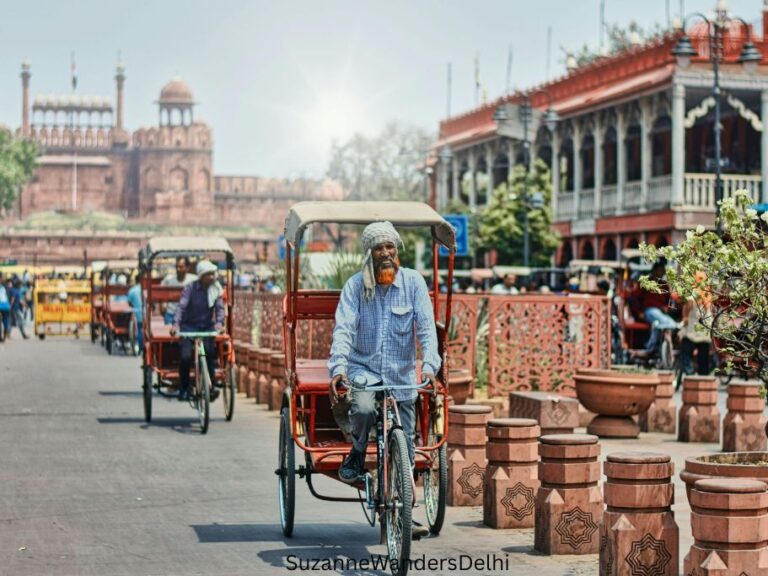
If it’s your first time in Delhi, you will notice auto rickshaws or tuk tuks are widely used. They are an excellent option for shorter distances, or getting you from the metro station to your hotel or vice versa.
Always negotiate the price before getting in and expect to pay between INR 50-80 for a few kilometres. Prices go up at night, if it’s raining, or if there are several passengers.
Auto rickshaws are always outside metro stations, markets, malls and Delhi’s monuments and attractions.
Local Buses
Delhi has a vast system of local buses, but I don’t recommend you use them. They can get extremely crowded and are not safe for women, especially after dark. If you look inside a Delhi bus, you’ll see most of the passengers are men.
Between the metro and auto rickshaws, it’s very unlikely you would need a bus. I’ve never taken one, and I’ve been all over Delhi.
Should You Hire a Driver?
Some people will recommend you hire a driver for a whole day – and you absolutely can do that, it can make things easier.
Here’s what you should know before hiring a driver: there will still be traffic, it’s the most expensive option, and some drivers will steer you to shops and restaurants where they earn a commission.
But, it will be more comfortable, there will probably be bottled water, and the car will be waiting wherever you go. I’ve travelled around Delhi with friends’ private cars and drivers, and it’s definitely more comfortable and convenient.
I hate to pay more than I have to, so if I need a car for a day I book an Uber for 6-8 hour with multiple stops. The cars are not as nice as private drivers, but it is a lot cheaper and does the same thing.
How to Dress in Delhi for First Time Visitors
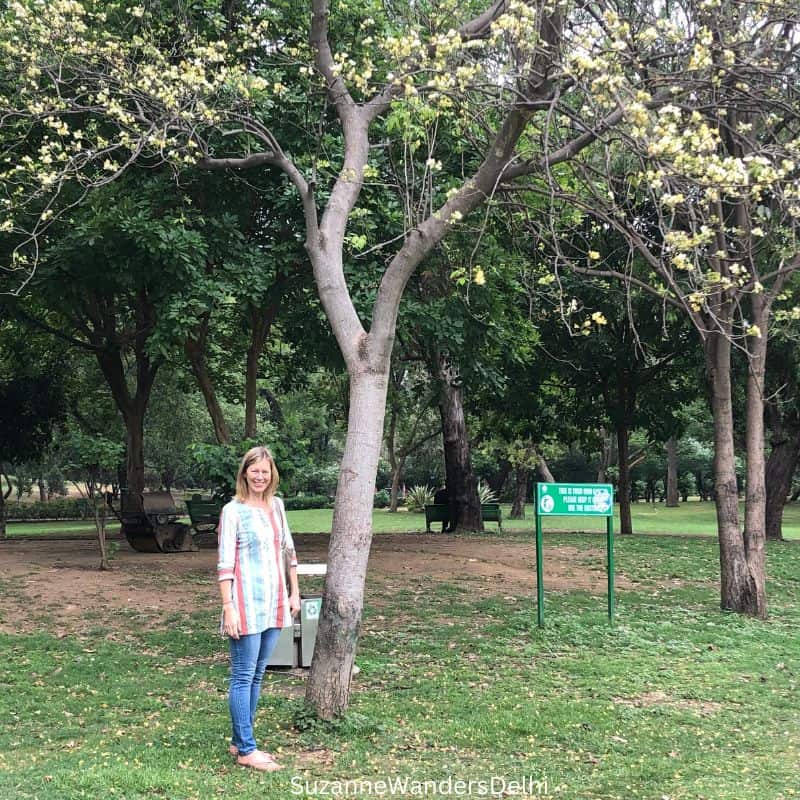
India is a conservative country in many aspects and this pertains to clothing. Men can pretty much wear what they want, but women should dress modestly.
Wear clothing that covers knees and shoulders, and definitely no cleavage. In clubs and bars clothing is much less conservative, and almost anything is acceptable there.
If you’re going to be in India for a few weeks, it’s smart to purchase a few kurtas and loose cotton pants. They are the most comfortable in hot weather, and you’ll blend in more easily.
Central Market Lajpat Nagar is one of the best and cheapest markets in Delhi for Indian clothing.
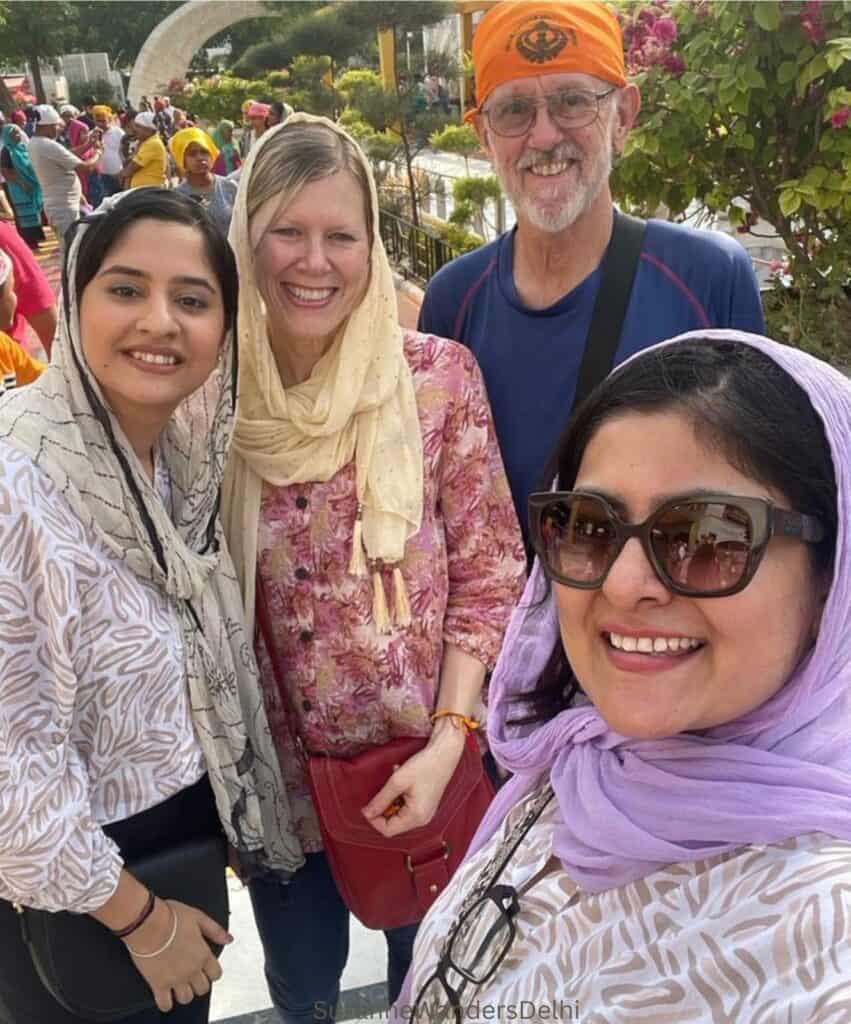
Also buy a dupatta and keep it with you. A dupatta is very handy for covering your head in mosques or gurudwaras, covering shoulders or chest, and using as a face mask if you end up on a scooter or motorcycle.
Tipping in Delhi
It is common practice to tip in Delhi, but not on everything. Tip amounts depend on the level of service received and personal preference.
Generally speaking, at a sit down restaurant, a hairdresser or other personal care service a 10% tip would be appropriate. Some restaurants add a 10% service charge automatically, so check before leaving a tip.
There is no need to tip street food and chai vendors or auto rickshaw drivers, though I sometimes tip the auto rickshaw driver if he was extra nice or helpful.
When taking Uber, you could round up the figure if you want to leave a small tip. If using a private driver for a full day, an INR 500 tip is appropriate.
How Expensive is Delhi?
Delhi can be extremely expensive or very cheap, depending on your choices. There is extreme wealth and poverty here, and services for both ends of the spectrum.
And while there is exorbitant wealth in the city, the per capita income in 2025 was under $5,500 USD per annum. It’s easy to do everything on a budget in Delhi – food, transportation, shopping and accommodation, even for a first time visitor.
| Budget | Expensive | |
| Tea/Coffee | $0.15 (chai wala on the street) | $3.00 (Starbucks) |
| Meal | $5.00 (vegetarian meal at a casual sit-in place like Kake Da Hotel in CP) | $45.00 (luxury restaurant like Spice Route in the Imperial Hotel) |
| Transportation | $1.00 (Delhi metro across city trip) | $10.00 (Uber across city trip) |
| Accommodation | $30.00 (Bed & Chai Guesthouse, 2 star) | $250.00 (Shangri-La Eros, 5 star) |
| Site/Attraction | Many are free, particularly those off the beaten path | $7.50 (admission at the Red Fort, a UNESCO site) |
Is it Safe to Eat Delhi Street Food?
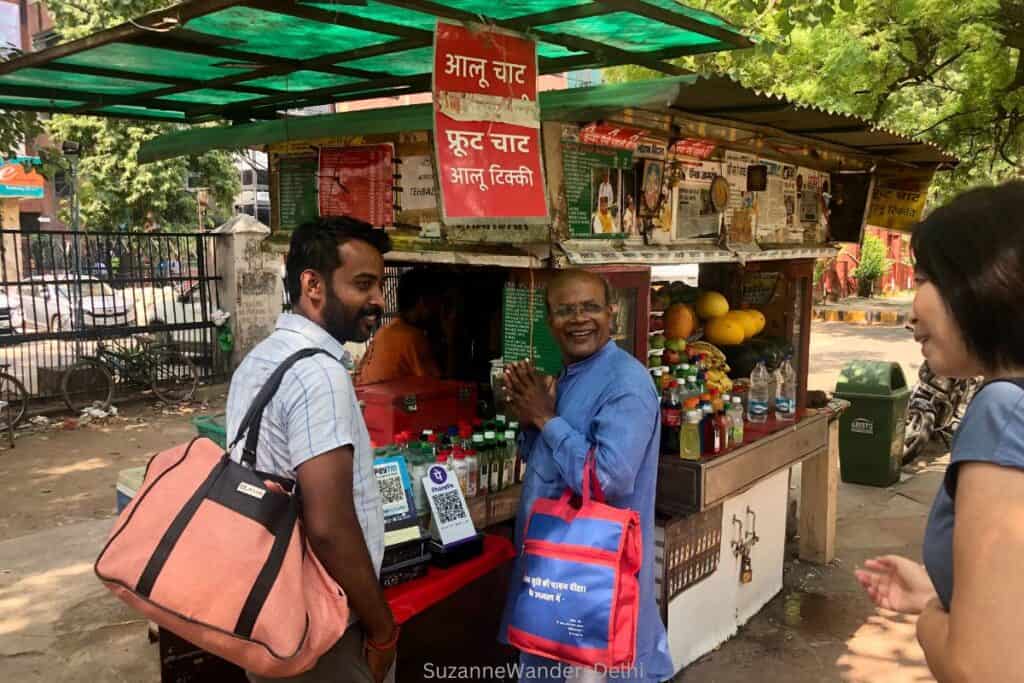
The quick answer is yes, but you have to keep a few things in mind.
Delhi has a thriving street food scene, and first time visitors should experience it. This is one of the best things about Delhi, and a quintessential Delhi experience.
I love street food and eat it every chance I get. Many times, tourists have stood around watching me eat street food – but they’re afraid to try it. Big mistake! Street food is super fresh, delicious and cheap!
The golden rules for eating street food in Delhi are:
- No street food in monsoon or summer when food spoils quickly.
- Nothing with water, like gol gappa or flavoured, crushed ice.
- No meat – unless it’s one of the famous spots in Old Delhi where they have very high turnover.
- Wash your hands or use sanitizer wipes.
- Choose kiosks that are busy and have a steady stream of customers.
For more tips and information, see how to eat local and stay healthy.
Is Delhi Safe for Solo Female Travellers?
The truth is Delhi does have a reputation for being unsafe for women, and it’s not totally without merit. But solo females can do a lot to keep safe.
I lived alone in Delhi and travelled to and from Delhi and around Delhi extensively. I still spend time there ever year. So, I know what I’m talking about. I’ve never had an issue – but I’m careful.
During the day Delhi is safe. You can ride the metro, explore, take auto rickshaws and be a tourist. That’s not the case at night. At night you shouldn’t go anywhere alone. Not even one block down the street. If you’re going out, use a trackable ride share app, like Uber or Ola.
How First Time Visitors Can Stay Healthy in Delhi
First of all, Delhi has world class medical and dental care. Better than what I’ve experienced in Canada. I prefer to get most of my medical and dental work done there.
Facilities and professionals are top notch, and it’s extremely inexpensive compared to Canada, USA and Europe. That being said, you should have travel health insurance, just in case.
- Get the right vaccines before arriving in India. Check the Centre for Disease Control and Prevention website for up to date information on recommended vaccines. Carry the vaccine certificates with you, especially yellow fever which is mandatory if arriving from certain countries. I have been asked for evidence of this at Delhi immigration.
- Do not drink tap water or water that may not be bottled or filtered. Delhi water is not safe to drink. Better restaurants, hotels and many Airbnbs have filtered water. Stick to bottled water while out and make sure the top is sealed. Do not drink anything with ice cubes (unless they were made with filtered water).

- Use mosquito repellent. Mosquitos in India can carry dengue and Chikungunya. Odomos is a good local brand repellent that comes in spray or cream form and is widely available.
- Stay hydrated. Delhi can be very hot, temperatures soar to 45°C (113°F) in the summer. It’s important to carry water and drink it.
- Prescription drugs and non-prescription medicines are easy to find. Delhi has lots of pharmacies, but you may need to provide the generic name of the medicine (ibuprofen instead of Advil, for example). Medicine is inexpensive.
General Travel Tips for First Time Visitors in Delhi

- There is no Visa on arrival in India for most countries. Only citizens of Japan, South Korea and the UAE can apply for visa on arrival. Apply for an e-visa on the official government site.
- Get a local SIM card at the airport.
- Use the metro to get around Delhi. It is a really good system and easy to use. There is an Airport Express line.
- Keep small bills on you. You’ll need them for small purchases and auto rickshaw drivers.
- Ignore touts and scammers. They are especially bad around Connaught Place and major tourists sites.
- Be prepared for beggars and ignore them. This includes child beggars. Begging is organized and part of a cartel in many Indian cities. If you buy a food or grocery item for someone, they often return it to the shop for cash. I sometimes give to a clearly disabled or elderly person, but that’s it. Children will tug on your clothes and follow you persistently, but keep moving and ignore them – eventually they give up.
- Do not drink the tap water.
- Bring the right power adapter. India has C, D, and M type electrical outlets so remember to bring the right adapter for your devices. Electrical voltage is 230V and the standard frequency is 50Hz.
- There is almost always a foreigner price and a local price for monuments and attractions. If it’s your first time in Delhi, you’ll notice the foreigner price is a lot higher than the local price. The good news is the foreigner line up is a lot shorter.
Best Things For First Time Visitors to Do in Delhi
These are all things that make really good first few days in Delhi excursions.
I would save Old Delhi until you’ve gotten a bit acclimated. Old Delhi is very important, but chaotic and crowded, so don’t tackle it on your first day.
1. India Gate
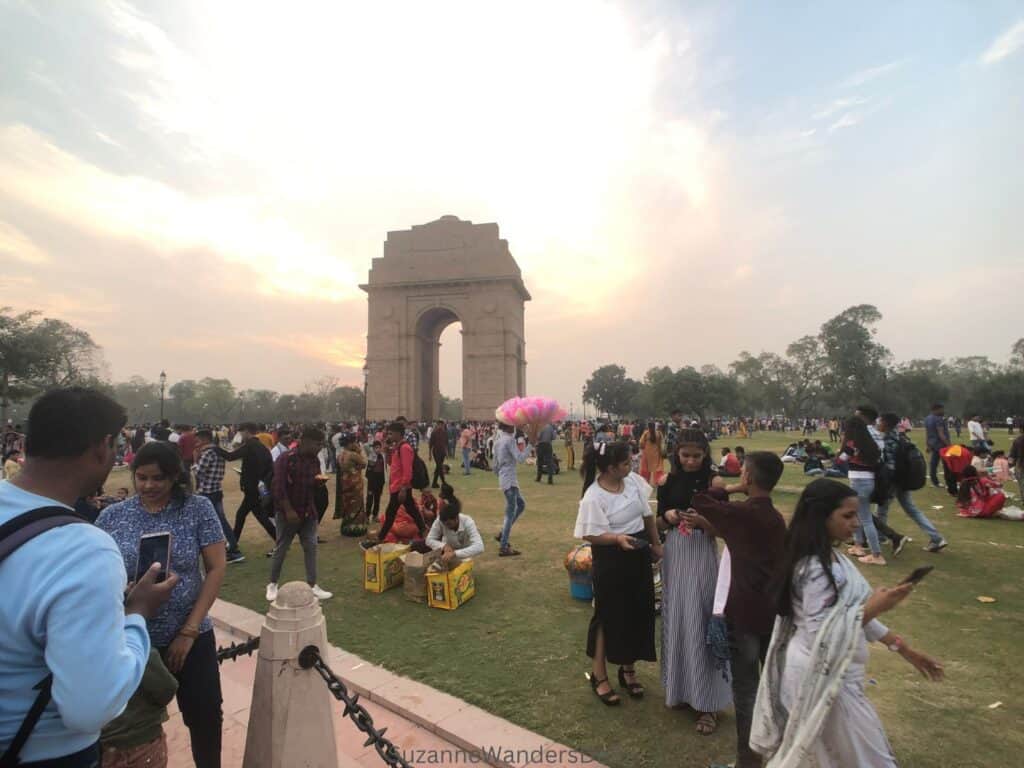
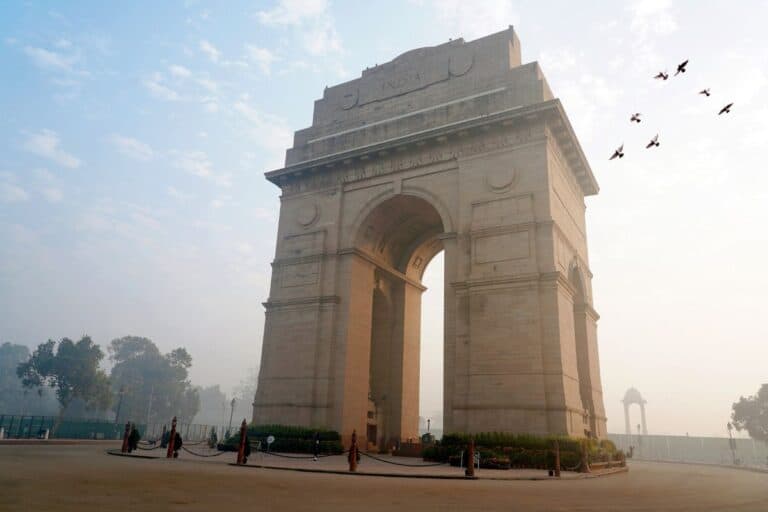
India Gate is one of Delhi’s most iconic sites. Even though it is a war memorial, it is not a somber site at all. In fact, it’s a favourite spot for domestic tourists who come with their families to picnic, eat cotton candy and generally enjoy themselves.
Parliament and federal government buildings line Kartavya Path, with India Gate at one end, and Rashtrapati Bhavan (President of India’s office and residence) at the opposite.
Bikaner House is across the street and has free art exhibits and several nice cafes. It’s the former palace of an Indian prince. These are all free.
2. Lodhi Garden
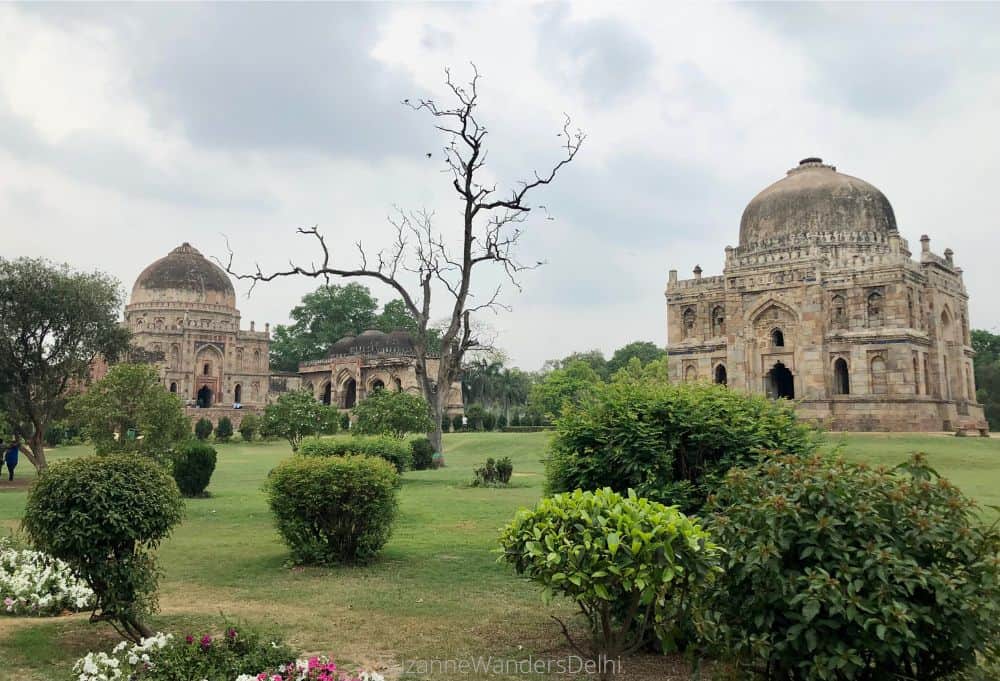
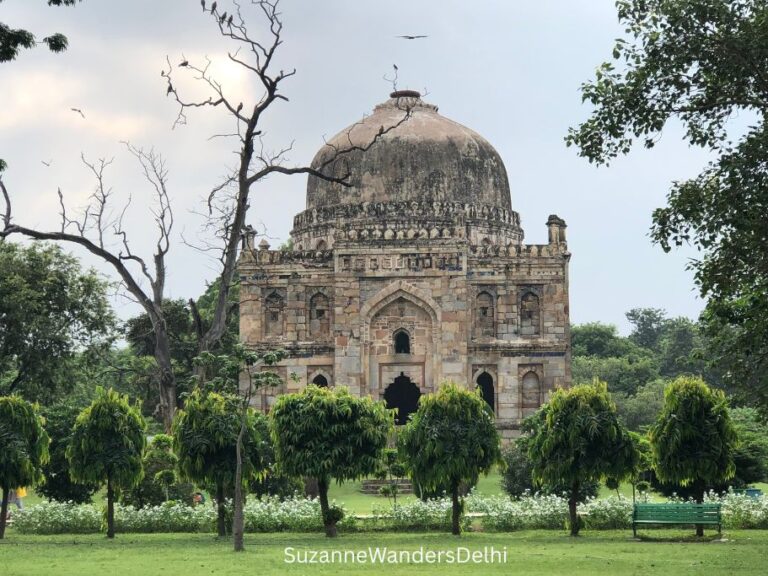
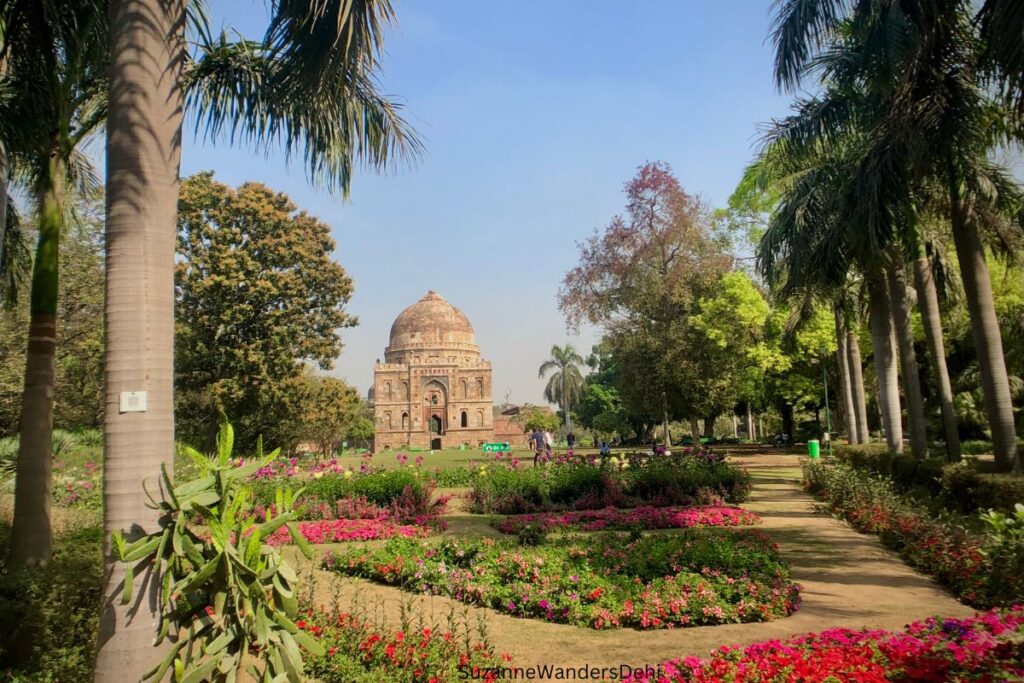
Lodhi Garden is the most popular park in Delhi, and as a first time visitor you will be captivated. The park has beautiful trees, gardens and ruins dating back to 1444. My visitors love Lodhi Garden – it’s magical.
There are tombs from the Sayyid and Lodhi dynasties, the beautiful gateway of Bara Gumbad, a three domed mosque and arched bridge built by the Mughal ruler Akbar.
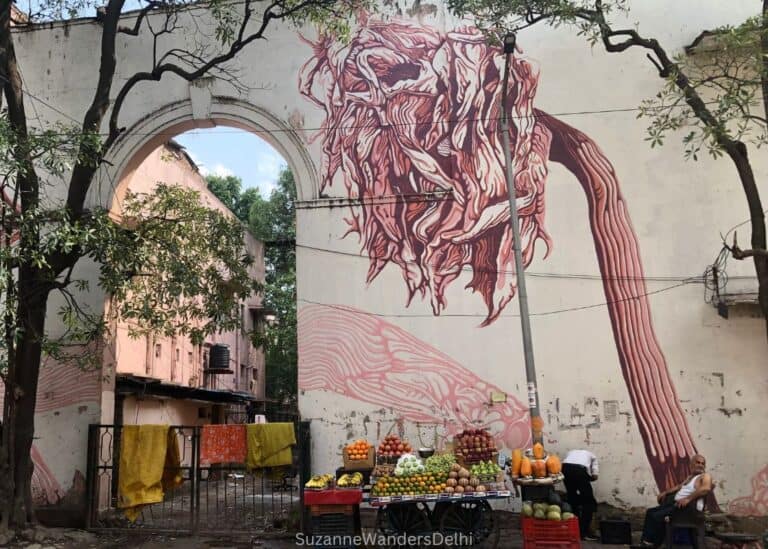
After you can easily cross the street to see the 50+ murals in Lodhi Art District, or head up to Khan Market for shopping and lunch. All free.
3. Humayun’s Tomb (UNESCO)
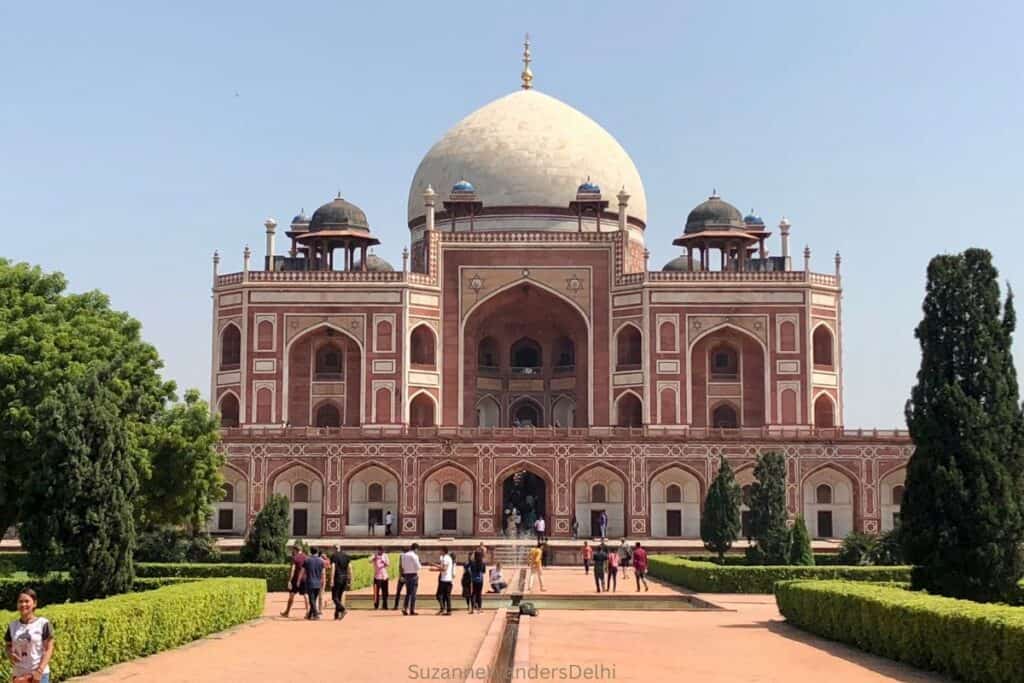
Humayun’s Tomb is a beautiful example of Mughal architecture and a UNESCO world heritage site. It was the first garden tomb in India and the inspiration for the Taj Mahal.
The complex has several well preserved and lovely tombs, Persian gardens and the graves of 150 Mughal royals and their entourage. Admission is INR 600. You can visit nearby Sunder Nursery after.
4. Qutub Minar (UNESCO)
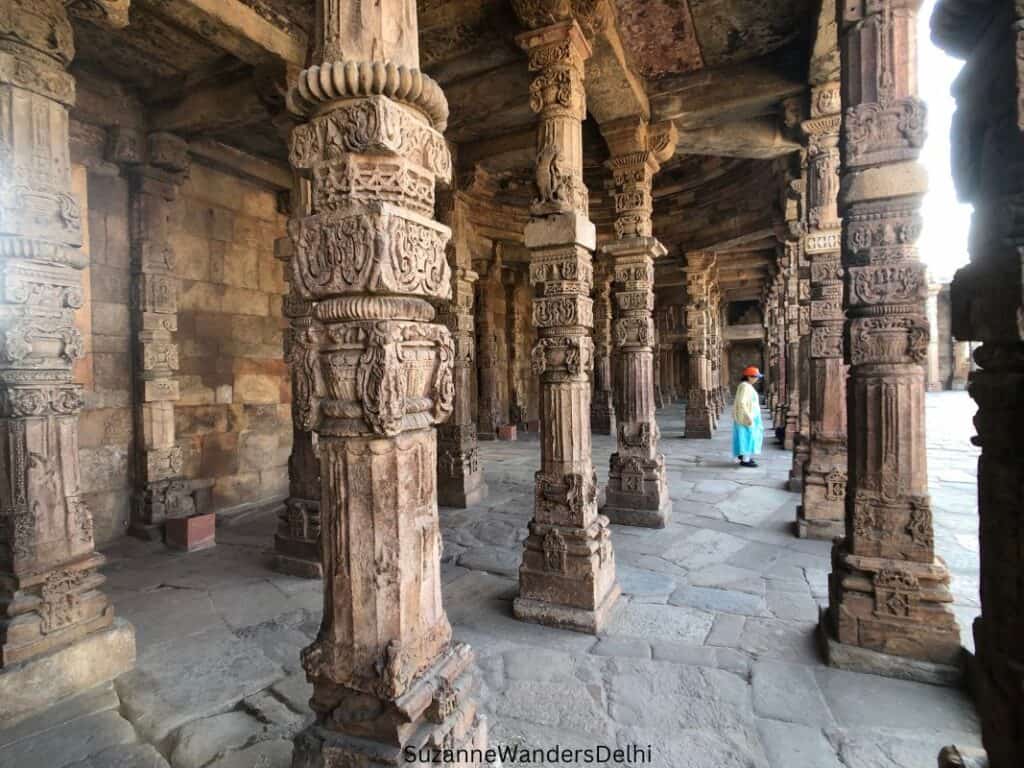
The Qutub Minar complex is one of Delhi’s 3 UNESCO sites. If it’s your first time in Delhi, this site is an absolute must.
The main feature of the complex is the Qutub Minar, the tallest brick minaret in the world built in 1192. It is considered a wonderful example of Indo-Islamic-Afghan architecture.
But there are also tombs, the ruins of a mosque which used pieces from a demolished Hindu temple in its columns, a madrassa, another minar and a famous ancient iron pillar that has never rusted. Admission is INR 600.
5. Mehrauli Archeological Park
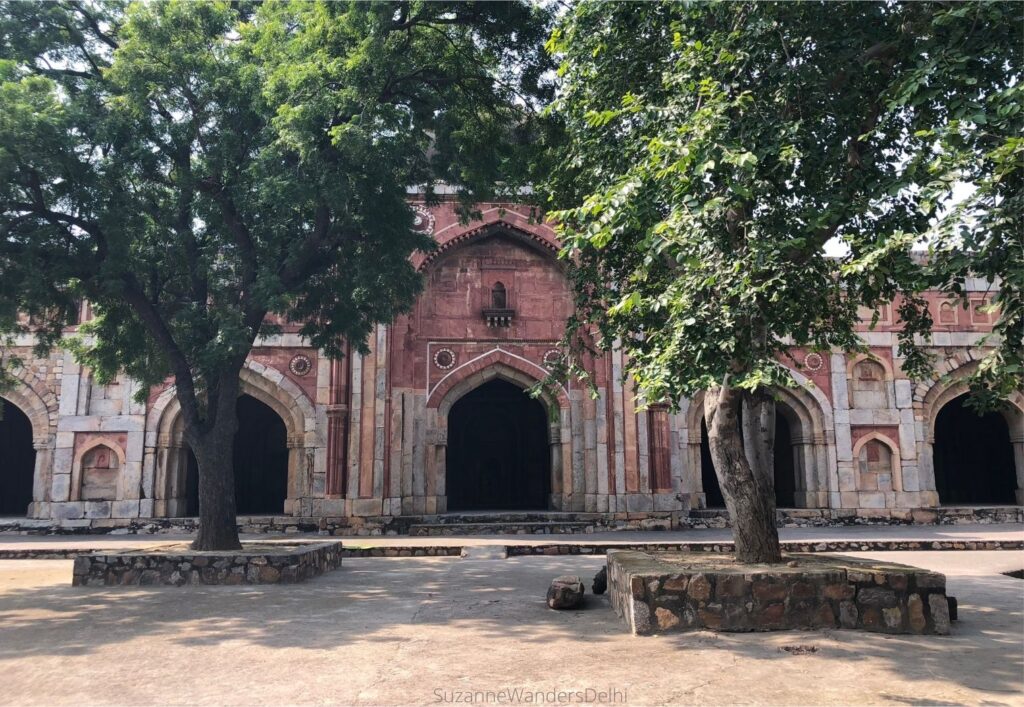
Mehrauli Archeological Park is a heritage park/forest very near the Qutub Minar. It just underwent a major restoration, and I was blown away by the transformation. It’s almost unrecognizable from the inhospitable, scrubby forest it used to be.
Visitors can now stroll through gardens, forest, and walkways leading to historical monuments from the pre-Islamic to late Mughal periods. Several monuments that were closed to the public are open now, as well as a large area of ruins.
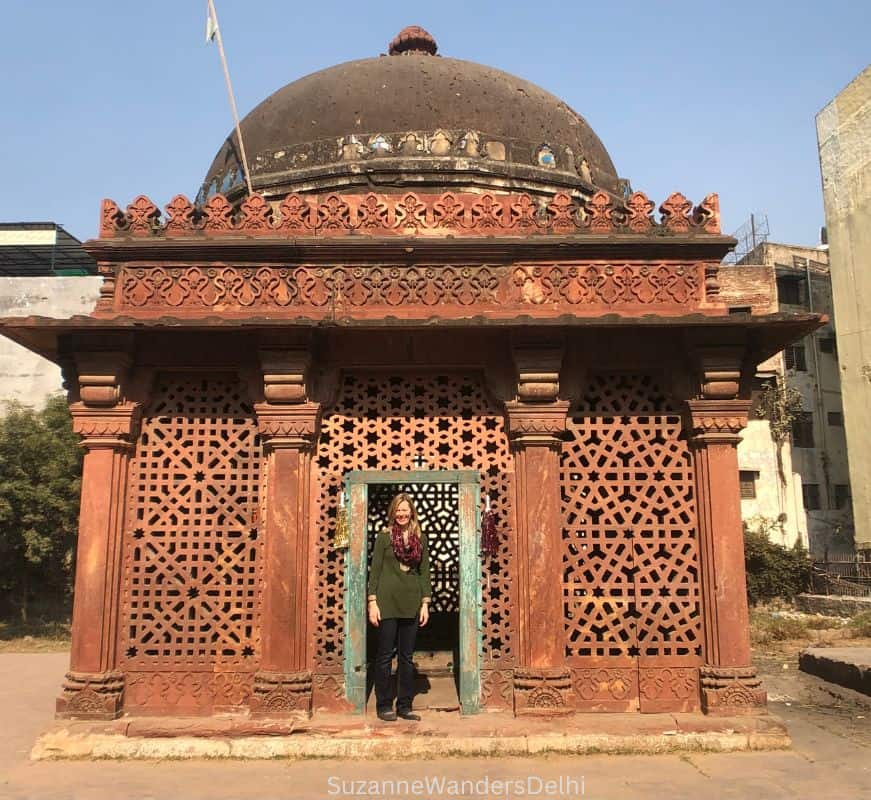
The monuments are amazing, especially the Rajon ki Baoli, Jamali Kamali Mosque and tomb of Quli Khan. Admission is INR 500.
6. Connaught Place
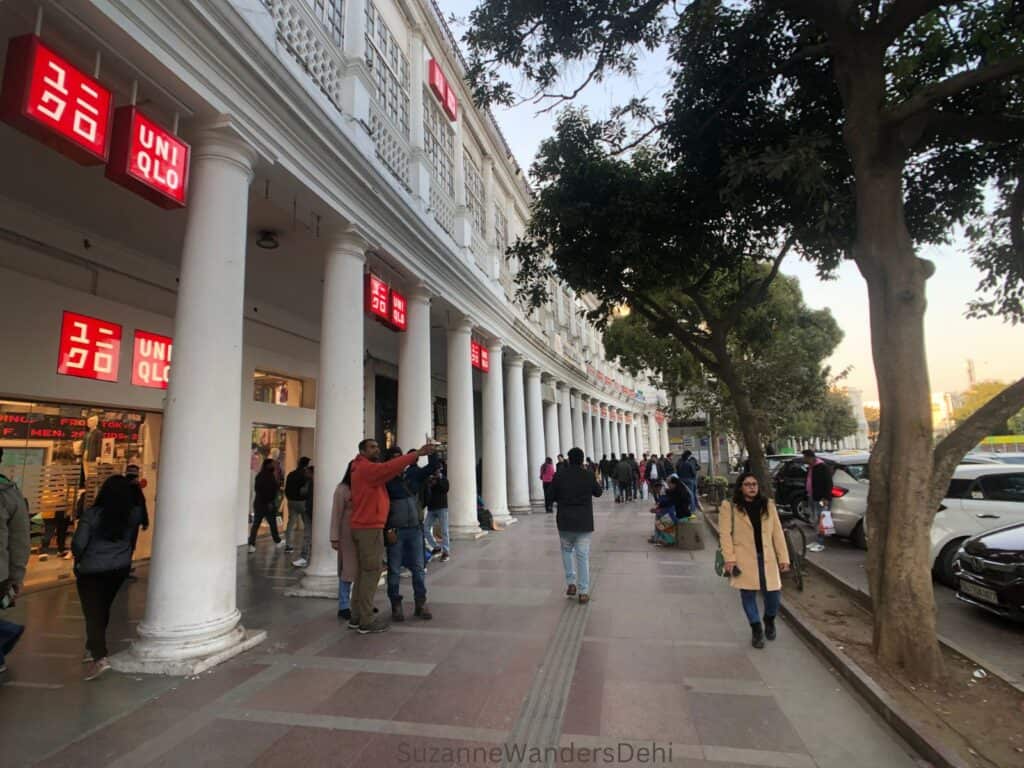
Connaught Place is the British built commercial and shopping hub of Delhi and the unofficial centre of the city. It’s a favourite meeting and hang-out spot for visitors and locals.
Everything is at Connaught Place (locally known as CP) – art galleries, international and Indian brand stores, tech stores, restaurants, money exchanges, book shops, movie theatres, bazaars, clubs and bars, and street vendors.
If you’re looking for textile souvenirs, the Shop and Soma are where I like to go. Free.
7. Agrasen ki Baoli
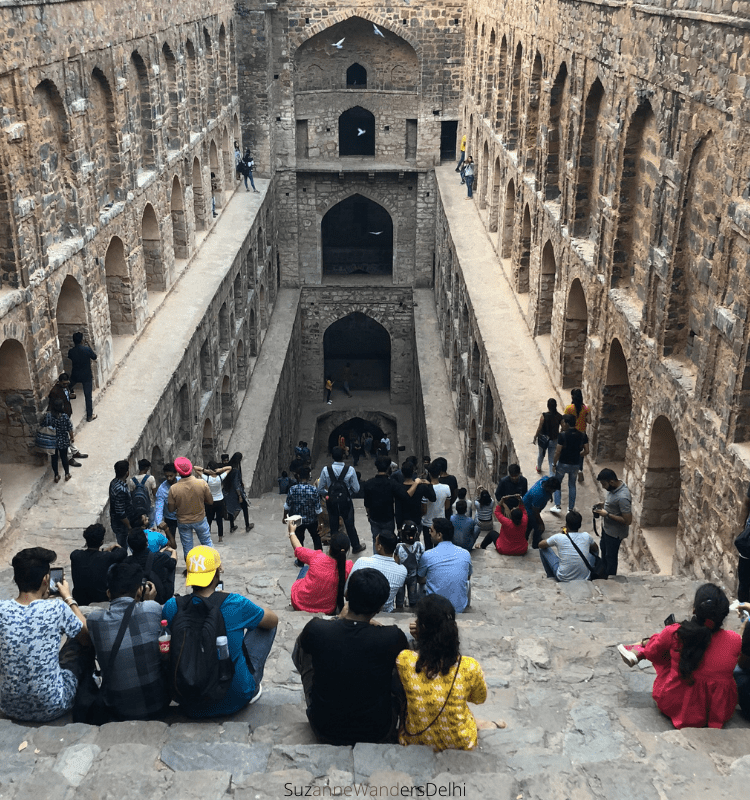
Agrasen ki Baoli is a very large, ancient stepwell. I think it’s the most beautiful of Delhi’s remaining stepwells.
The current stepwell was rebuilt in the 14th Century by the Agrawal community, but the original dates back to 3000 BC. Some people believe the black water at the bottom of the well has mystical powers. Free.
If you see laundry drying on the lanes beside Agrasen ki Baoli, it’s from Devi Prasad Sadan Dhobi Ghat, one of Delhi’s last outdoor laundries.
8. Jantar Mantar
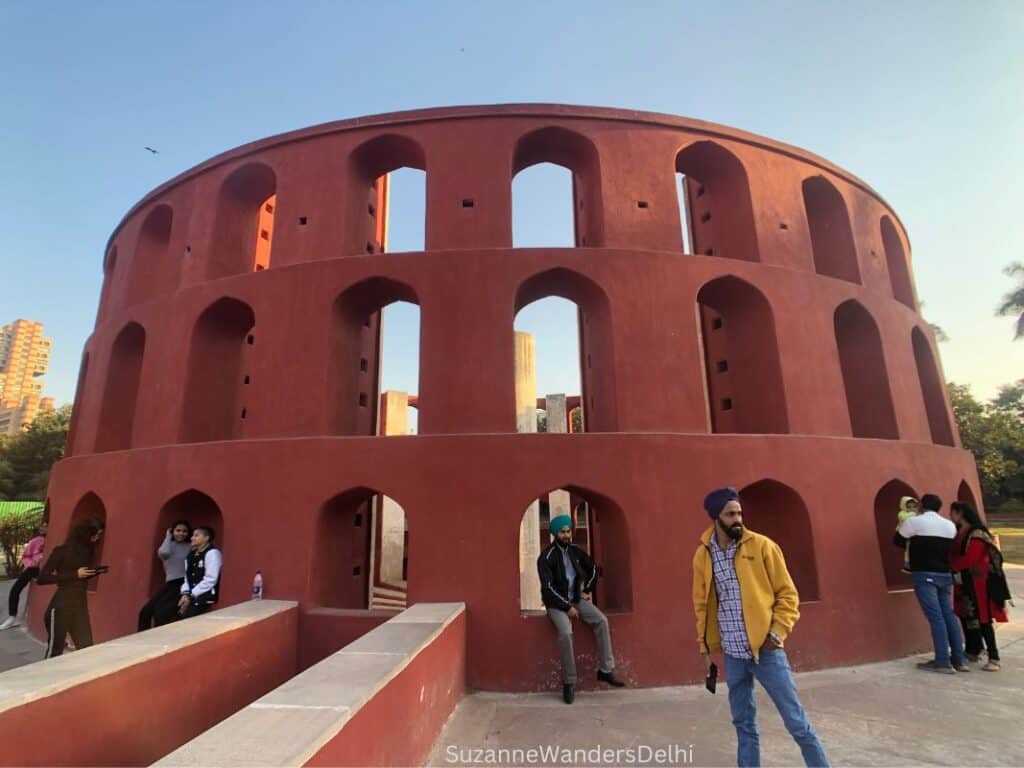
Jantar Mantar is a group of 13 architectural astronomy instruments built in 1724 that were incredibly accurate. Now the fine calibrated markings on the instruments are severely eroded and in need of restoration.
This particular jantar mantar is one of five built in India by the Maharaja Jai Singh II (four remain). The largest one is located in Jaipur. It’s not far from Agrasen ki Baoli. Admission of INR 300.
9. Gurudwara Bangla Sahib
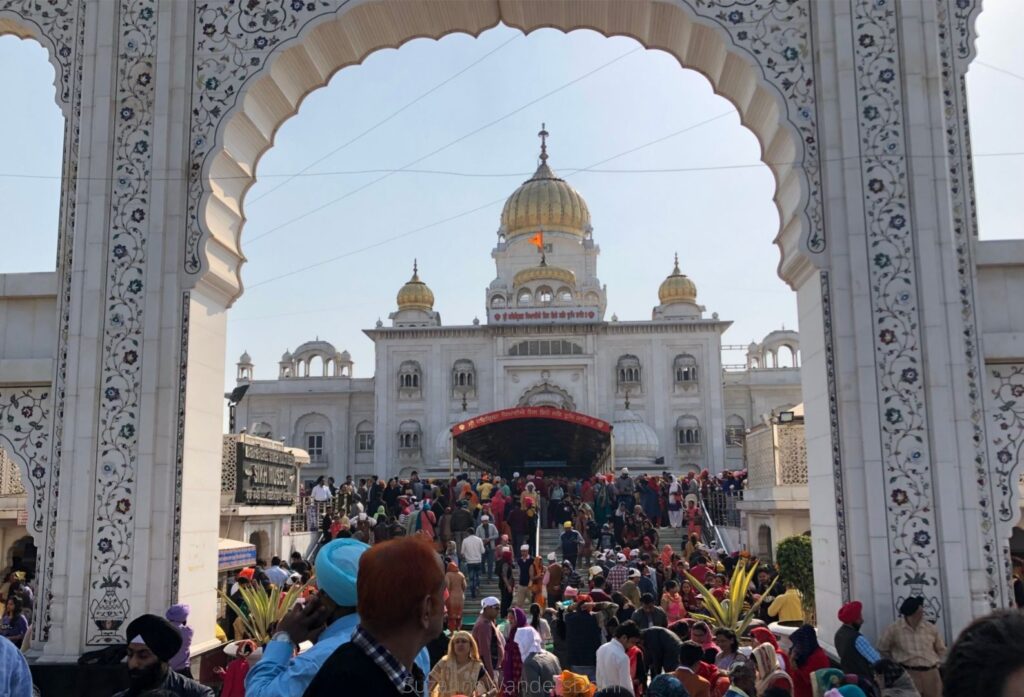
Gurudwara Bangla Sahib is the most prominent gurudwara (Sikh temple) in Delhi for the Sikh community. It’s a large complex with prayer hall, two langar halls, a museum, offices, hospital and accommodation for pilgrims. All religions, races and nationalities are welcome.
The most important things to do at the gurudwara (besides visiting the prayer hall) are circumventing the Sarovar (holy pool) and having langar in the dining hall. Langar is a free vegetarian, community meal open to everyone.
There’s a visitors centre where you can leave your shoes and get a bandana to cover your head. Free.
10. Hauz Khas Village & Fort
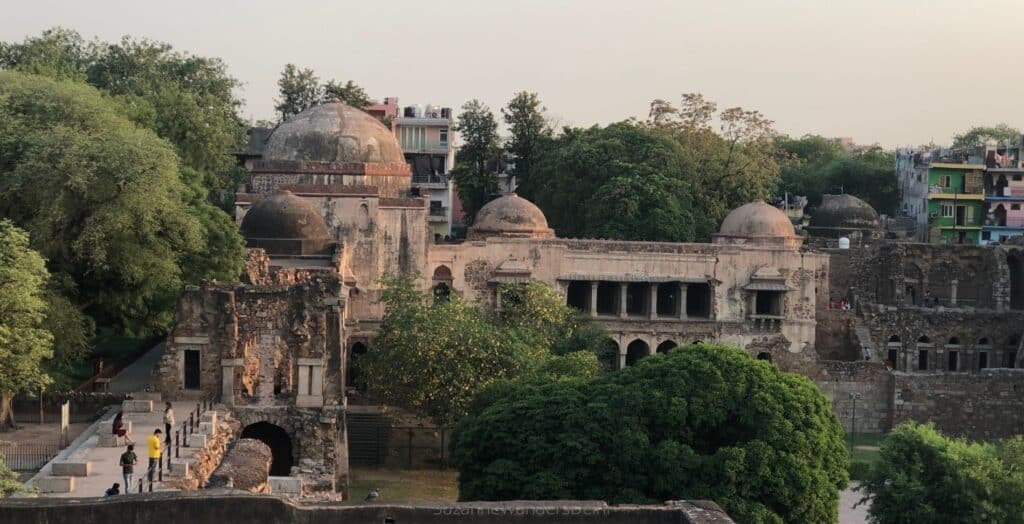
Hauz Khas Village is a pedestrian friendly, trendy urban village characterised by winding lanes with shops, boutiques, restaurants and clubs. I always take my first time Delhi visitors here.
Hauz Khas Village is home to Hauz Khas Fort, which was built in the 1300s as part of the second of Delhi’s historic cities, Siri. The fort is at the end of the main lane of Hauz Khas Village.
After, have lunch on the terrace at Social. They have great views of the fort and the food is good. Admission fee of INR 300 for Hauz Khas Fort.
Next to Hauz Khas Village is Deer Park. It’s one Delhi’s nicest green spaces, and also has historic mausoleums.
11. Dilli Haat INA
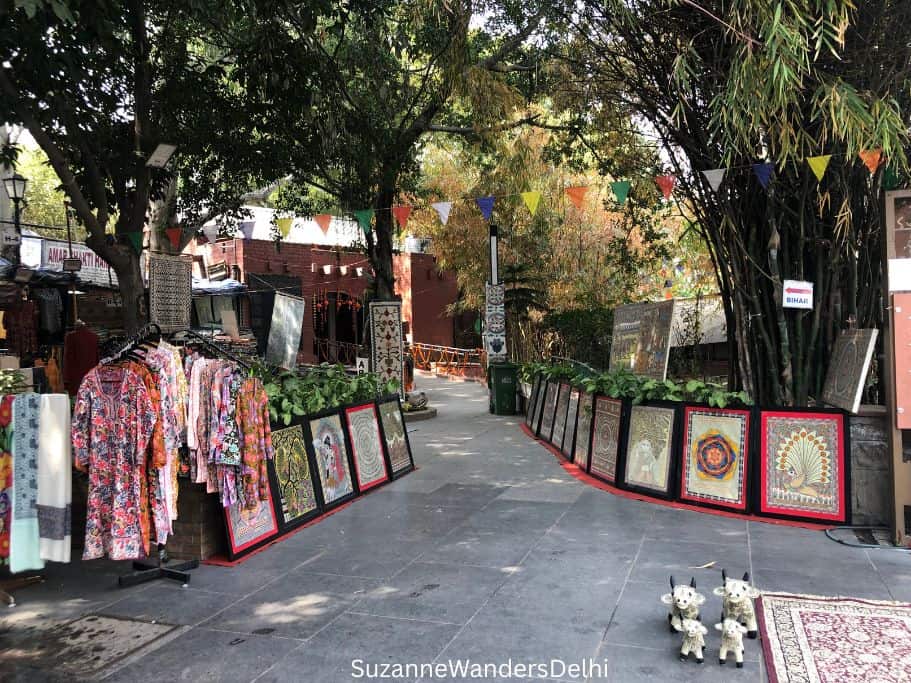
Dilli Haat is a pedestrian only, outdoor craft and food market. Artisans and craftspeople from all over India come here for two weeks at a time to sell their products.
I actually came here on my very first day in Delhi, in 2016 (I’ve been back a lot since then).
It’s an excellent place to shop for authentic handicrafts from around the country. There’s also a large food court offering foods from states all across India. Admission of INR 100.
12. Bahai Lotus Temple
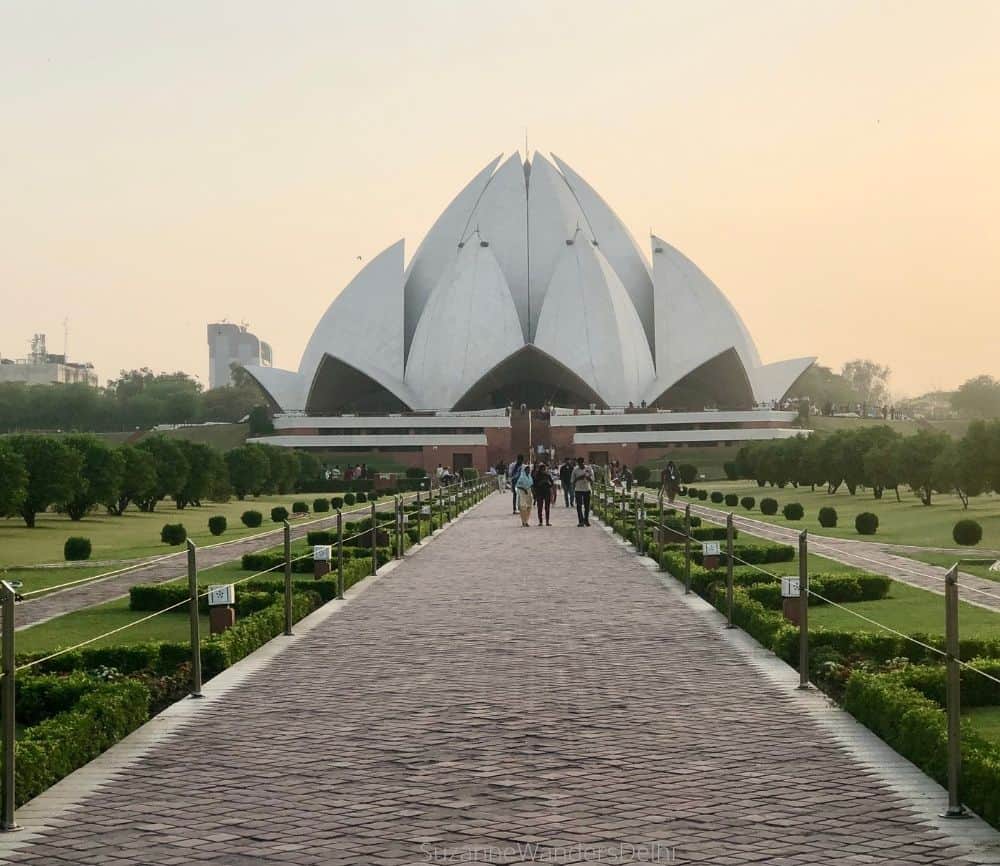
The Bahai Lotus Temple is one of the most visited religious buildings in the world. The temple is built from white marble in the shape of a lotus flower. Everyone is welcome.
On weekends and holidays the lineup can take an hour. Try to go earlier in the day. You will need to remove your shoes before entering the temple. Free. Closed Monday.
13. Old Delhi
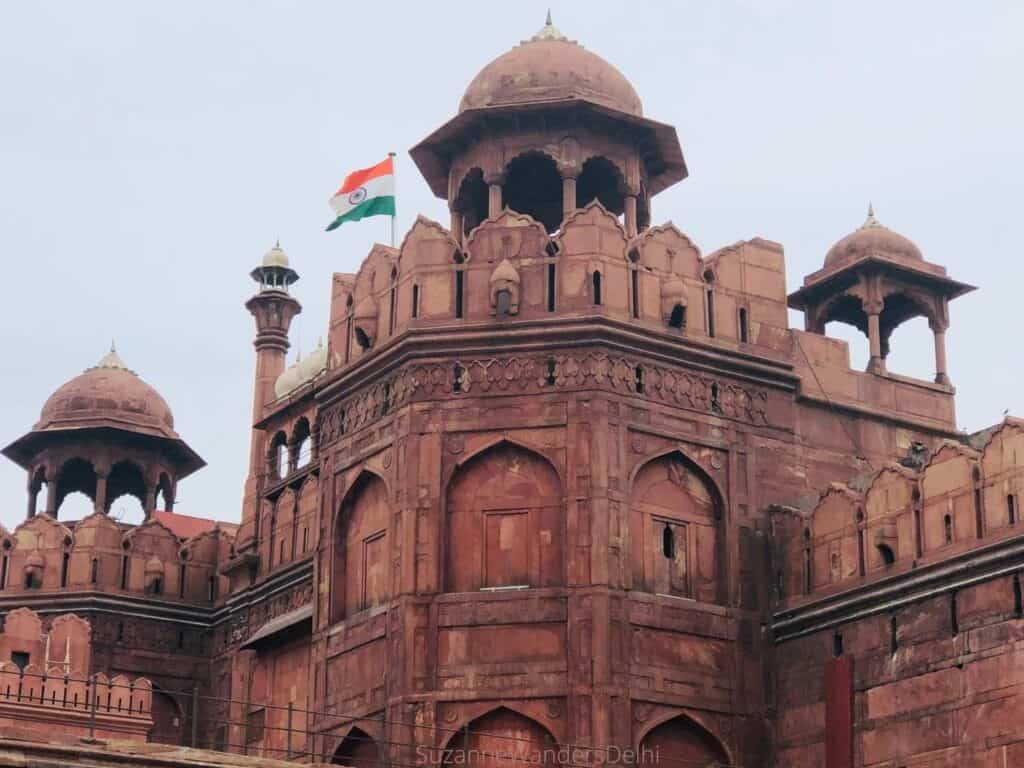
Historically this is the most important part of Delhi, but it’s bonkers. Save it until you’ve had a day or two to get used to Delhi.
Old Delhi was primarily build by Shah Jahan (who built the Taj Mahal) in the 1600s and is the last of Delhi’s 7 historic cities.
Important and most visited sites of Old Delhi are:
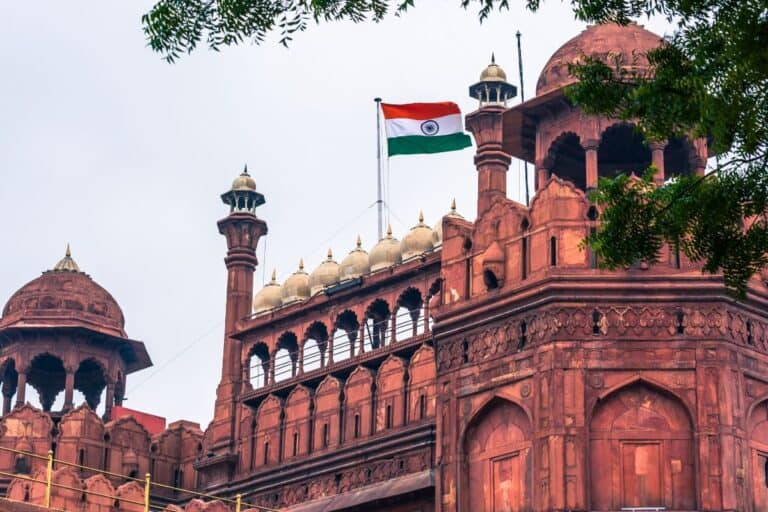
- Red Fort (UNESCO): Built in 1639 this was the palace and main residence of all Mughal rulers until the British deposed the last ruler in 1857. Admission INR 600 (closed Monday).
- Chandni Chowk: The most famous street in Delhi, it runs between the Red Fort and Fatehpuri Masjid. It is lined with historic sites, like Shri Digambar Jain Lal Mandir, Gurudwara Sis Ganj Sahib and Kinari Bazaar. No motorized vehicles are permitted during the day, making it easy to explore on foot. Free.
- Fatehpuri Masjid: Mosque built for Fatehpuri Begum in 1650 (one of Shah Jahan’s wives). It’s a working mosque, so shoes must be removed and ladies must cover their heads. Free.
- Khari Baoli (Spice Market): Historic spice market and one of the largest wholesale spice markets in Asia. It starts around the corner from Fatehpuri Masjid. Free.
- Jama Masjid: The largest, and one of the oldest mosques in Delhi. It was built in the 1650s by Shah Jahan as his personal mosque. It’s a working mosque and has a strict dress code – modest clothing is essential to visit. Free, but they sometimes charge tourists.
This is one area where it would be helpful to take a guided tour, especially if it’s your first time in Delhi. You’ll get valuable information about the history of the area and see things you wouldn’t on your own.
Both Delhi Heritage Walks and India City Walks offer heritage walking tours which give you the highlights and include sampling street food.
If you’d rather do it yourself, here’s my DIY heritage walk of Old Delhi.
14. Raj Ghat (Gandhi Memorial)
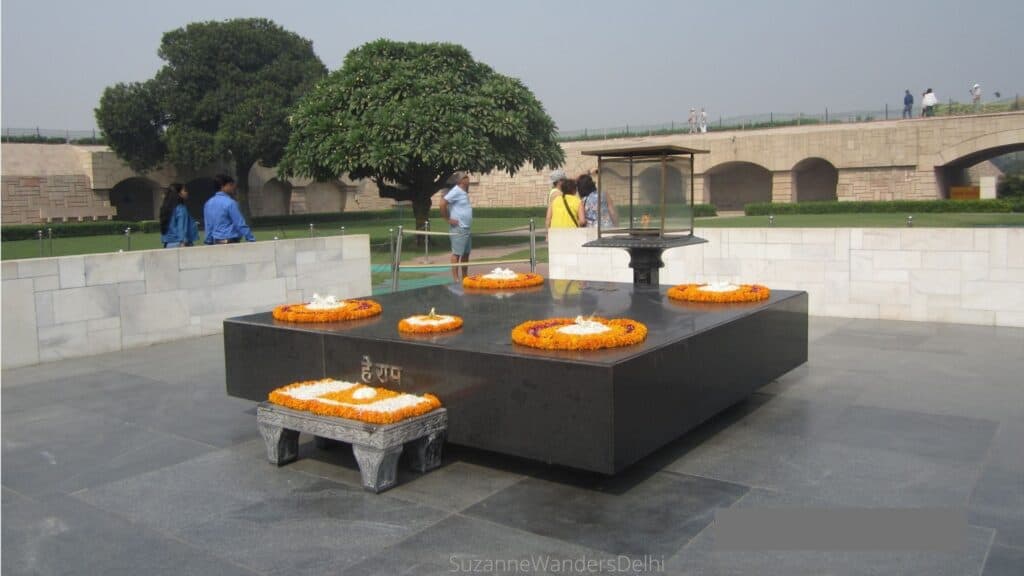
Raj Ghat is where Mahatma Gandhi’s last rites were performed, the day after his assassination on January 30, 1948. The memorial itself is simple – a black marble platform with an eternal flame, meant to reflect the simplicity of Gandhi’s life.
Gandhi is still venerated across India. He is considered the father of the nation. His birthday, October 2nd, is a national holiday, his face is on the currency and his portrait hangs in government offices.
The National Gandhi Museum and Library is kitty corner to Raj Ghat. Both sites are free.
15. Swaminarayan Akshardham
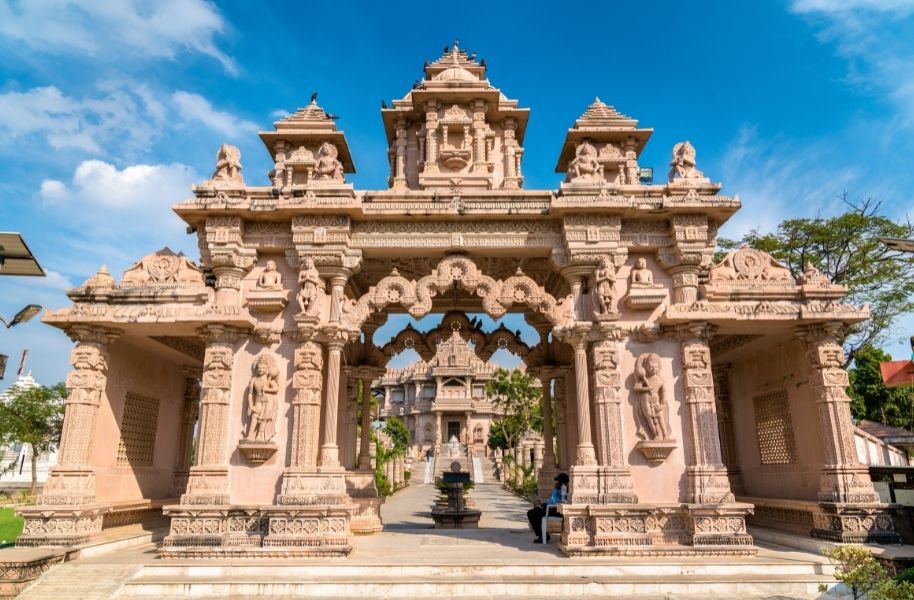
Akshardham Temple is one of the largest Hindu temples in the world. It is a stunning masterpiece of intricately carved marble from floor to vaulted ceiling, and some of the most breathtaking architecture I have seen in India.
It’s built entirely of Italian Carrara marble and Rajasthani pink sandstone, without structural steel. Because of the tireless work of 7,000 artisans and 3,000 volunteers Akshardham was completed in 5 years.
The temple is in east Delhi, but very easy to reach by metro. From the metro it’s a 5-10 minute walk. Closed on Monday, free. Strict dress code (shoulders, knees covered).
16. Indian Food Cooking Class
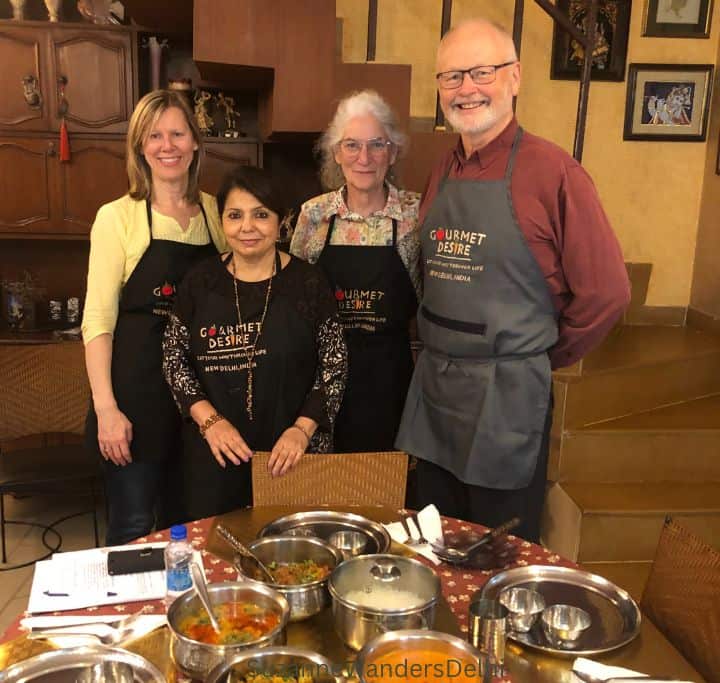
If you’re thinking about an Indian cooking class, I highly recommend Gourmet Desire. Classes are taught by Jyoti Agarwal in her home – and she is excellent.
Not only did Jyoti teach us how to make a delicious meal, she taught us about Indian family dynamics, table manner and food customs. You’ll also get to see a typical South Delhi home.
Jyoti gave me the name of her favourite spice shop in Delhi (I’ve been going there ever since), and sent us all home with recipes and spices.
FAQs about Visiting Delhi for the First Time
Yes, Delhi is safe for tourists, but you have to exercise a bit of extra caution. Don’t go out alone at night and dress modestly. Delhi has a lot of security and surveillance cameras which reduce crime and terrorist attacks.
3-4 days will give you time to see the most important sites and get a feel for the city. You could stay in Delhi for a year and not see everything. It’s a city you chip away at with each visit.
Tap water is not safe to drink in Delhi. Drink filtered or bottled water only.
Women should dress modestly in Delhi. Shoulders, knees, cleavage and behind should be covered. Indian clothing is best – cotton kurtas (tunic-like shirts), and loose cotton pants.
While luxury hotels are expensive, everything else is budget-friendly. Entrance fees for sites, transportation and food are cheap, and there are excellent budget choices for accommodation.
Last Words on First Time in Delhi Survival Guide
Delhi can feel very overwhelming when you first arrive. The airport is calm and quiet, and then you step outside and it’s pandemonium! But Delhi has so much to offer a first time visitor, if you give it chance.
This is a city that grows on you over time, as you start to appreciate everything there is to see and experience.
Also Recommended:
- Delhi Itinerary: Easy Ways to Spend Your First Day 2026
- How to Avoid Delhi Belly While Eating Everywhere in India’s Capital
- The Perfect One Day in Delhi: An Insider’s Guide
- Delhi vs New Delhi: What is the Difference?
- Is Delhi Worth Visiting? 10 Reasons to Go
- How to Buy Train Tickets in Delhi (2026)
- Golden Triangle India: How to Do It On Your Own