21 Famous and Unique Temples in Delhi: An Insider’s Guide

These are 21 of the most famous and unique temples in Delhi. India is a deeply religious country and there are hundreds of temples in Delhi. I’m still discovering temples, and I’ve been in Delhi a long time!
This is my insider’s list of temples you should see. But don’t hesitate to visit other temples you come across.
There are also a number of ashrams for spiritual seekers. Many are open to the public and can be visited for a few hours.
21 Famous and Unique Temples in Delhi
These are the most unique and famous temples in Delhi. Always remove shoes before entering. Some women cover their heads, but you don’t have to. Modest dress is best, and be respectful about taking photos.
Temples are always free.
1. Bahai Lotus Temple
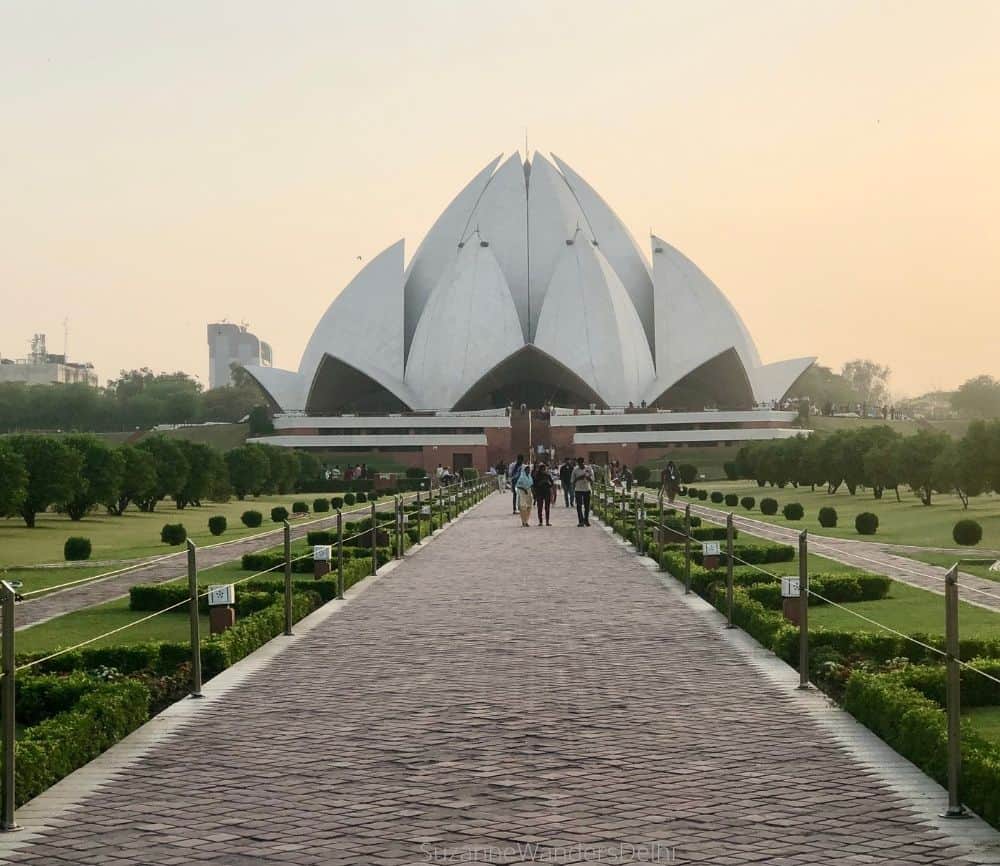
The Bahai Lotus Temple is probably the most famous temple in Delhi. It is one of the most visited religious buildings in the world, with over 10,000 visitors each day.
The temple resembles a lotus flower with 27 petals made of Greek marble. The interior is simple, but beautiful. Iranian architect Fariborz Sahba created the design and has won numerous awards for it.
It’s one of my favourite temples in Delhi, just for the tranquil energy – a rarity in Delhi
The temple was completed in 1986 after a Bahai practitioner from Hyderabad donated his life savings for the building of a new temple.
2. Swaminarayan Akshardham
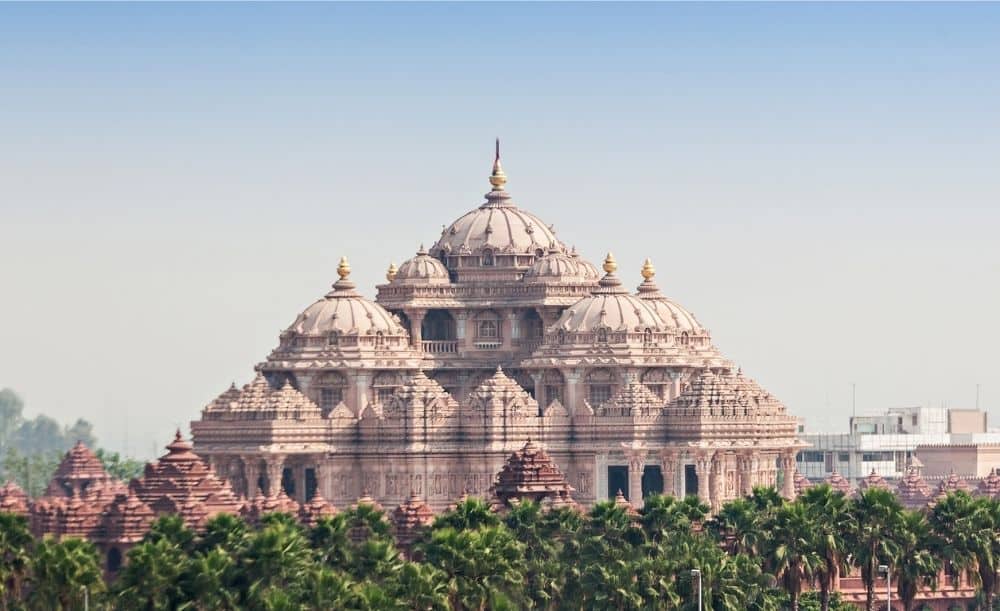
The most impressive temple in Delhi is Swaminarayan Akshardham. It is a visually stunning masterpiece that took 7,000 artisans from across India to complete. It is one of the largest Hindu temples in the world.
The temple is truly breathtaking, an intricately carved masterpiece from floor to ceiling. There are several shrines dedicated to the most important Hindu gods and colourful murals depicting the life of Swaminarayan.
Besides the temple, Akshardham has several exhibits (including a cultural boat ride), a huge food hall (it’s good – I’ve eaten there a few times), and children’s playground.
At night there’s a popular water depicting a story from the Kena Upanishad (Hindu holy text). It starts at 7:15 pm, but you must arrive 30 minutes before. Small fee for the water show.
Security is tight at Akshardham. All electronics must be left in the secured storage area and there is no photography. The dress code is also strict. Shoulders, knees, upper arms and chest must be covered.
3. Gurudwara Bangla Sahib
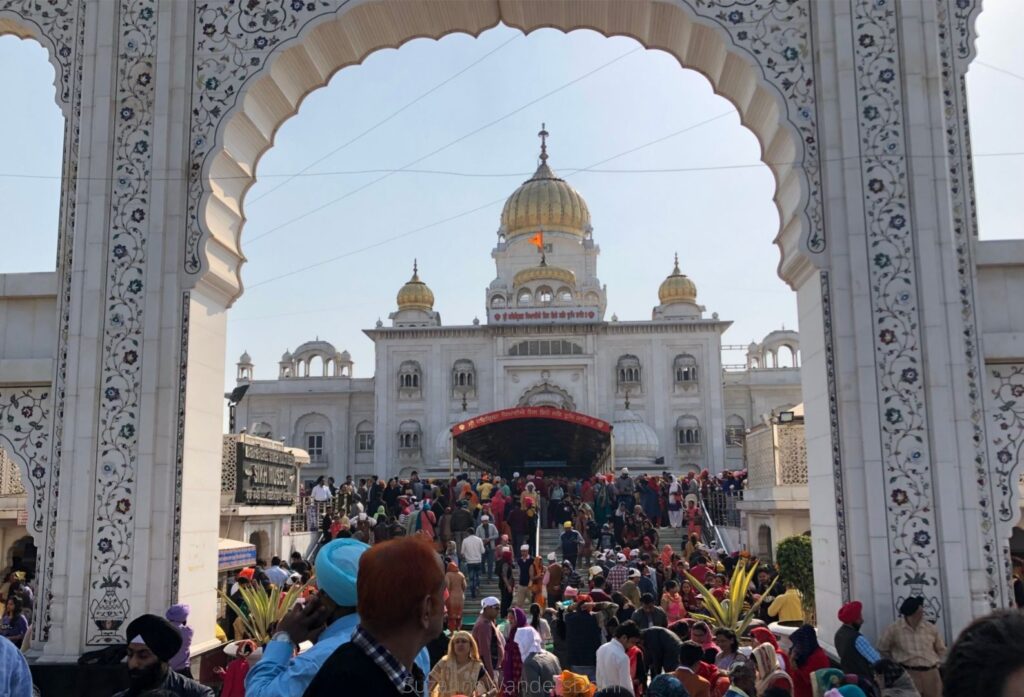
A gurudwara is a Sikh temple, and Gurudwara Bangla Sahib is one of the most prominent in Delhi. I’ve been visiting this temple since 2018 when a local friend brought me, and have been back many times.
It’s one of Delhi’s most beautiful and spiritual temples, dedicated to the eighth Sikh Guru, Guru Har Krishnan. It’s actually one of the best places to visit at night in Delhi because there’s always people here.
Remember to cover your hair (men too, there are bandanas in bins outside the temple to borrow), and leave shoes at the shoe storage. Then head upstairs to the prayer hall.
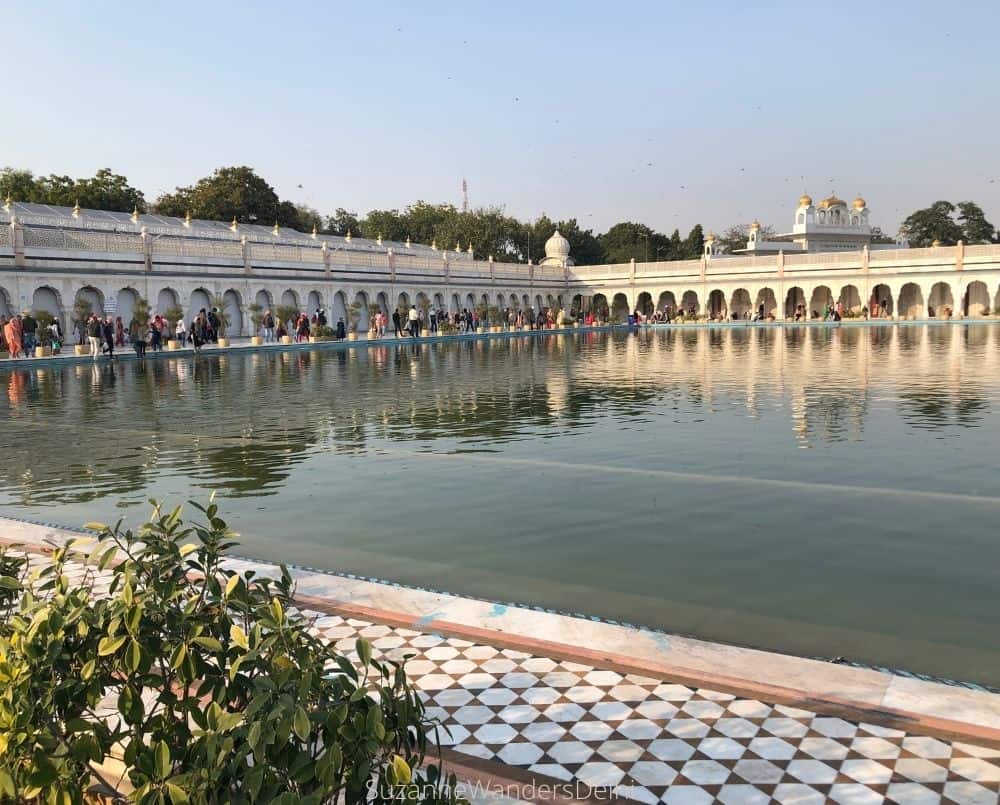
Sikhs are very helpful, and there’s lots of volunteers working at the gurudwara. They’ll be happy to assist you.
Gurudwara Bangla Sahib gets a lot of tourists, but most don’t stop and listen to the live devotional singing in the prayer hall, stroll around the holy pond (sarovar), or share in langar, the free vegetarian meal. Everyone is welcome in the gurudwara – you don’t have to be Sikh to do any of these things.
4. Sankat Mochan Hanuman Mandir (Karol Bagh)
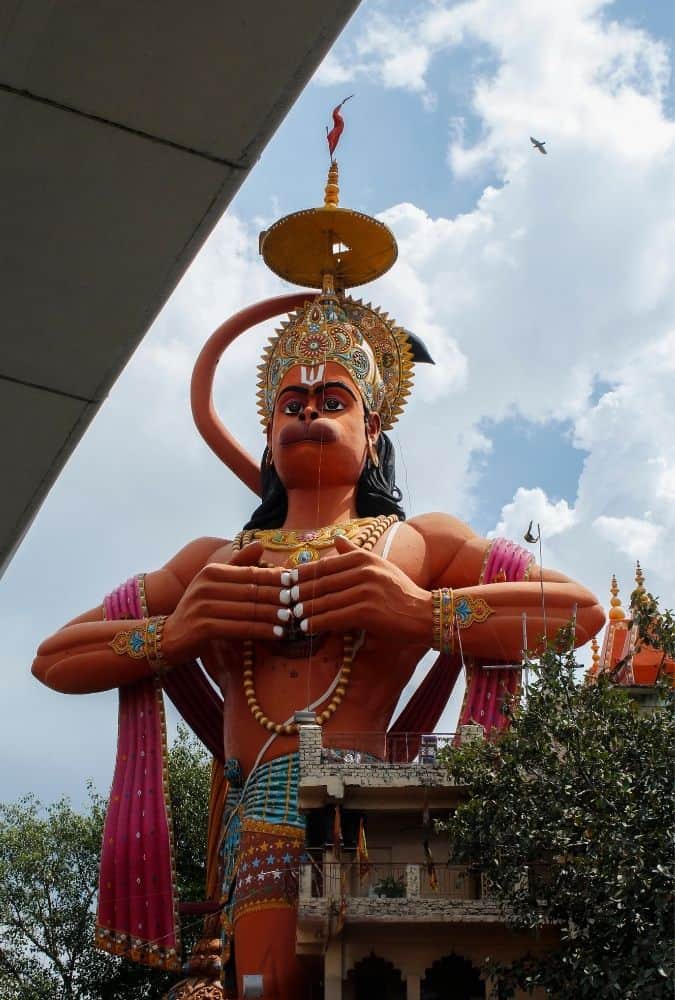
One look and you’ll understand why this is one of the most famous and unique temples in Delhi. Sankat Mochan Hanuman Mandir is a 108 foot high statue of Lord Hanuman, the Hindu god who is half man and half monkey.
The temple is an iconic symbol of Delhi, immediately identifying the city. You may have seen this temple from the Delhi metro Blue line – you get a good view of it from there.
To enter the temple you must walk through the gaping mouth of a monster slain by Hanuman. Inside are several levels, each with shrines dedicated to different Hindu gods. Each shrine is cared for by a priest who will want to bless you for a small donation, about INR 50.
On Tuesday and Saturday at 8:15 am and 8:15 pm the statue of Hanuman opens his chest to reveal Lord Rama and Sita in his heart. It is quite the spectacle.
Hanuman is the god who is half man and half monkey. He is revered for his loyalty, fearlessness and strength. In the great epic poem the Ramayana, Hanuman rescues kidnapped Sita from the evil Ravana and returns her to Lord Rama.
5. Laxminarayan Mandir (Birla Mandir)
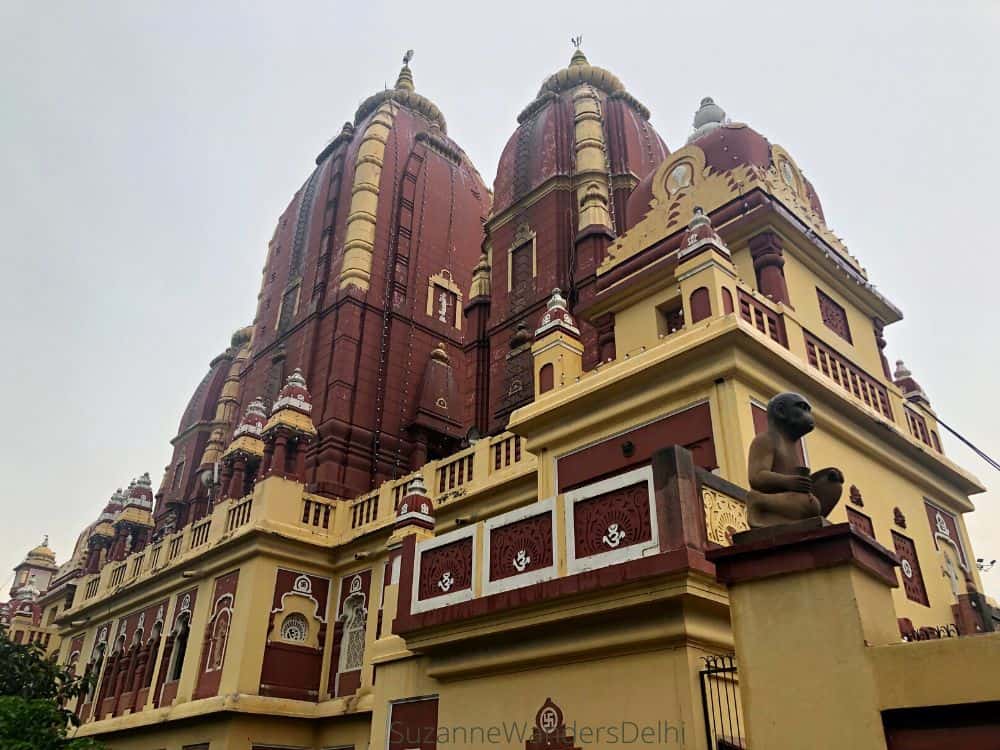
When it was built in 1939, Laxminarayan Mandir was the largest Hindu temple in Delhi. The most unique thing about this Delhi temple is that Mahatma Gandhi inaugurated it under the condition that all castes be welcomed. At that time the caste system was still dominant in India.
The temple developed a loyal following and remains one of the most prominent Hindu temples in the city. Not many tourists come here, but it is very popular with locals. I came here on a Hindu festival day one year, and the lineup was down the street.
Laxminarayan Mandir is dedicated to Lord Vishnu (Narayan) and his consort, Lakshmi. It was the first of a series of temples built by the wealthy industrialist Birla family, commonly called Birla Mandirs.
There are extensive gardens with fountains, statues of animals representing different aspects of Hinduism, and a Shiva temple with a gaping mouth of a slain monster as the entrance.
Mobile phones and cameras must be left in the free, secured locker area. Photography is forbidden inside the temple.
6. Sri Sri Parthasarathi Mandir (ISKCON Temple Delhi)
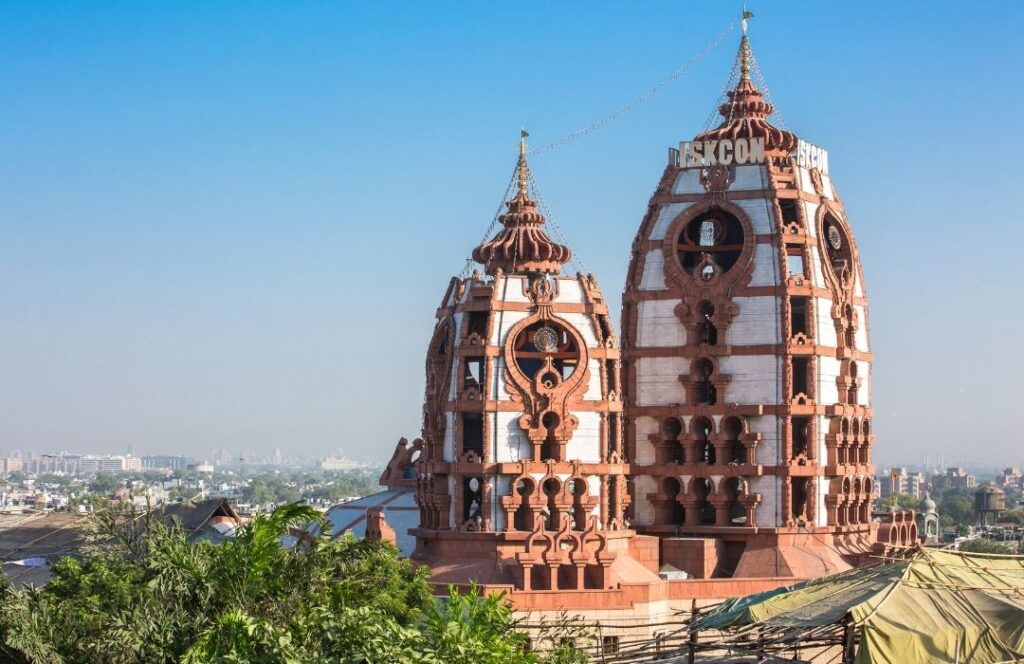
Sri Sri Parthasarathi Mandir (aka ISKCON Temple Delhi) is one of the most unique temples in Delhi for a few reasons. The main one is that it’s a lively, happy place, bursting with energy.
I attended an aarti (prayer ceremony) which was unforgettable. The prayer hall was crowded, full of ecstatic devotees clapping, chanting and dancing while priests showered them with rose petals and sacred water.
It reached a fervor as everyone surged forward to get as close to the priests as possible, so they could offer their flowers and coconuts and receive blessed ones in return. It was a bit mad, but fun and joyful.
What is ISKCON?
ISKCON stands for International Society of Krishna Consciousness and it was founded by Srila Prabhupada in the 1960s. One of the core beliefs is that happiness can be studied and learned in order to obtain a state of permanent contentment.
ISKCON is dedicated to Lord Krishna, the eighth avatar of the supreme god, Vishnu. Krishna is one of the most important Hindu gods and a prominent character in the Indian epic poem the Mahabharata, on which Hindu beliefs are partially based.
7. Shri Digambar Jain Lal Mandir & Bird Hospital
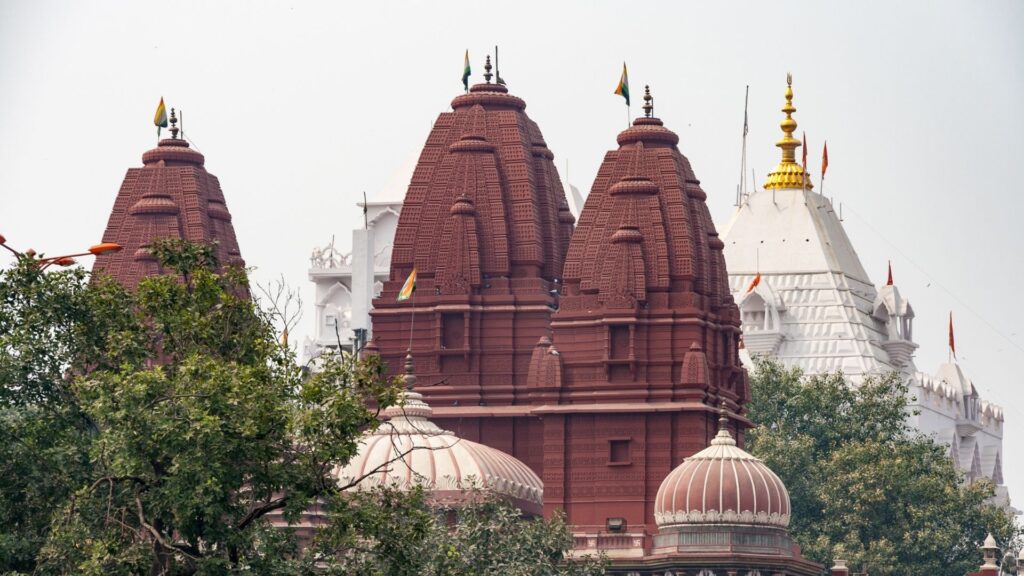
Shri Digambar Jain Lal Mandir is the oldest Jain temple in Delhi. It was built during Shah Jahan’s rule in the 1650s. It is located on Chandni Chowk, the most famous street in Old Delhi.
Jainism is an ancient Indian religion that believes the path to enlightenment is through non-violence to all living things. Jains are strict vegetarians and do not even eat root vegetables since removing the root kills the plant. They believe in karma and re-incarnation.
One of the most unique features of Shri Digambar Jain Lal Mandir is the charity bird hospital. The hospital operates completely on donations and does not charge for the treatment of any bird.
In keeping with Jain beliefs, the birds are fed a vegetarian diet of seeds and vegetables. They are treated, bathed and set free. Squirrels are also treated at the hospital.
Shoes and leather items must be removed before entering the temple. Photography is not allowed inside the temple.
8. Kururattha-Khemararam (Wat Khmer New Delhi)
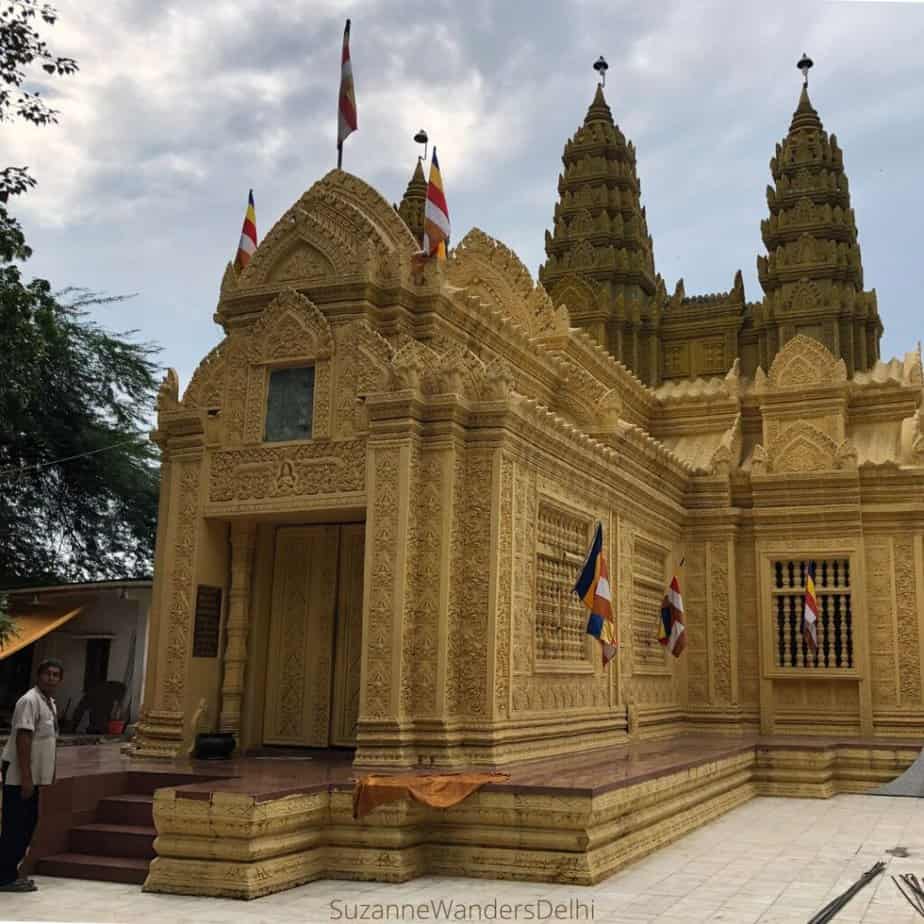
Kururattha-Khemararam is the only Cambodian temple in Delhi. It is often overlooked for nearby Chhatarpur Temple complex, but this is a lovely temple that deserves a visit.
The exterior is golden and intricately carved in classical Khmer style. The interior is simple, but beautiful with a large golden Buddha on a lotus flower. It’s the only temple of its kind in Delhi.
There is usually a caretaker on duty, and if the temple is locked you can ask him to let you inside (for a small tip). Remove your shoes before entering.
9. Shri Aadya Katyayani Shaktipith Mandir (Chhattarpur Temple)
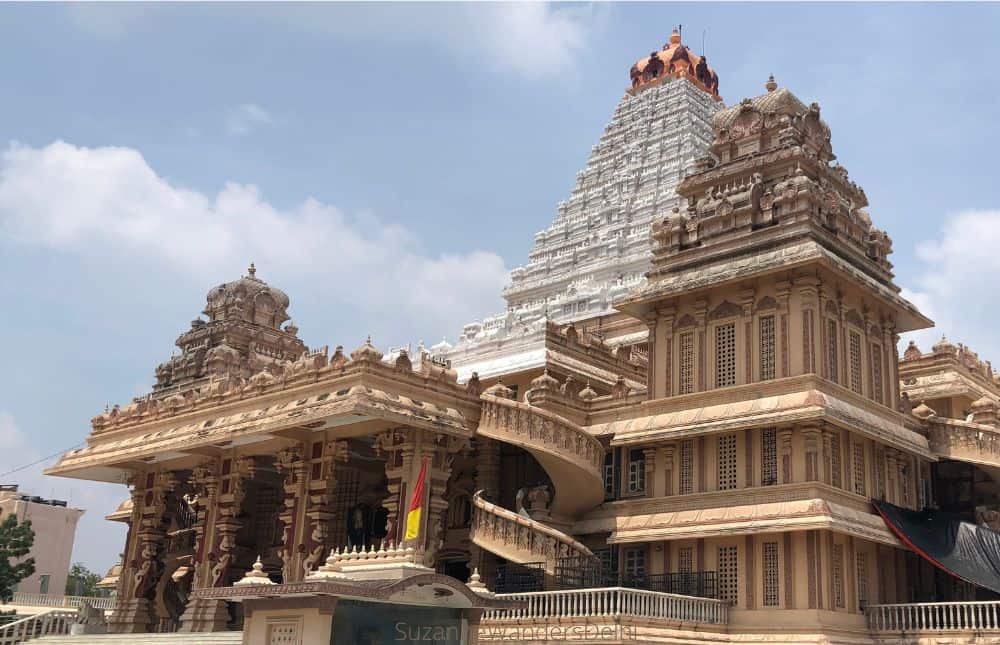
This temple is the most famous in a large complex of temples on Main Mandoli Road in the Chhattarpur neighbourhood of Delhi. It is dedicated to the goddess Shakti (also known as Katyayani).
Shakti is central to Hinduism and represents divine female energy. Devotees consider her to be the mother goddess, the sum of all female gods. She has nine avatars, the most well known being Katyayani, Durga, Kali and Parvati, consort of Lord Shiva.
Inside the temple near the prayer hall is a living room for the goddess, complete with nine chairs, one for each of her nine avatars, as well as a bedroom with a silver bed, dressing table and sword. The interior of the prayer hall is beautiful with an elaborate and brightly painted ceiling.
During the Hindu festival Navratri the temple stays open around the clock. The image of the goddess is places in the main hall and elaborately dressed and garlanded in fresh flowers. Thousands will walk past her and seek her blessings. I’ve visited during Navratri and it’s really interesting to see, but very crowded.
10. Tibetan Monastery (Majnu Ka Tilla)
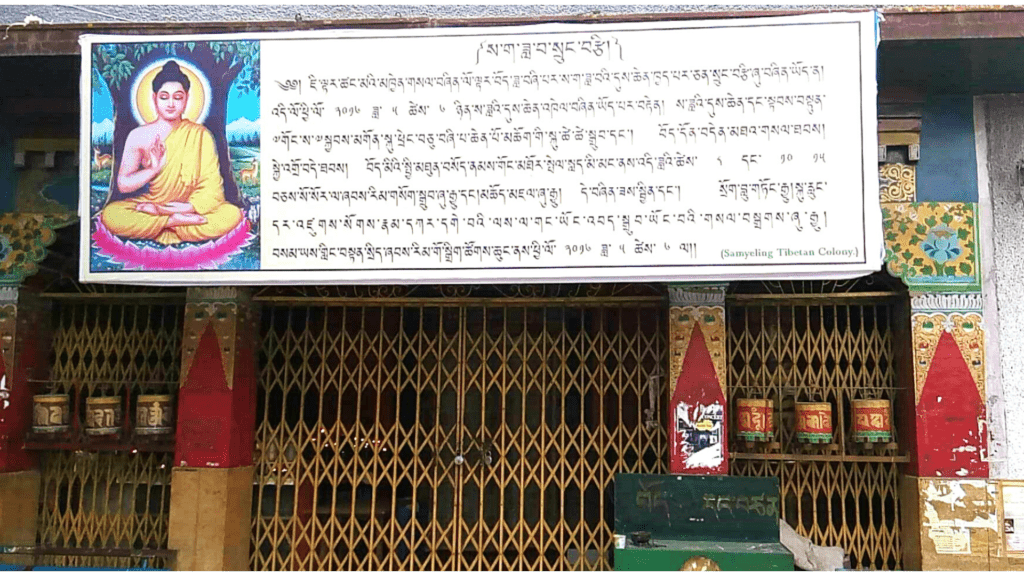
Majnu ka Tilla is known as Delhi’s Little Tibet and it has two famous and unique Tibetan Buddhist temples which are side by side in a quiet courtyard.
The temples are both styled in traditional Tibetan fashion, with images of the Buddha, prayer wheels, butter carvings, sacred texts, candles and holy images. Monks wander around quietly and chant prayers.
Tibetans started coming to Delhi in 1959 after the Dalai Lama was exiled to Dharamshala in northern India. Refugees settled in this area on land that was allotted to them by the government. Today the area is home to about 3,500 second generation Tibetans.
11. Shri Neelanchal Seva Sangh (Shri Jagannath Mandir)
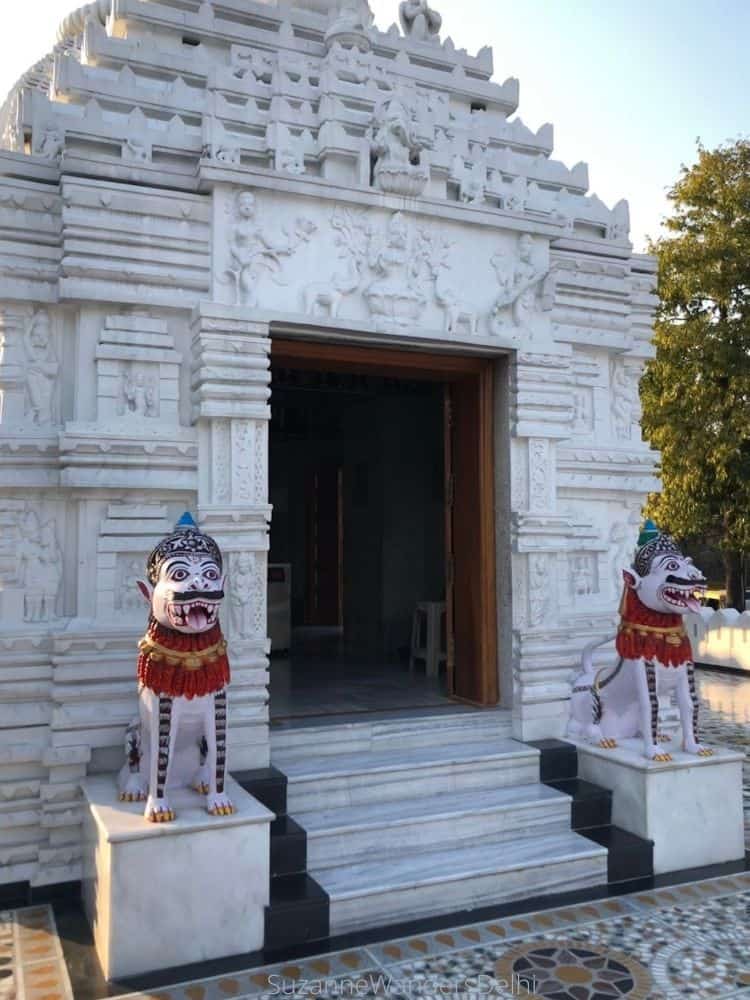
This is a small but well known south Indian temple very near Hauz Khas Village. I often visit this temple whenever I’m in the area.
Its formal name is Shri Neelanchal Seva Sangh, but it is more commonly known as the Jagannath Mandir in Hauz Khas. The temple is actually several small temples, each with their own deities whose clothing and jewellery are changed daily.
It was built for the local Odisha community in 1969 and is dedicated to the Hindu god Jagannath. Jagannath is considered an avatar of Vishnu and worshipped as a form of Lord Krishna in south India.
Shri Jagannath Mandir is famous for its Rathyatra festival which is in June or July (the date is based on the Hindu calendar, so it changes yearly).
During Rathyatra, the statues of Lord Jagannath (Lord Krishna) and his brother and sister, Lord Balabhadra and Goddess Subhadra, are taken from the temple and placed in grand chariots for a ceremonial procession through the streets.
12. Kalkaji Mandir
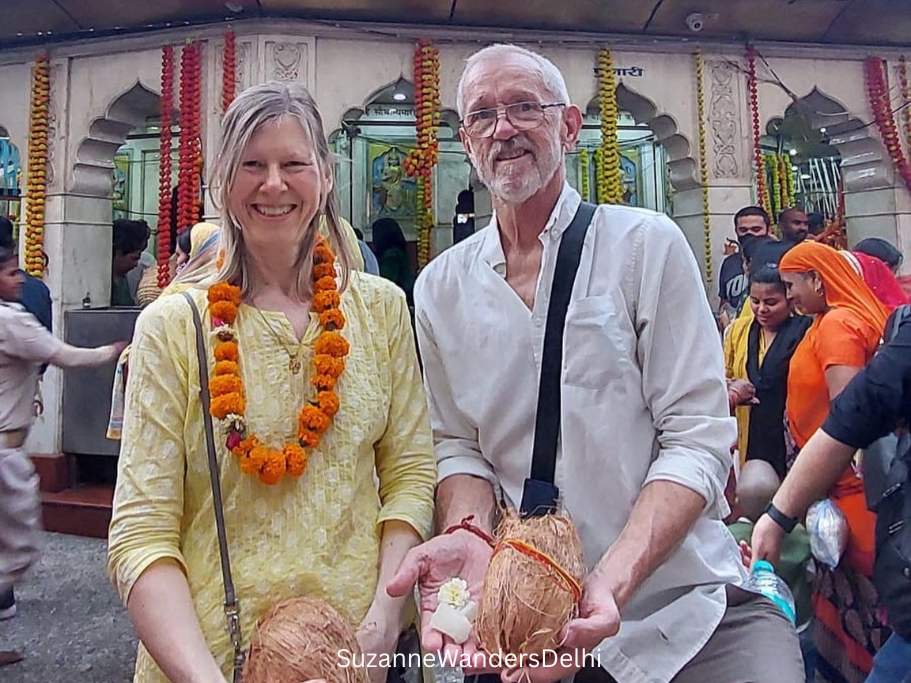
Kalkaji Mandir is one of the oldest and most revered Hindu temples in Delhi. Part of the current structure was built in 1764, but the origins of the temple go back to the Mahabharata, about 5,000 years ago.
The temple was built on the site where Goddess Kalkaji appeared and settled. During the time of the Mahabharata, Lord Krishna worshipped the goddess here. This is why Kalkaji Mandir is one of the most unique and famous temples in Delhi.
Every morning prior to the first aarti (prayer ceremony), the deity is lovingly bathed in milk and dressed.
13. Pracheen Hanuman Mandir
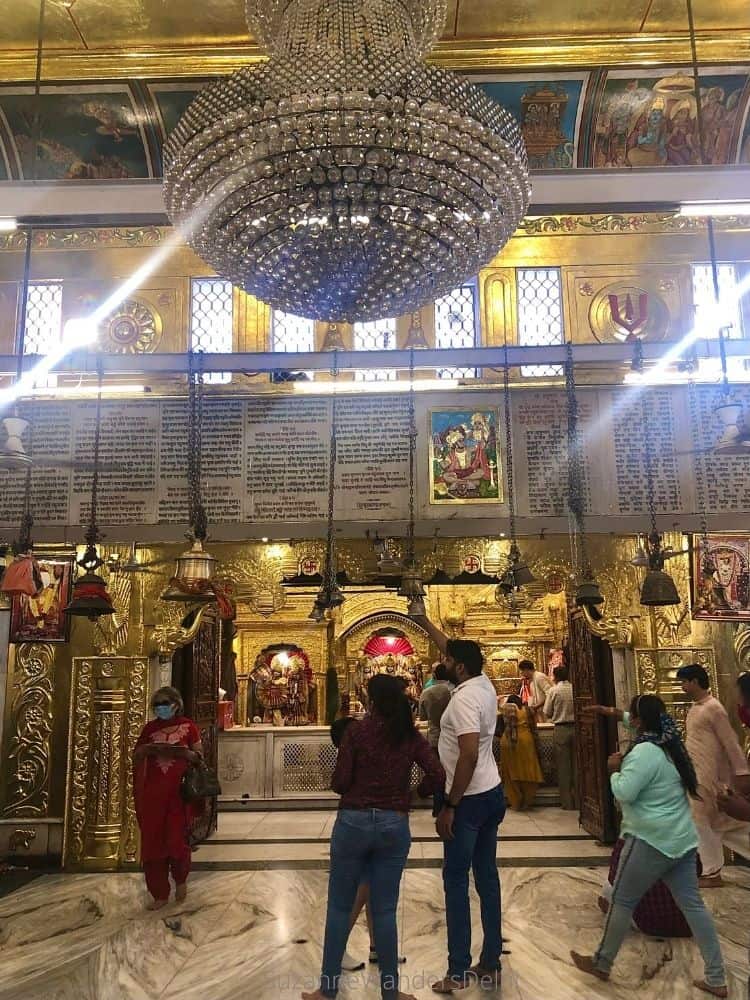
Pracheen Hanuman Mandir is one of the oldest Hanuman temples in India. Like Kalkaji Mandir above, it is believed to go back to the time of the Indian epic the Mahabharata.
The current structure was built by Maharaja Man Singh between 1540 and 1614, during the reign of the Mughal ruler Akbar. It was rebuilt by Maharaja Jai Singh in 1724.
The temple is dedicated to the god Hanuman who is revered for his strength, courage and unwavering devotion to Lord Rama. Devotees worship Lord Hanuman to gain peace, happiness, success and courage.
The temple will be extra busy on Tuesday which is the most auspicious day to worship Lord Hanuman.
One of the reasons this temple is so revered is the image of Lord Hanuman is self-manifested (called a Swayambhuhu), meaning it was not made, but appeared spiritually.
14. Kali Mandir (Chittaranjan Park)
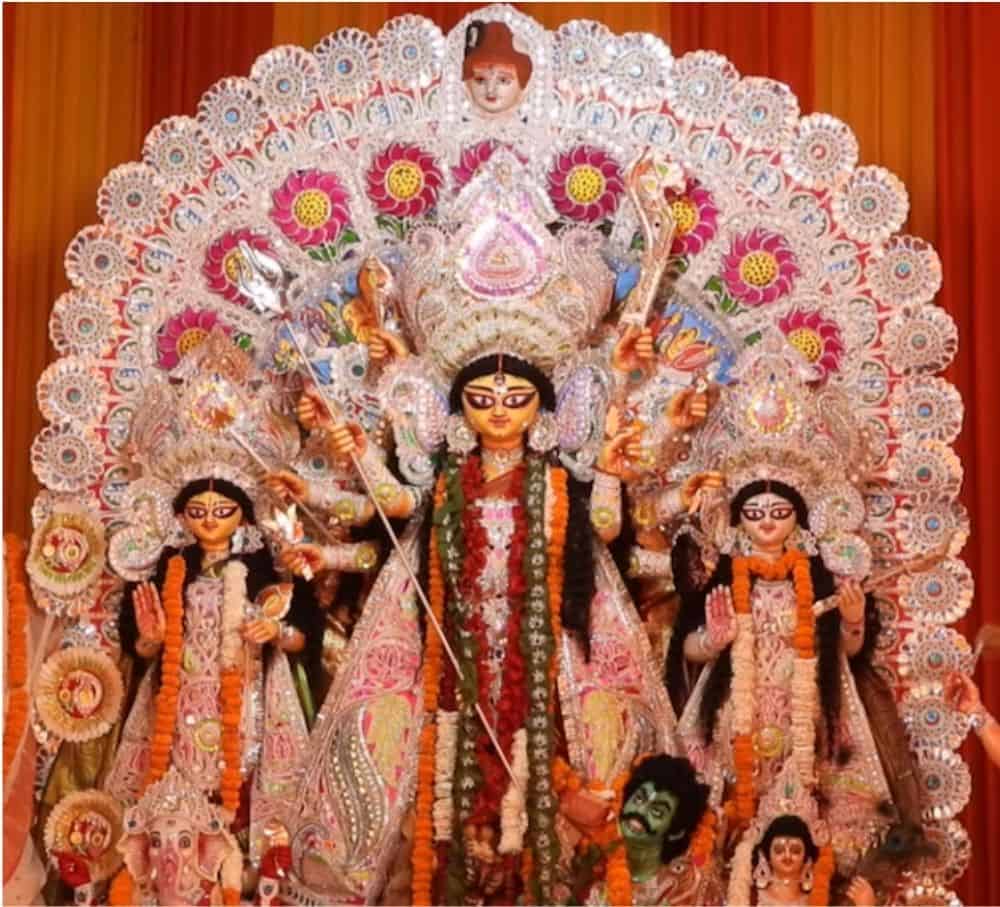
More than a temple, the Kali Mandir serves as a cultural centre for the Bengali community of Delhi. It is located in an area called Chittaranjan Park (locally referred to as CR Park), which has a large Bengali population.
The largest shrine is the one dedicated to the goddess Kali. It is flanked by shrines devoted to Lord Shiva and Radha Krishna on each side. The shrines are connected by a covered walkway, so you can easily visit all three.
The complex is built in typical terracotta Bengali style, and the shrines are covered in beautiful carvings.
Kali Mandir is the main temple of the Durga Puja celebrations in Delhi. Durga Pura is a 10 day Hindu festival in autumn when the victory of good over evil is celebrated.
For how to celebrate Durga Puja, read my guide to Durga Puja in Delhi.
15. Uttara Swami Malai Mandir (R K Puram)
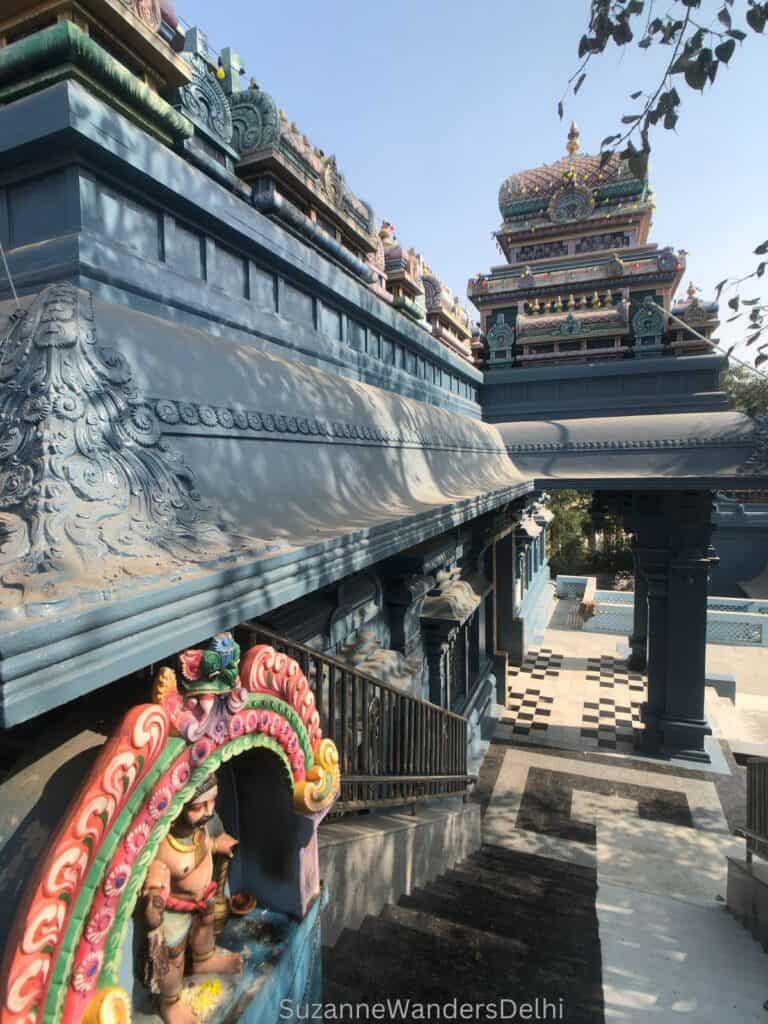
Often simply referred to as Malai Mandir, this South Indian temple is dedicated to Lord Swaminatha. It resembles the Chola style temples of Tamil Nadu, India.
Lord Swaminatha is the son of Lord Shiva and Parvati (he was then named Kartikeya). After imparting the meaning of the word ‘om’ to Lord Shiva, Parvati re-named him Swaminatha, which means ‘the guru of Lord Shiva.’
Peacocks are kept by the temple because the peacock is believed to be the vehicle of Lord Swaminatha.
The temple is built entirely of granite stones without the use of cement or mortar. Some of the stones are massive and weigh between 3-4 tons. An adhesive of lime, sand and molasses was used to fill the crevices between stones.
16. Ladakh Buddhist Vihara
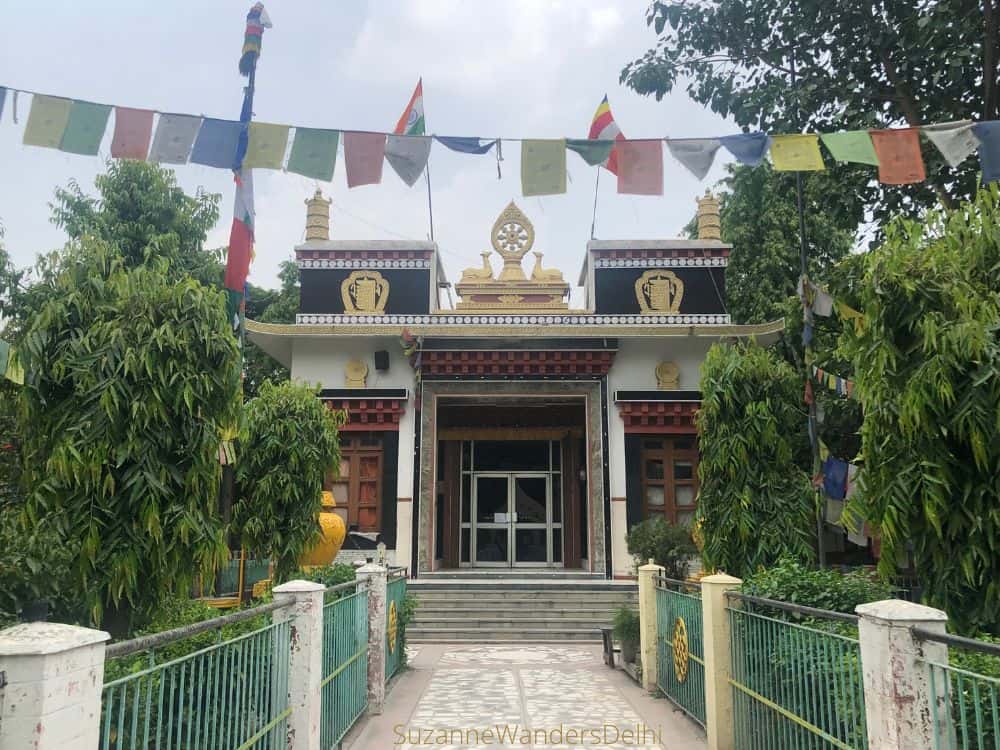
This peaceful Buddhist monastery was built in 1963 to support the Tibetan and Ladakhi (Ladakh is a state in northern India) communities that settled nearby.
The temple interior is decorated with paintings and thangkas (painted religious scrolls) depicting the life and teachings of Buddha with a large, beautiful golden Buddha in the centre.
A long row of Tibetan prayer wheels line the exterior wall of the temple and a cabinet of butter lamps sits just outside for devotees to light. Lighting a butter lamp symbolizes extinguishing the inner darkness of ignorance and lighting the inner light of wisdom.
17. Jhandewalan Mandir
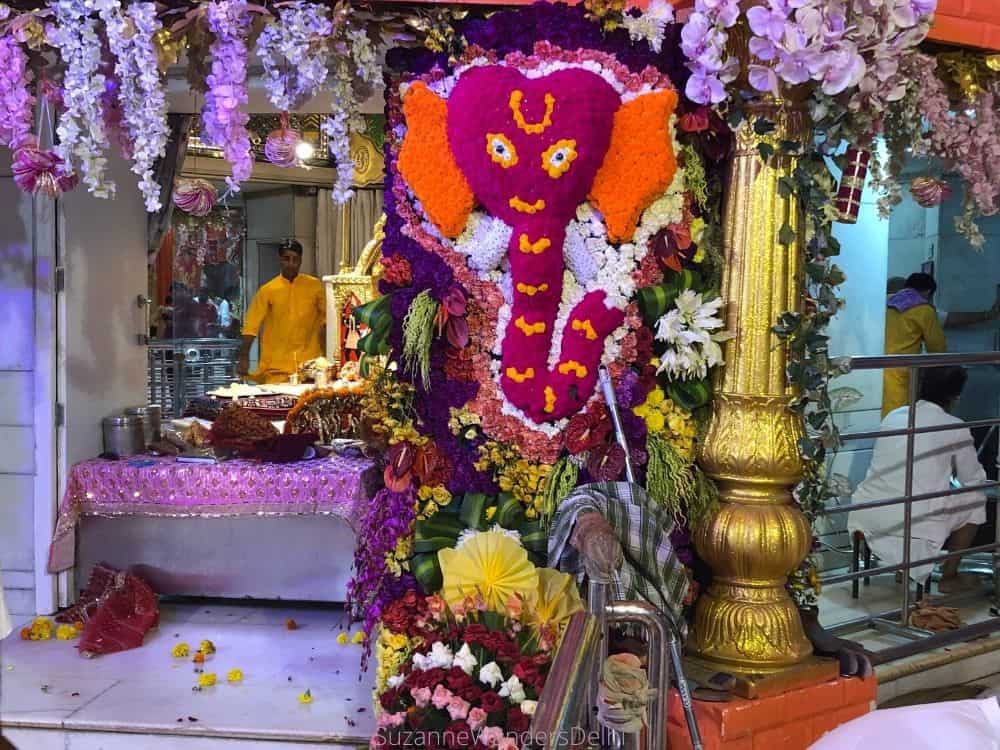
Jhandewalan Mandir is one of the oldest and most important Hindu temples in Delhi. It is dedicated to the all powerful goddess Durga.
The temple was built in the 18th century after Badri Das, a cloth merchant, discovered a carving of the goddess and a stone lingam while digging. Das built the temple on the same spot and installed a large prayer flag. Jhandewala means ‘place of the flag.’
The original idol discovered by Das is stored in a sanctum below the temple, making it a very unique and famous temple in Delhi.
During the Navratri festivals, the deities are dressed in elaborate clothing and accessories, and the temple becomes awash in flowers and lights. It’s the most flower adorned temple I have ever seen and a spectacular sight.
18. Mangal Mahadev Birla Kanan (Shivaji Murti)
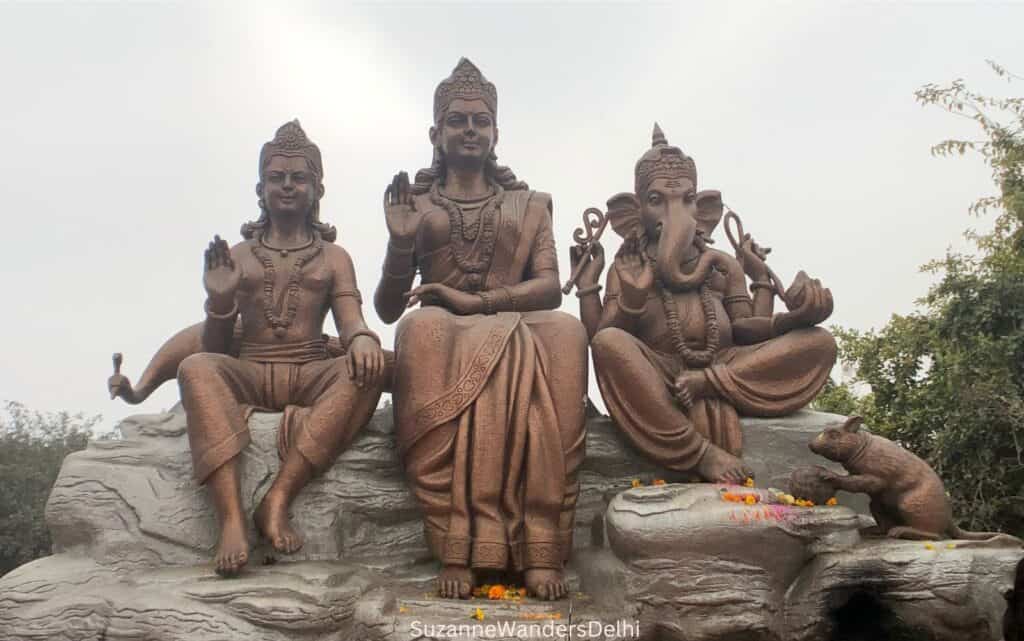
What’s really unique about this temple is that it’s outdoors, very unusual for Delhi. The temple is dedicated to Lord Shiva, in this case referred to as Mahadev which means ‘great god.’
The temple is actually a series of large statues of Hindu gods (some as tall as 100 feet), in a park like setting. If you have traveled on the main highway between Delhi and Gurugram, you have probably seen the enormous statue of Lord Shiva from the highway.
It’s located in Gurugram, a south western suburb of Delhi, and was built in 1994. Even though the complex is outdoors, it is still a temple and shoes must be removed.
The Delhi Airport is directly across the street, and this is a great place for plane watching – they fly in very low over the temple.
19. Gurudwara Sis Ganj Sahib
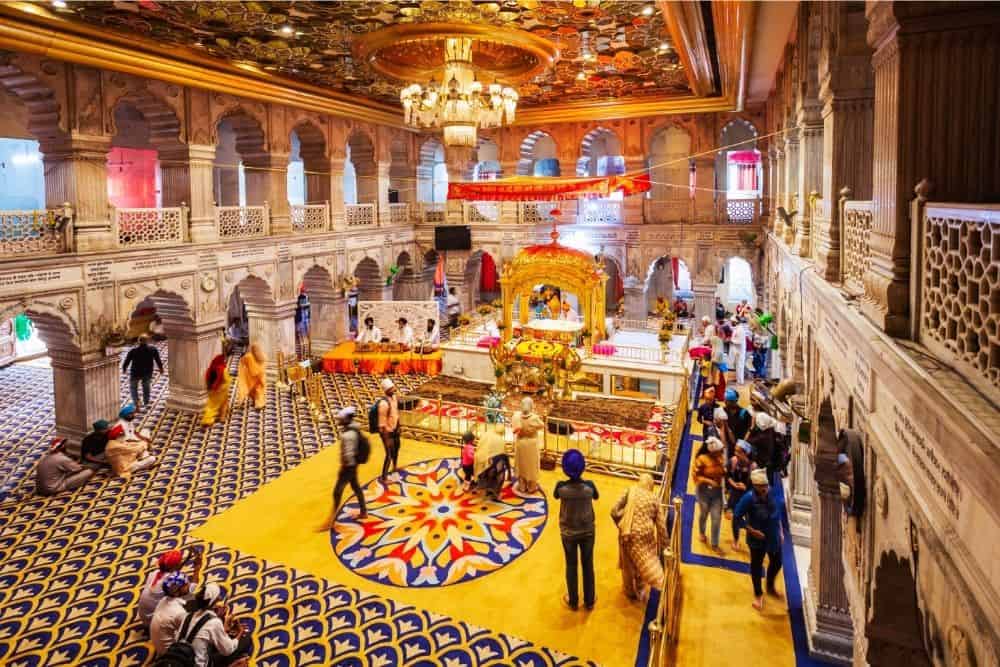
This gurudwara (Sikh temple) holds a special place in the hearts of the Sikh community. The shrine is on the exact spot the ninth Sikh Guru, Guru Tegh Bahadur, was beheaded in 1675. The gurudwara takes its name from the Punjabi word for head, ‘sis.’
The gurudwara was first constructed in 1783 as a small shrine to commemorate the martyrdom site of Guru Tegh Bahadur. It was later expanded in 1930 to the building it is today.
Men and women must remove shoes and cover their heads before entering the temple. The gurudwara always has kerchiefs outside for this purpose. Gurudwara Sis Ganj Sahib is located on Chandni Chowk in Old Delhi.
20. Sai Baba Mandir (Lodhi Road)
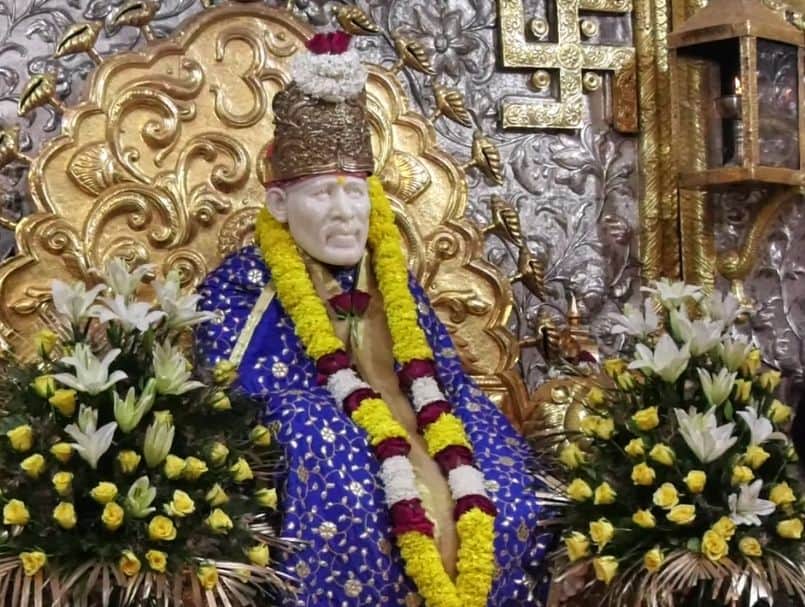
There are different Sai Baba temples throughout Delhi (I had one just around the corner from my old apartment), but this one on Lodhi Road is one of the oldest and busiest.
The temple itself is simple, but the white marble statue of Sai Baba is magnificent, enshrined in a gold and silver carved background and surrounded by flowers. What really makes this temple unique and famous in Delhi is the devoutness of Sai Baba’s followers.
Ever since the temple was built in 1968 followers have reported feeling Baba’s divine presence and I have to agree – the spiritual energy is palpable here.
Who is Sai Baba? He is the most popular saint in Delhi. He was a spiritual leader and teacher who died in 1918. Many Hindu temples, even those devoted to a different deity, have a Sai Baba shrine.
Sai Baba did not devote himself to one religion, and had many Hindu and Muslim devotees worldwide.
21. Shri Neelam Mata Vaishno Mandir
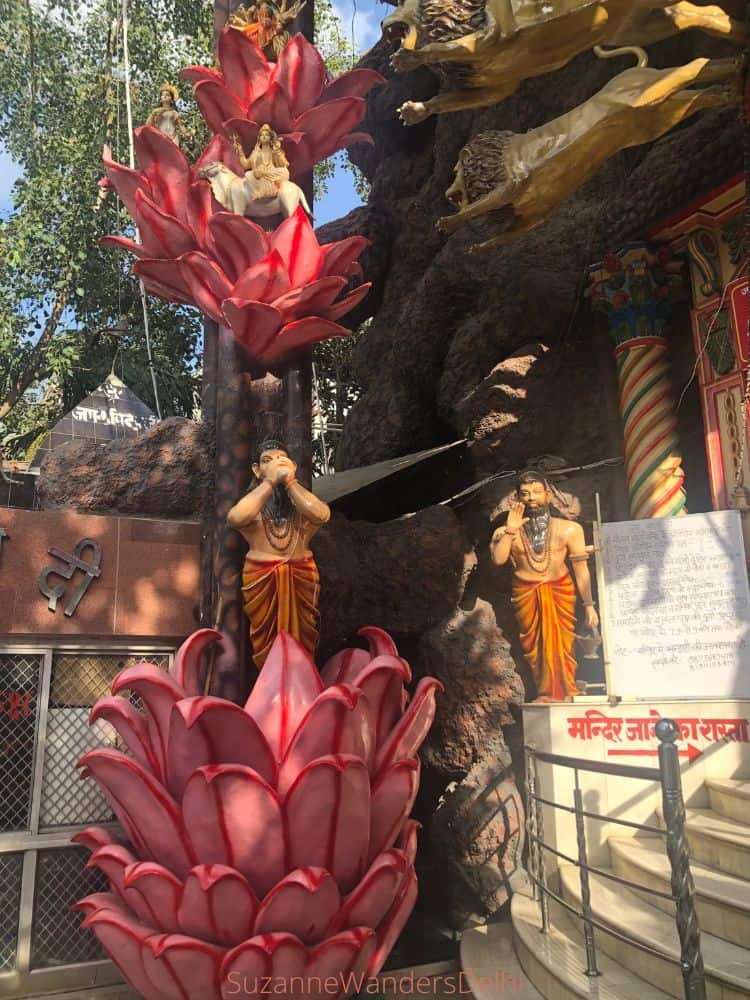
This temple was built as a replica of an important pilgrimage site for Hindus, the Vaishno Devi temple in Jammu Kashmir. It is dedicated to the goddess Vaishno Devi, who is an incarnation of the supreme goddess Durga.
The architecture and interior of the temple is fascinating. Surrounding the temple outside are large statues of Hindu gods (Lord Shiva himself presides on the roof of the temple), the seven sages, various animals and even a winged angel. All of these represent different Hindu legends and beliefs.
Inside are several levels with many shrines and idols of Hindu deities and saints. In keeping with the original cave temple in Jammu Kashmir, the Delhi temple has a cave shrine inside the main temple which is open every evening.
What You Should Wear to Visit Temples in Delhi
All temples require you to remove shoes before entering. Most will have a shoe storage area and if not, just leave your shoes outside the temple on the ground.
It’s best to wear shoes that are easy to slip on and off. I have never had a pair of shoes disappear, but it does happen occasionally.
Women and men should ensure shoulders are covered (no tank tops) and bottoms fall below the knees.
Some temples are more strict than others (like Swaminarayan Akshardham), but the strict ones usually have cover ups you can borrow.
Women do not have to cover their head in Hindu temples, but men and women must cover their heads in Sikh gurudwaras. There are usually kerchiefs available to borrow for this.
Good to Know Before Visiting Temples in Delhi
Here’s a few things to keep in mind when visiting temples in Delhi:
- Be respectful when taking photos. These are places of worship, and it is considered disrespectful to take photos of someone praying.
- Some temples have strict no photography rules. Akshardham, Bahai Lotus Temple and Digambar Lal Jain Mandir don’t allow photographs inside the prayer halls, and there are others. When in doubt, ask.
- Temples in Delhi are free. No temple in Delhi charges an admission fee, but small donations are appropriate and appreciated. INR 50 – 200 is fine. Akshardham charges a small fee for the cultural exhibits and light show, but not to visit the temple.
- Everyone is welcome in all temples. This included having the free community meal known as langar in Sikh gurudwaras.
- Shoes must be removed. Apart from Sikh gurudwaras, it is not necessary to cover your head.
What is Prasad and What Should You Do With It?
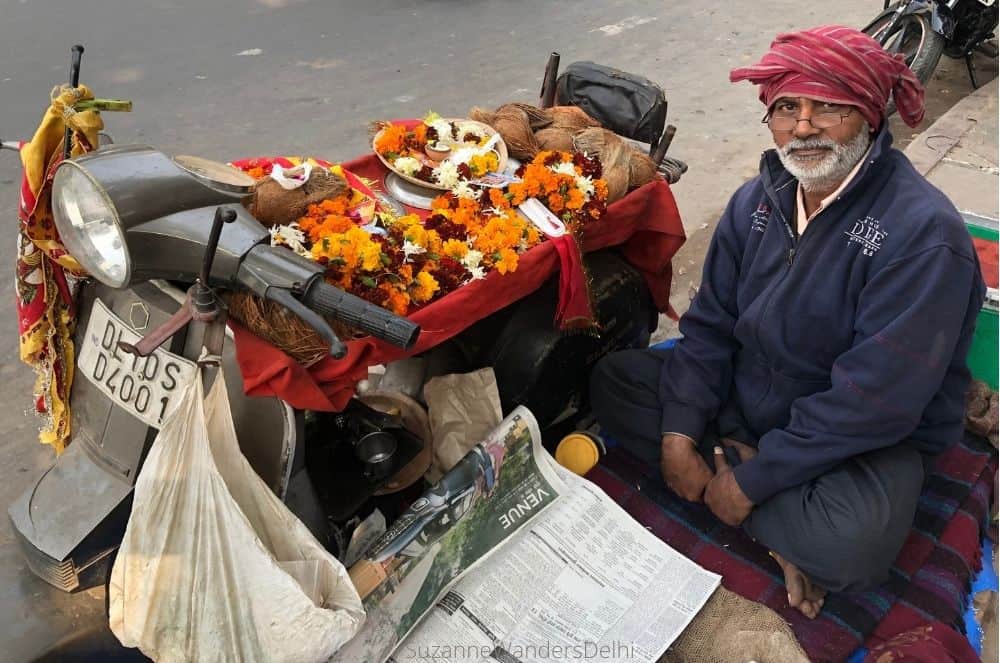
Prasad is a devotional offering. There are places to buy items for prasad in front of most temples. Devotees can present the offering to the priest inside the temple. It will be accepted, blessed, and then given back to devotees. Once it is blessed it is prasad.
Prasad can be different things, but the most common items are roses, marigold garlands, coconuts, bananas, puffed rice, and Indian sweets like ladoo or halwa.
Because prasad is considered blessed by the gods, you should never throw it away.
The proper way to treat prasad is to consume and share anything edible. Anything you do not want to eat can be given to a cow or left somewhere elevated for squirrels or birds. Whole coconuts and flowers can be left on a tree branch, or at the base of a tree if you see other prasad items left there.
When you make an offering at a shrine, the priest will take it away so the god can partake of it. He may then bless you with a bindi on your forehead and/or tie blessed threads around your wrist.
How to Get to the Temples in Delhi
I highly recommend using the Delhi metro to get around the city. It is fast, clean, inexpensive, safe and air conditioned. It’s very easy to navigate, and operates in English and Hindi.
If your destination is not within walking distance of the nearest metro station, just take an auto rickshaw from the station to your final destination. There are always auto rickshaws outside metro stations waiting for passengers.
Where to Stay in Delhi
I am very familiar with these properties, and recommend them because they are exceptional and in good neighbourhoods. They are also well located for seeing the famous temples in Delhi.
- Leela Palace New Delhi (luxury): 5 star property and considered Delhi’s finest hotel. It’s beautiful and traditional, with exceptional service and comfort. Located in Delhi’s most exclusive neighbourhood near the embassies.
- Lutyens Bungalow (mid-range): Heritage boutique property in one of the best areas of the city next to Lodhi Garden. Fantastic area near many sites. Breakfast is included.
- Prakash Kutir Bed & Breakfast (budget): Family run guest house in a very good area of South Delhi, near the metro and easy to explore the whole city from. Spotlessly clean. A home-cooked breakfast is included.
Last Words on 21 Famous and Unique Temples in Delhi: An Insider’s Guide
There are hundreds of temples in Delhi, but these are 21 of the most famous and unique. Faith is a big part of the culture of Delhi, and whether you are religious or not, visiting temples is an excellent way to experience that culture.